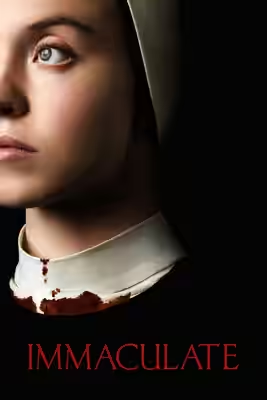
Michael Mohan’s convent horror is handsomely lit, briskly cut and for most of its 89 minutes the film you expect. Then Sydney Sweeney, who also produces, drags it somewhere nastier and better, and for a quarter of an hour it is worth the wait.
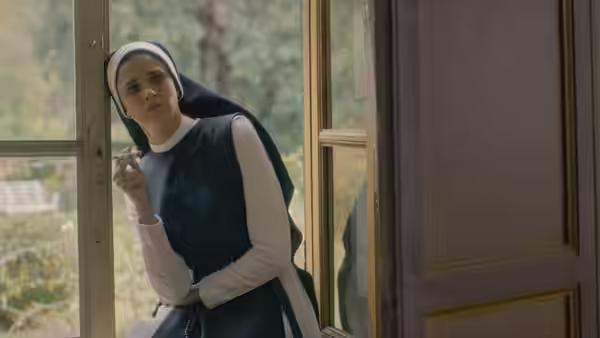
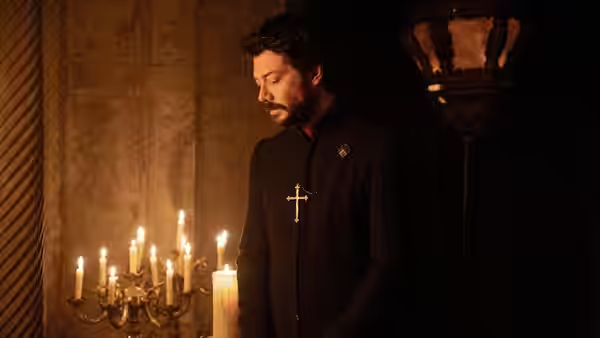
Michael Mohan’s Immaculate opens with a nun trying to leave a convent at night, and it does not go well for her. That is the film’s promise: this is a place women do not leave. Sister Cecilia (Sydney Sweeney) arrives soon after, a young American whose parish back home has closed, brought to the Italian countryside by Father Sal Tedeschi (Álvaro Morte) to take her vows and help nurse the elderly sisters through their last years. Within half an hour she is pregnant, she has never been with a man, and the convent has decided she is carrying a miracle. Andrew Lobel’s script takes that idea and, for most of 89 minutes, does with it roughly what you would guess.
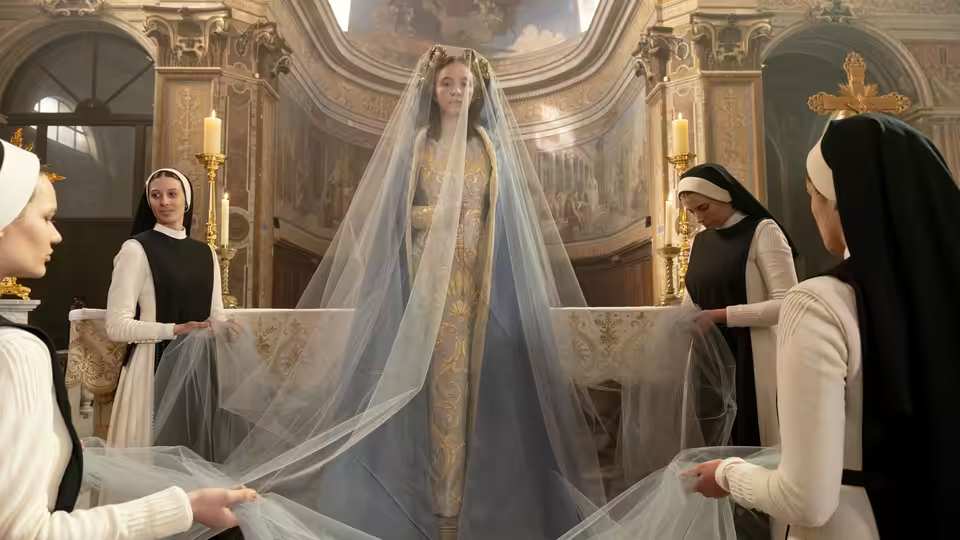
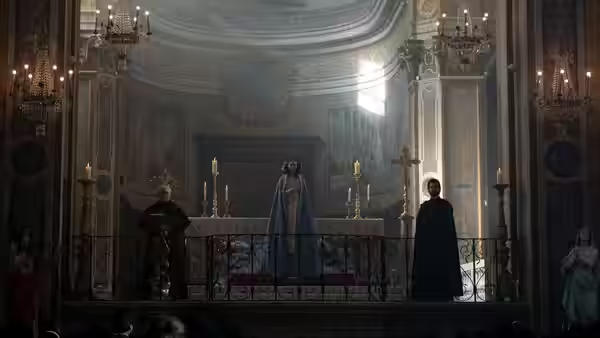
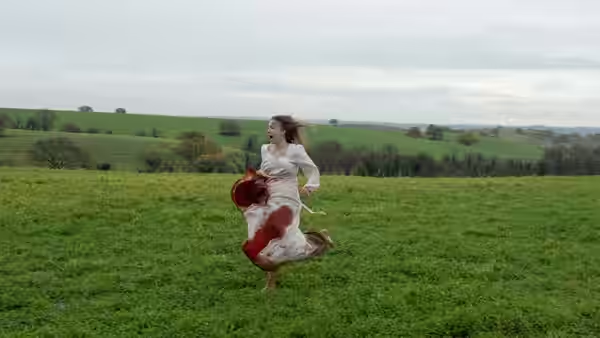
It looks better than it needs to. Elisha Christian shoots the convent almost entirely by candle and window, amber inside and hard white out in the garden, and holds his shots long enough that we start scanning the background for whatever is going to move. Adam Reamer’s convent is long stone corridors, a chapel, a wing of sick beds and a catacomb underneath, and the film’s best images put a single figure in white at the far end of a dark passage. Francesca Brunori puts the sisters in plain habits and the men who run the place in scarlet, so that when the red masks appear we already know whose side they are on. This is a handsome film, and the handsomeness is the main reason to stay through the middle hour.
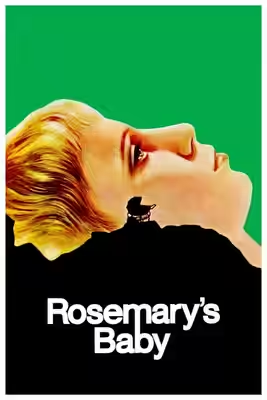
The middle hour is the trouble. Mohan’s chosen tool is the jump scare, and he uses it on schedule: a face where none should be, a hand from the dark, each announced by a lurch in Will Bates’s score. Bates has written something interesting underneath, organ and plainsong smeared with electronic noise, but it is asked to do the frightening rather than the film, and by the fourth or fifth lurch we had stopped flinching and started counting. Christian Masini cuts briskly, which keeps the film short and also means no scene is allowed to sit long enough to become dread. Anyone who has seen Rosemary’s Baby knows the shape of the story and will be ahead of Cecilia for most of the way.
Sweeney, who also produces and is here making her second film with Mohan, is the reason it works as far as it does. She plays Cecilia’s faith without a wink, a girl who nearly died once as a child and has decided God kept her for something, and she makes the convent’s early kindness feel like weather closing in. Benedetta Porcaroli’s Sister Gwen, who joined to get away from a man and has no patience for the rest of it, supplies the film’s only jokes and its only friend, and every scene is livelier when she is in it. Morte’s Father Tedeschi is gentle and reasonable, which is the correct way to play him. Dora Romano’s Mother Superior and Giorgio Colangeli’s Cardinal are stern and given not much else to do.
Then comes the last act, which we will not describe. What we can say is that a film that had been nudging us for seventy minutes stops nudging and starts hitting, and Sweeney goes with it entirely. We were tense, then appalled, then, along with the rest of the cinema, laughing in the way you do when a film has gone further than you were braced for. Christian holds one shot near the end for what felt like a full minute and will not cut away, and it is the one moment where the camera, the performance and the idea about who owns a woman’s body are all doing the same thing at once. It is a proper ending. It does not make the hour before it any better.
As convent horror goes, this sits above the studio Nun films and well below The Devils. The Italian horror of the 1970s it keeps borrowing from had colour and cruelty and no interest in explaining itself; Immaculate has the colour and, eventually, the cruelty, and it explains everything.
Most critics land about where we do. See it with someone who can take an 18 certificate, ideally in a full cinema, because the last quarter of an hour is built for company. At home it is a well-lit 89 minutes in which not much happens and then a great deal does, which is fine, and not more than fine.