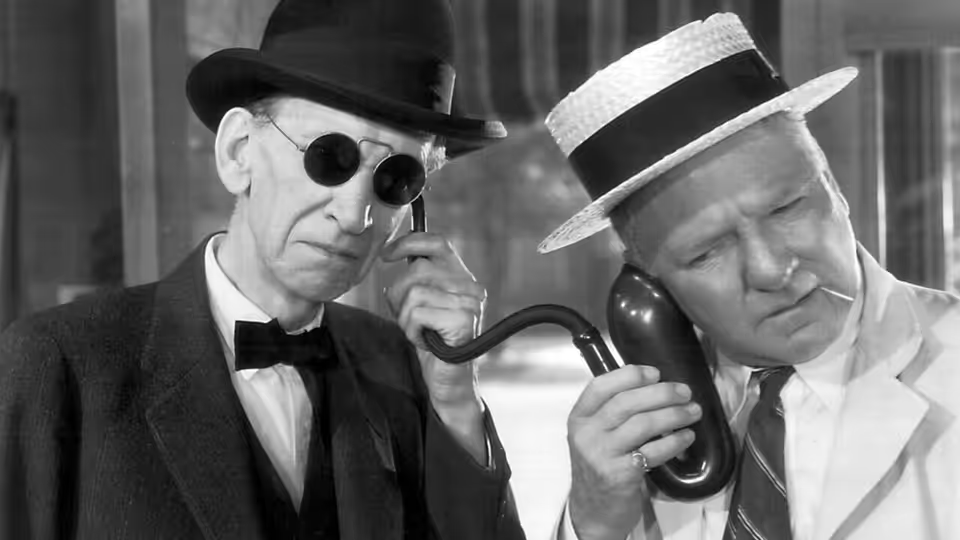
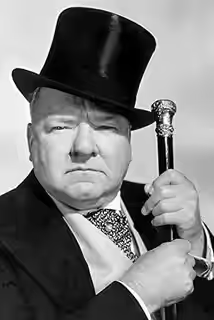
W.C. Fields makes small-town aggravation funny enough to sustain a whole film, with the porch sequence a particular pleasure. We recommend it warmly, though the surrounding family can become as tiring for us as for him.
Norman Z. McLeod’s It’s a Gift finds a rich supply of comedy in one man’s dwindling patience. W.C. Fields plays Harold Bissonette as someone for whom having to deal with anybody else is already a substantial inconvenience. We recommend it warmly, with a warning that some of the company becomes wearing. Its small-town family life will be familiar to anyone who has ever wanted five uninterrupted minutes.
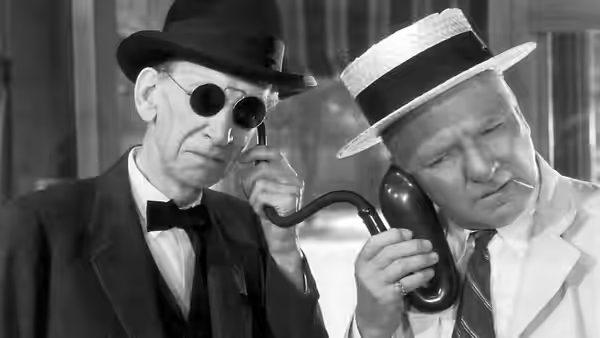
W.C. Fields makes Harold’s resentment understandable, even when we would not care to spend much time with him. The performance allows us to enjoy the pettiness of his responses and still feel for the man having them. He can be unreasonable; the people around him give him ample opportunity. The story is credited to W.C. Fields, and the concentration on Harold’s grievances gives the central performance plenty to work with.
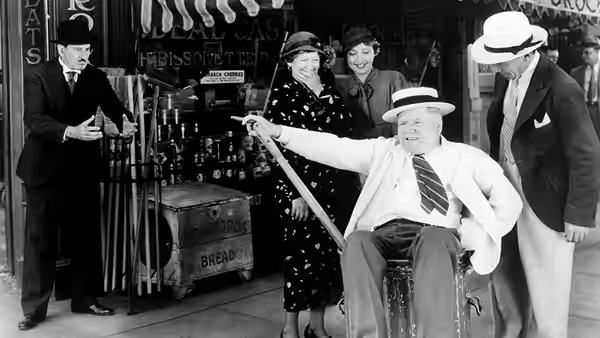
The sustained porch sequence is the clearest demonstration of what the film does well. We laughed, then felt worn down on Harold’s behalf, because the succession of irritations denied him the relief we had begun to want for him. The length matters: a shorter version would give us the joke without making us share the aggravation. Norman Z. McLeod allows the situation to occupy our attention long enough for each further nuisance to become an affront.
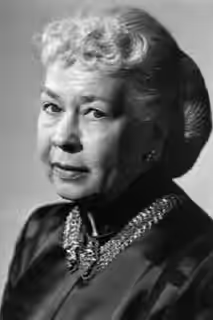
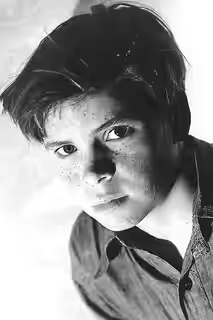
Kathleen Howard makes Amelia Bissonette a substantial obstacle to Harold’s comfort, though the film is less interested in what might be troubling her. That imbalance can grow wearing. Jean Rouverol and Tommy Bupp, as Mildred Bissonette and Norman Bissonette, belong to the same crowded company of people whose main comic purpose is to bother him. We do not need a comedy to give everyone equal sympathy, but a little more variety would make the household less tiring.
Henry Sharp’s cinematography serves W.C. Fields well; the comedy remains easy to follow, and we rarely find ourselves attending to the photography for its own sake. That is sensible work in a film so dependent on our interest in Harold’s discomfort. John Leipold’s music makes less of an impression than the persistence of the situations themselves. The emphasis feels right, even if there is little here to tempt anyone indifferent to the central performance.
Jack Cunningham’s screenplay is strongest when it stays with a nuisance and allows its consequences to accumulate. The transitions between routines are less absorbing, and we occasionally notice the work of getting Harold into position for his next difficulty. At 68 minutes, the film has the good sense not to insist on an entire evening of our patience. Even within that short running time, the relentless supply of impossible people could use a little variation.
Domestic comedy often depends on our wanting the household to stay together; here we can understand the appeal of being left alone. That makes for some tart, satisfying laughter, provided we are not already exhausted by other people’s habits. W.C. Fields gives us enough pleasure to forgive the narrower treatment of everyone else. Save it for an evening when minor annoyances are still funny.