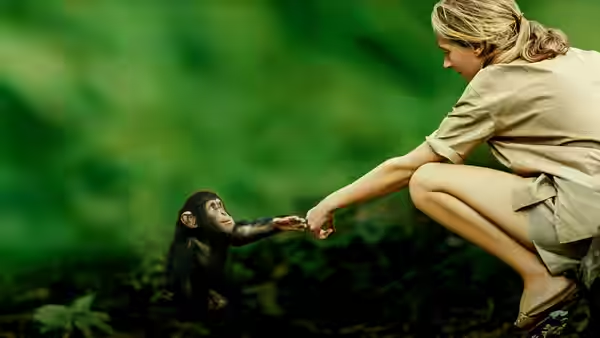
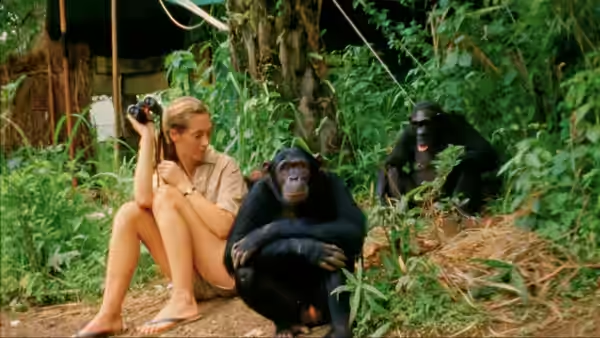
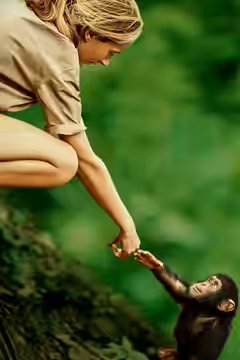
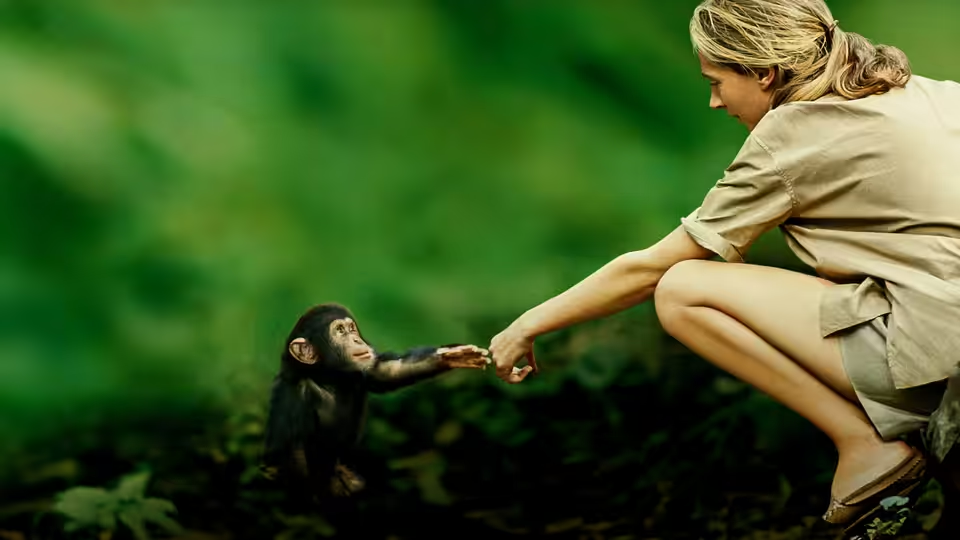
Jane Goodall reaches toward a young chimpanzee in the forest
Film review

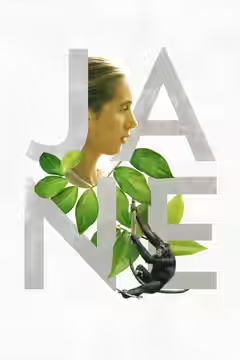
Jane

2017 · Directed by Brett Morgen · 1h 30m

In a sentenceA young woman waits in a forest until the chimpanzees give in, and so, rather more quickly, do we

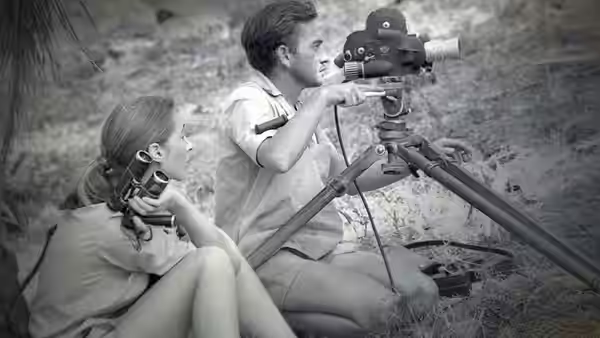
A young Jane Goodall arrives at Gombe to watch chimpanzees. Each morning she climbs the ridge above the lake with binoculars and a notebook, and for months the chimpanzees run from her. Then, slowly, they stop. National Geographic sends the photographer Hugo van Lawick to film her at work, and his colour footage, which sat unseen in an archive for years, is what Brett Morgen builds the film from: a woman alone on a hillside, brown shapes in the trees, a black hand taking a banana from a white one. Goodall, interviewed today, talks over the pictures and says plainly what she saw, while a score by Philip Glass and Vitek Kral runs underneath.

Plays from YouTube when you press play; nothing loads from them until then.

Fi1m review

Brett Morgen builds a portrait of Jane Goodall from more than a hundred hours of film nobody had looked at in half a century, and the footage is remarkable. The woman talking over it is better still. Only Philip Glass gets in the way.

In 2014 the National Geographic Society found more than a hundred hours of film in its archive that nobody had looked at for half a century. It was Hugo van Lawick’s colour footage of a young Jane Goodall at Gombe. Brett Morgen has cut it to 90 minutes and put Goodall’s own voice over the top, and the result is one of the better archive documentaries we have seen. The footage would be worth an evening on its own. Only the music gets between us and it.

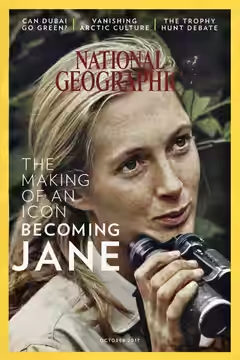
She arrived with binoculars and a notebook. Van Lawick’s camera finds her on a ridge above the lake, pale hair tied back, khaki shorts, binoculars up, and the chimpanzees are brown specks in the trees on the far slope. Joe Beshenkovsky cuts the first half hour so that the distance closes: specks, then shapes, then a black hand taking a banana from a white one. The colour has held better than it had any right to; the forest is green, the lake is grey, the earth is brick red. The film was shot without sound, and every hoot, rustle and cicada has been put there since. We noticed, and for most of the running time we did not mind.

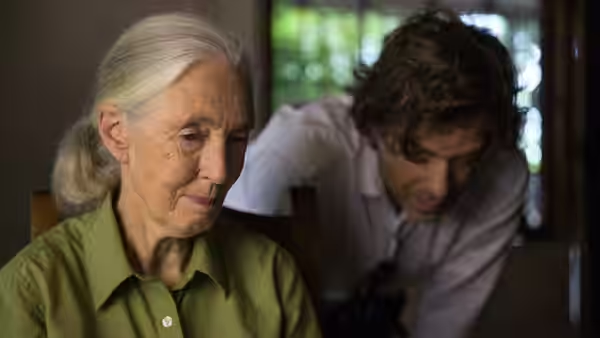
Goodall is interviewed now, in a plain room shot by Ellen Kuras, and she answers Morgen’s questions like a woman who has told this story a thousand times and has no interest in decorating it. She says what she saw. The first time a chimpanzee comes close enough to take something from her hand, the film simply shows it, and it moved us more than we expected, because Morgen lets us watch it happen before anyone tells us what it means.

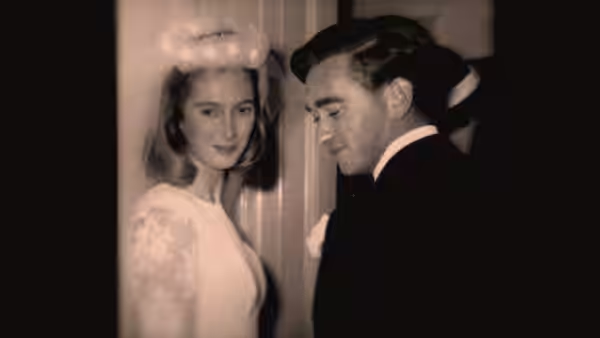
The second story is van Lawick. National Geographic sent him to photograph her work, and he stayed. The pictures of the two of them are the most candid in the film, because he was filming her and she, now and then, turned the camera on him. The marriage itself is told in a handful of sentences and a few letters read aloud. Morgen gives it about ten minutes, and it needed twenty. The man who made these images is in the film mostly as the eye behind them.

Then there is Philip Glass. The score, credited to Glass and Vitek Kral, starts in the first minute and almost never stops, and it is Glass in his familiar climbing, circling mode. For the first half hour it fits; the figures rise as she climbs, and the repetition suits a woman doing the same thing every day for months. By the hour mark we wanted it to stop. There is a passage, which we will not describe, where the chimpanzees are doing something terrible and the strings tell us how to feel before they have finished doing it. For a few minutes we were irritated by a film we were otherwise enjoying, and it was the music every time.

Morgen’s earlier archive films, The Kid Stays in the Picture (2002) and Cobain: Montage of Heck (2015), cut their material fast and to the beat, with flourishes. Here he is quieter, and the subject requires it. He is also uncritical. The scientists who objected to Goodall naming her animals and feeding them bananas get a sentence or two, and then the film moves on. That is a fair choice for a portrait and a limit on it.

Watch it at home. The images are small and close, a person and an animal a few feet apart, and they lose nothing on a sofa. Ninety minutes is about right. Goodall waited months for a chimpanzee to sit still near her; the film asks for an hour and a half and earns most of it.
Critical consensus AI synthesised

77
Positive
8
Mixed
3
Negative
0

The reviews lean positive: eight of eleven approve and none dislike it. Praise gathers in one place, the rediscovered footage Hugo van Lawick shot in Gombe, which most critics call vivid and immediate and several treat as the film’s whole case. Philip Glass’s score is the other frequent point of approval, credited with making Goodall’s early research feel like something happening now. Goodall herself draws warm notice for her poise, and more than one critic calls this a definitive portrait of her.

The spread is narrow and the reservations mild. Vulture finds the film captivating but is distracted by some of Morgen’s stylistic choices. Time Out, the lowest full rating, thinks the chimpanzee-watching plays as an ordinary nature documentary and suffers beside Blue Planet. The Guardian suggests Goodall is the main asset rather than the filmmaking. Two of the three mixed scores come from reviews readable only in part, so the dissent is thinner than the count implies.

IndieWire
14 September 2017 · A- · Kate Erbland
90

The critic calls the film a definitive, emotionally beautiful portrait of Jane Goodall. She particularly praises the vivid archival footage and the careful craftsmanship that makes it immersive.

Read the full review →
The Hollywood Reporter
10 September 2017 · festival review · David Rooney
90*

Rooney calls the film a wondrous, moving, and likely definitive portrait of Jane Goodall. He praises the previously unseen archival footage and Philip Glass’s enveloping score for making her discoveries and life feel immediate.

Read the full review →
Los Angeles Times
19 October 2017 · Sheri Linden
85*

Linden gives the documentary a strongly positive verdict, calling it a stirring portrait of Jane Goodall. She singles out Hugo van Lawick’s archival footage and Philip Glass’ score for their vivid emotional force.

Read the full review →
The Guardian
26 November 2017 · Wendy Ide
80*

Ide finds the portrait of Jane Goodall fascinating and praises her enduring poise and engagement. She singles out the vivid archival footage and Philip Glass’s score, while calling Goodall the film’s main asset.

Read the full review →
Variety
18 September 2017 · festival review · Dennis Harvey
75*

Harvey finds the documentary a charming, insightful portrait of Goodall and her breakthrough research. He especially praises the engrossing, long-lost footage of the chimpanzees and Goodall’s close observations of them.

Read the full review →
Vulture
20 October 2017 · David Edelstein
70*

Edelstein finds the documentary captivating, despite several distracting stylistic choices. He especially praises the newly discovered footage of Goodall’s early years in Gombe and the intimate view of her life with chimpanzees.

Read the full review →

Straight answers AI written, from our review

Is Jane worth watching?
Jane is worth watching for anyone with an evening to give to a quiet archive documentary, and we scored it 78. Hugo van Lawick's colour footage of the young Goodall at Gombe is remarkable, and her plain, undecorated voice over it is better still. Our one reservation is Philip Glass's score, which hardly stops and by the hour mark tells you how to feel before the pictures have finished.
How long is Jane, and what is it rated?
Jane runs 1h 30m. It is a documentary film.
Where can I watch Jane in Ecuador?
Jane is streaming on Disney+ in Ecuador. Availability is checked daily; the links above go straight to each service.
How does Jane compare to Project Nim?
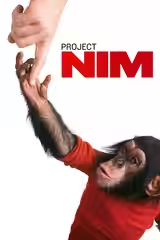
Jane and Project Nim are two sides of the same story: a woman who waited in a forest until the chimpanzees accepted her, and a chimp raised by people and what that cost him. Marsh's film is the more upsetting and the more argumentative; Morgen's is calmer, kinder to its subject and uncritical of her. Watch Jane for the images and Project Nim for the harder questions.
What should I watch after Jane?
After Jane, try Project Nim (2011, Fi1m 81): The other side of the primate story: a chimp raised by people, and what that cost him. Then Grizzly Man (2005, Fi1m 85): Another person who went to live among animals, filmed it, and did not come back; and Fire of Love (2022, Fi1m 76): Two scientists, a marriage and a found archive; volcanoes rather than chimps.

Cast

If you liked this, try…

  1. Project Nim (2011, Fi1m 81)The other side of the primate story: a chimp raised by people, and what that cost him.

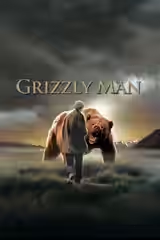
  2. Grizzly Man (2005, Fi1m 85)Another person who went to live among animals, filmed it, and did not come back.

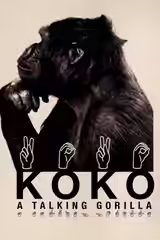
  3. Koko: A Talking Gorilla (1978) · not reviewed yetBarbet Schroeder watches a gorilla learn sign language and keeps his doubts in frame.

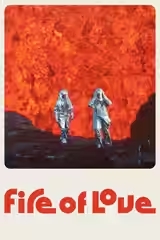
  4. Fire of Love (2022, Fi1m 76)Two scientists, a marriage and a found archive; volcanoes rather than chimps.

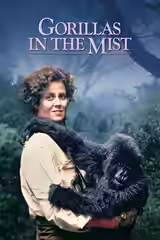
  5. Gorillas in the Mist (1988) · not reviewed yetDian Fossey and her mountain gorillas, in a drama that takes her obsession seriously.