Brett Morgen builds a portrait of Jane Goodall from more than a hundred hours of film nobody had looked at in half a century, and the footage is remarkable. The woman talking over it is better still. Only Philip Glass gets in the way.
In 2014 the National Geographic Society found more than a hundred hours of film in its archive that nobody had looked at for half a century. It was Hugo van Lawick’s colour footage of a young Jane Goodall at Gombe. Brett Morgen has cut it to 90 minutes and put Goodall’s own voice over the top, and the result is one of the better archive documentaries we have seen. The footage would be worth an evening on its own. Only the music gets between us and it.
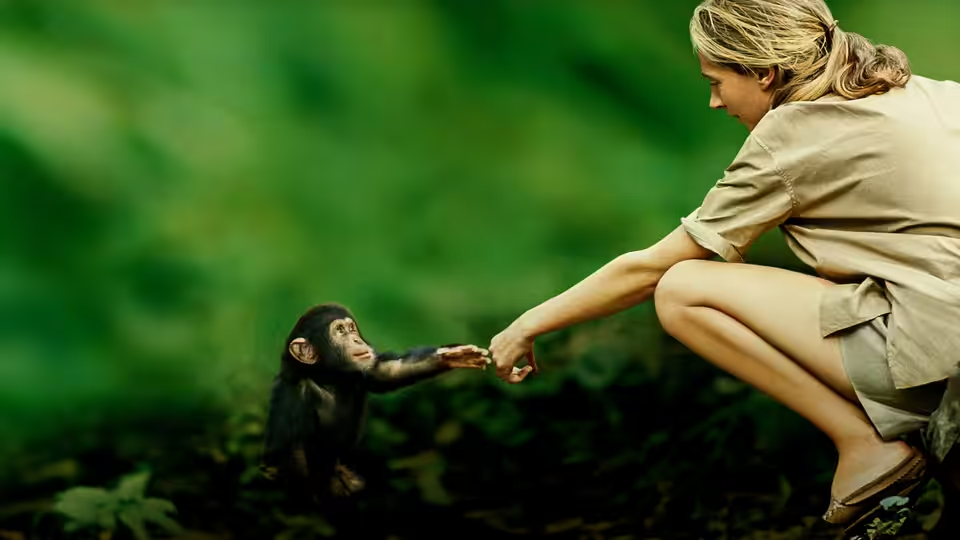
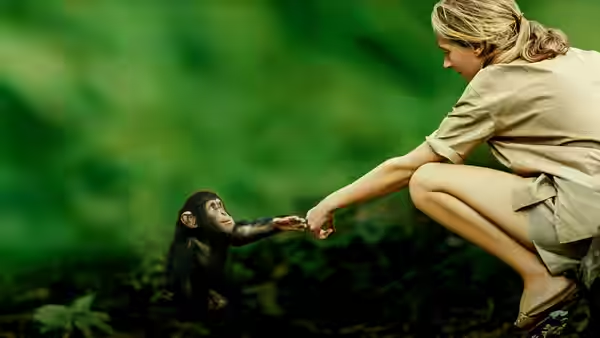
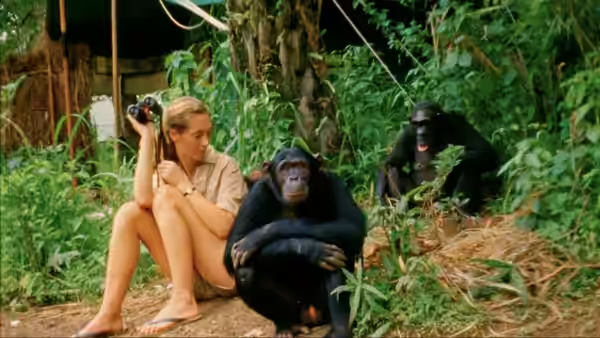
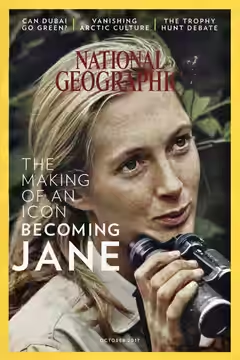
She arrived with binoculars and a notebook. Van Lawick’s camera finds her on a ridge above the lake, pale hair tied back, khaki shorts, binoculars up, and the chimpanzees are brown specks in the trees on the far slope. Joe Beshenkovsky cuts the first half hour so that the distance closes: specks, then shapes, then a black hand taking a banana from a white one. The colour has held better than it had any right to; the forest is green, the lake is grey, the earth is brick red. The film was shot without sound, and every hoot, rustle and cicada has been put there since. We noticed, and for most of the running time we did not mind.
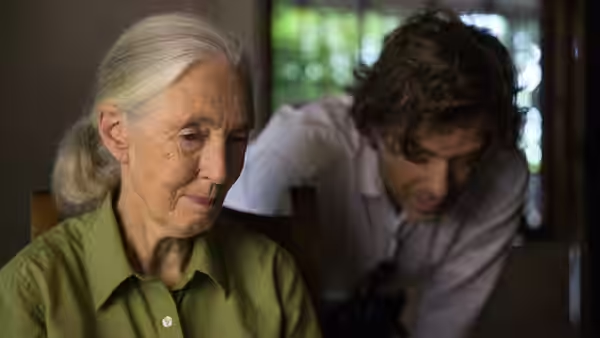
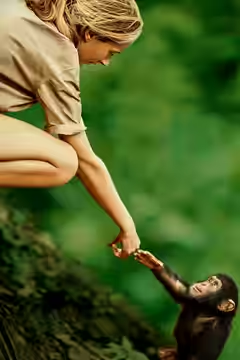
Goodall is interviewed now, in a plain room shot by Ellen Kuras, and she answers Morgen’s questions like a woman who has told this story a thousand times and has no interest in decorating it. She says what she saw. The first time a chimpanzee comes close enough to take something from her hand, the film simply shows it, and it moved us more than we expected, because Morgen lets us watch it happen before anyone tells us what it means.
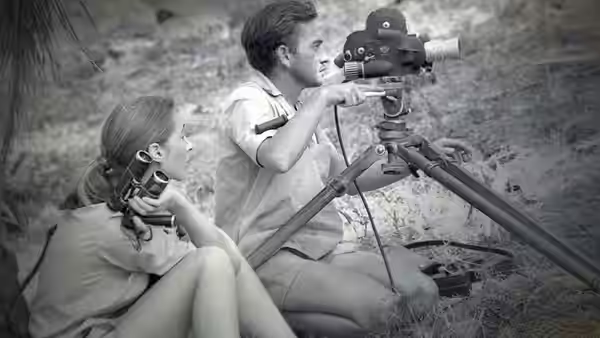
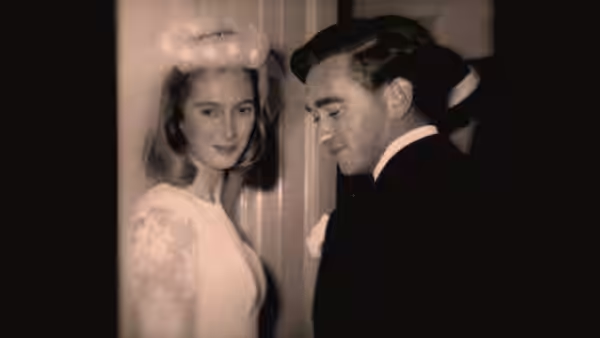
The second story is van Lawick. National Geographic sent him to photograph her work, and he stayed. The pictures of the two of them are the most candid in the film, because he was filming her and she, now and then, turned the camera on him. The marriage itself is told in a handful of sentences and a few letters read aloud. Morgen gives it about ten minutes, and it needed twenty. The man who made these images is in the film mostly as the eye behind them.
Then there is Philip Glass. The score, credited to Glass and Vitek Kral, starts in the first minute and almost never stops, and it is Glass in his familiar climbing, circling mode. For the first half hour it fits; the figures rise as she climbs, and the repetition suits a woman doing the same thing every day for months. By the hour mark we wanted it to stop. There is a passage, which we will not describe, where the chimpanzees are doing something terrible and the strings tell us how to feel before they have finished doing it. For a few minutes we were irritated by a film we were otherwise enjoying, and it was the music every time.
Morgen’s earlier archive films, The Kid Stays in the Picture (2002) and Cobain: Montage of Heck (2015), cut their material fast and to the beat, with flourishes. Here he is quieter, and the subject requires it. He is also uncritical. The scientists who objected to Goodall naming her animals and feeding them bananas get a sentence or two, and then the film moves on. That is a fair choice for a portrait and a limit on it.
Watch it at home. The images are small and close, a person and an animal a few feet apart, and they lose nothing on a sofa. Ninety minutes is about right. Goodall waited months for a chimpanzee to sit still near her; the film asks for an hour and a half and earns most of it.