Jiang Ziya is worth a look for its striking animation, though the tangled storytelling makes it a qualified choice. Cheng Teng and Li Wei give us plenty to admire and too much difficulty following what matters.
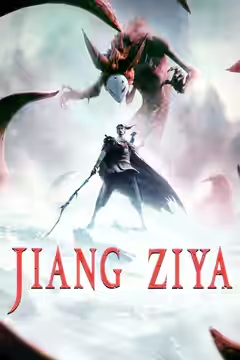
Jiang Ziya offers enough visual invention to interest animation enthusiasts, but its storytelling makes a straightforward recommendation difficult. Cheng Teng and Li Wei direct a fantasy built around the promise that no soul should be denied salvation, a serious concern with room for feeling as well as action. We welcome the ambition. The problem is that keeping up with the story takes so much attention that there is less left for the people in it.
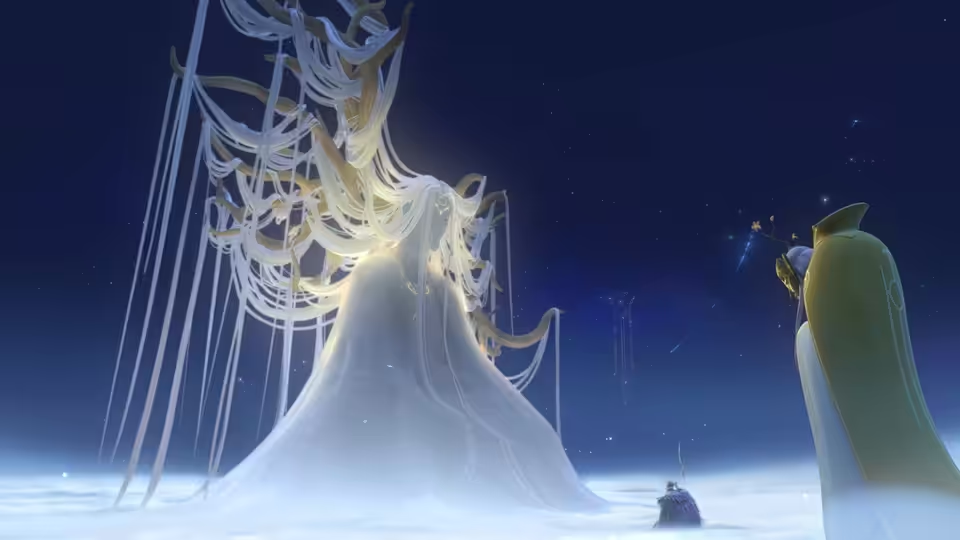
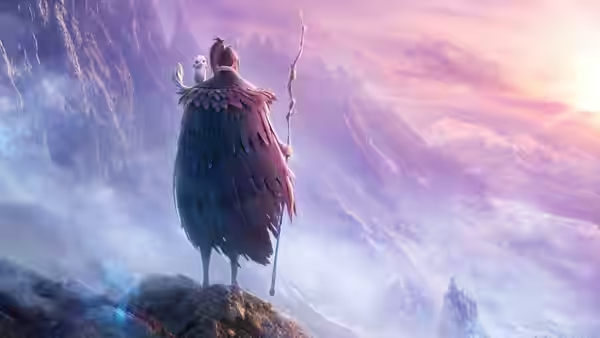
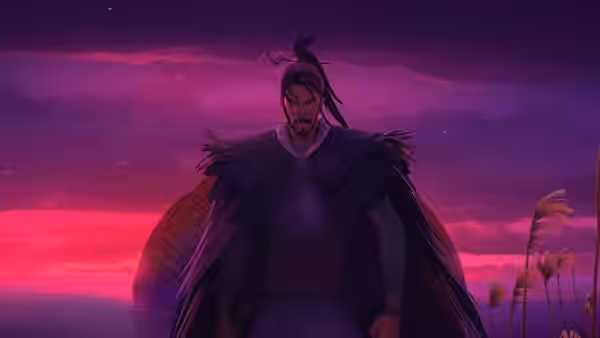
The widescreen imagery is the chief reason to stay with it. Cheng Teng and Li Wei give the animation room to impress as a sequence of pictures, and Su Daji’s vivid design is a particular pleasure. We were absorbed by the images, then frustrated by our difficulty following the story. That frustration matters because the visual work makes us want to care, rather than simply wait for the next impressive sight. There is enough care in these pictures to make the difficulty disappointing.
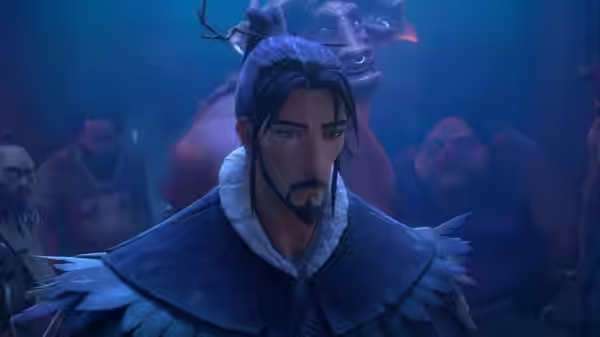
Zheng Xi voices Jiang Ziya, Ji Guanlin voices Jiuwei, the Demon Queen, and Yang Ning voices Xiao Jiu. These are names an unfamiliar viewer should be able to meet without preparatory reading. Xie Xiying’s screenplay does not make that encounter easy enough: too much of our attention goes towards sorting out the story rather than responding to the characters. A fantasy can leave parts of its world unexplained, but it still needs to make clear what matters to the person at its centre.
The concern with salvation gives the confusion consequences beyond a missed detail. To weigh a question about who deserves saving, we need to understand the choices and feel their cost; the film does not consistently secure that understanding. Raymond Wong supplies the music, although musical emphasis cannot do the work of explaining why a moment matters. The ambition remains appealing, and we would rather see animation attempt a difficult moral question than assume its audience only wants movement and noise.
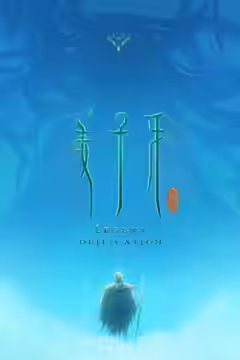
Its position as the second entry in the Fengshen series should not make newcomers feel that they have arrived without the right preparation. The task includes giving those viewers enough to enjoy without worrying about what they might have missed. The widescreen images suggest a setting worth exploring further, so the wish to build more films around it is understandable. For that prospect to be inviting, each individual story needs to establish its own reasons for caring about its characters.
At 105 minutes, this is a manageable commitment, though the 12A certificate does not tell a parent how readily a younger viewer will follow it. An interest in animation is a more useful guide to the likely pleasure than a general appetite for adventure. There are enough pictures worth examining to justify a patient look, provided narrative confusion is something we can forgive. Save it for company that enjoys discussing how an image was made, and does not mind also asking what just happened.