Film review

The Prince of Egypt

1998 · Directed by Steve Hickner, Brenda Chapman, Simon Wells · 1h 39m · MPA PG

In a sentenceTen plagues, several songs, two brothers, and the brothers are the best of it

AdventureAnimationDramaFamily

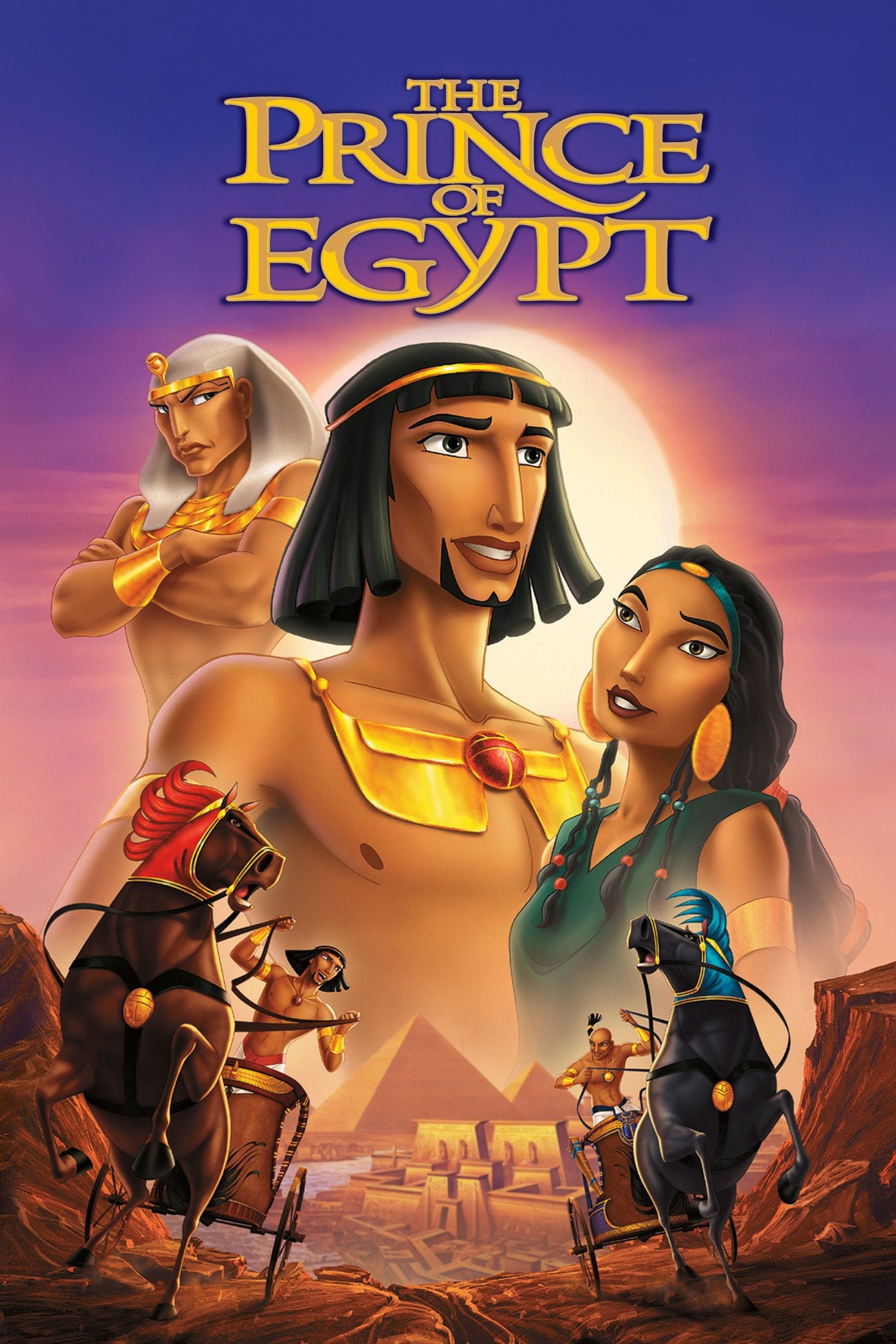
Egypt, under Pharaoh Seti (Patrick Stewart). Hebrew slaves haul stone for his monuments and their infant sons are being put to the sword. A mother sets her baby in a basket on the Nile; his sister Miriam (Eden Riegel) follows it along the bank until it drifts into the palace, where the Queen (Helen Mirren) takes the child as her own. He grows up as Moses (Val Kilmer), a prince, racing chariots through the city with his brother Rameses (Ralph Fiennes), Seti’s heir. A chance meeting with the grown Miriam (Sandra Bullock) and Aaron (Jeff Goldblum) tells him where he was born. A nightmare in hieroglyphs tells him the rest. The priests Hotep (Steve Martin) and Huy (Martin Short) supply the court’s magic and its comedy.

Plays from YouTube when you press play; nothing loads from them until then.

Fi1m review

The most serious thing DreamWorks ever drew, and the drawing earns it: Val Kilmer and Ralph Fiennes make the brothers hurt, and the plagues are a set piece. The songs run to formula and two comic priests keep wandering in from a lighter film.

Three directors, Brenda Chapman, Steve Hickner and Simon Wells, take the book of Exodus and draw it by hand, with songs, in 99 minutes. That is a large ambition and The Prince of Egypt gets most of the way there. The pictures are as fine as anything in feature animation, the two men at its centre are acted rather than merely voiced, and the story is told with a seriousness children’s films of its era rarely risked. What holds it back is inherited machinery: songs built to a template, and two comic priests who never find out what film they are in.

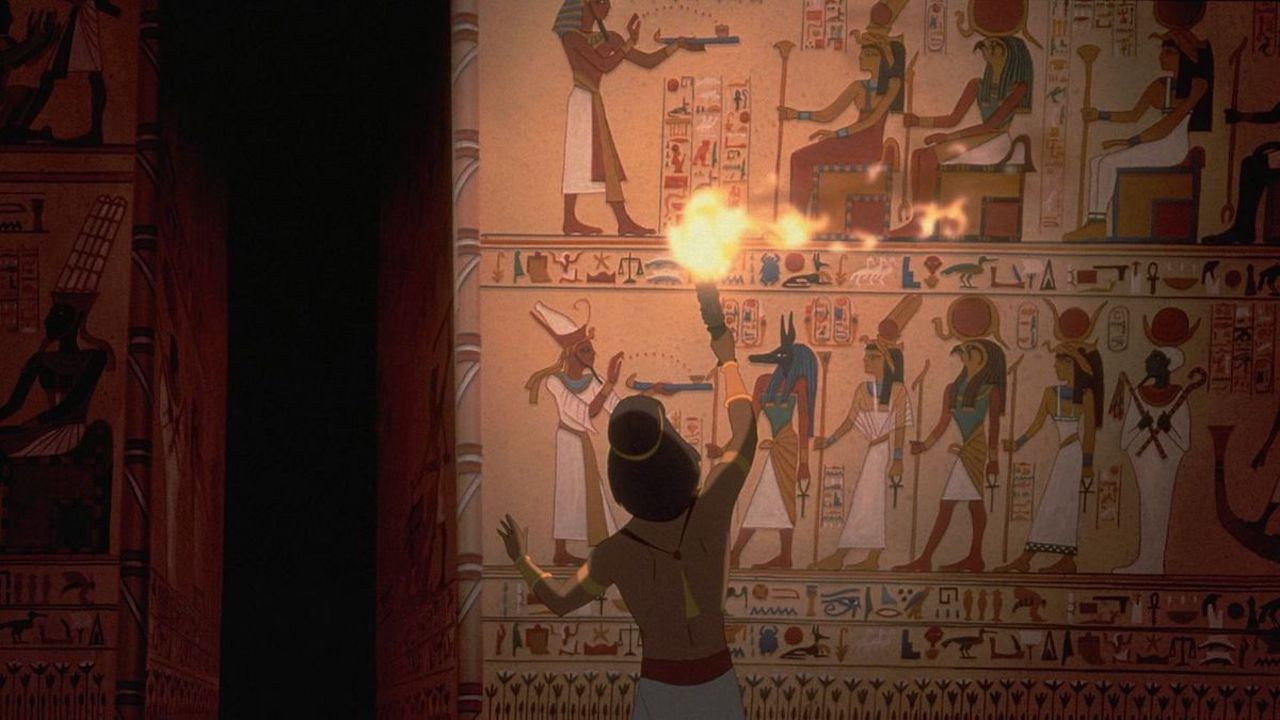
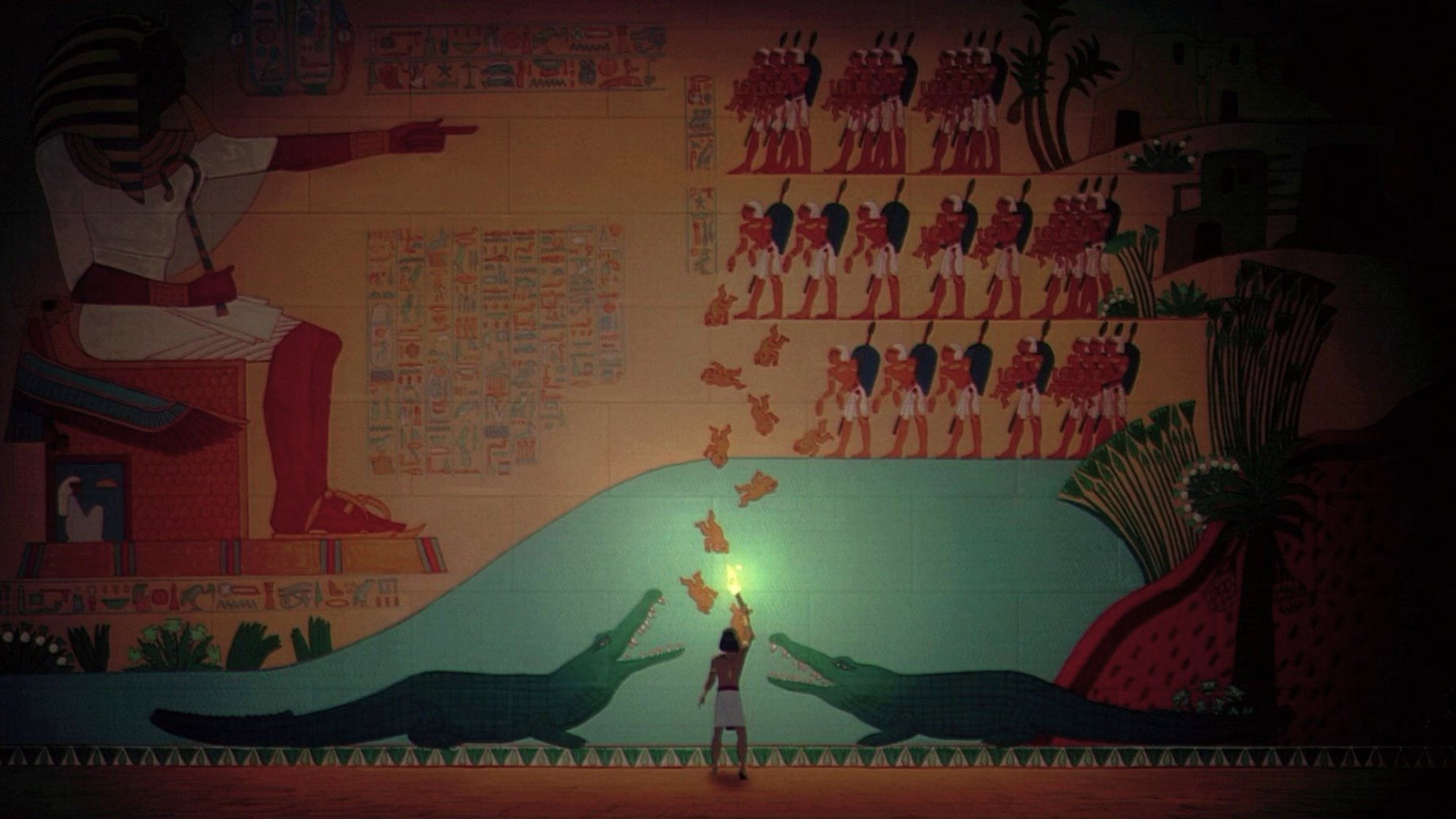
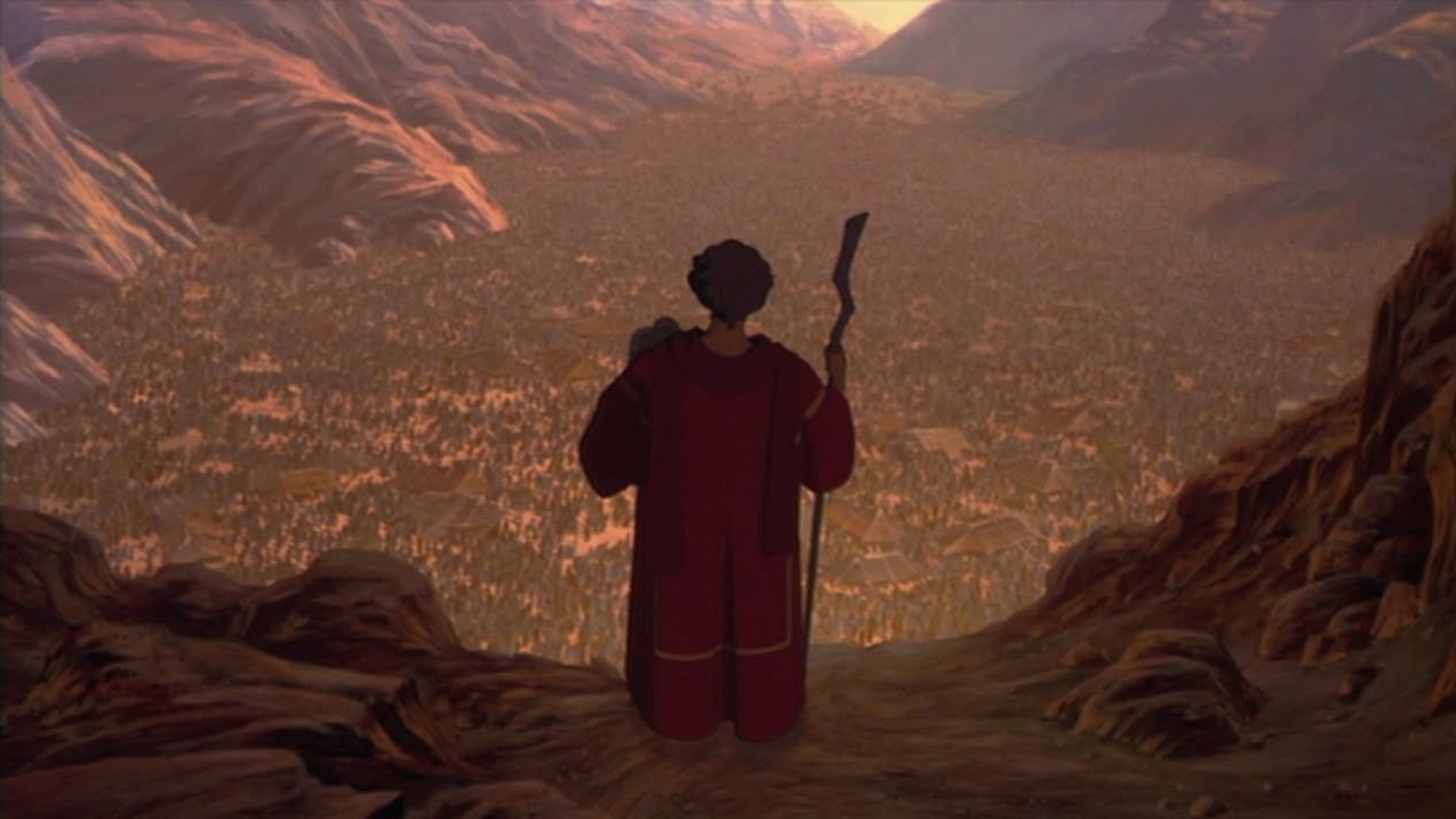
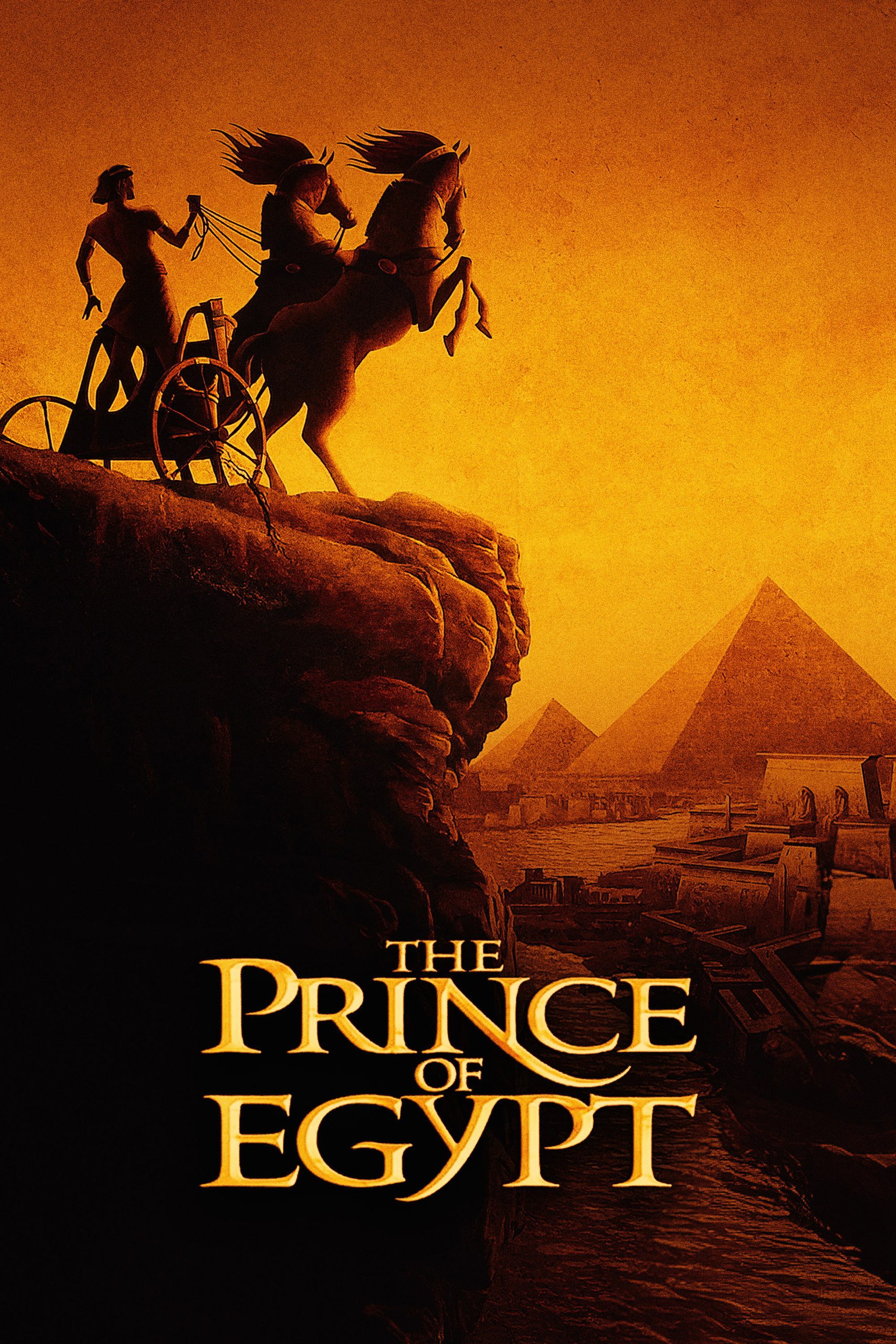
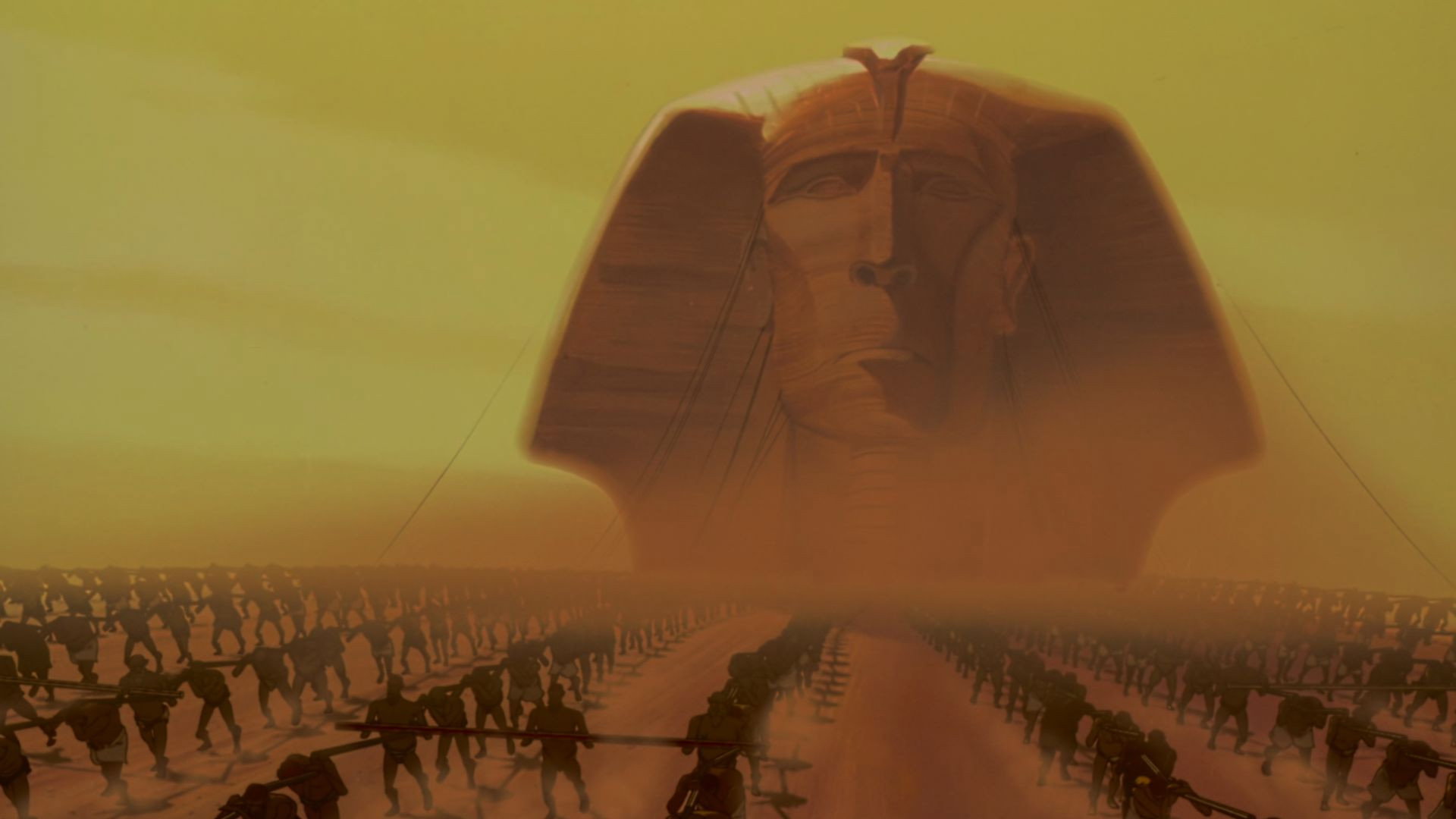
Darek Gogol designs an Egypt of flat planes and enormous verticals. Seti’s statues run out of the top of the frame, the brick pits are the colour of dust, and the palace is a warm ochre that goes cold at night. The opening number has slaves dragging a stone head up a ramp while soldiers take their infant sons, and a mother sets her baby in a basket on the Nile. The basket goes under a barge, past crocodiles, between the legs of hippos, and a small girl runs along the bank after it. We had seen this story in Sunday school and in DeMille’s robes and did not expect it to get to us. It did, inside eight minutes, and it was the girl running that did it.

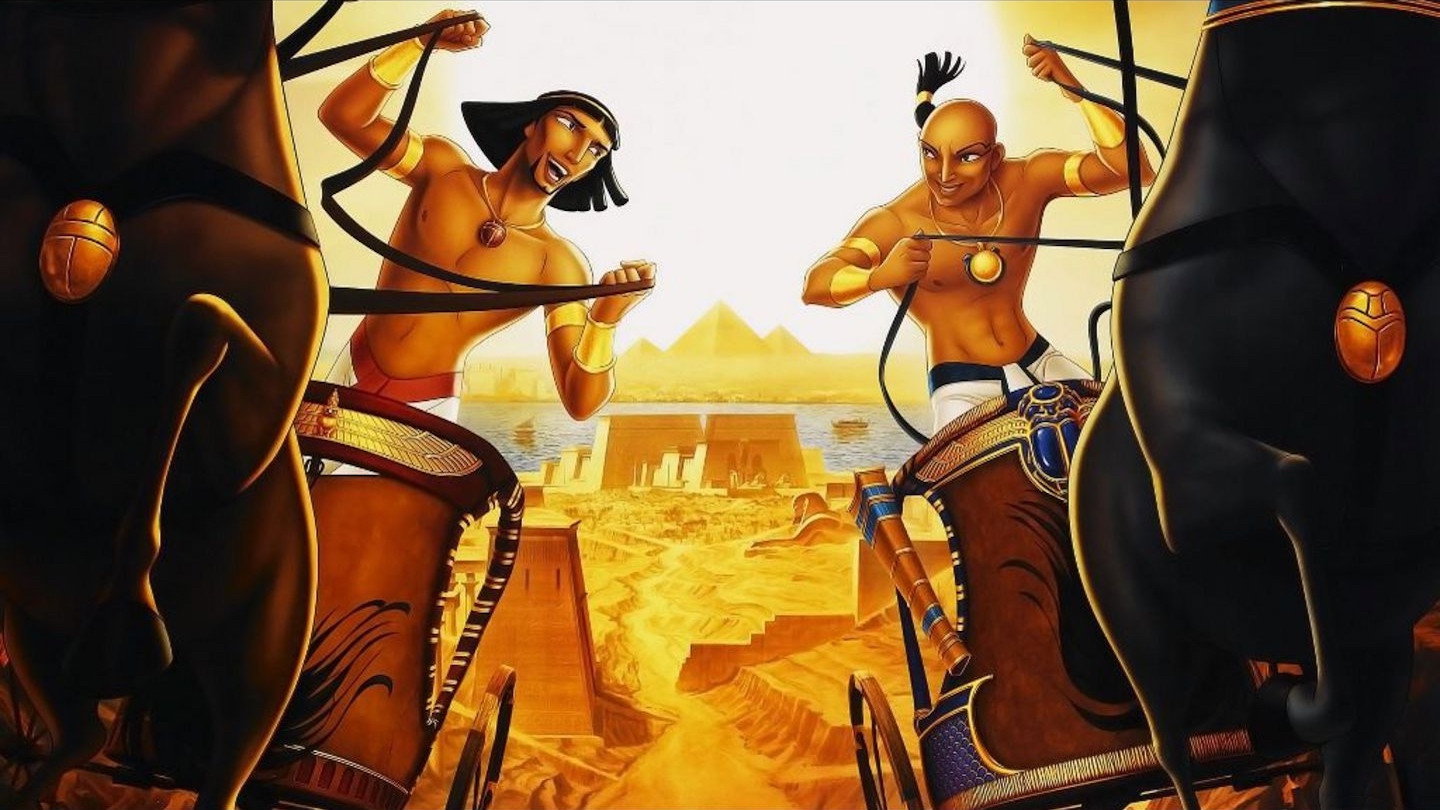
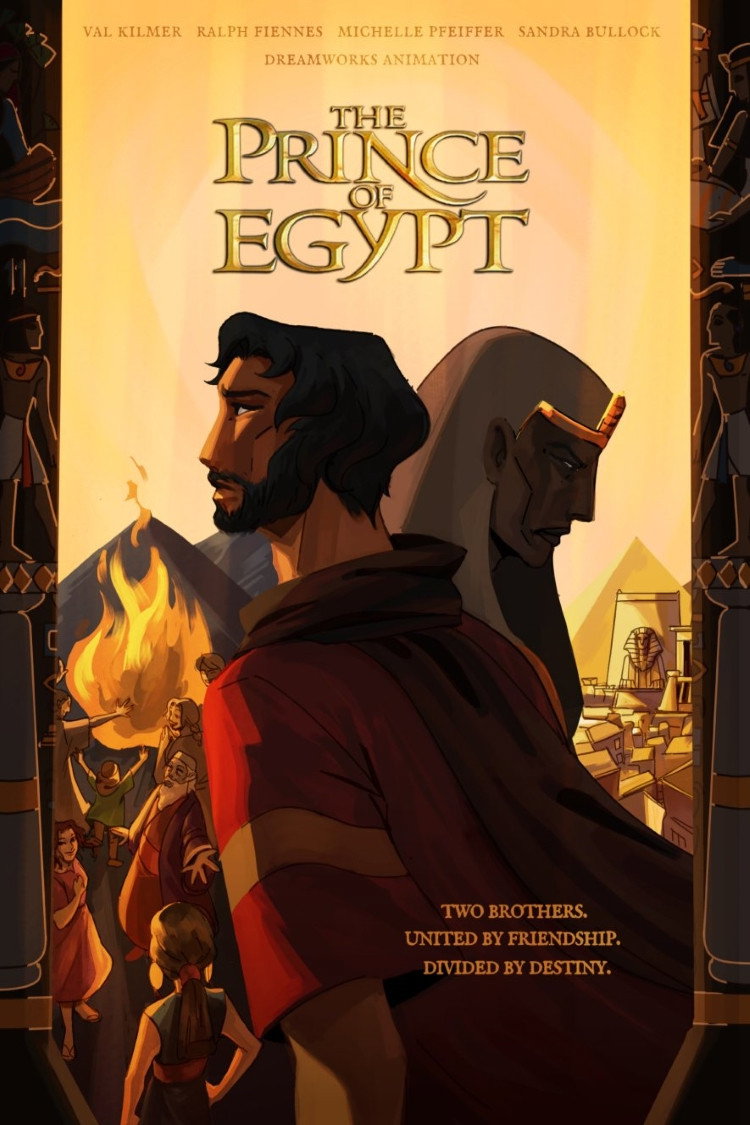
Val Kilmer plays Moses as a young man who has never had to want anything, and the voice loses that ease by degrees as he learns what his family’s house is built on. Ralph Fiennes is better still. His Rameses is an heir who has been told once, by Patrick Stewart’s Seti, that he could be the weak link that breaks the dynasty, and every decision he takes afterwards is a man trying not to be. Early on the two race chariots through the city and knock the nose off a temple; later they stand on opposite sides of a throne room and the same two voices have nothing left in common. Stewart has one scene, explaining a massacre in the tone of a man discussing drainage, that is the most frightening thing in the film.

Hans Zimmer’s underscore is the better half of the music: brass, a large choir, a low drum under the desert, and a habit of going quiet when the images get big. The songs follow the shape every animated musical of the decade followed, the hero’s song of doubt, the wise man’s counsel, the duet of hope, and Miriam and Tzipporah’s duet is sung well without sounding like anything but the number the film owed. The exception is the plagues. Nick Fletcher cuts locusts, hail, frogs and a river turning red against the two brothers singing at each other from opposite ends of the city, and for four minutes song, image and story pull the same way.

Then there are Hotep and Huy. Steve Martin and Martin Short voice Seti’s priests as a double act with a song of smoke and stage magic that stops the film dead to remind everyone it is a cartoon. It is not badly done. It is in the wrong film, and each time they came back we felt the seriousness the directors had worked for drain away. The writers, Philip LaZebnik and Nicholas Meyer, also have to fit Exodus into 99 minutes, which means the desert, the marriage and the return to Egypt happen in the middle twenty. Michelle Pfeiffer’s Tzipporah gets one spiky scene, brought bound into the palace and biting, before she is a wife, and Danny Glover’s Jethro, the one warm adult in the story, gets a song and a wave goodbye.

Against its rivals it stands well. Disney’s musicals of the same decade were built to be liked; this one is built to be believed, and it treats slavery as slavery rather than a condition the songs will cure. DreamWorks went on to Shrek (2001) and a long career of winking at the audience. It never made another film this straight-faced, and it should have.

It carries a PG, and parents should know what that covers: the first ten minutes show infants carried off to the river, in outline, and the plagues are not softened. A child who can manage that gets a real film rather than a nursery one. Watch it on the largest screen in the house, because Gogol’s frames were drawn to be looked up at, and put the priests’ song down to the cost of doing business.

Critical consensus AI synthesised

70
Positive
10
Mixed
2
Negative
1

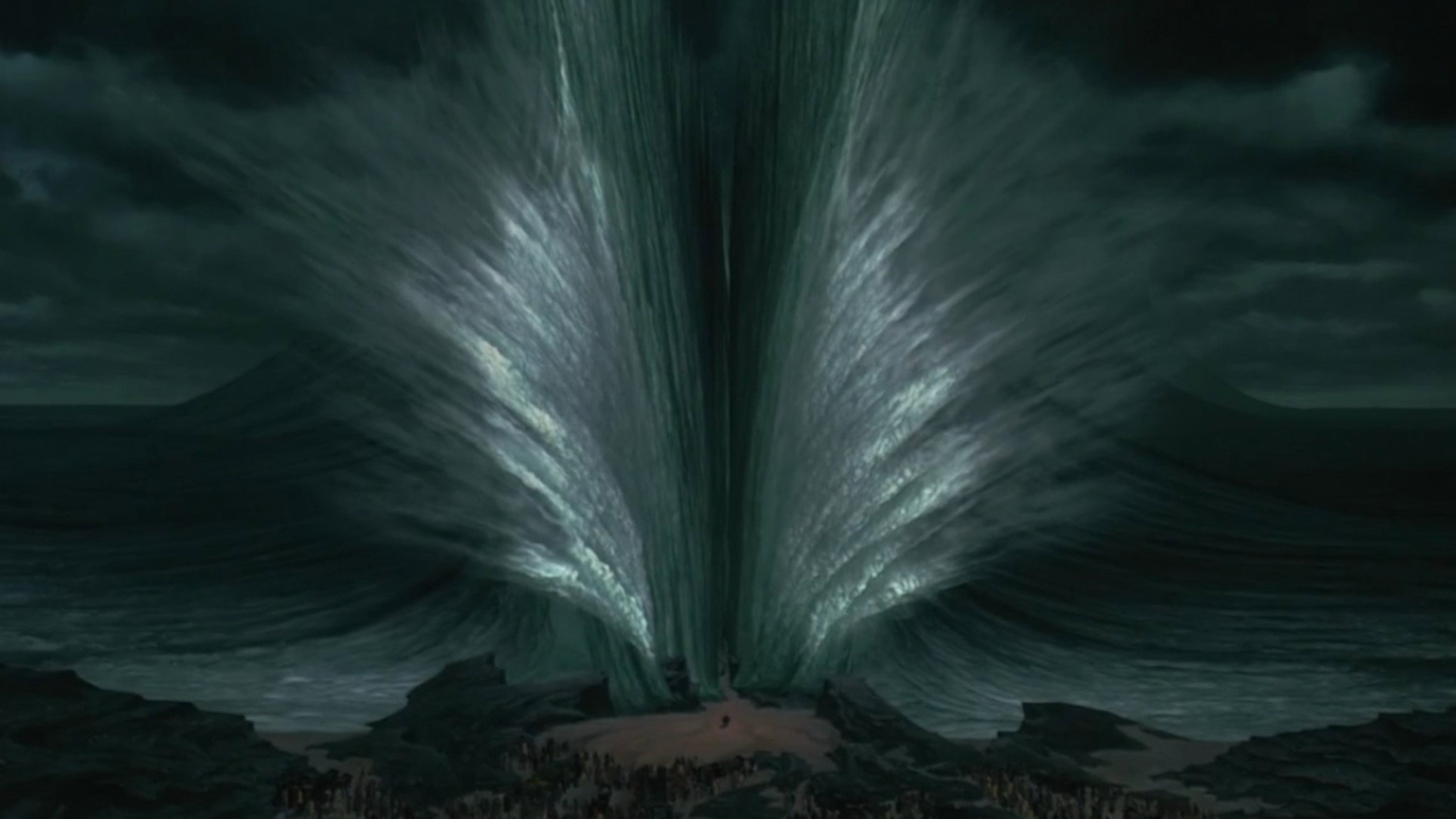
Most critics like it, and the praise goes to the animation. Nearly every review singles out the scale of the set pieces, the plagues and the parting of the Red Sea above all, and the blend of hand-drawn work with computer imagery that makes them possible. Several find the film unusually serious for a cartoon and count that in its favour: it treats the Moses story as a biblical epic rather than a children’s adventure, and the brotherly relationship between Moses and Rameses is credited with giving the spectacle a human centre. The voice cast draws steady approval, as does Zimmer’s score.

The reservations cluster around the songs, which more than one critic calls conventional or hokey, and around whether an earnest tone leaves both children and adults slightly short-changed. The spread is wide: the later reviews, from Collider and Polygon, rank it among DreamWorks’ best, while The Independent stands alone in dismissing it as bloated kitsch.

RogerEbert.com
18 December 1998 · Roger Ebert
85*

Ebert praises the film as one of the best-looking animated features ever made, noting how animation frees the story from the constraints of live-action epics like DeMille's versions. He highlights the visual imagination in the prologue, Red Sea parting, and character work, while appreciating its seriousness and complex themes.

Read the full review →
Variety
10 December 1998 · Glenn Lovell
85*

Lovell hails it as an outstanding artistic achievement that ups the ante in feature animation, rich in historic detail and eye-popping tableaux that sometimes outdoes DeMille. He praises the seamless blend of traditional animation and CGI along with the score and songs, while noting its dour tone may limit broad appeal.

Read the full review →
Los Angeles Times
18 December 1998 · Kenneth Turan
80*

Turan lauds the sheer spectacle of the animation, achieved through a mix of traditional and computer methods, as a succession of visual wonders. He finds it a serious venture that effectively depicts the plagues and encourages returning to the biblical source.

Read the full review →
Radio Times
★★★★ · Jason Caro
80

This rousing animated take on the Moses story delivers visual grandeur and epic set pieces like the parting of the Red Sea that rival Disney at its best. The strong voice cast and stirring songs enhance the achievement, though some dramatic licence is taken.

Read the full review →
The New York Times
18 December 1998 · Janet Maslin
75*

Maslin calls it a well-made work that succeeds more than expected as a biblical epic in animation, commending its visual spectacle and gravitas once it settles into the story. She notes it works best when relying on the strong source material rather than lighter elements.

Read the full review →
Empire
1 January 2000 · Ian Freer
70*

The critic praises the film's epic storytelling, stunning visuals, grand themes and emotional set pieces while noting the strong dynamic between Moses and Rameses. It is seen as a worthy but earnest effort that may not fully satisfy either children or adults.

Read the full review →

Cast

Awards

Academy Awards, 1999

Nominated
Best Original Musical or Comedy Score

Annie Award for Best Animated Feature, 1999

Nominated
Annie Award for Best Animated Feature

Critics' Choice Awards, 1998

Nominated
Best Animated Feature

If you liked this, try…

The Ten Commandments poster

The Ten Commandments

1956 · DeMille’s version, with Heston and real sand; see what the animators were arguing with.

The Hunchback of Notre Dame poster70

The Hunchback of Notre Dame

1996 · Disney’s own attempt at gravity, with a villain’s song the priests here should have studied.

The Iron Giant poster88

The Iron Giant

1999 · Hand-drawn, same era, equally serious about a child and a weapon; quieter and sadder.

The Secret of Kells poster

The Secret of Kells

2009 · Irish, illuminated, a boy and a book; flat drawing carrying the sacred without songs.

The Gospel According to St. Matthew poster

The Gospel According to St. Matthew

1964 · Pasolini’s plain-faced scripture, no spectacle, for when you want the story on its own.