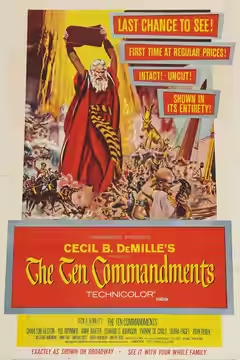
DeMille’s last and largest film is sincere, enormous and stiff as a temple frieze. The set pieces still land, the dialogue never does, and 220 minutes asks a great deal of an evening. Worth it for the Exodus and for Yul Brynner.
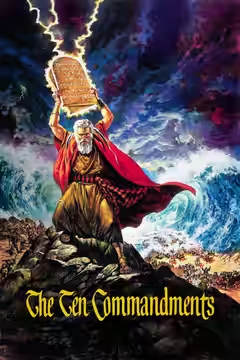
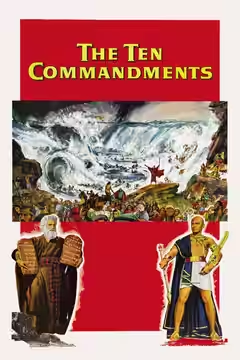
Cecil B. DeMille had told this story once before, as a silent film in 1923, and he ended his career by telling it again with sound, colour, a cast of thousands and a running time of 220 minutes. He walks on before the titles to introduce it himself, from behind a curtain, and says the film is about whether men belong to the state or to God. The Ten Commandments is sincere, enormous and stiff, and it is worth an evening, provided you know which evening.
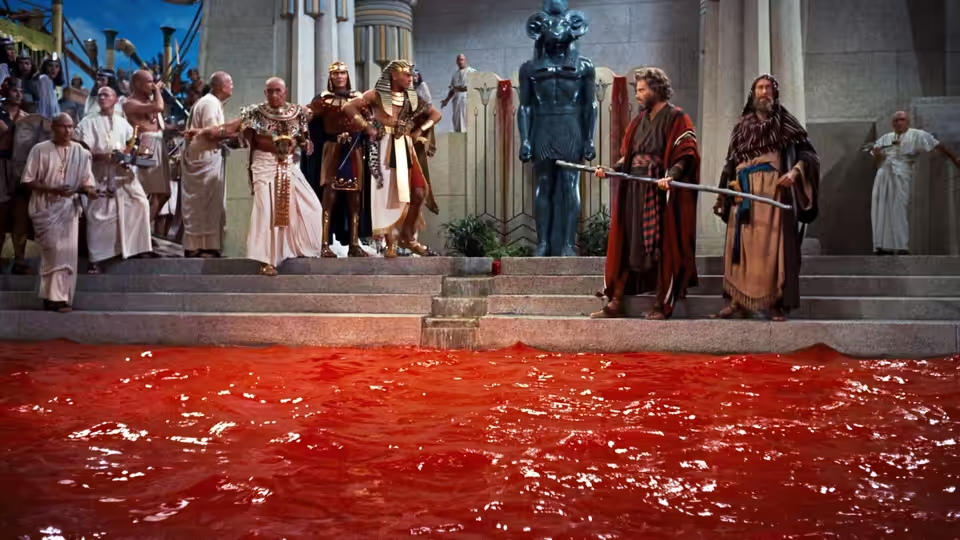
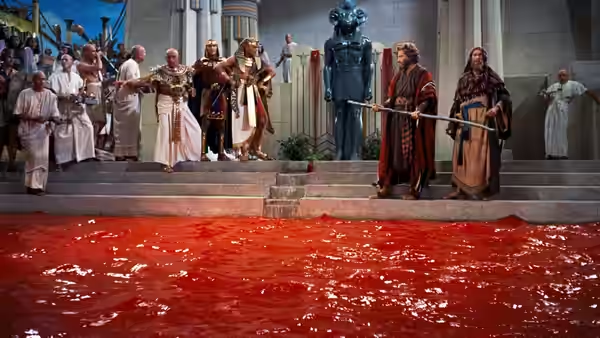
The spectacle is the reason, and it still works. Loyal Griggs shoots the palace in deep reds and gold, lit as if by torches, and the desert in hard flat noon so that every figure throws a black shadow on the sand. When the Hebrews leave Egypt, DeMille simply fills the frame with them: carts, goats, geese, old men on litters, children on shoulders, a column that goes back to the horizon. We expected to be counting extras. Instead we found ourselves moved, more than we would care to admit, by the plain sight of that many people walking out through a gate.
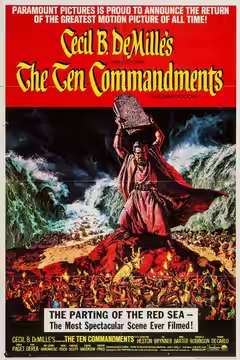
The plagues are stranger and better. The tenth is a green mist that comes down out of the sky and creeps along the streets and under doors, while Elmer Bernstein’s score drops to a low held chord and the film cuts inside to a lamp-lit Passover meal where a family eats and listens. We were properly unnerved. The parting of the sea has been laughed at for decades and it holds; you can see the join where the water was run backwards, and it does not matter, because the walls are high and the people small and DeMille lets them stand there long enough to be afraid.
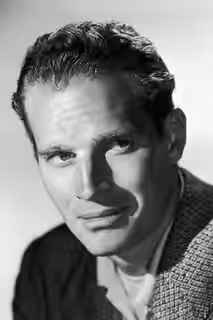
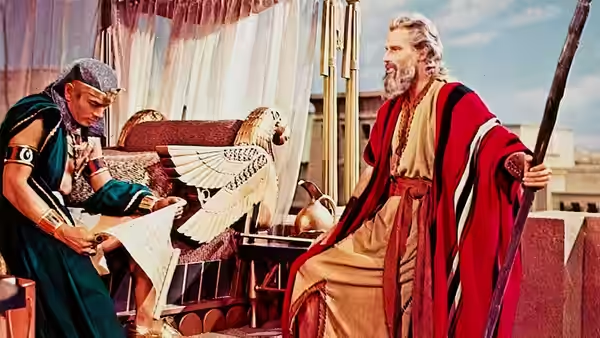
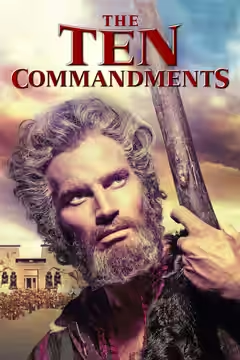
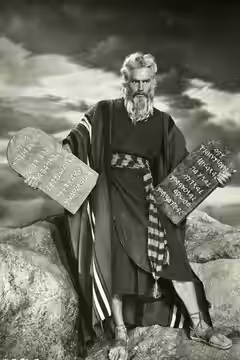
Then somebody speaks. Four screenwriters, Æneas MacKenzie, Jesse Lasky Jr., Jack Gariss and Fredric M. Frank, worked from three novels, and between them they have produced dialogue that sounds like inscriptions read aloud. Nobody says a thing once if it can be said as a title. Charlton Heston plays Moses as a monument that has learnt to walk, which suits the second half, when he comes down the mountain with white in his beard, and hobbles the first, when he is meant to be a young prince in love.
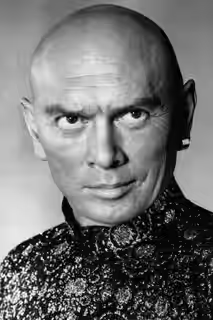
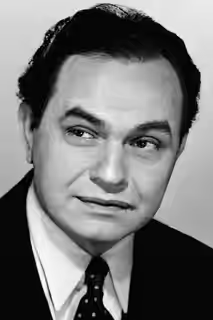
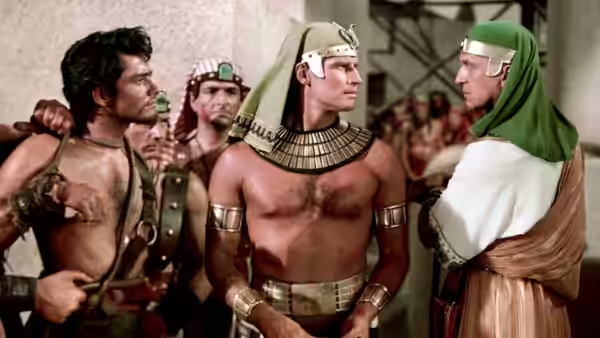
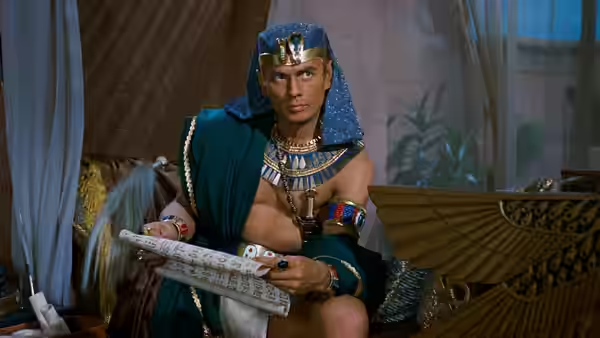
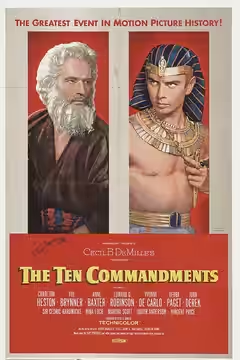
Yul Brynner is the best thing in it. His Rameses stands with his arms folded and his chin down and waits for other people to finish, and every scene he enters gets colder. Anne Baxter, as Nefretiri, plays the princess who wants Moses as if she had wandered in from a far racier picture, all purring and eyelids, and she is the one performer who knows what kind of film this is and enjoys it; we laughed at her, then realised she meant us to. Edward G. Robinson plays the overseer Dathan with the voice and manner of a Chicago ward boss, which is absurd and also the liveliest acting in Goshen. Cedric Hardwicke’s tired, dry Sethi is the one Egyptian who seems to have read a book.
The length is the trouble, and it is not evenly spread. The stretch in Midian, where Moses meets Sephora (Yvonne De Carlo), is where the film sits down, and so did we, and we looked at the clock. Anne Bauchens keeps the crowd scenes clear, so we always know where Moses is in a frame of five thousand people, but she lets the two-shots run until the lines have been said twice. Bernstein’s brass tells us how to feel at every entrance; it is at its best when it goes quiet, as it does under the mist. Edith Head, Dorothy Jeakins, John Jensen, Ralph Jester and Arnold Friberg dress the court in colours nobody has since dared, Nefretiri in turquoise and gold with a collar the width of her shoulders, Rameses bare-chested under a stiff blue crown, and the Egyptians look like painted wood, which is the intention.
Against DeMille’s own record this is the largest and the most solemn and not the most fun. It is also the last of its kind made by the man who invented the kind, and there is no irony in it anywhere, which is rarer now than it was. Watch it with a break where the intermission was, with company who will answer Heston back, and do not expect the people to be as interesting as the weather. It carries a U certificate and runs 220 minutes, and you will feel both.