William Wyler’s Ben-Hur earns its long evening through the chariot race and the tension between Charlton Heston and Stephen Boyd. The solemn instruction needs more patience than the action ever does.
William Wyler’s Ben-Hur is a good historical adventure that would be better with fewer solemn speeches. Its biblical story repeatedly pauses to make sure we are taking it seriously. The people still matter, particularly when Charlton Heston and Stephen Boyd share the screen. At 212 minutes, they need to.
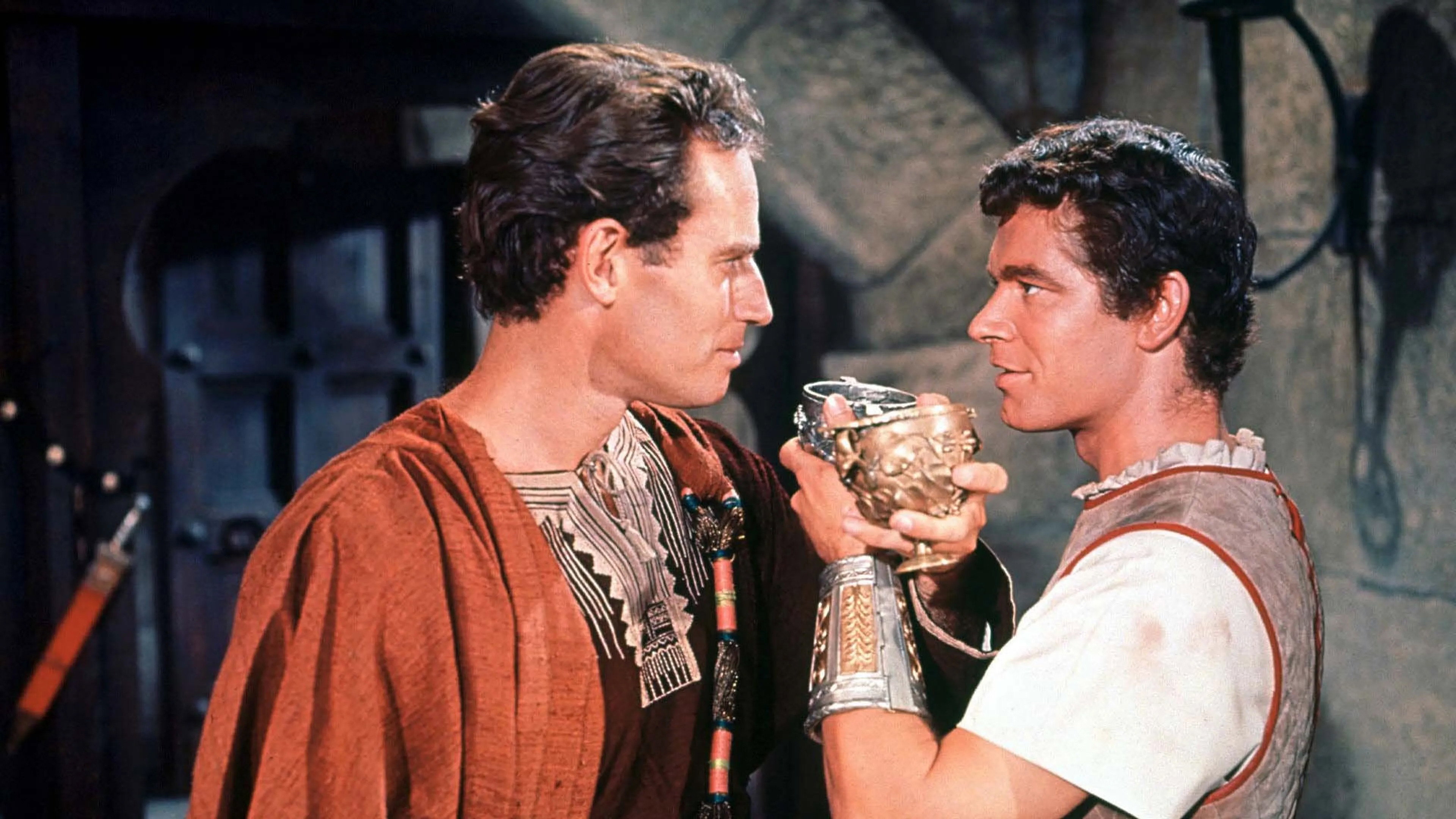
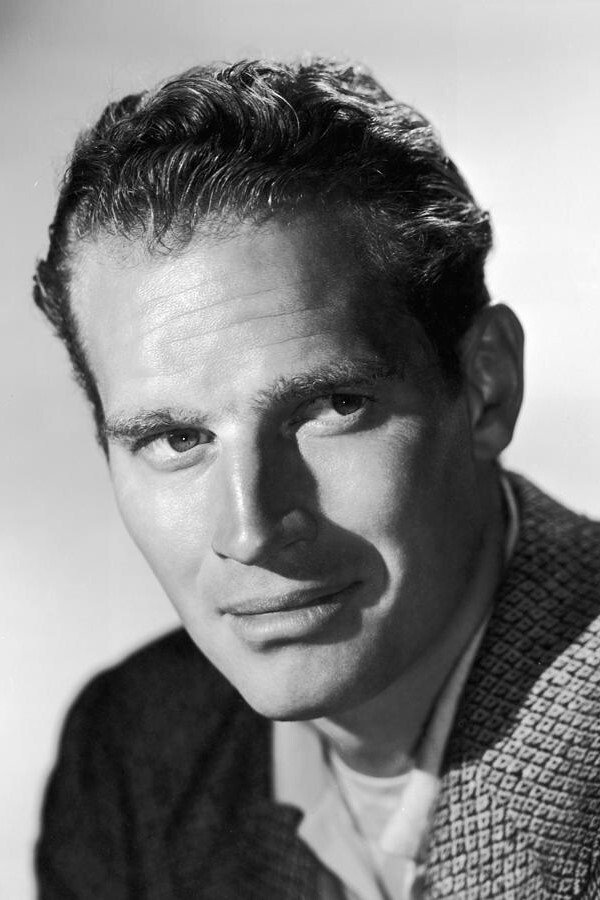
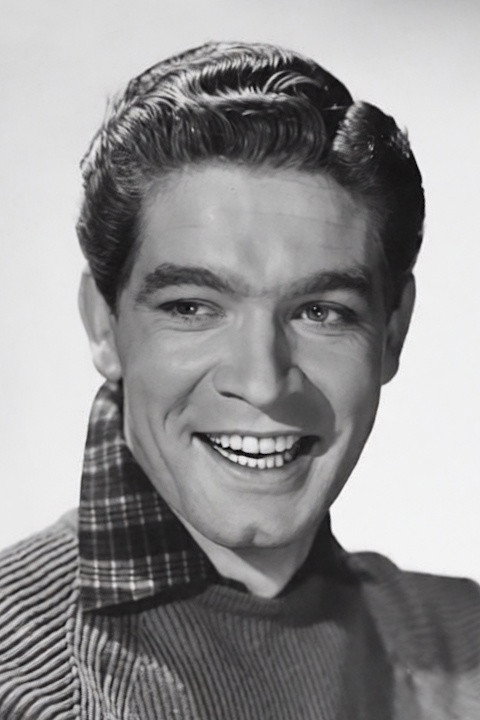
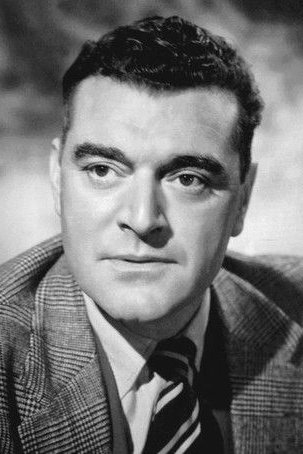
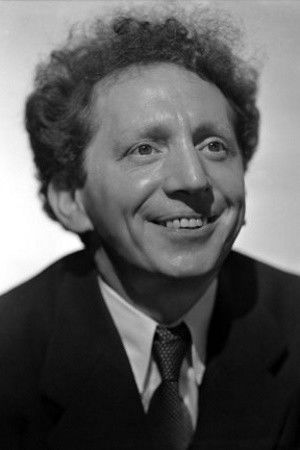
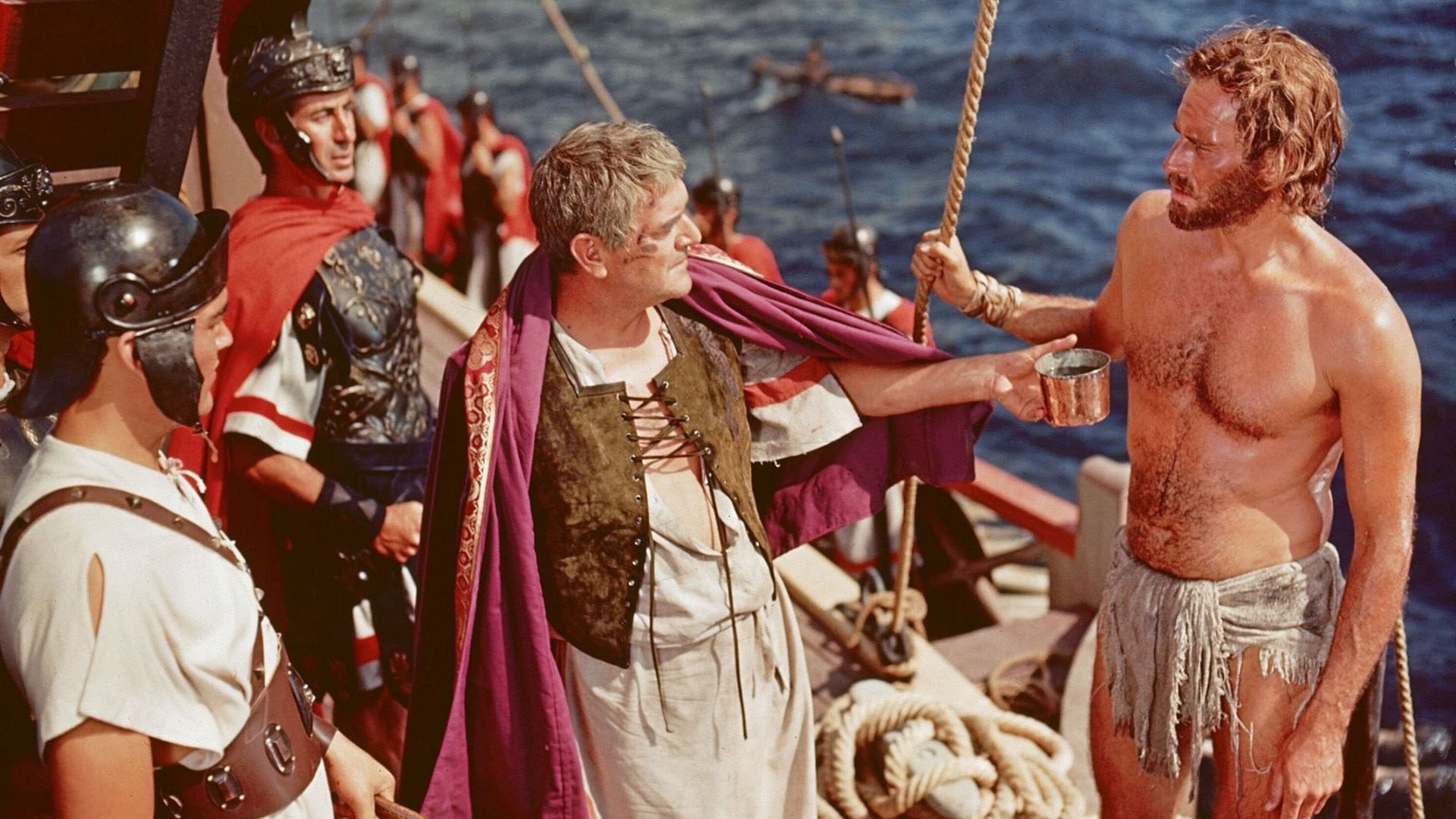
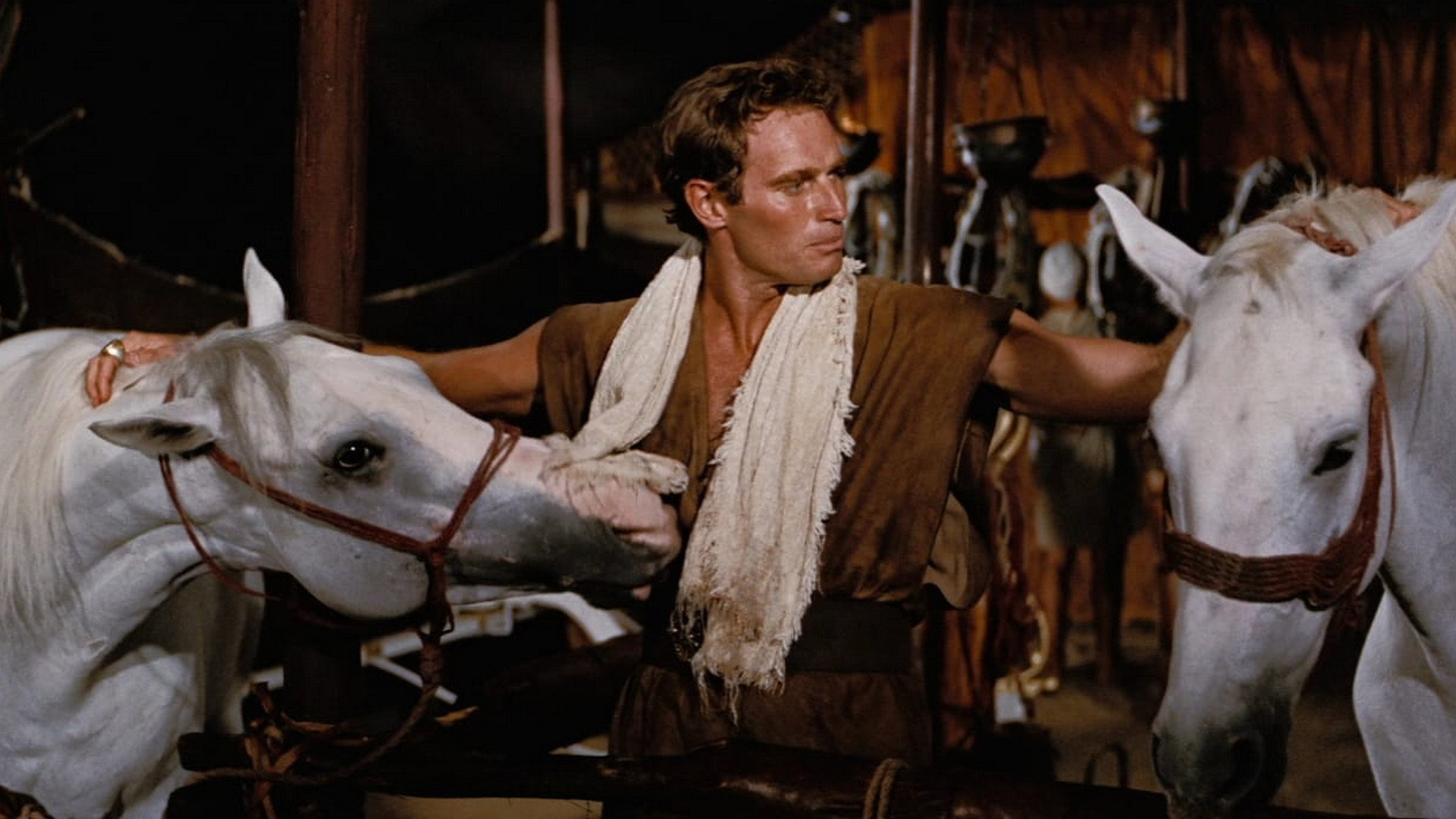
Heston plays Judah Ben-Hur with a formality that can look stiff, especially when the dialogue requires him to announce a feeling. Boyd gives Messala enough emotional pressure to make that reserve interesting. Their reunion has the discomfort of two people for whom meeting again matters more than either would care to admit. The attraction in their attention to one another is plain enough without the film spelling it out. These scenes give Heston something more demanding to do than look resolute.
Robert Surtees’s cinematography keeps the large-scale action readable across the wide frame. The space around the actors makes their relative positions clear, so we can take in the surroundings without losing track of the people. The grand sets occasionally threaten to dwarf the actors, yet the reunion shows how much interest two figures can carry. There is pleasure in being allowed to look across a scene instead of being hurried past its surroundings.
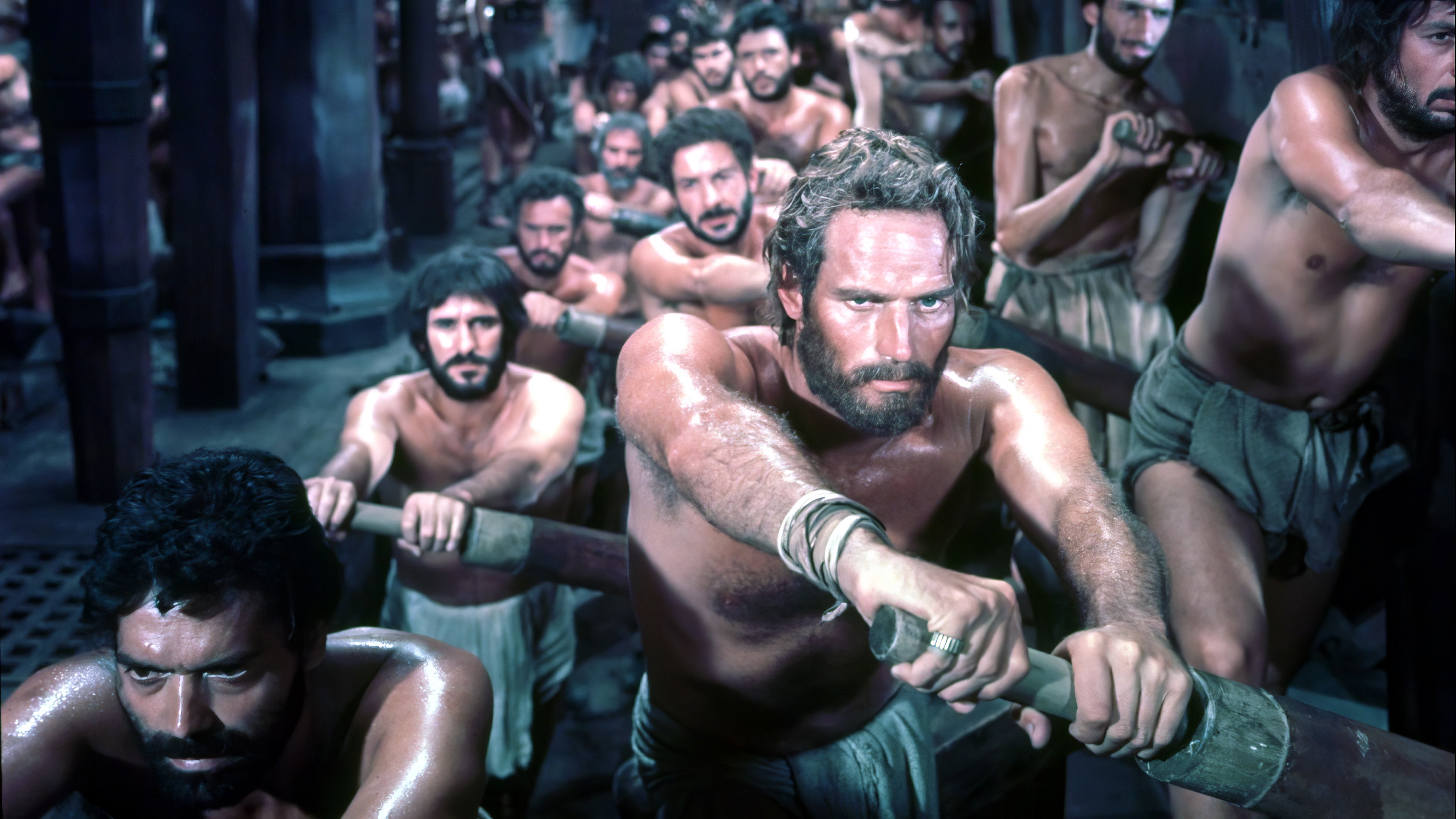
The editing by Ralph E. Winters and John D. Dunning is most convincing in the chariot race, where the sustained contest earns the attention the quieter passages sometimes demand. We were gripped by it: the horses and chariots remain clear enough for us to follow the racing, and that makes the danger register. The attack on the Roman fleet has considerable force too, with the action carrying more urgency than the speeches. Neither sequence needs a running explanation of why it matters.
Miklós Rózsa’s score understands the film’s taste for grandeur and often makes that grandeur stirring. Its weight suits the scale of the images, although the solemn mood becomes wearing when a scene is already pressing hard for reverence. That is a problem shared with Karl Tunberg’s screenplay, adapted from Lew Wallace’s novel. Too often, the words insist on the moral importance of something the drama could have left us to judge.
The difficulty is not simply the running time. The pace slackens whenever the film repeats a moral lesson, and the serious delivery makes those repetitions harder to forgive. Wyler is more engaging when the characters’ feelings complicate their grand declarations, as Heston and Boyd demonstrate together. A historical adventure can accommodate faith, melodrama and a generous amount of ceremony, but here the ceremony sometimes leaves the actors waiting for the next useful exchange.
Give it an evening when the length will not become a negotiation over bedtime. This is worth seeing for anyone with an appetite for historical adventure and some tolerance for being instructed. A break is permitted; the film’s solemnity need not extend to the sofa.