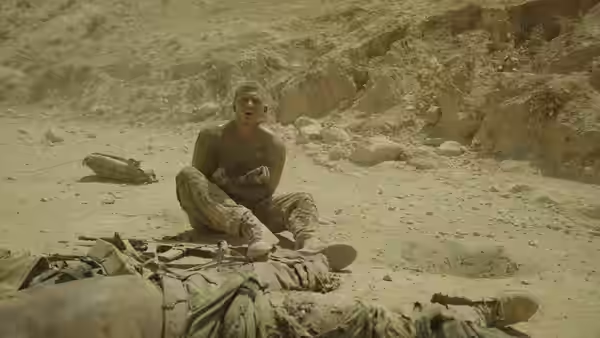
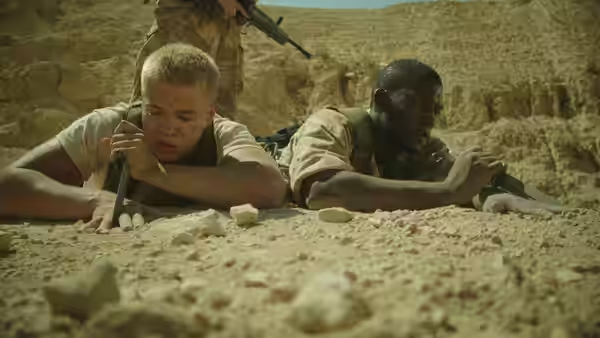
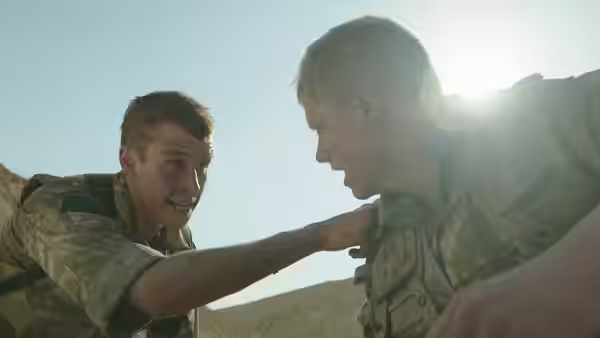
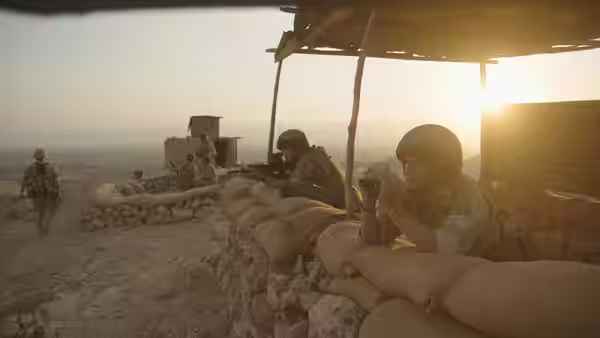
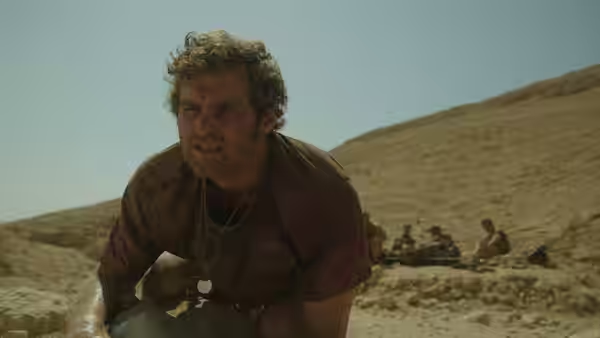
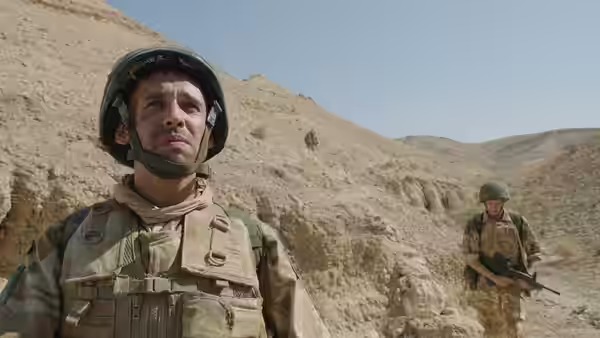
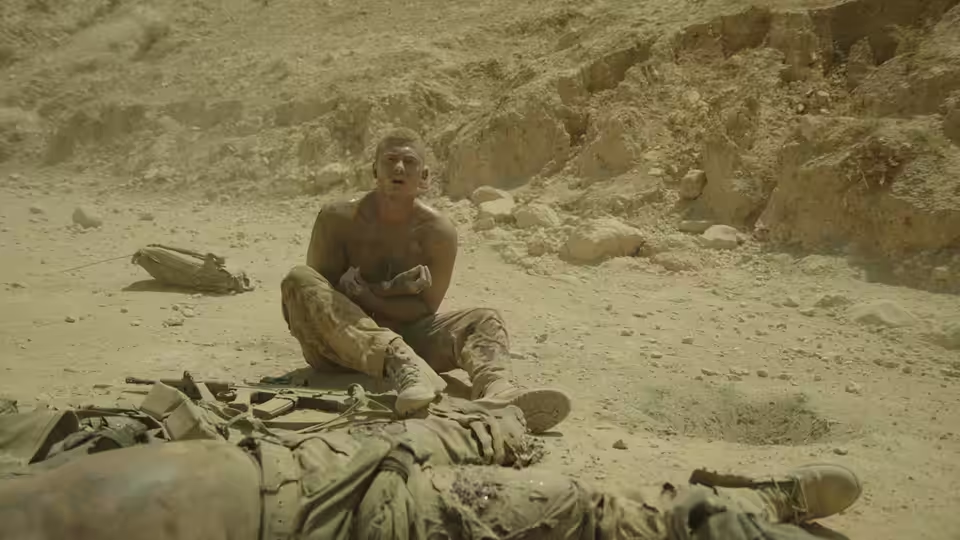
A soldier sits beside a comrade lying on the rocky desert ground
Film review

Kajaki

2014 · Directed by Paul Katis · 1h 48m · IGAC M/14

In a sentenceNobody needs to charge anywhere when the ground is already trying to kill them

In Afghanistan, British soldiers find themselves trapped in a minefield, where reaching a comrade can put another man in danger. Among them are Tug (Mark Stanley), Snoop (Malachi Kirby), Spud McMellon (Ali Cook) and Mark Wright (David Elliot). They need to get out, but the ground between them and safety cannot be trusted. With movement itself a threat, helping one another means weighing the need to act against the risk of setting off a mine. The men have to rely on one another while trying to find a way through an ordeal that leaves them little room to move.

Plays from YouTube when you press play; nothing loads from them until then.

Fi1m review

Paul Katis makes a tense, convincing war film from soldiers’ efforts to survive a minefield. The cast make the danger matter, though the ordeal grows repetitive and the wider war receives little attention.

Kajaki is a good war film built around an ordeal that scarcely needs dramatising: British soldiers are trapped in a minefield in Afghanistan. Paul Katis trusts that predicament to hold our attention, and for much of the film it does. The immediate question is how anyone can help without becoming another person who needs help. We recommend it for that concentrated fear and for a cast who make the soldiers convincing company. Its limitations become clearer as it tries to sustain the pressure over its 108 minutes.

Tom Williams’s screenplay gets considerable help from the ensemble’s believable familiarity. Mark Stanley’s Tug, Malachi Kirby’s Snoop and Ali Cook’s Spud McMellon feel like men who know one another, rather than performers waiting for a line that will distinguish them. David Elliot, as Mark Wright, gives the group a particularly strong human presence. We believe in their concern for one another, which matters more here than a carefully rationed personal history.

Chris Goodger’s steady cinematography is crucial to the suspense. An unsteady camera would give us another problem to solve; these images let us concentrate on the men and the ground around them. We were frightened by the prospect of a soldier trying to reach another soldier, because the minefield makes an ordinary act of help potentially disastrous. The director gets considerable tension from that simple restriction. The open space offers no comfort when nobody can trust it.

Erik Rehl’s production design supports the film’s convincing physical realism; the minefield never feels arranged for our benefit. There is no pleasure here in surveying the ground around the soldiers. Brin’s editing gives the predicament time to register, keeping us waiting rather than hurrying towards the next release of tension. This is effective suspense work, although the patience required of the audience becomes harder to justify as the film continues.

The problem is repetition. Once the danger is understood, another stretch of uncertainty does not necessarily deepen our involvement, and the screenplay cannot always find enough variation within its restricted situation. Brin preserves the pressure but cannot prevent parts of the film from feeling prolonged. We remain concerned about the soldiers; we also begin to notice how often the drama asks us to have much the same response.

The narrow view of the war is a more complicated limitation. Paul Katis makes us attend to British soldiers in Afghanistan while showing little curiosity about the wider conflict, and that matters in a film so committed to credibility. Keeping political debate outside the minefield does make the immediate ordeal easier to follow. It also leaves the film with little to offer anyone hoping to understand the war beyond these men’s experience. Much depends on how much of that wider account we expect from a survival thriller.

There is also a closing-credits ballad that presses for an emotion the performances have already earned. It is an unnecessary instruction after such largely unsentimental work, and weakens the director’s restraint without undoing it. The cast deserve better than that final nudge. Choose Kajaki for a tense, physically convincing account of men trying to keep one another alive, provided a tightly confined survival story is enough for the evening.

Critical consensus AI synthesised

73
Positive
7
Mixed
2
Negative
0

Most critics find Kajaki a tense, engrossing account of soldiers trapped in a minefield, with praise centred on its stripped-down approach and convincing physical realism. The reviews repeatedly credit the ensemble’s believable camaraderie, alongside the direction and effects work, for making the ordeal feel immediate. Suspense is the clearest point of agreement: even the more reserved responses acknowledge the force of the film’s close attention to the soldiers’ predicament.

Reservations concern how long that tension can sustain the drama, with several critics finding repetition or stretches that drag. The film’s limited political scope divides opinion: Little White Lies welcomes its nonpartisan approach, while The Guardian questions its lack of curiosity about wider issues. Sentimentality towards the close also draws objections. The spread is broadly favourable rather than sharply polarised, with mixed assessments questioning the dramatic shape without dismissing the realism or performances.

Empire
28 October 2014 · Nev Pierce
85*

The critic finds it a blistering, intensely effective survival war film. They single out its stripped-down approach and David Elliot’s performance in a very human ensemble.

Read the full review →
Radio Times
★★★★ · Trevor Johnston
80

The review finds the film a nerve-shredding experience. It praises the cast, director and effects crew for their commitment to reality.

Read the full review →
Time Out
24 November 2014 · ★★★★ · Dave Calhoun
80

Calhoun gives the film four out of five, describing it as a low-key but high-tension account of British soldiers in Afghanistan. The review singles out the reconstruction’s tension as a strength.

Read the full review →
Variety
28 November 2014 · Guy Lodge
78*

Lodge finds the film an impressively disciplined, tense portrait of soldiers trapped in a minefield. He praises its grounded realism and taut handling of suspense, while faulting the closing-credits ballad.

Read the full review →
The Guardian
27 November 2014 · Andrew Pulver
70*

Pulver finds the film nerve-racking and powerfully claustrophobic, despite its lack of curiosity about wider political issues. He singles out its suspenseful recreation of the soldiers’ ordeal in the minefield.

Read the full review →
The Hollywood Reporter
14 November 2014 · Leslie Felperin
70*

Felperin finds the film well-made, tense and moving, though dramatically repetitive and politically narrow. She especially praises its stable cinematography and the ensemble’s believable camaraderie and commitment.

Read the full review →

Straight answers AI written, from our review

Is Kajaki worth watching?
Kajaki is worth watching for its tense minefield survival story and convincing ensemble, and we score it 77 out of 100. We recommend it to viewers who want a war thriller focused on soldiers helping one another under extreme pressure, though the ordeal becomes repetitive and offers little insight into the wider conflict.
How long is Kajaki, and what is it rated?
Kajaki runs 1h 48m and is rated M/14 by the IGAC in Portugal. It is a thriller and war film.
Where can I watch Kajaki in Portugal?
Kajaki is not on any streaming or rental service in Portugal at the moment. It is available in 16 other countries; change your country at the top of the page to see where. Availability is checked daily.
How violent or frightening is Kajaki, and is it suitable for children?
Kajaki has a UK 15 certificate and is not suitable for children under 15; its minefield predicament makes it a frightening survival thriller. We find the prospect of soldiers endangering themselves to reach their comrades particularly tense. The certificate indicates adult content, but our review does not establish how graphic the violence is.
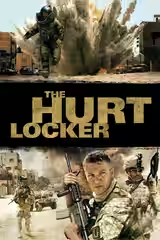
How does Kajaki compare to The Hurt Locker?
Kajaki is the better fit for viewers seeking an ensemble survival story, while we recommend The Hurt Locker for bomb-disposal procedure and its central character’s troubling attraction to danger. Both make explosives frightening, but Kajaki confines its soldiers to a minefield and grows repetitive; The Hurt Locker gives its supporting soldiers less attention than they deserve.
What should I watch after Kajaki?
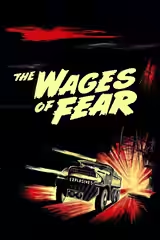
After Kajaki, try The Hurt Locker (2008, Fi1m 86): For more soldiers negotiating lethal explosives, with tension rooted in procedure. Then The Wages of Fear (1953, Fi1m 90): Men, unstable explosives and practical work that becomes almost unbearable to watch; and The Ascent (1977, Fi1m 88): For wartime survival with a harsher landscape and greater moral reach.

Cast

If you liked this, try…

  1. The Hurt Locker (2008, Fi1m 86)For more soldiers negotiating lethal explosives, with tension rooted in procedure.

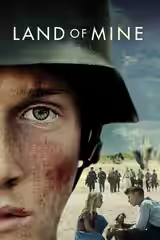
  2. Land of Mine (2015) · not on Fi1m yetAnother minefield drama that makes each careful movement difficult to watch.

  3. The Wages of Fear (1953, Fi1m 90)Men, unstable explosives and practical work that becomes almost unbearable to watch.

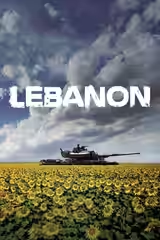
  4. Lebanon (2009) · not on Fi1m yetA confined view of combat that makes limited sight its chief terror.

  5. The Ascent (1977, Fi1m 88)For wartime survival with a harsher landscape and greater moral reach.