Paul Katis makes a tense, convincing war film from soldiers’ efforts to survive a minefield. The cast make the danger matter, though the ordeal grows repetitive and the wider war receives little attention.
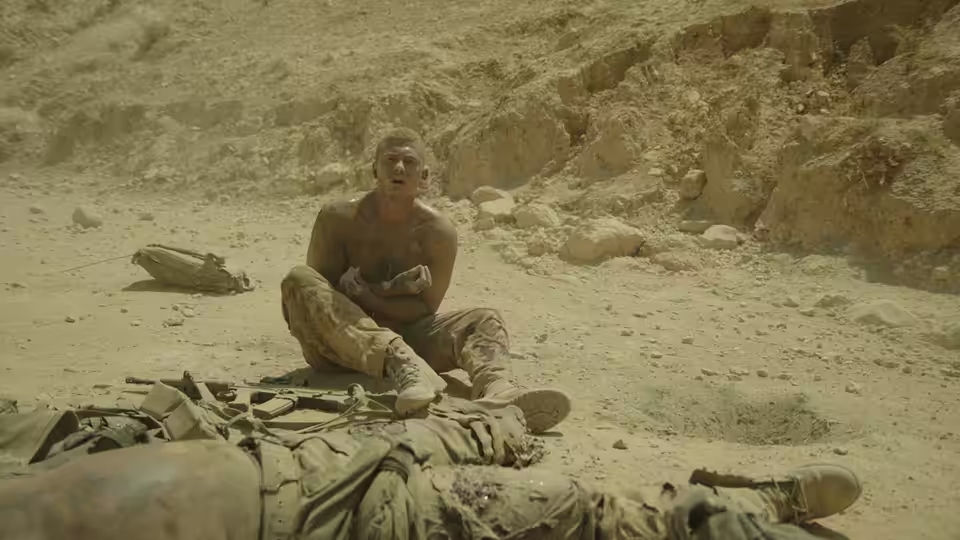
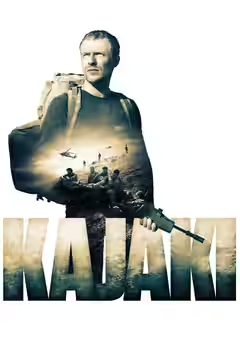
Kajaki is a good war film built around an ordeal that scarcely needs dramatising: British soldiers are trapped in a minefield in Afghanistan. Paul Katis trusts that predicament to hold our attention, and for much of the film it does. The immediate question is how anyone can help without becoming another person who needs help. We recommend it for that concentrated fear and for a cast who make the soldiers convincing company. Its limitations become clearer as it tries to sustain the pressure over its 108 minutes.
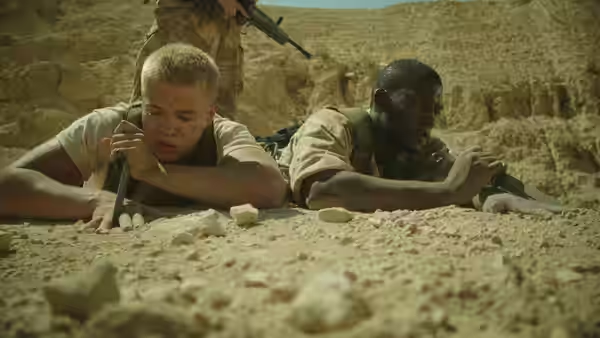
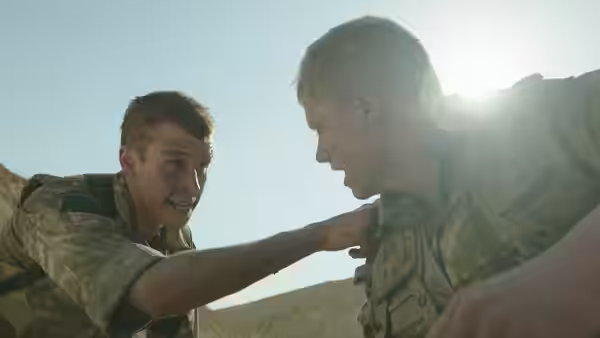
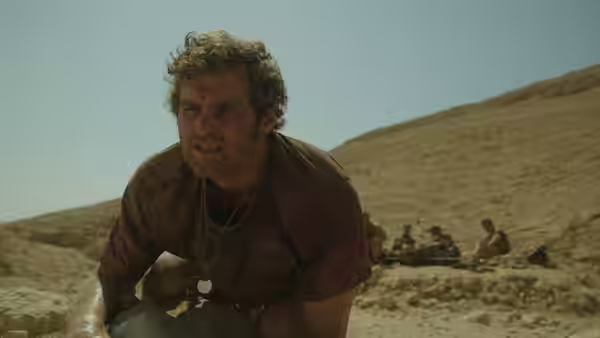
Tom Williams’s screenplay gets considerable help from the ensemble’s believable familiarity. Mark Stanley’s Tug, Malachi Kirby’s Snoop and Ali Cook’s Spud McMellon feel like men who know one another, rather than performers waiting for a line that will distinguish them. David Elliot, as Mark Wright, gives the group a particularly strong human presence. We believe in their concern for one another, which matters more here than a carefully rationed personal history.
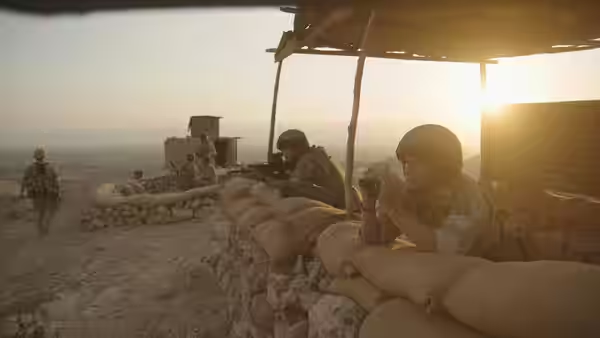
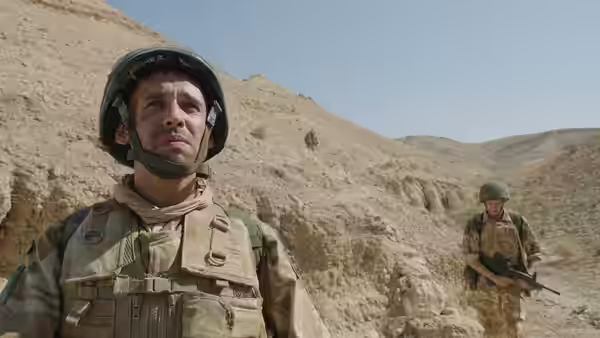
Chris Goodger’s steady cinematography is crucial to the suspense. An unsteady camera would give us another problem to solve; these images let us concentrate on the men and the ground around them. We were frightened by the prospect of a soldier trying to reach another soldier, because the minefield makes an ordinary act of help potentially disastrous. The director gets considerable tension from that simple restriction. The open space offers no comfort when nobody can trust it.
Erik Rehl’s production design supports the film’s convincing physical realism; the minefield never feels arranged for our benefit. There is no pleasure here in surveying the ground around the soldiers. Brin’s editing gives the predicament time to register, keeping us waiting rather than hurrying towards the next release of tension. This is effective suspense work, although the patience required of the audience becomes harder to justify as the film continues.
The problem is repetition. Once the danger is understood, another stretch of uncertainty does not necessarily deepen our involvement, and the screenplay cannot always find enough variation within its restricted situation. Brin preserves the pressure but cannot prevent parts of the film from feeling prolonged. We remain concerned about the soldiers; we also begin to notice how often the drama asks us to have much the same response.
The narrow view of the war is a more complicated limitation. Paul Katis makes us attend to British soldiers in Afghanistan while showing little curiosity about the wider conflict, and that matters in a film so committed to credibility. Keeping political debate outside the minefield does make the immediate ordeal easier to follow. It also leaves the film with little to offer anyone hoping to understand the war beyond these men’s experience. Much depends on how much of that wider account we expect from a survival thriller.
There is also a closing-credits ballad that presses for an emotion the performances have already earned. It is an unnecessary instruction after such largely unsentimental work, and weakens the director’s restraint without undoing it. The cast deserve better than that final nudge. Choose Kajaki for a tense, physically convincing account of men trying to keep one another alive, provided a tightly confined survival story is enough for the evening.