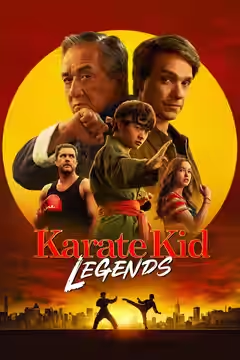
Ben Wang gives this martial-arts sequel warmth and a reason to care. The fights are lively, but the hurried storytelling leaves its new friendships underdeveloped and gives Jackie Chan and Ralph Macchio too little room.
Karate Kid: Legends is a decent, hurried martial-arts film with a lead worth spending more time with than the screenplay allows. Jonathan Entwistle aims for uncomplicated warmth, and for stretches that is enough: friendships form, lessons are delivered and the fighting supplies a little lift. At 94 minutes, it avoids the fatigue of a long franchise instalment. Rob Lieber’s script nevertheless tries to fit a new coming-of-age story and a reunion into a space that barely accommodates either.
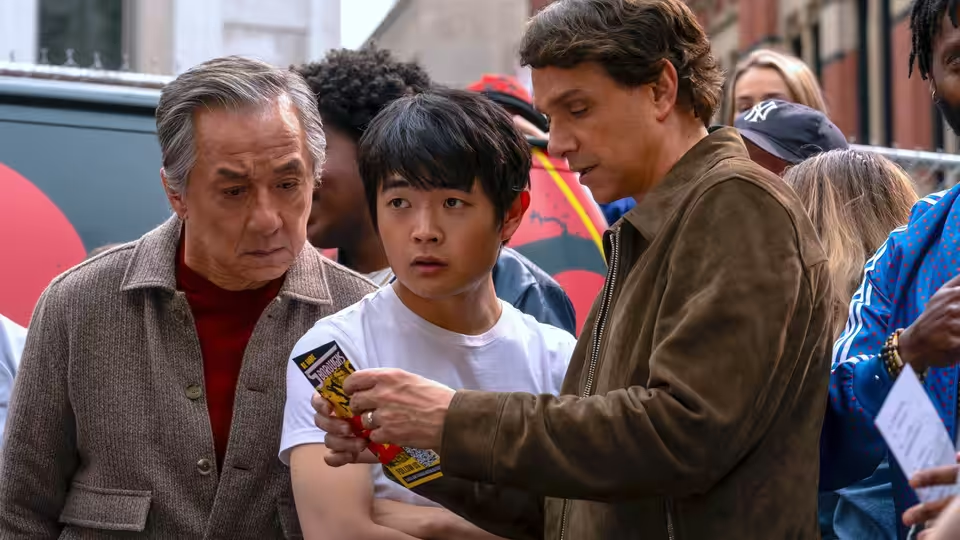
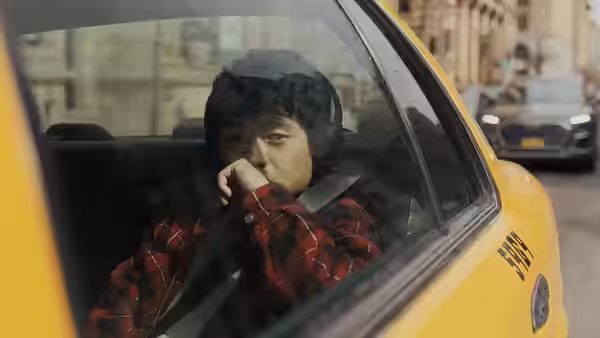
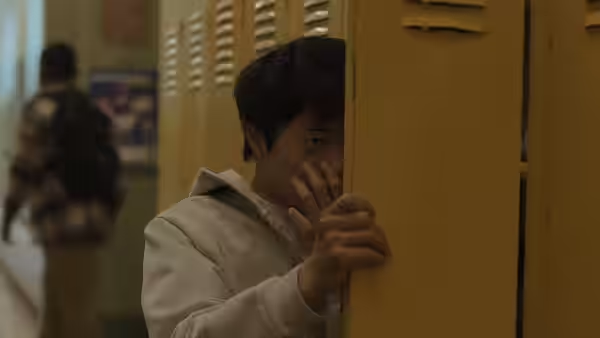
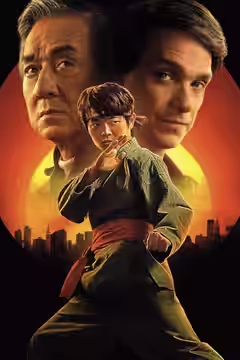
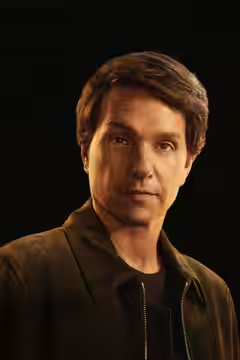
Ben Wang gives Li Fong an appealing shyness without making him seem feeble, and his ease with the other actors is the film’s strongest asset. The friendship with Victor Lipani and Mia Lipani allows for ordinary affection, helped considerably by Joshua Jackson’s unforced charm. We warmed to these three together; their exchanges made us interested in the people before the next bout. That is useful groundwork, and the film could have trusted it for longer.
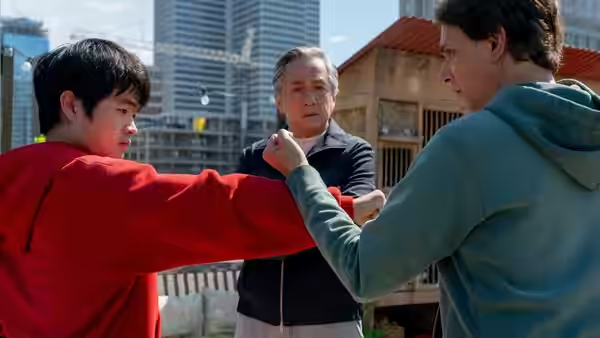
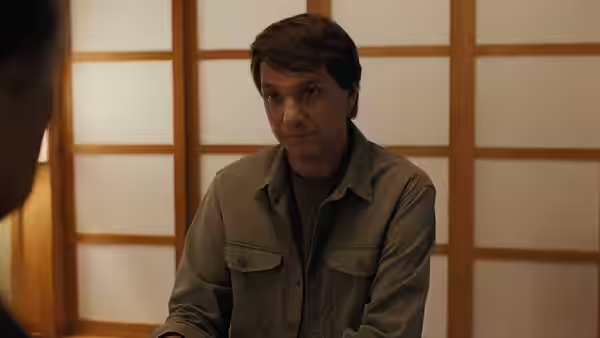
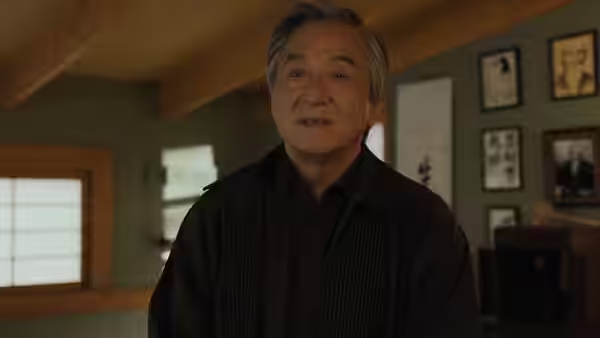
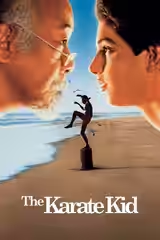
Jackie Chan and Ralph Macchio are enjoyable company, too, as Mr. Han and Daniel LaRusso. Their shared scenes have an easy comic rhythm, and Jackie Chan’s playful approach to martial arts gives the film some welcome lightness. The difficulty is how little time the pairing gets to become more than a familiar pleasure. The film relies heavily on our affection for the returning characters, without giving them much chance to develop a relationship here.
The action is generally more satisfying than the plotting. Justin Brown’s cinematography serves the performers well, while editors Dana E. Glauberman and Colby Parker, Jr. give the fights a brisk, engaging rhythm. Ben Wang can hold our attention through a bout without the script having to tell us what to feel. The same urgency becomes a liability when applied to the tournament and the relationships around it: the cutting keeps us moving before the characters have properly registered what has happened.
Elsewhere, the supporting parts are too slight. Sadie Stanley has less to play as Mia Lipani than the promising friendship deserves, and the antagonists are thin enough to make the confrontations feel prearranged. Maya Sigel’s production design gives the action a serviceable setting without making the surrounding life especially memorable. Dominic Lewis’s music is similarly functional; it cannot make the film’s life lessons feel earned when the writing delivers them so insistently.
There is nothing inherently wrong with a training montage or a predictable contest. A coming-of-age sports film earns those familiar scenes by letting us understand why winning matters to this particular person, and by giving the people watching something at stake. Here, the early friendships suggest a more personal film than the later rush can sustain. The screenplay keeps supplying the expected steps, while Jonathan Entwistle moves through them too quickly for the quieter moments to matter as much as the punches.
We can forgive a certain amount of corn in a film this amiable. There is enough pleasure in the company and enough skill in the fights to make this a reasonable choice for martial-arts devotees, provided expectations stay modest. Come for Ben Wang; allow for a script that keeps checking the clock.