Bradley Cooper’s film about Leonard Bernstein is a good film about a marriage and a thin one about music. Carey Mulligan’s Felicia is the reason to watch; the man at the centre is accurately imitated and only occasionally alive.
Leonard Bernstein is in bed when the telephone rings. The conductor at Carnegie Hall is ill, the assistant will go on that afternoon, and there will be no rehearsal. Bradley Cooper plays the call in a bedroom he shares with a man (Matt Bomer’s David Oppenheim), throws back a curtain, and Michelle Tesoro cuts so that the curtain opens straight onto the stage. It is the best cut in the film and it comes in the first five minutes. Maestro, Cooper’s second film as director and written with Josh Singer, tells us early that it would rather sweep us along than stop and explain.
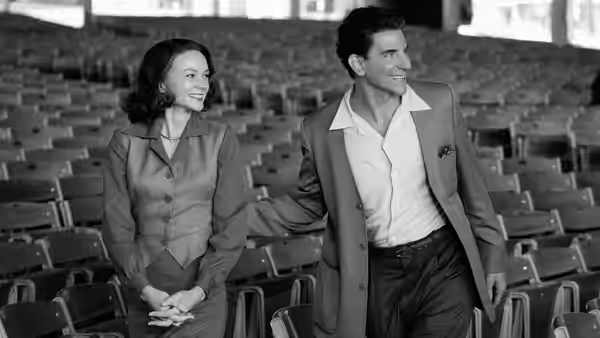
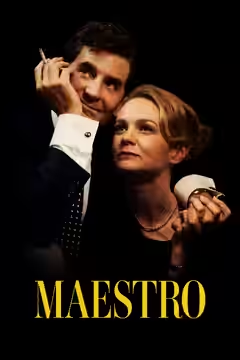
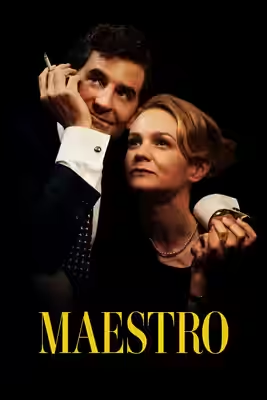
It is a good film about a marriage and a thin one about music. Carey Mulligan, billed first and rightly, plays Felicia Montealegre, the actress who meets Bernstein at a party, understands within an evening what she is taking on, and takes it on. Most critics have rated the film higher than we do, and nearly all of them for Mulligan, and about her we have no argument. Where we part company is the man she marries. We are told, often, that he is a genius. We are almost never shown what he does when he composes.
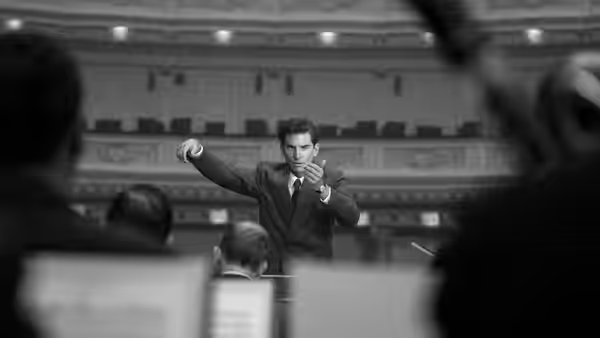
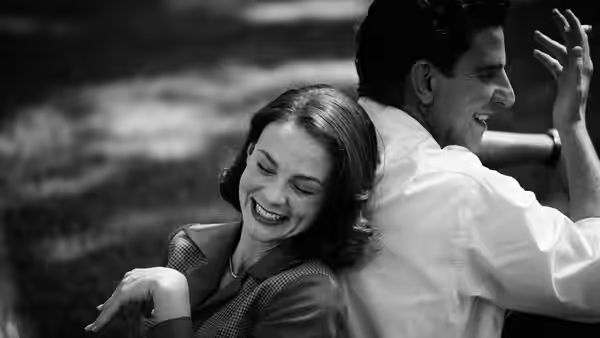
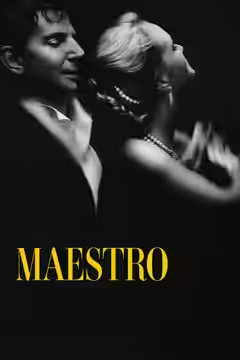
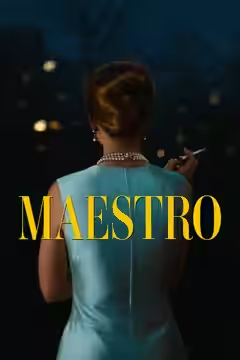
The craft is real. Matthew Libatique shoots the early years in black and white in a narrow frame and the later ones in colour with the frame widened, and the switch tells us time has passed more cleanly than any caption could. Kevin Thompson’s production design gives the Bernsteins pale, high rooms that are always full of other people. Mark Bridges keeps Felicia in tailored lines while Lenny loosens by the decade until he is all cardigan, cigarette and open collar. Early on, Michael Urie’s Jerry Robbins is rehearsing a ballet about sailors on leave, and the film slides out of the rehearsal room into the dance itself, with Lenny and Felicia swept up among the dancers. It is the one stretch where the music tells us something about the two of them rather than playing behind them.
Cooper’s own performance is a careful piece of reconstruction. The voice is dropped and slowed, the hands are never still, the laugh arrives a beat before the joke. We watched him closely and admired the accuracy, and we kept watching him, which is the problem. A performance you keep watching is not a man you have stopped noticing. Cooper the director films Cooper the actor from a fond distance, and the fondness gets in the way. Sarah Silverman, as Bernstein’s sister Shirley, gets the best dry lines and delivers them without looking up. The film treats Bernstein’s affairs with men as a fact of the household rather than a revelation, and that is the right call.
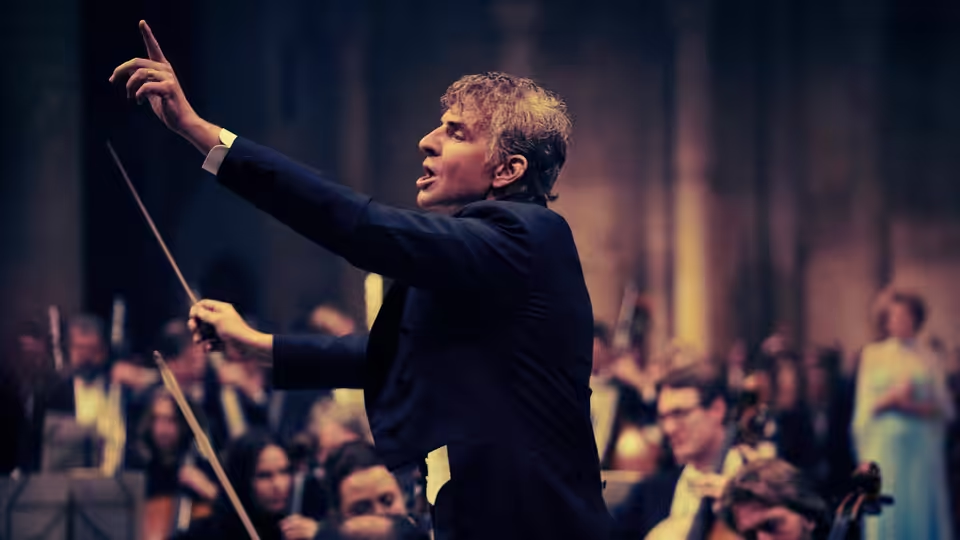
Late in the film Cooper stages Bernstein conducting Mahler in a cathedral, in one long take, the camera close on him, hair plastered down, mouth open, the orchestra loud enough to shake the seat. It got us. We sat forward and forgot we were watching an actor, which we had not managed in the two hours before. When it ended we understood why. It was the first time the film had let us hear a whole stretch of music and simply watch a man do his work. Everything before it had been parties, arguments and montage.
The marriage scenes are where Singer and Cooper’s script is sharpest, because Felicia is allowed to be clever about her situation rather than merely wounded by it. Mulligan plays her as a woman who made a bargain with her eyes open and is annoyed, more than anything, to discover it costs more than she was quoted. Her big speech, delivered in a doorway and mostly without moving, is worth the price of the evening on its own. The second half takes the story somewhere we will not describe.
See it for Mulligan, and turn it up for the Mahler. You will leave knowing how Bernstein smoked, how he laughed and how he treated the people who loved him. You will not be much closer to knowing why the music matters. The film runs 129 minutes and the conducting takes up perhaps six of them.