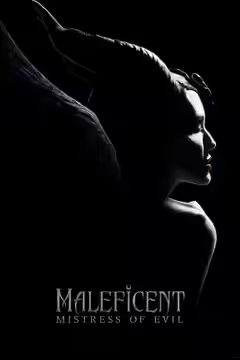
Angelina Jolie and Michelle Pfeiffer make their hostility entertaining, but this crowded fantasy keeps finding less interesting things to do. The costumes and fairyland offer passing pleasures; the muddled story does not earn its scale.
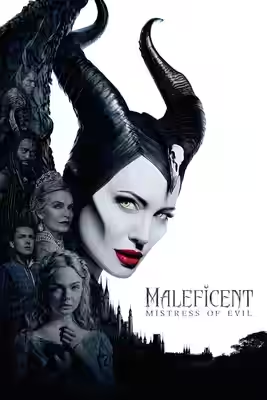
Maleficent: Mistress of Evil has two actors worth watching and an unfortunate determination to keep us looking elsewhere. Joachim Rønning’s fantasy gives Angelina Jolie a formidable adversary in Michelle Pfeiffer, then crowds their confrontation with enough magical business to make both seem underused. There is some pleasure here for anyone who enjoys a queen being unpleasant in elaborate clothes. We would struggle to recommend 119 minutes on that basis, particularly when the film works so hard to dilute its principal attraction.
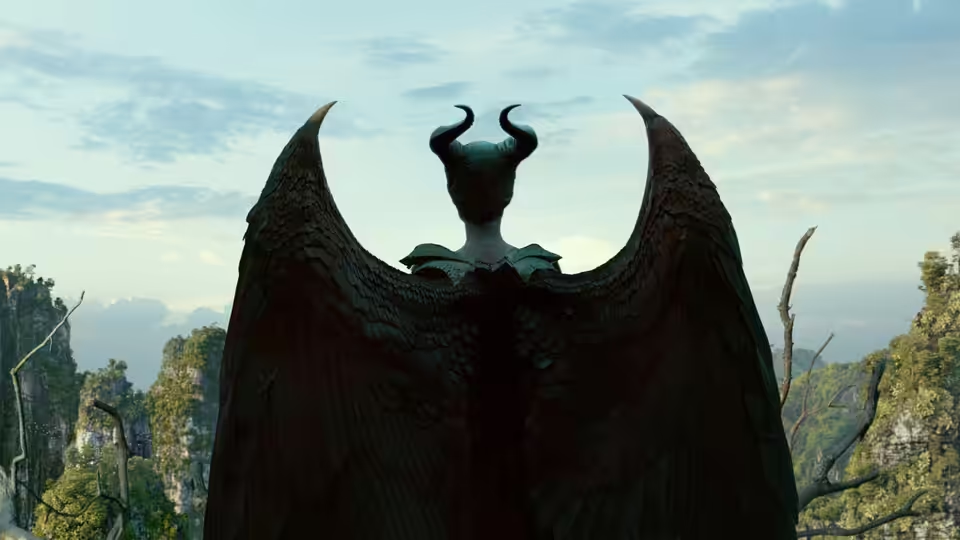
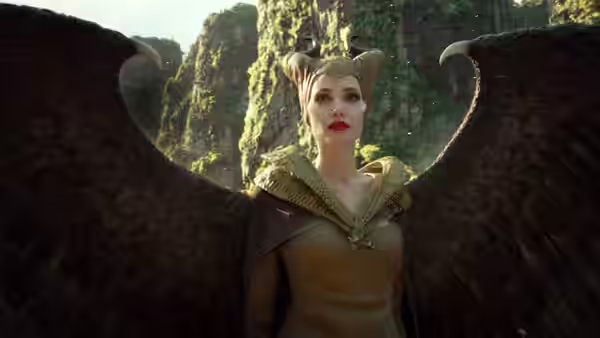
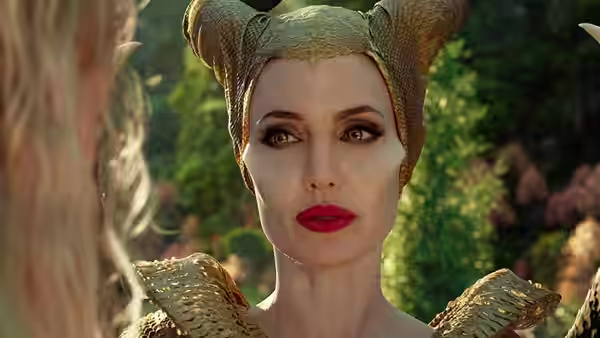
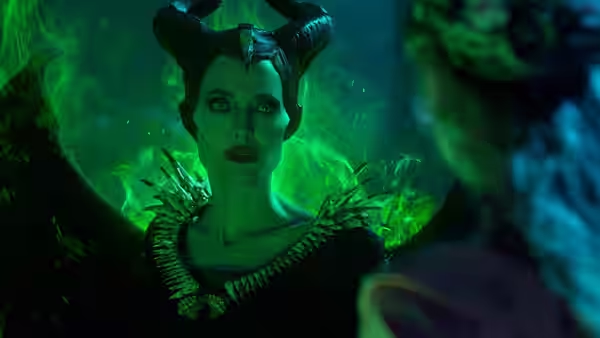
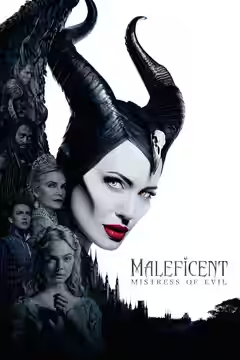
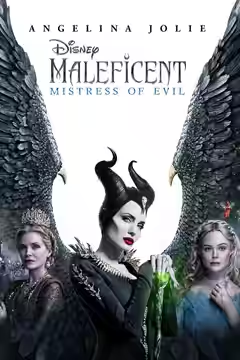
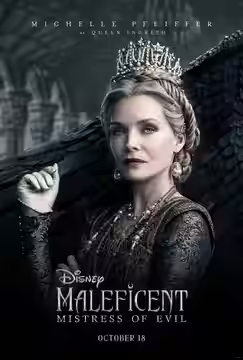
As Maleficent, Angelina Jolie can be fearsome without giving up the comedy. The performance understands how funny such a figure can be without making her harmless. Michelle Pfeiffer’s Queen Ingrith supplies the right amount of malice, and their exchanges make cruelty briefly entertaining. We laughed at their mutual hostility, because both actors let us enjoy the bad behaviour without asking us to mistake it for charm.
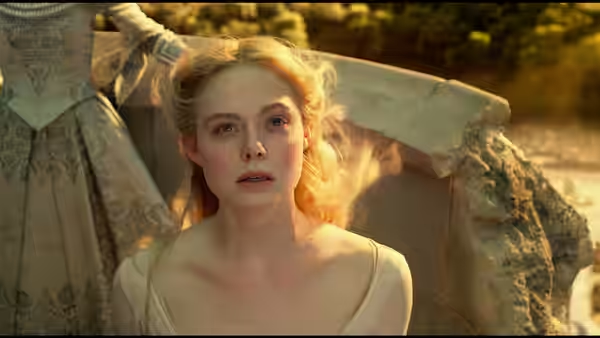
Elle Fanning brings commitment to Princess Aurora, though the writing gives that commitment too little support. The screenplay, credited to Noah Harpster, Micah Fitzerman-Blue and Linda Woolverton, keeps widening the fairy-tale world while leaving its central conflict blunt. Its familiar turns would be less troublesome if the film allowed more time for the personalities already making them interesting. Too often, another stretch of fantasy spectacle arrives instead, and the actors have to compete for our attention with things that cannot answer back.
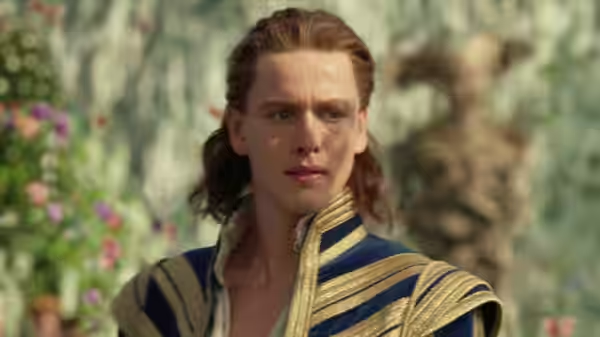
Patrick Tatopoulos’s production design gives the fairy realm enough strangeness to justify a little sightseeing. There are places here that deserve more attention than the busy storytelling allows them. Ellen Mirojnick’s elaborate costumes are a more dependable pleasure, particularly on a queen whose jewellery hardly softens her nastiness. Henry Braham’s underwater images also offer a welcome change from the crowded spectacle. Those passages allow the eye to settle, which becomes a considerable relief amid so many effects.
Laura Jennings and Craig Wood’s editing does not find a steady rhythm between the harsh fantasy conflict and the child-friendly silliness. The shifts keep breaking the tension, making it difficult to know how much weight to give the danger. Geoff Zanelli’s music cannot make those moods feel as though they belong to one story. However much energy the film expends, it rarely sustains a feeling long enough for us to become involved in what happens to anyone beyond the leading women.
A family fantasy can be frightening, and there is no reason to demand that its dangers remain tidy. The problem is the film’s uncertainty about how seriously to take them: the darker material and the comic distractions seem to belong to different evenings. We found the repeated changes of mood tiring, because the silliness keeps interrupting the unease the harsher passages have established. Its PG certificate should not be mistaken for a promise of gentleness.
Fairy tales can unsettle with a single difficult character, and Angelina Jolie supplies one here. Turning so much attention towards computer-generated conflict makes the film feel more ordinary, despite all the extra creatures and scenery. The performances and peculiar sights provide occasional rewards, but the story gives us little reason to stay interested between them. Anyone coming chiefly for Angelina Jolie should be prepared to spend a fair amount of the evening waiting.