Christopher Nolan’s backwards thriller is gripping, darkly funny and carried by Guy Pearce’s vulnerable Leonard. Some supporting characters exist chiefly to keep us guessing, but the difficult structure makes his memory loss frightening.
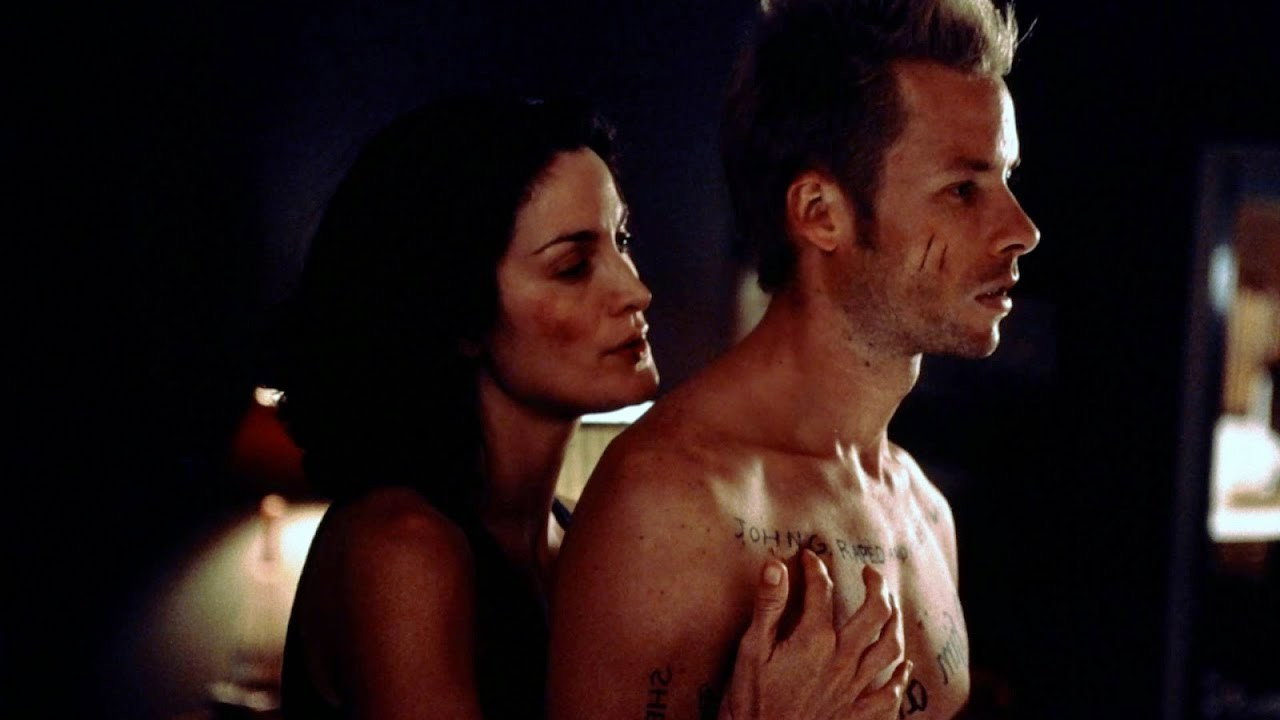
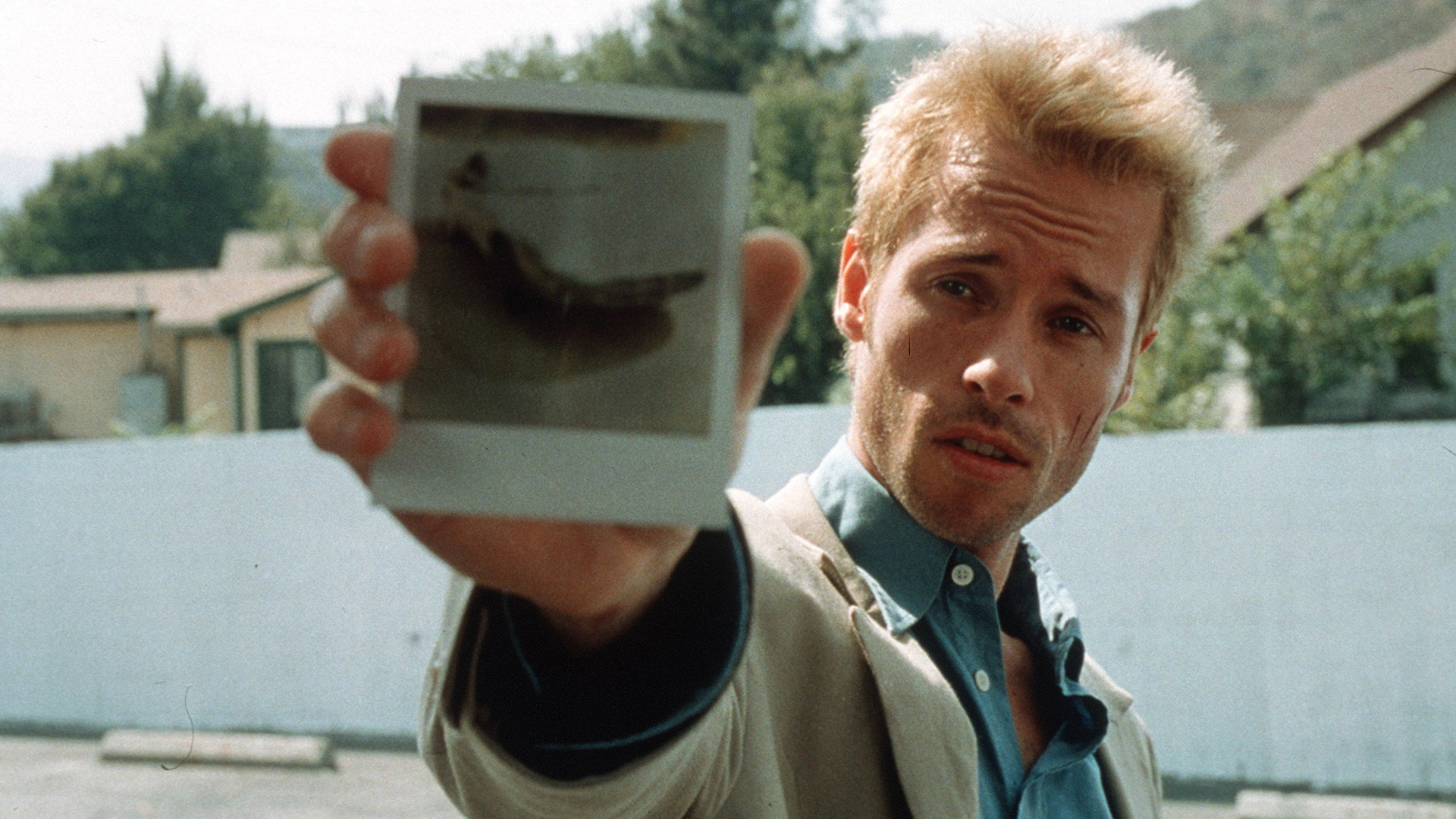
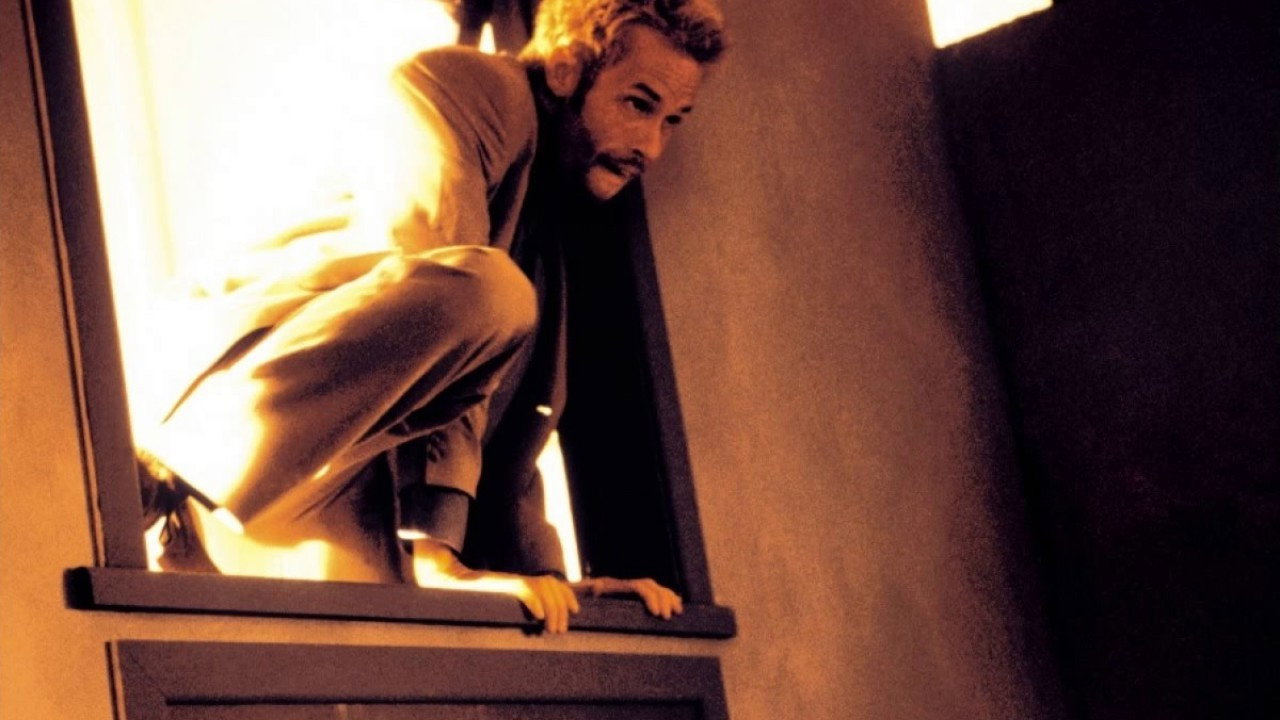
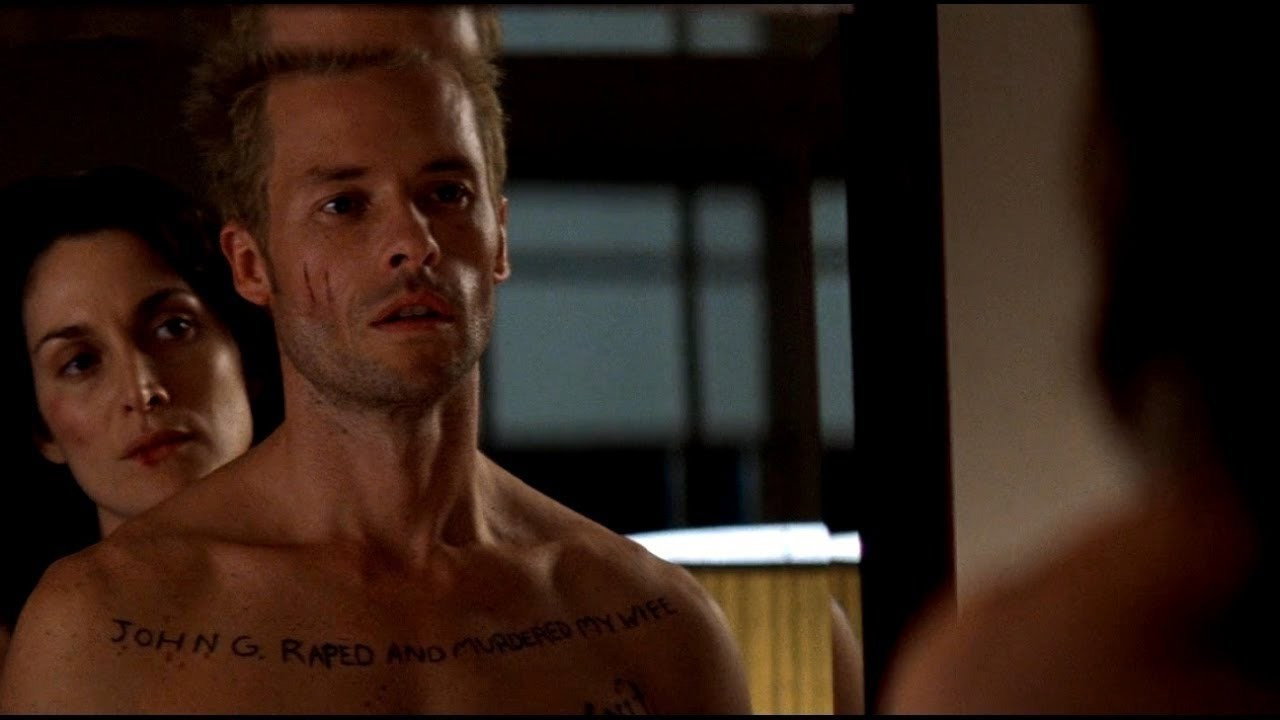
Memento makes us work for a simple reason: Leonard cannot retain new memories, and Christopher Nolan wants us to share his difficulty in judging what is happening. Guy Pearce plays a man pursuing his wife’s killer with Polaroids and tattoos to keep him on course. The story moves backwards, asking us to make decisions before we have the information that would usually support them. It is an excellent thriller, and its cleverness matters because being wrong feels dangerous.
Dody Dorn’s editing makes this difficult arrangement surprisingly easy to follow from moment to moment. We understand the immediate question even when we cannot place it in the larger story, so the suspense survives the effort of keeping track. As the order runs backwards, a judgement formed during one encounter becomes something to reconsider when we see what preceded it. That repetition could have been wearying; Dorn makes it an invitation to look harder. We keep returning to events with a little more information about the people involved.
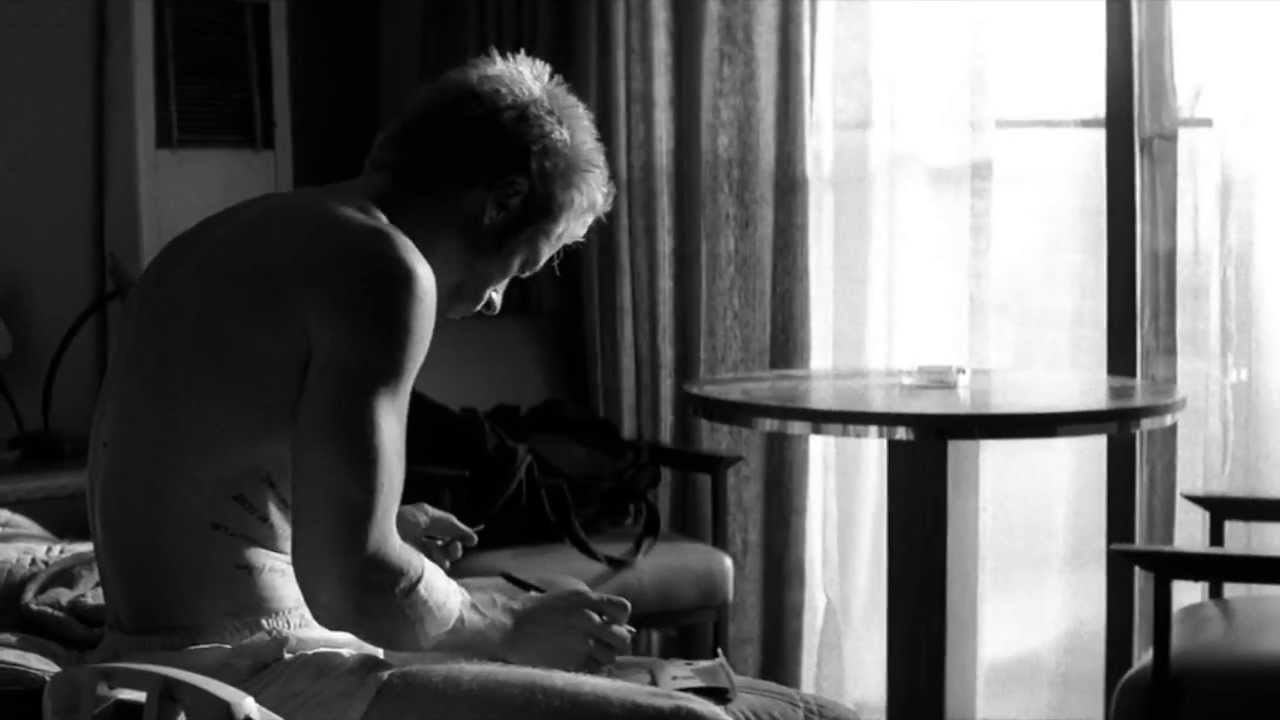
Pearce keeps Leonard from becoming a walking explanation of his condition. His determination is persuasive, but he also allows a helplessness that makes the practical business of remembering hard to watch. We were frightened by his dependence on photographs and tattoos: these are the things he must trust when he cannot check his own recollection. Pearce makes that trust seem necessary, even when we want him to hesitate. He is convincing even when Leonard’s confidence seems least sensible.
Wally Pfister’s cinematography gives the dusty Los Angeles surroundings an unwelcoming plainness. There is little comfort in looking around, which suits a story in which getting your bearings is already hard work. Patti Podesta’s production design helps make the places Leonard passes through feel indifferent to him; nothing about the surroundings promises that somebody will take care of this man. The effect works because the physical world remains ordinary enough for his difficulty to seem worse.
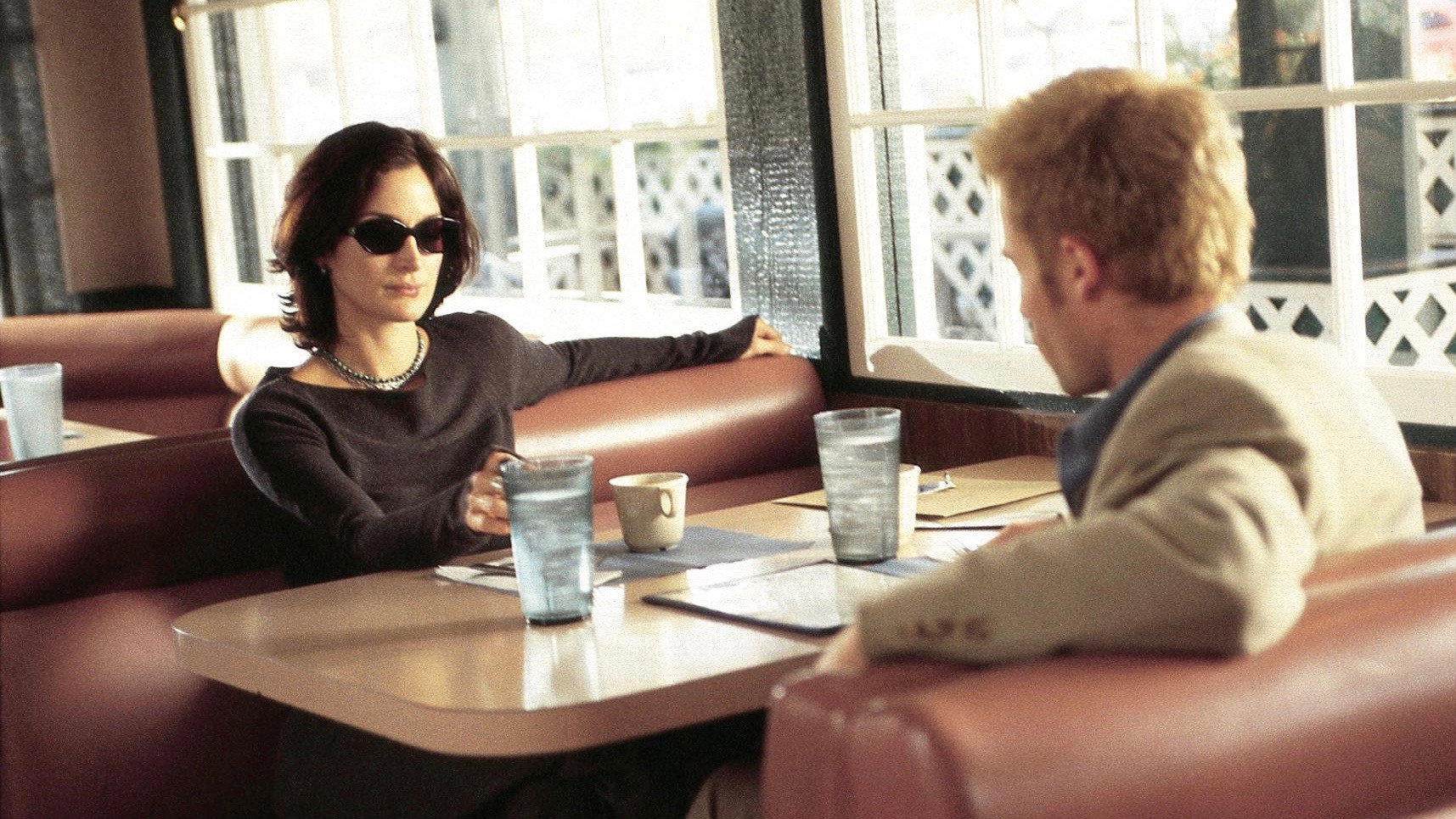
David Julyan’s score keeps the anxiety close to Leonard, an effective choice when the editing could so easily monopolise our attention. There is dry humour, too, and Joe Pantoliano’s Teddy gives the film some welcome ease without making us relax. Carrie-Anne Moss’s Natalie is compelling for similar reasons: watching her means trying to judge someone with too little to go on. Both actors make that uncertainty entertaining.
The reservation is that Natalie and Teddy sometimes seem written chiefly to regulate what we know. Nolan’s screenplay gives us plenty to consider about them, but less reason to think about their lives outside Leonard’s search. The cast makes this easier to accept than it might have been, and a thriller is entitled to keep its secondary characters mysterious. Still, the film can narrow our attention so firmly to the next piece of information that we start watching these people chiefly for clues.
As a murder mystery, Memento asks more of concentration than of our familiarity with the genre. Its central pursuit is straightforward; the excitement comes from having to reconsider what we thought we understood, without losing sympathy for the man doing the pursuing. That is enough to make its 113 minutes absorbing, despite the limited space given to the supporting characters. Give it an uninterrupted evening, preferably with someone prepared to disagree about what was obvious.