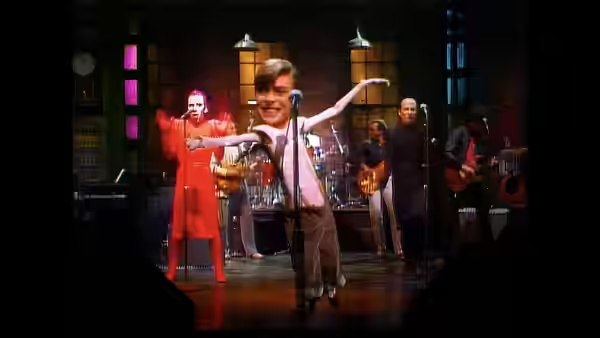
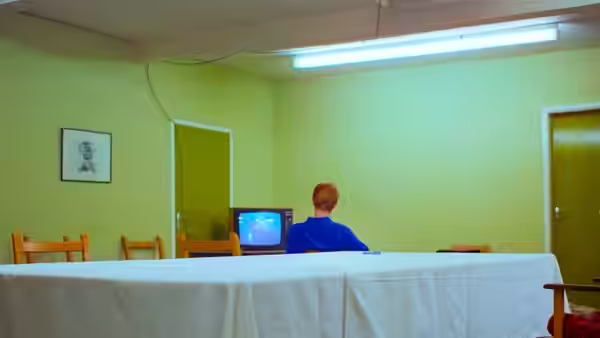
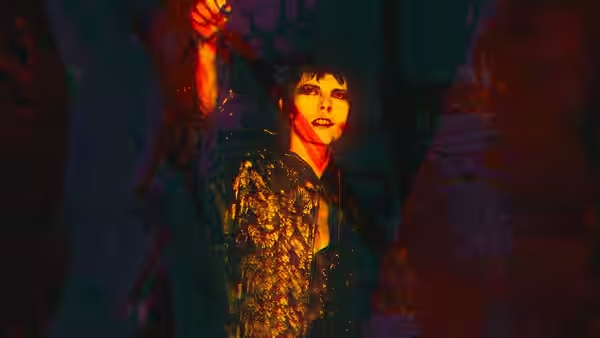
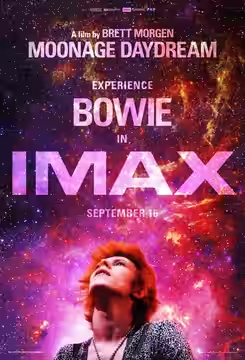
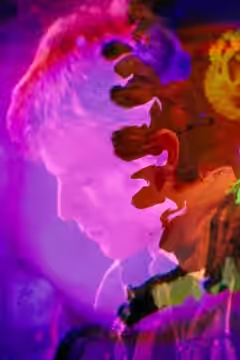
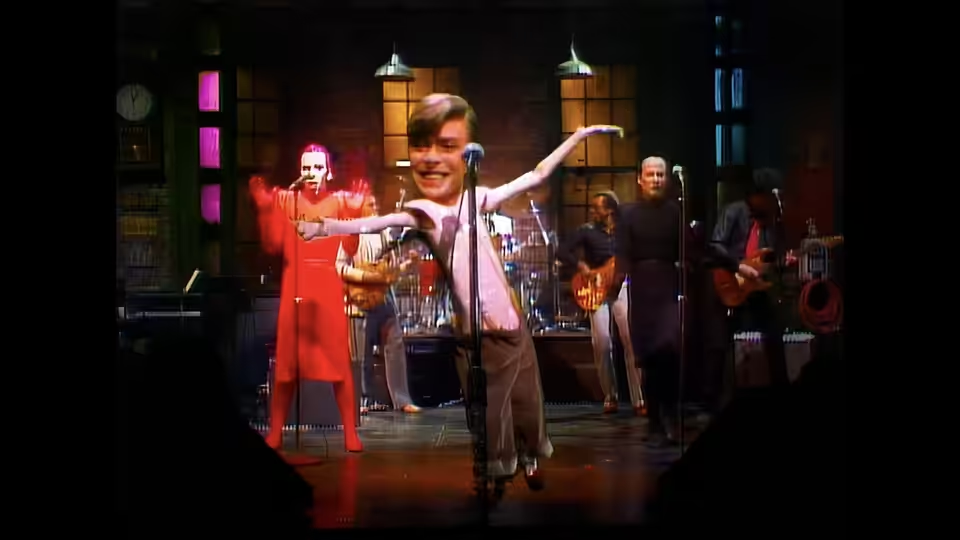
A performer dances at a microphone as musicians play behind him onstage
Film review

Moonage Daydream

2022 · Directed by Brett Morgen · 2h 15m

In a sentenceDavid Bowie holds our attention; the editing keeps worrying that he might not

Moonage Daydream opens with archive footage of David Bowie performing as Ziggy Stardust, then draws on interviews and music to explore his changing artistic identity. Russell Harty and Dick Cavett also appear as themselves in the archive material. Director and editor Brett Morgen assembles performances, recorded speech and psychedelic imagery, following associations rather than setting out a straightforward chronology. David Bowie’s own interview recordings supply the commentary as the film moves between his public performances and his reflections on making art. His appetite for reinvention provides the thread through material drawn from different stages of his working life.

Plays from YouTube when you press play; nothing loads from them until then.

Fi1m review

Brett Morgen’s archive portrait of David Bowie is worth seeing for the concert footage and the force of its sound. The restless editing can be exhilarating, though the reverence and 135-minute running time require some patience.

Moonage Daydream is a good music documentary with a persistent temptation to make every minute overwhelming. Director Brett Morgen uses David Bowie’s archive appearances, recorded interviews and music to follow an artist repeatedly changing his public self. The performances make that worth doing; the more insistent visual flourishes sometimes make it harder to watch. We recommend it for the music and the pleasure of watching him work, with some patience required for the effort spent making everything look momentous.

The opening concert footage is the clearest demonstration of what the film can do. We felt a rush of excitement watching David Bowie perform as Ziggy Stardust, and the force of the recorded sound was a large part of it. His stage presence gives the footage a directness that survives all the material assembled around it. The remastered performances deserve the attention they receive here, because they let us judge his command of an audience rather than take somebody else’s admiration on trust.

Brett Morgen’s editing makes a sensible connection between the changing performances and the restless movement of the film itself. Concert footage, interviews and psychedelic imagery are arranged by association, asking us to notice correspondences without having every change explained. At its most engaging, this approach makes an interview excerpt feel like part of the music rather than a pause to supply information. It also puts considerable faith in our willingness to follow, especially when a little context would help more than another burst of imagery.

The music, credited to David Bowie, is served particularly well by the forceful sound. Performances of Heroes and Cracked Actor have enough presence to justify giving this film an evening rather than putting on a record. The trouble comes when the images compete with that pleasure, demanding fresh attention before we have had time to absorb what we are hearing. Brett Morgen can seem anxious that simply listening might not be enough.

Recorded interviews supply David Bowie’s own commentary, and hearing him consider his work is one of the film’s pleasures. Brett Morgen’s writing and assembly favour the artist’s appetite for change, however, while less flattering questions remain largely outside the portrait. The pleasure of spending time with a gifted performer is a perfectly reasonable starting point, but the admiration grows repetitive when there is so little resistance to his account. A documentary built so heavily around its subject’s words needs more curiosity about what those words leave out.

At 135 minutes, the repeated bursts of image and music also begin to cost the film some of its force. There is so much encouragement to be excited that the quieter business of listening to a person think has to compete for attention. The editing remains busy after the reason for its busyness is clear, and several passages could have been shorter without losing anything essential. Fewer visual interruptions would have helped us attend to both the performances and the interviews.

Against the familiar music-documentary habit of having other people explain why the songs matter, this approach has considerable appeal. We get enough of David Bowie in performance to understand the attraction without instruction, even if Brett Morgen seldom leaves it at that. Anyone seeking a clear account of the people and circumstances around him will need more than this film provides. Choose it when the music is the reason for the evening, and conversation can wait.

Critical consensus AI synthesised

75
Positive
21
Mixed
4
Negative
3

Most critics welcome Moonage Daydream as an immersive, unconventional portrait of Bowie, with praise concentrated on its archival footage, editing and sound. The remastered concert performances draw particular enthusiasm, giving the music a force that even some detractors acknowledge. Admirers find that Morgen’s restless montage captures Bowie’s appetite for reinvention, while his own interviews let him guide the portrait. For these critics, the departure from a conventional biography is central to its appeal.

The spread is wide, however, and the same sensory approach strikes others as exhausting or short on insight. Reservations extend beyond the negative reviews: sympathetic critics also note missing context, omissions and an overly reverent treatment of Bowie. The Hollywood Reporter finds the film shapeless and distancing despite admiring the performances. The New Yorker objects more fundamentally, arguing that the visual bombardment produces an inert, sanctified portrait that misses much of Bowie’s wit and collaborative spirit.

Time Out
24 May 2022 · ★★★★★ · Phil de Semlyen
100

The review presents the documentary as almost as extraordinary as Bowie himself. It singles out the film’s cosmic, spectacular, music-filled approach for praise.

Read the full review →
Empire
12 September 2022 · Lou Thomas
90*

Thomas calls it a definitive, essential portrait of Bowie and a triumph despite a few omissions. He especially praises the inventive visual presentation and the film’s use of rare performance footage and Bowie’s music.

Read the full review →
The Guardian
18 September 2022 · Mark Kermode
90*

Kermode finds the film a dazzling, loving tribute that captures some of Bowie’s adventurous spirit, though it cannot be definitive. He praises its kaleidoscopic archival collage and the profound affection running through it.

Read the full review →
Los Angeles Times
15 September 2022 · Carlos Aguilar
85*

Aguilar considers the documentary a worthy tribute that lets Bowie’s own words and art shape its portrait. He praises Morgen’s sensorial blend of psychedelic imagery, concert footage and music for capturing Bowie’s spirit.

Read the full review →
Variety
25 May 2022 · Critics Pick · Owen Gleiberman
85*

Gleiberman praises the film as a vivid, unconventional meditation that brings viewers closer to Bowie’s enigmatic identity. He particularly singles out the concert footage and powerful sound, while wishing the film had given more attention to Nile Rodgers and “Station to Station.”

Read the full review →
IndieWire
24 May 2022 · B+ · Siddhant Adlakha
83

The critic finds the documentary an ambitious, immersive portrait that captures Bowie’s influence and humanity. The film’s archival imagery and loud, concert-like sound are praised, though its authorized perspective avoids controversy.

Read the full review →

Straight answers AI written, from our review

Is Moonage Daydream worth watching?
Moonage Daydream is worth watching for David Bowie’s concert performances and the force of its sound; we score it 78 out of 100. We recommend it when music is the reason for the evening, rather than a straightforward biography. The restless editing, uncritical admiration and 135-minute running time require patience.
How long is Moonage Daydream, and what is it rated?
Moonage Daydream runs 2h 15m. It is a documentary and music film.
Where can I watch Moonage Daydream in Singapore?
Moonage Daydream is available to rent from Apple TV from S$4.98. Availability is checked daily; the links above go straight to each service.
How violent or frightening is Moonage Daydream, and is it suitable for children?
Moonage Daydream has a UK 15 certificate, so we do not recommend it for children under 15. Its forceful sound, psychedelic imagery and restless editing can feel overwhelming; for older teenagers, those are useful considerations, though they do not establish how much violence or frightening material it contains.
How does Moonage Daydream compare to Koyaanisqatsi?
Moonage Daydream is our choice for Bowie’s performances, while Koyaanisqatsi better suits an evening of music and montage without biographical explanation. We find Bowie compelling despite the overbusy editing; Koyaanisqatsi sustains pleasure and unease through Ron Fricke’s photography and Philip Glass’s music, though its ecological case is thin.
What should I watch after Moonage Daydream?
After Moonage Daydream, try Koyaanisqatsi (1982, Fi1m 82): For music and montage allowed to carry a film without biographical explanation. Then Pina (2011, Fi1m 80): Another portrait of an artist that makes room for the work itself.

Cast

If you liked this, try…

  1. Stop Making Sense (1984) · not reviewed yetFor another concert film that lets the performer justify the attention.

  2. The Velvet Underground (2021) · not reviewed yetA useful companion for its closer attention to collaborators and artistic surroundings.

  3. Koyaanisqatsi (1982, Fi1m 82)For music and montage allowed to carry a film without biographical explanation.

  4. Pina (2011, Fi1m 80)Another portrait of an artist that makes room for the work itself.

  5. F for Fake (1973) · not reviewed yetA more sceptical encounter with artists, self-presentation and the pleasures of editing.