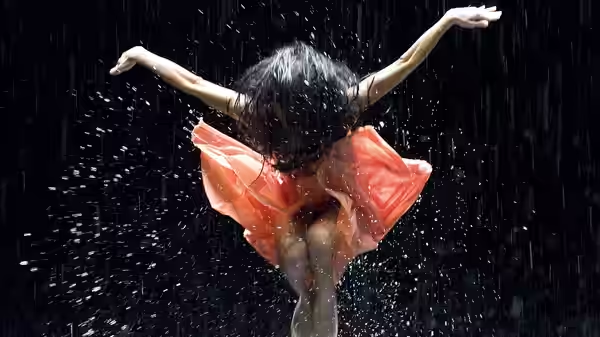
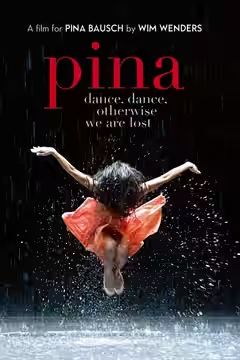
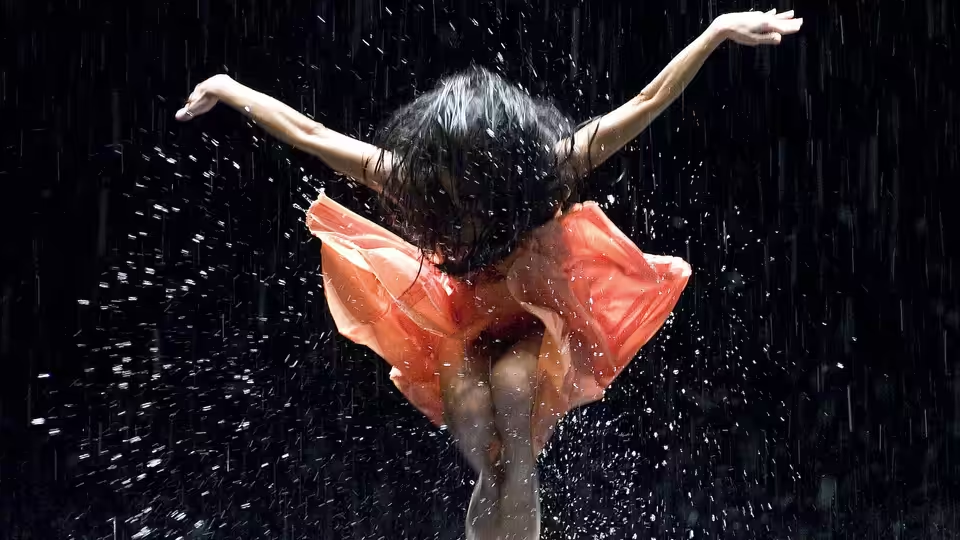
A dancer in an orange dress spreads her arms as water falls around her
Film review

Pina

2011 · Directed by Wim Wenders · 1h 46m · MPA PG

In a sentenceWe would happily exchange several interviews for a few more minutes of dancing

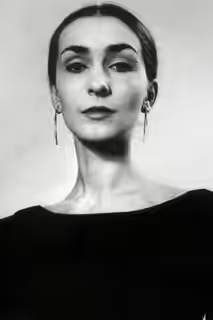
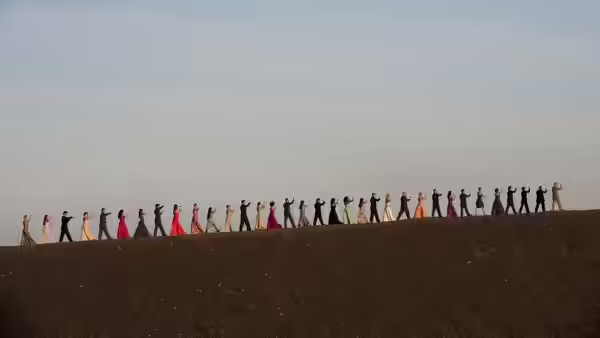
Wim Wenders brings the dances of Pina Bausch to the screen, alongside recollections from the people who perform them. Regina Advento, Malou Airaudo and Ruth Amarante appear as themselves among the ensemble, while Pina Bausch appears in archive footage. Performances and interviews sit beside one another, with 3D giving the choreography depth and outdoor settings taking the dancers away from the theatre. The film approaches its subject through movement and memory rather than a detailed account of her life. The performers demonstrate the work and speak about the woman who shaped it.

Plays from YouTube when you press play; nothing loads from them until then.

Fi1m review

Wim Wenders gives Pina Bausch’s dances the space and attention they deserve in a moving film. The affectionate interviews interrupt the pleasure and offer newcomers too little help with the woman behind the work.

Pina is a moving dance film that gives newcomers too little help with the woman behind the work. Wim Wenders puts his faith in the performances, giving them enough space to justify the attention even if dance is not usually what we choose for an evening. The dancers make that faith look sensible. The trouble comes when their recollections have to tell us who Pina Bausch was, because affection alone supplies little explanation.

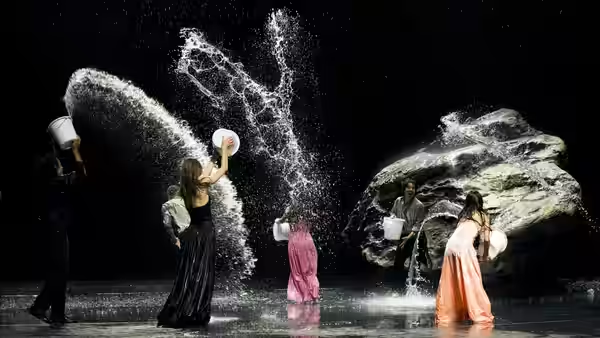
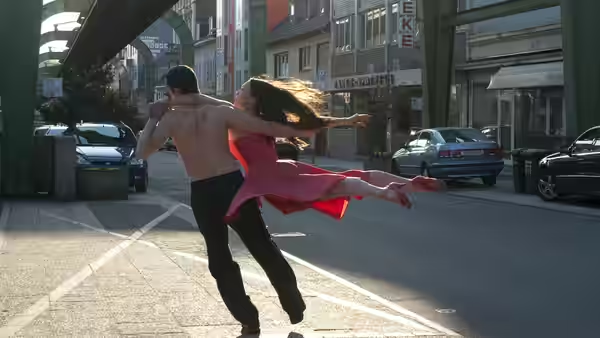
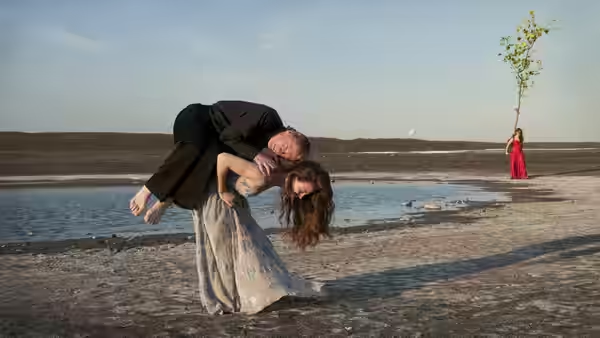
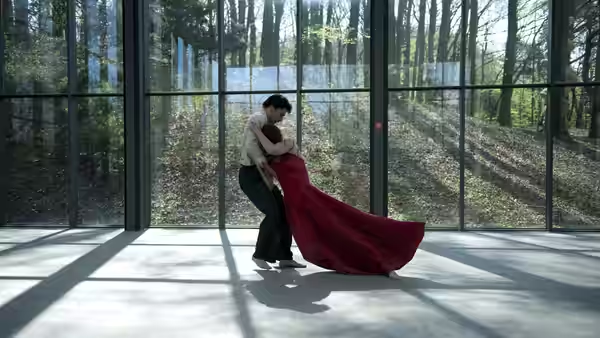
Hélène Louvart and Jörg Widmer use 3D to make the distance between performers readable, so that movement has somewhere to travel. It is easier to register a body’s weight when we can see the space it occupies. The static framing is particularly valuable: it lets us look across an image without being hurried towards whichever detail the camera has selected. We were moved by the dancers’ physical effort. Being given time to watch them within the frame, rather than constantly having our attention redirected, made that effort harder to take for granted.

The outdoor staging gives the dancing a welcome change of surroundings. Away from a theatre, the movements acquire a strangeness that makes them absorbing; familiar human bodies start doing things an ordinary setting does not prepare us for. There is pleasure in simply looking, and the film allows that without insisting that every movement be translated into a message. The ensemble’s commitment keeps these passages from feeling like decorative excursions, and the performances hold our attention without needing an accompanying explanation.

Toni Froschhammer’s editing faces a harder problem in the movement between dance and recollection. Each return to the interviews asks us to shift from watching the work to listening to people describe its importance, and the rhythm repeatedly slackens. Their devotion is clear well before the film has finished establishing it. Some of this testimony matters, but the repetition makes us wish the director had been less reluctant to trim affectionate material.

Thomas Hanreich’s music helps sustain the mood across these changes, though it cannot make the spoken passages as absorbing as the dancing. Our attention stays with the performers, which is the right order of priorities for a film so dependent on their presence. Against the usual expectations of an arts documentary, the relative scarcity of explanation is initially refreshing. It is possible to enjoy the choreography without already knowing where it belongs in dance history.

Pina Bausch appears in archive footage, but her personal life and reasons for making the work remain largely unexplored. That need not disqualify a film built around performance, yet it leaves the reminiscences with too little to add to what we can already see. We wanted more about how the work was made and fewer assurances of its importance. The reverence sometimes makes the subject harder to understand, particularly for anyone meeting her work through this film.

Approach it as an encounter with the dances and there is much to enjoy. Expect a rounded account of their maker and the omissions will bother you. An existing interest in dance will help, but curiosity is enough. Give it a large screen and some undivided attention; this is a poor choice for an evening spent checking a phone.

Critical consensus AI synthesised

74
Positive
11
Mixed
3
Negative
1

Most critics welcome Pina as a moving tribute to Pina Bausch, with praise centred on the dancers’ physical commitment and Wenders’ use of 3D. The reviews repeatedly credit the depth of the images with giving the choreography a compelling screen presence, rather than merely recording it. The company’s performances carry much of the emotion, and even several less persuaded critics admire how the film brings dance into cinema.

The reservations concern what surrounds those performances, and what is missing. Several critics find the dancers’ interviews distracting or repetitive; others want more context about Bausch’s life and work. The spread is wide despite the positive majority, ranging from enthusiastic endorsements to complaints of excessive reverence and muddle. The New Yorker offers a distinct objection: it admires the 3D but argues that the outdoor staging and emphasis on dance underrepresent the unsettling theatrical side of Bausch’s work.

Los Angeles Times
13 January 2012 · Kenneth Turan
90*

Turan calls the film a knockout and praises its immersive use of 3-D to bring Pina Bausch’s dances vividly to the screen. He finds the dancer interviews less effective, saying they distract from the dances themselves.

Read the full review →
The Guardian
21 April 2011 · Peter Bradshaw
85*

Bradshaw finds the film a tremendous, poignant tribute that captures the yearning at the heart of Bausch’s work. He especially praises the dancers’ overwhelming physicality and the way 3D gives the choreography presence.

Read the full review →
IndieWire
22 December 2011 · B+ · Eric Kohn
83

Kohn finds the film visually beautiful and heartfelt, but ultimately slight and not essential. He praises the immersive use of 3D while criticizing the reminiscences for distracting from Bausch’s dances.

Read the full review →
Time Out
20 December 2011 · ★★★★ · Joshua Rothkopf
80

The available page identifies this as a review, but its verdict is not exposed in the accessible text. No specific element praised or criticized is available.

Read the full review →
Empire
31 March 2011 · David Hughes
78*

The review calls the film a worthy, moving tribute to Pina Bausch. It praises the ensemble’s heartfelt performances and the way 3D captures the emotion in Bausch’s choreography.

Read the full review →
Variety
13 February 2011 · festival review · Leslie Felperin
75*

Felperin finds the film captivating, though its lack of context may frustrate newcomers and dance purists. She praises its immersive presentation of Bausch’s choreography, especially the performances by her company.

Read the full review →

Straight answers AI written, from our review

Is Pina worth watching?
Pina is worth watching for its moving dance performances, even without an existing interest in dance, and we score it 80. Wenders gives the dancers space and time to hold our attention, though the affectionate interviews repeatedly slow the film and offer too little explanation for anyone seeking a rounded portrait of Pina Bausch.
How long is Pina, and what is it rated?
Pina runs 1h 46m and is rated PG by the MPA in the US. It is a documentary film.
Where can I watch Pina in the US?
Pina is streaming on AMC+, Amazon Prime Video, Apple TV and The Roku Channel in the US, and it is also available to rent from Amazon Prime Video and Apple TV from $2.99. Availability is checked daily; the links above go straight to each service.
How does Pina compare to The Red Shoes?
Pina offers a direct encounter with dance performances, while The Red Shoes makes a dancer’s ambition feel urgent and dangerous; we recommend the latter more broadly. Both take dance’s physical demands seriously, but Pina suits those drawn to choreography rather than drama, with interviews that interrupt the pleasure; The Red Shoes has only an occasional weakness for self-important dialogue.
What should I watch after Pina?
After Pina, try The Red Shoes (1948, Fi1m 92): For another film that takes the physical demands of dance seriously. Then Beau Travail (1999, Fi1m 86): Bodies, discipline and desire, with movement expressing what the characters cannot say.

Cast

Awards

Academy Awards, 2012

Nominated
Best Documentary Feature Film

International Submission to the Academy Awards, 2012

Nominated
International Submission to the Academy Awards

European Film Award for Best Documentary, 2011

Won
European Film Award for Best Documentary

If you liked this, try…

  1. The Red Shoes (1948, Fi1m 92)For another film that takes the physical demands of dance seriously.

  2. Beau Travail (1999, Fi1m 86)Bodies, discipline and desire, with movement expressing what the characters cannot say.

  3. Rize (2005) · not on Fi1m yetA dance documentary that pays closer attention to the community around its performers.

  4. The Fits (2015) · not on Fi1m yetA young dancer’s unease becomes something strange, physical and difficult to explain.

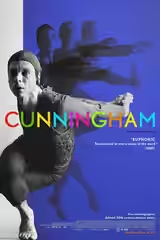
  5. Cunningham (2019) · not on Fi1m yetAnother dance documentary that uses 3D to clarify how bodies occupy space.