Film review

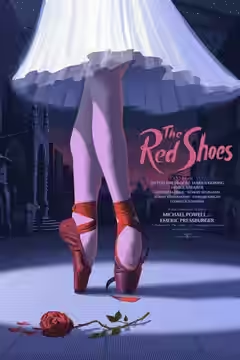
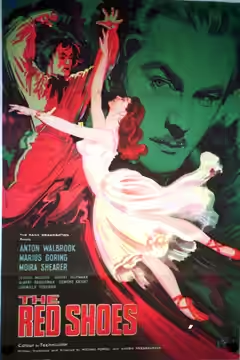
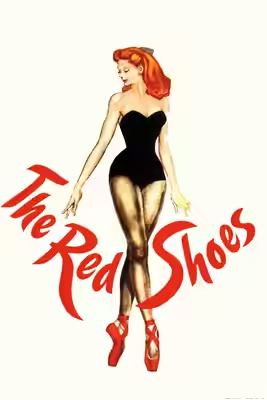
The Red Shoes

1948 · Directed by Michael Powell, Emeric Pressburger · 2h 13m · U

In a sentenceThe dancing is magnificent; someone should still have a word with the management

DramaRomance

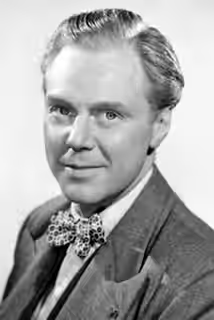
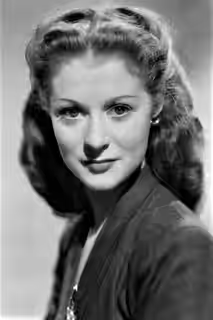
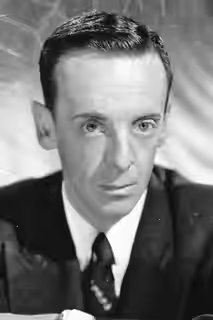
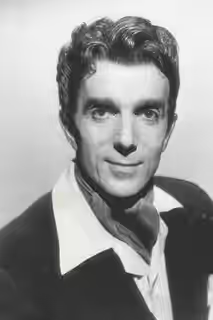
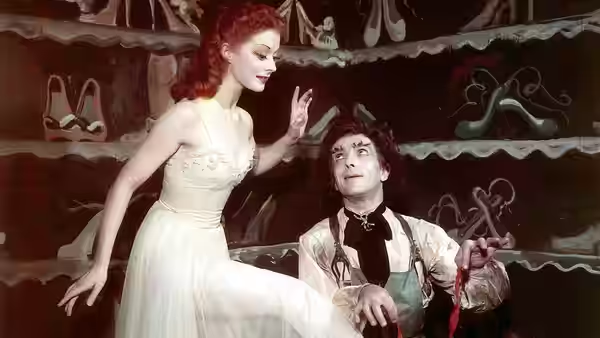
Victoria Page (Moira Shearer) is a ballerina whose ambitions place her under the influence of ballet producer Boris Lermontov (Anton Walbrook). Lermontov’s devotion to art leaves little room for competing loyalties, and Victoria finds herself caught between dancing and love. Michael Powell and Emeric Pressburger follow her through a ballet world in which professional success and personal happiness become increasingly difficult to reconcile. The backstage drama includes a central ballet that gives shape to the dancer’s private fears and desires. Marius Goring plays Julian Craster, with Robert Helpmann as Ivan Boleslawsky and Léonide Massine as Grischa Ljubov.

Plays from YouTube when you press play; nothing loads from them until then.

Fi1m review

Powell and Pressburger make a dancer’s ambition feel urgent, seductive and dangerous. We would recommend The Red Shoes to anyone, despite dialogue that occasionally sounds too pleased with its own seriousness.

The difficulty with films about artistic obsession is getting us to believe that the work deserves so much upheaval. The Red Shoes clears that hurdle whenever Moira Shearer dances, and we would happily recommend it to someone who has never cared for ballet. Michael Powell and Emeric Pressburger take Victoria Page’s ambition seriously without making her producer’s demands seem reasonable. They also give the dancing enough time to explain why she might submit to them. The trouble comes when the characters have to explain the same things in words.

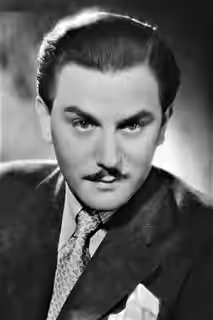
Anton Walbrook makes Boris Lermontov’s devotion to ballet difficult to dismiss. A merely bullying producer would make Victoria’s predicament too easy; Walbrook gives him enough conviction that we understand the appeal of being taken seriously by him. His possessiveness becomes more alarming because the devotion is persuasive. Shearer keeps Victoria from disappearing beneath his opinions, and her assurance as a dancer is essential: we believe that she has something worth protecting before the dialogue tells us how much it matters.

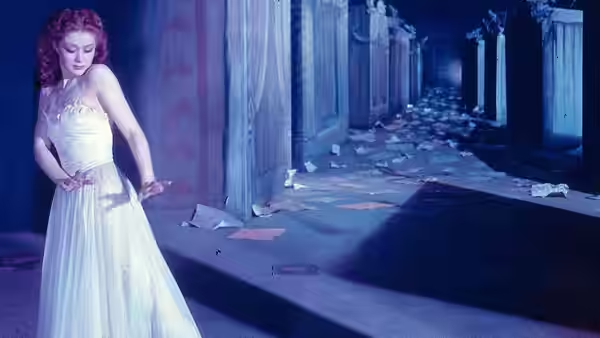
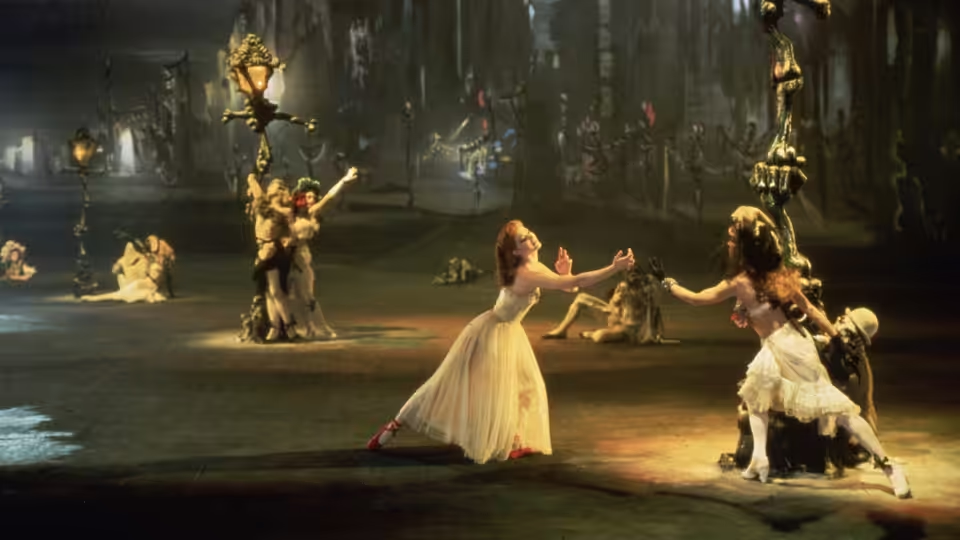
Jack Cardiff’s Technicolor photography gives the ballet’s artificial world colour strong enough to hold our attention on its own. Production designer Hein Heckroth supplies settings that can escape the practical limits of a stage, making the passage into fantasy seem inviting before it becomes unsettling. Heckroth also designs the costumes, and their place within those settings feels carefully judged. The visual extravagance helps us understand the attraction of Lermontov’s world.

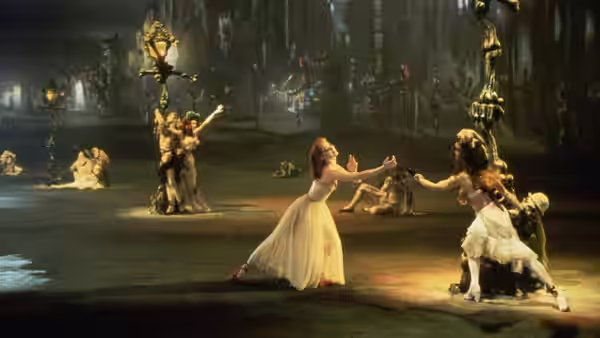
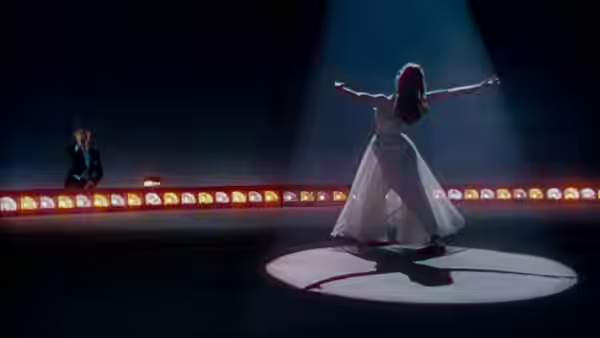
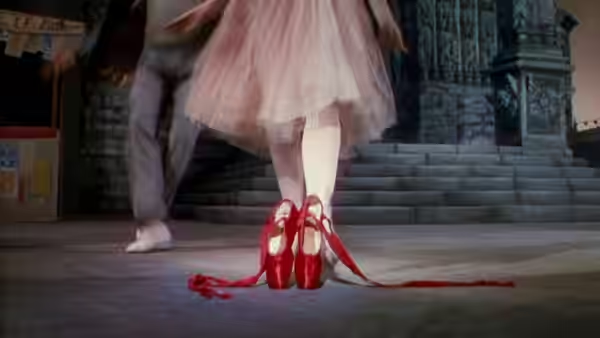
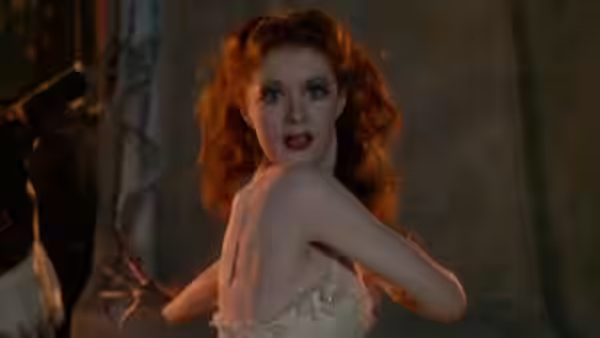
The central ballet goes further, letting the performance show Victoria’s inner life rather than merely displaying her skill. We were frightened by it, because the dancing stays precise while the space around the dancer becomes increasingly unreal. Reginald Mills’s editing makes those changes feel continuous, so we follow the movement instead of stopping to work out how one setting has become another. Brian Easdale’s score gives the passage its musical coherence without making it feel safe. It is a sustained piece of storytelling through dance, and Shearer keeps it human even when the surroundings cease to be.

The dialogue is the reservation. Powell and Pressburger occasionally give their characters declarations about art that sound too grand for conversation, particularly when the dancing has already made the point. Marius Goring’s Julian Craster has a harder time holding our attention beside Lermontov, and the romantic scenes can feel constrained by the need to put Victoria’s choice into words. Goring keeps the personal stakes clear, but we sometimes want the film to let Shearer move again.

In the backstage genre, a performance often serves as the reward for getting through the quarrels. Here it makes the quarrels harder to dismiss, because we have seen what all that discipline can produce. The film takes seriously the frightening prospect of giving another person authority over something we need to do. Walbrook’s conviction is essential to that idea, but it is Shearer’s dancing that makes us understand the temptation.

Give it an uninterrupted evening and a screen large enough to follow Shearer’s dancing. There is no need to arrive knowing anything about ballet. The other jobs can wait until the dancing is finished.
Critical consensus AI synthesised

84
Positive
8
Mixed
0
Negative
1

Most critics respond warmly to The Red Shoes, with praise concentrated on its Technicolor photography, music, production design and dancing. The central ballet sequence is the clearest point of agreement: the reviews admire how it turns a stage performance into a surreal expression of the ballerina’s inner life. Moira Shearer’s performance draws particular praise, while the conflict between artistic ambition and personal happiness gives the film a seriousness that many find compelling rather than forbidding.

Reservations concern the drama surrounding the dancing, though the spread is largely positive with one marked dissent. Variety finds the opening hour a commonplace backstage melodrama before the ballet transforms it. The New Yorker goes further, admiring Shearer and finding the ballet interesting but judging the whole unstimulating, with excessive length, inflated dialogue about art and unflattering colour. Most critics instead see the visual richness and obsessive emotions as central to the film’s force.

The Times
8 December 2023 · ★★★★★ · Kevin Maher
100

The critic calls it one of the most influential movies in history and a perfect work of art about the price of success, with visual references echoed by later directors. It praises the story of ambition and its personal costs through the ballerina's journey.

Read the full review →
Empire
1 January 2000 · David Parkinson
90*

The critic hails the film as a luminous masterpiece for its glorious Technicolor glamour and refinement of the backstage musical form. He singles out the ravishing visuals, intense performances, and impressive technical credits including choreography, score, and production design.

Read the full review →
Slant Magazine
19 December 2021
90*

The critic praises the film's sensual power and vivid Technicolor as a prime example of the erotics of art, highlighting its lyrical structure and the groundbreaking subjective ballet sequence. The review celebrates the masterpiece's exploration of art versus life as a sublime achievement of classical filmmaking.

Read the full review →
The Guardian
10 December 2009 · Philip French
90*

The critic hails the restored 1948 classic as blazing on screen, profoundly serious yet erotic, as a parable of art's destructive demands on the artist. The central ballet sequence stands out as a masterful, surreal dramatisation of inner longings comparable to Hitchcock.

Read the full review →
The Telegraph
26 July 1948 · George Campbell Dixon
75*

The original release review finds the film captivating in its remote ballet world and enchanting colour, with the Andersen-inspired ballet sequence a highlight thanks to strong performances and music. It notes the painful ending and lack of humour as minor drawbacks outweighed by visual beauty and charm.

Read the full review →
The New Yorker
16 October 1948 · John McCarten
40*

McCarten finds the embedded ballet sequence interesting and praises Moira Shearer as the ballerina, but deems the picture as a whole unstimulating due to its dialogue and length. He criticizes the extravagant talk about art and the dismal complexion given by the color.

Read the full review →

Cast

Stills

Awards

Academy Awards, 1949

Nominated
Best Film Editing
Nominated
Best Picture
Nominated
Best Story
Won
Best Art Direction, Color
Won
Best Original Dramatic or Comedy Score

If you liked this, try…

The Tales of Hoffmann poster

The Tales of Hoffmann

1951 · Powell and Pressburger give music and dance still more freedom from stage-bound realism

The Young Girls of Rochefort poster

The Young Girls of Rochefort

1967 · For colour, choreography and performers whose feelings need more room than conversation

All That Jazz poster

All That Jazz

1979 · An exacting showman turns rehearsals into a study of work consuming a life

The Piano poster

The Piano

1993 · For another woman whose music matters more than the men around her understand

Black Swan poster

Black Swan

2010 · Another dancer under pressure, with the ballet world’s anxieties pushed into horror