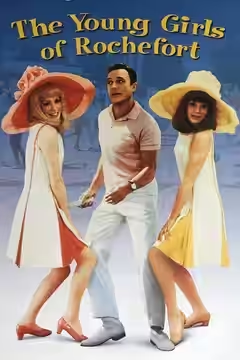
Jacques Demy’s musical is a warm, spacious pleasure, with Michel Legrand’s songs giving its romantic hopes real urgency. Some dancing is merely pleasant, but the colour, company and music make the occasional slackness easy to forgive.
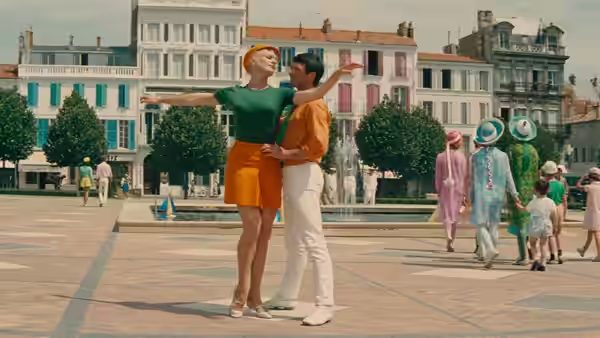
Jacques Demy makes an unusually companionable musical out of romantic longing, and we recommend it with one reservation: the dancing does not always match the songs. The Young Girls of Rochefort is most persuasive when conversation becomes music and the townspeople are allowed into the number. There is pleasure in how readily everyone accepts this, without the film asking us to applaud its own invention. Its cheerfulness leaves room for people who need romance rather badly.
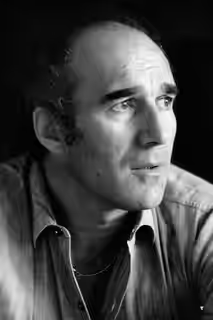
Michel Legrand’s songs are the strongest reason to stay. They give ordinary romantic hopes a little grandeur without making the people who hold them ridiculous, and their sweetness seldom becomes oppressive. We were cheered more than we expected when the townspeople joined the musical action; seeing the film make room for them gave those numbers an extra warmth. Their participation makes the songs feel like something a whole town might share, and helps the shifts out of conversation seem natural.
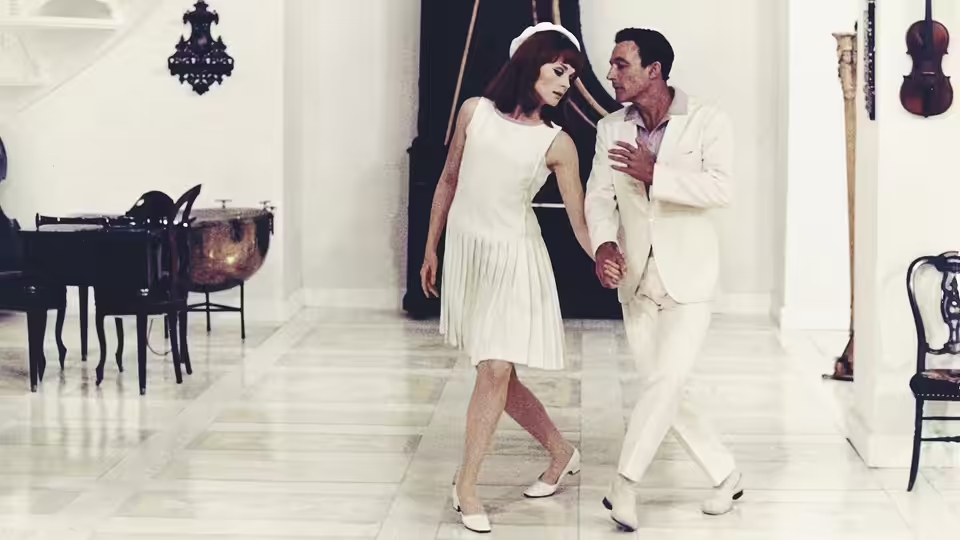
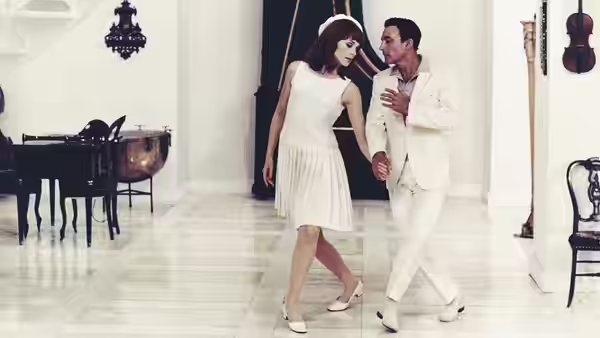
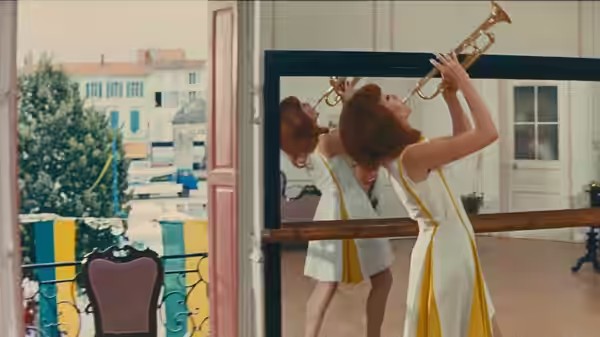
Bernard Evein’s production design gives the open-air settings a pastel brightness that suits this social ease. The colour makes the surroundings seem welcoming enough for someone to start singing in them, which is a useful achievement in a musical. Ghislain Cloquet’s cinematography makes those colours inviting without letting them overwhelm our interest in the performers. The airy settings work particularly well when the musical numbers involve the townspeople: there is room for the dancing, and the surroundings remain worth looking at.
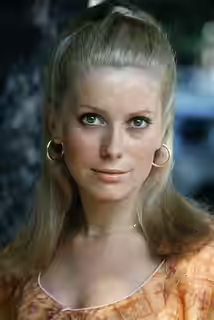
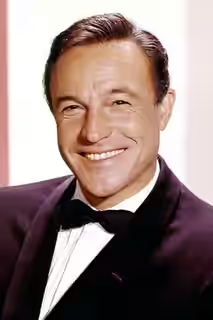
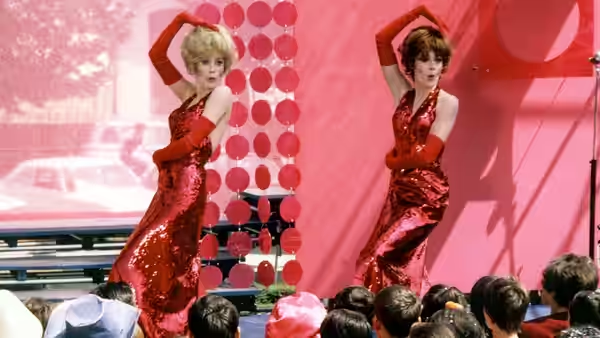
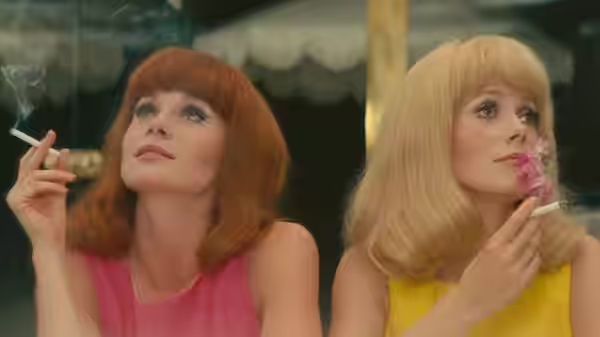
Catherine Deneuve and Françoise Dorléac, as Delphine Garnier and Solange Garnier, give the film spirited company at its centre. Their appeal does not depend on making every romantic hope look sensible; there is enough urgency in the performances to suggest how much these hopes matter. Gene Kelly, playing Andy Miller, fits comfortably into the film’s affection for Hollywood musicals. The cast takes the feelings seriously while accepting the freedom that a musical gives performers to express them, without becoming coy about the singing.
The reservation is that the choreography sometimes settles for being agreeable. After the opening number, there are stretches where the dancing has less character than the music, and our attention shifts towards the songs when it ought to be held by both. Jean Hamon’s editing makes the movement between dialogue and musical performance feel easy, but cannot give a routine the bite it lacks. At 126 minutes, the film allows enough time for that unevenness to become noticeable, even with so much else to enjoy.
The blend of Hollywood musical exuberance and French New Wave freedom works because Jacques Demy stays attentive to people. The desperation beneath the romantic hopes keeps the pastel surroundings from making everything feel too comfortable. It also makes the optimism more affecting: these people have reasons to want their lives to change, and the music lets that desire be heard. Within a genre that can become pleased with its own prettiness, that attention to dissatisfaction matters, even when the film is being thoroughly cheerful.
Choose it for an evening when romance sounds appealing but solemnity does not. Allow for a few dances that pass pleasantly without making much of an impression, and give Michel Legrand’s songs your attention. We would happily spend another evening with these singing neighbours.