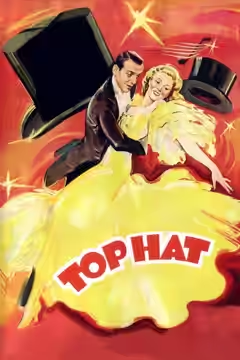
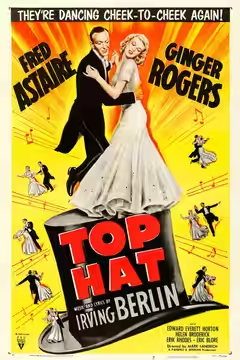
The fourth Astaire and Rogers picture has a plot one plain sentence would fix and songs by Irving Berlin that make you glad nobody speaks it. Two of the dances are as fine as anything the cinema has managed. The finale is too big.
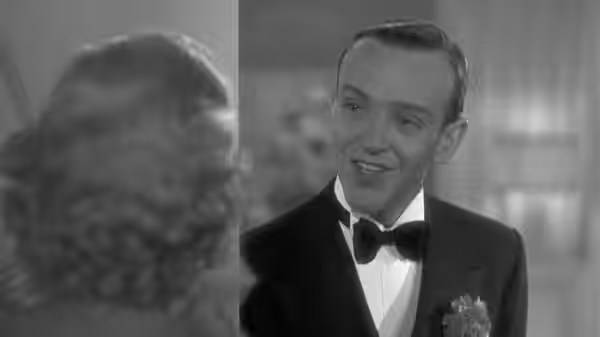
Jerry Travers (Fred Astaire) is an American dancer in London to open a show for his producer, Horace Hardwick (Edward Everett Horton). Late one night he tap-dances round his hotel room and wakes Dale Tremont (Ginger Rogers) in the suite below. She comes up to complain, he falls for her on the spot, and within a day she has decided, wrongly, that he is Horace, who is married to her friend Madge (Helen Broderick). That is the whole plot, and Dwight Taylor and Allan Scott’s script spends 99 minutes making sure nobody says the one sentence that would end it. Mark Sandrich directs. It is the fourth film Astaire and Rogers made together, and the reason to see it is what happens every time the story stops.
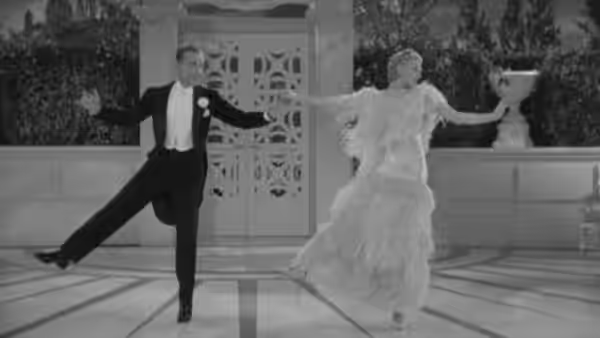
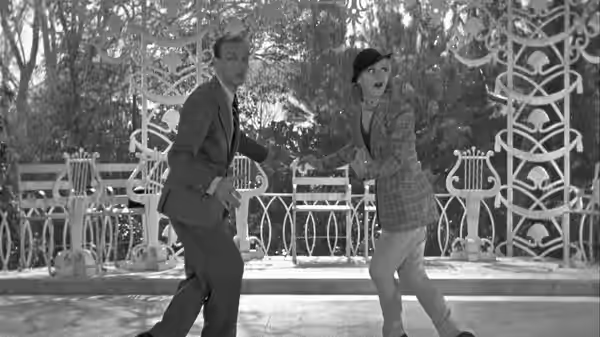
Irving Berlin wrote the songs and the film gets to them quickly. “No Strings” is the hotel-room number: Astaire tapping on a hard floor, the sound coming through the ceiling to Rogers in bed, until he sprinkles sand on the boards and softens the taps to send her to sleep. “Isn’t This a Lovely Day” is the one in the park, with rain, a bandstand and Rogers in riding clothes with her arms folded, Astaire copying her steps until she gives in and copies his. David Abel keeps the camera back and level so both dancers are in the frame head to foot the whole time, and William Hamilton cuts within the numbers as little as he can get away with. We grinned from the first thunderclap to the handshake at the end.
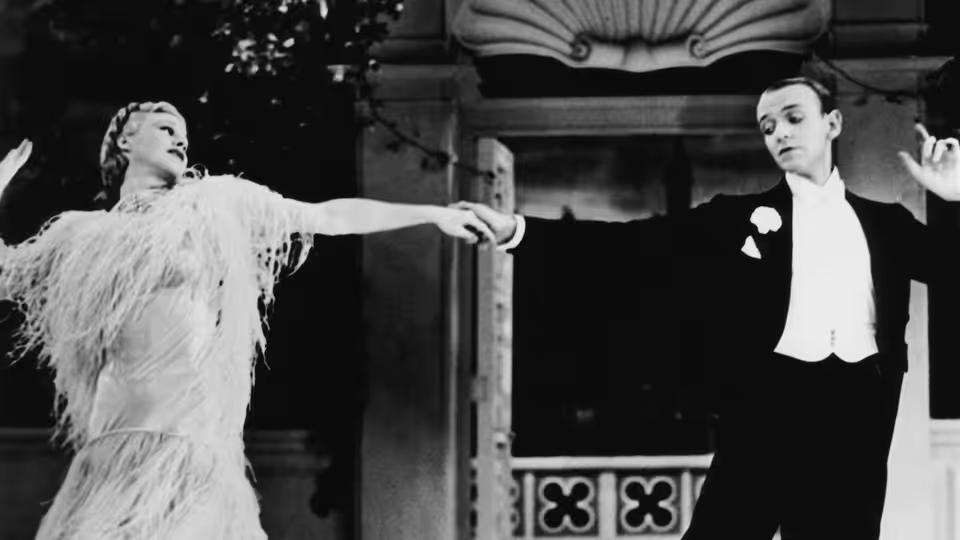
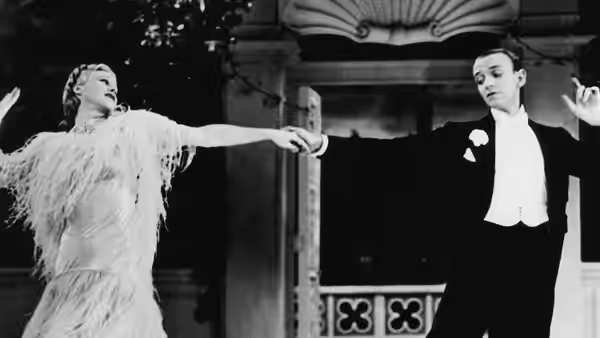
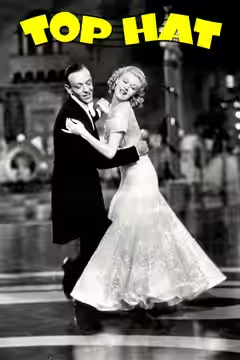
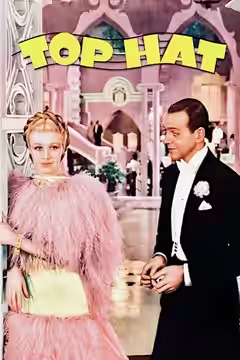
Then there is “Cheek to Cheek”, and Bernard Newman’s dress. It is ostrich feathers from the shoulders to the floor, and on every turn a few of them come loose and drift off across the set; the film leaves them in. Astaire sings the verse walking her away from the crowd, they dance, and the routine ends with a long slow bend backwards over his arm and a held pause. We stopped breathing at the pause, both times we watched it, and what did it was the take, unbroken, and the sight of two people who have spent the film squabbling stop talking and agree about something with their whole bodies.
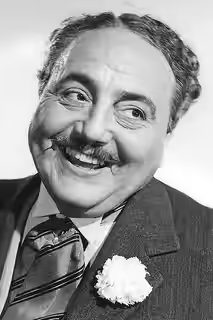
Between the songs it is a farce, and the supporting cast is the right one. Horton does his double takes and his strangled “Oh” whenever the plot turns on him. Eric Blore, as Horace’s valet Bates, refers to himself as “we” and treats his employer as a job of work. Helen Broderick’s Madge hears that her husband is apparently romancing her friend and reacts as though she has been told the trains are late; it is the best joke in the picture. Erik Rhodes plays Alberto Beddini, the dress designer who has Dale under contract, as an Italian who cannot get through an English sentence without breaking it. The film finds this funnier than we did. Lucille Ball turns up uncredited behind a flower shop counter.
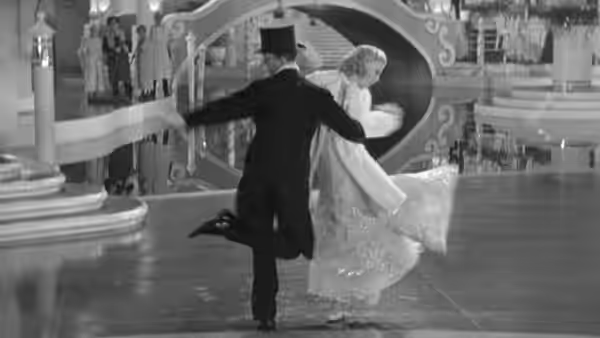
The trouble is the padding. Sandrich stages the dialogue as though a proscenium were just out of frame, with people entering, saying their lines and going out again, and the middle third is a run of these scenes while Dale keeps deciding not to ask a direct question. The plot is close to the one Astaire and Rogers had already played in The Gay Divorcee, and it was not much of a plot then. The finale, “The Piccolino”, brings on a chorus of dozens and a stretch of studio Venice with white gondolas on black water, for a song about a song. It is handsome, and the film does not need it; its best work is already done with two people on an empty floor.
The sets are white: white stairs, white telephones, white gondolas, against black water and black tailcoats, and Abel lights them so that there is hardly a shadow anywhere. It is not London or Venice and does not pretend to be, which suits a story in which nobody has a job worth mentioning. Hermes Pan’s routines, by most accounts, supply the charge between the leads; what we can see for ourselves is that Rogers is never carried, and that in the bandstand she is the one who decides when the dance is over.
It is a U certificate. If you must talk, talk during the plot.