The film that made Fred Astaire and Ginger Rogers a pair is a creaky farce with one great dance in the middle of it. ‘Night and Day’ on a hotel terrace is worth the evening on its own; the rest is padding of the pleasant kind.
Mark Sandrich’s film is a farce about a divorce that has to be staged before it can be granted, and it is the film that made Fred Astaire and Ginger Rogers a pair. It comes from a stage musical and keeps only one of that show’s songs, Cole Porter’s ‘Night and Day’, which turns out to be the only song it needed. The rest is misunderstanding, chorus work and character actors doing their turns. Most of it is agreeable. About four minutes of it are a wonder, and they carry everything else.
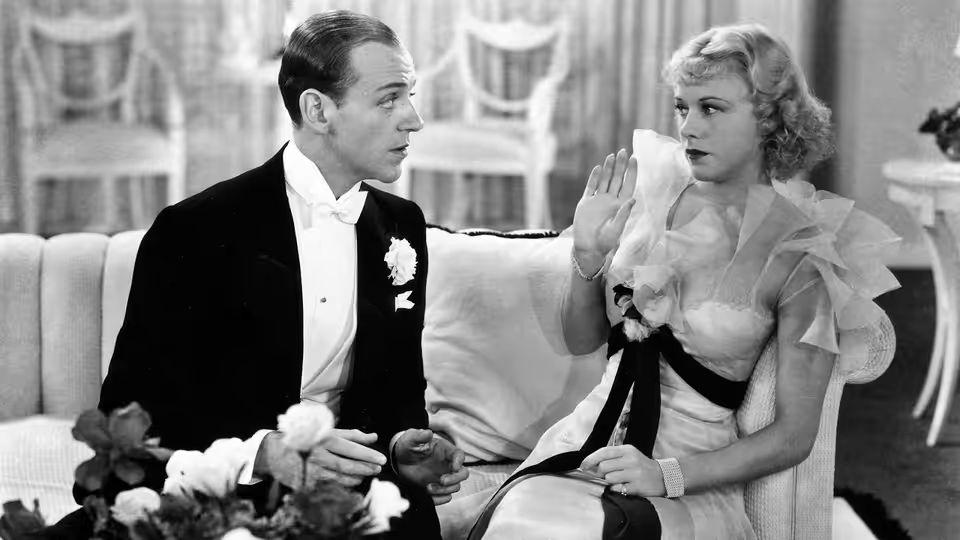
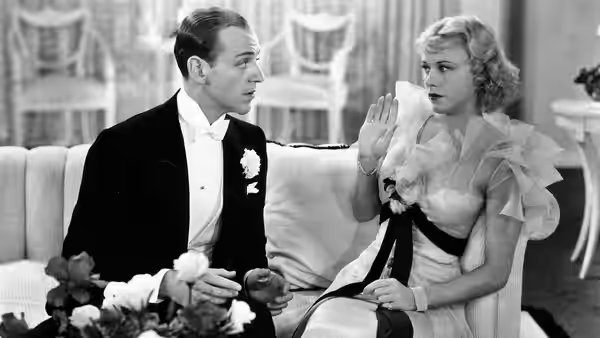
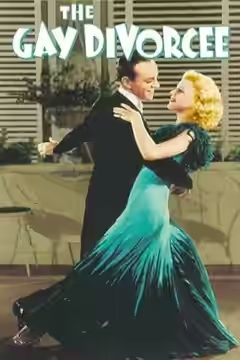
The four minutes come when Guy has followed Mimi onto a hotel terrace at night and she has told him, again, to go away. He sings to her and she keeps trying to leave, and each time she turns for the door he is somehow in front of it, so the number is a pursuit before it is a dance. David Abel’s camera keeps them both in frame from head to foot and moves only to follow them, with almost no cuts. We found we were holding our breath at the point where Rogers stops fighting the step and is dancing with him before she has decided to. It moved us far more than a comedy about a staged adultery had any business doing.
The other numbers are a mixed bag. ‘A Needle in a Haystack’ has Astaire dressing to go out and dancing round his flat while the valet hands him his clothes, and it is light and quick and exactly as long as it should be. ‘The Continental’, the finale, is the opposite. It starts well, with Guy and Mimi rigging a trick with silhouettes to fool Tonetti so they can slip down to the floor. Then the chorus arrives in black and white, and William Hamilton cuts between overhead formations, the couple, the chorus again, and the number keeps arriving at an ending and declining to take it. We admired it for a while. Then we started looking at the chorus girls’ shoes.
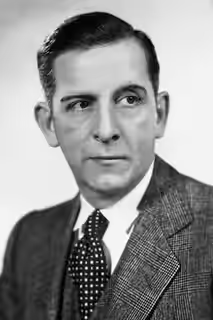
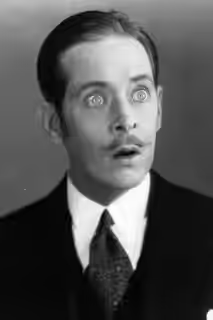
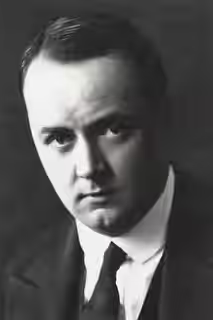
Between the songs the film belongs to its character actors. Edward Everett Horton’s Egbert flusters best when nobody is on screen to react to him. Alice Brady’s Hortense starts every sentence three times and finishes none of them. Erik Rhodes plays Tonetti, the professional co-respondent, as a man with a password about chance and fate that he cannot get right, and every scene he is in moves faster than the ones either side of it. Eric Blore is a waiter for whom taking an order is a negotiation. Betty Grable turns up for one song with Horton and is gone before the film notices what it had.
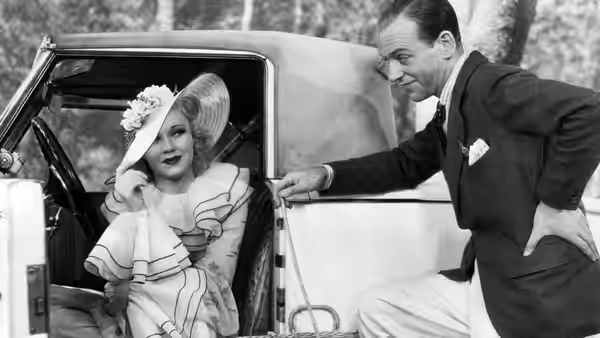
The script, by George Marion Jr., Dorothy Yost and Edward Kaufman, has one misunderstanding and stretches it over an hour. Mimi believes Guy is the hired man; we have known he is not since the customs shed; and every scene until she learns it has to find a fresh reason for her to run away from him. It also asks us to find a man charming for following a woman across two countries after she has asked him to stop, and Astaire’s manners do most of the work of making that bearable. The new songs, by Con Conrad and Herb Magidson and by Mack Gordon and Harry Revel, are serviceable; set beside Porter’s survivor they sound like what they are. Walter Plunkett dresses Rogers in gowns that move a beat behind her, so every turn leaves a trail.
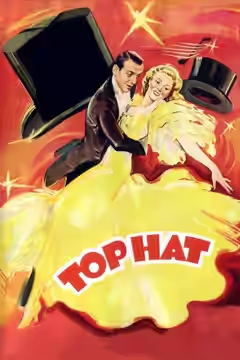
Astaire and Rogers made better films than this. Top Hat (1935) has a tighter plot and better songs. But this is where the two of them work out what they are for. The film does not yet know how good they are together; it gives them one dance, gets out of the way, and goes back to Horton falling over things.
See it for the terrace. Watch it at home, where you can be honest about the finale and go and make the tea, and where the long takes of the duet lose nothing. It runs 105 minutes. Four of them are the reason anyone still bothers, and they are enough.