Film review

Singin' in the Rain

1952 · Directed by Stanley Donen, Gene Kelly · 1h 43m · U

In a sentenceWe could happily watch Jean Hagen argue with recording equipment for another hour

ComedyRomance

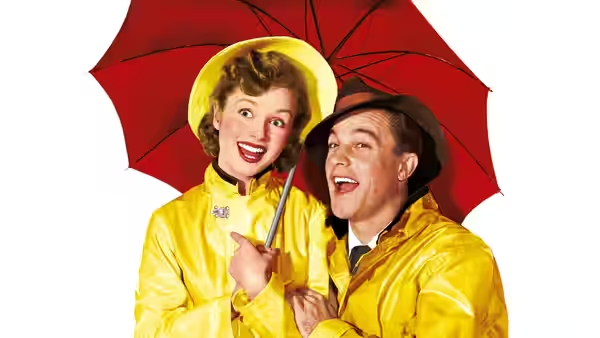
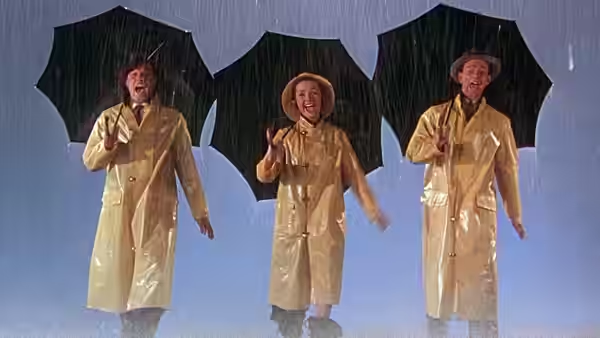
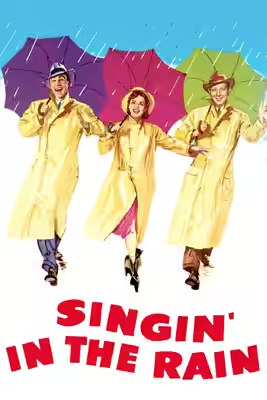
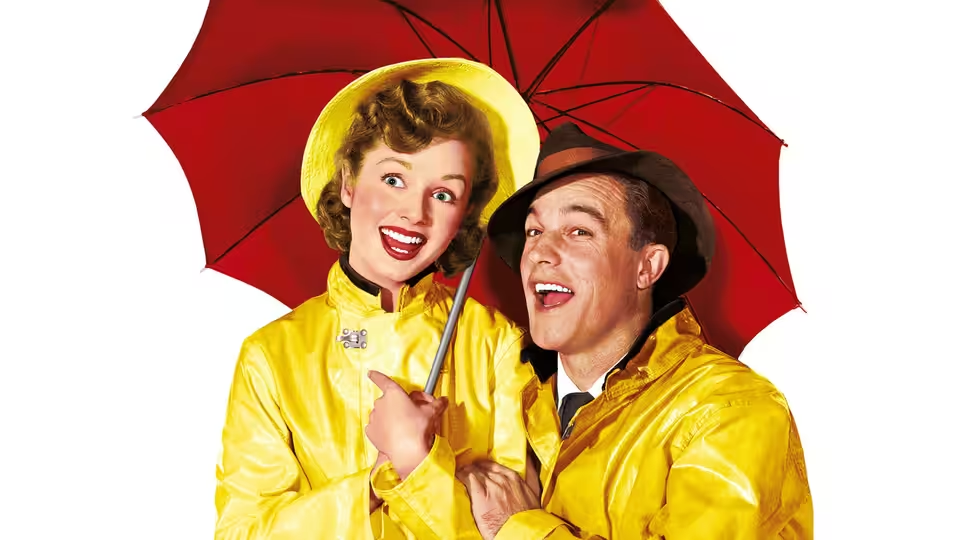
Hollywood is learning to make films with sound, and Don Lockwood (Gene Kelly) is caught in the change. Around him are Cosmo Brown (Donald O’Connor), Kathy Selden (Debbie Reynolds) and Lina Lamont (Jean Hagen), as performers and film-makers discover how much a microphone can complicate their work. Studio routines become material for comedy, romance and song-and-dance numbers, with elocution lessons and recording troubles among the obstacles. Stanley Donen and Kelly direct a musical set amid the picture business of the late 1920s, where being able to command the screen no longer means being able to stay silent.

Plays from YouTube when you press play; nothing loads from them until then.

Fi1m review

Stanley Donen and Gene Kelly’s musical makes the arrival of sound in Hollywood funny, troublesome and a reason to dance. The romance is slight, but the comic timing and pleasure of the performances make this an easy recommendation.

Singin’ in the Rain is generous entertainment with a useful comic suspicion of the people who make it. Directors Stanley Donen and Gene Kelly turn Hollywood’s move to sound into a succession of practical difficulties, giving talented people equipment that does not care how famous they are. We recommend it without requiring any fondness for old Hollywood: the jokes make sense the moment somebody has to work with the new machinery. Betty Comden and Adolph Green’s screenplay gives the singing and dancing room while keeping the business of making a film in view.

Jean Hagen, as Lina Lamont, is the chief reason the comedy stays so sharp. We laughed aloud at Lina’s trouble with the microphone. Hagen gives her indignation such conviction that we can enjoy the absurdity without dismissing the performer. She makes the difficulties of recording a voice funny through timing and temperament, and the scene has no need of a song to keep it moving.

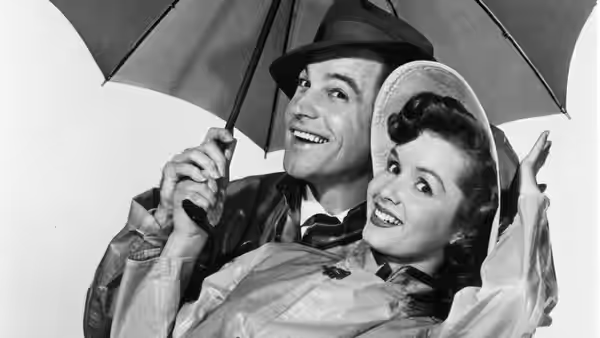
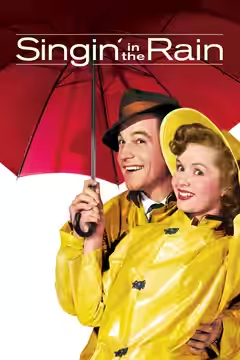
Kelly’s Don Lockwood gives the film its assurance, and Donald O’Connor’s Cosmo Brown supplies a welcome unruliness. Kelly never seems to be counting steps, while O’Connor lets us feel the effort of a physical joke. Debbie Reynolds, as Kathy Selden, holds her place alongside them without seeming like an accessory to their act. The romance is thinly written, though Reynolds gives Kathy enough presence to keep it from feeling like a pause between routines.

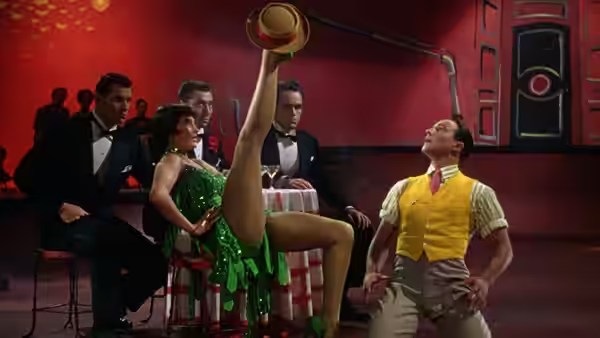
Harold Rosson’s photography gives the dancers space, allowing us to follow their movements clearly. Adrienne Fazan’s editing preserves that pleasure while allowing the comic performances their pauses, particularly when Hagen has something to object to. The production design makes the studio surroundings enjoyable to look at without stealing attention from the people at work in them. Walter Plunkett’s costumes contribute to the bright colour and keep the period visible even when the dancing takes over.

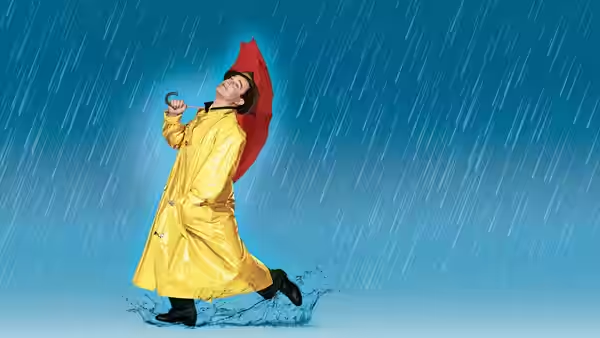
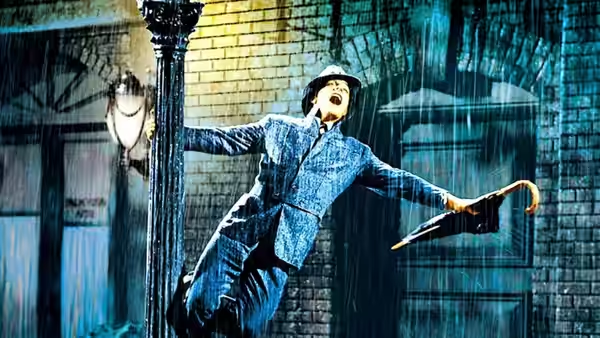
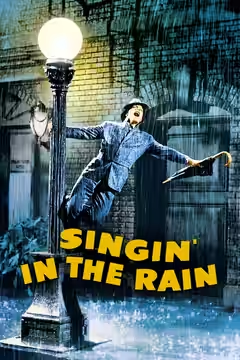
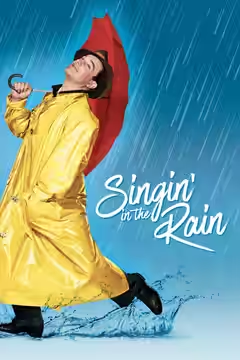
Nacio Herb Brown’s music has the directness this kind of comedy needs: tunes that make an immediate impression and still leave room for a performer to play. The title number is a good measure of the film’s confidence, trusting Kelly’s dancing in the rain to hold our attention. It made us happier than we expected; his pleasure in moving is so clear that the sequence does not need a further joke to justify itself.

The film is less curious about anyone who might be left behind by the change to sound. Comden and Green find plenty of comedy in professional panic, but their sympathy has limits when somebody cannot adapt. That keeps things light, though it also makes the studio business seem kinder than some of the jokes suggest. The attention stays chiefly with people who can keep entertaining us, leaving the less fortunate outside the picture.

At 103 minutes, it gives its performers time without making us impatient for the story to resume. It passes the musical’s basic test of making another song welcome, even when the comedy would be enough to keep us watching. If musicals usually test your patience, we would try this one before giving up on them.
Critical consensus AI synthesised

5 of 6
Positive
5
Mixed
0
Negative
0
Little White Lies
17 October 2019 · 3/5/5 · BP Flanagan
100

The timeless musical remains an effervescent, life-affirming wonder that pokes fun at Hollywood’s transition to sound through brilliant comic set pieces and dance numbers. It celebrates joy and dreams while glossing over the industry’s less fortunate side.

Read the full review →
Radio Times
★★★★★ · Tony Sloman
100

A collection of talents at their peak generated an enjoyable and clever movie that evokes the excitement of making motion pictures. It is the supreme original, an affectionate parody of the sound era whose every incident actually happened, and a unique work of art from MGM at its height.

Read the full review →
Sight and Sound
· Jason Anderson
95*

It is perhaps the greatest of movie musicals, the product of enormous toil yet defined by effervescence and joy that feels scarce today. Kelly and Donen’s masterwork is a meta celebration of Hollywood history with an inexhaustible bounty of ingenuity and unabashed showstoppers.

Read the full review →
The Hollywood Reporter
12 March 1952 · THR Staff
90*

The critic calls the film a gay, tuneful spoof of the late-1920s picture business that is poised to be another MGM hit thanks to its stars, songs, dancing and comedy. Direction by Kelly and Donen keeps a lively, tongue-in-cheek tone, with standout production numbers and excellent performances, especially from Kelly, O’Connor and Hagen.

Read the full review →
Empire
26 January 2006 · Ian Freer

The critic calls it one of the greatest musicals ever made, an ode to the joy of moviemaking, friendship and dance, with sophisticated integration of songs into the story and timeless appeal.

Read the full review →
Slant Magazine
25 July 2012 · Chris Cabin

The review hails the film as the greatest to date about the promises and pitfalls of change in cinema, praising its exuberant musical numbers, technical ingenuity and Kelly’s dual role as star and co-director. It singles out the film’s sincere appreciation of cinema as pure enchantment and the way it relates Kelly’s own artistic journey.

Read the full review →

Cast

Stills

Awards

Academy Awards, 1953

Nominated
Best Original Musical Score
Nominated
Best Supporting Actress

If you liked this, try…

Top Hat poster

Top Hat

1935 · For dancing with wit, and romantic complications that know when to stop talking.

The Young Girls of Rochefort poster

The Young Girls of Rochefort

1967 · For a whole town where colour, flirtation and dancing occupy nearly everyone.

Shall We Dance? poster

Shall We Dance?

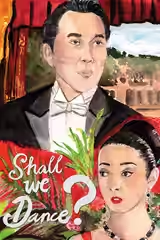
1996 · For the quieter pleasure of watching an inhibited adult learn to dance.

Strictly Ballroom poster

Strictly Ballroom

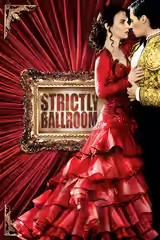
1992 · For competitive dancers whose formidable vanity makes the romance more entertaining.

The Artist poster

The Artist

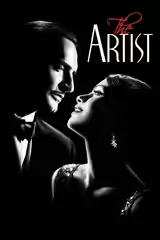
2011 · For another comedy about sound arriving before its leading man is ready.