Potsy Ponciroli’s revenge thriller strips out the dialogue and lets the soundtrack carry it, and for an hour that is a good trick. The action is brutal and well staged; the story beneath it is thin, and the film loses its nerve at the end.
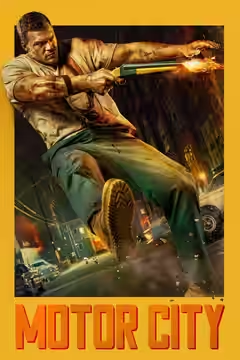
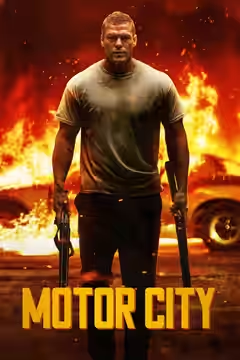
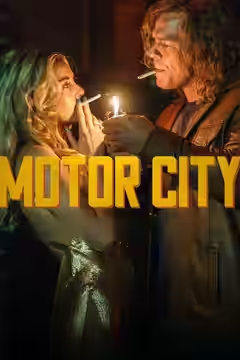
Potsy Ponciroli has made a revenge thriller in which nobody speaks. Not a word, for 104 minutes: the script by Chad St. John gives its cast looks, gestures and a record player, and asks them to carry a story of love, betrayal and a shotgun through 1970s Detroit on those alone. Motor City is a decent, muscular B-picture with one good idea, and the idea holds for about an hour. After that the songs start doing the work the film should be doing, and the ending misjudges what it has earned.
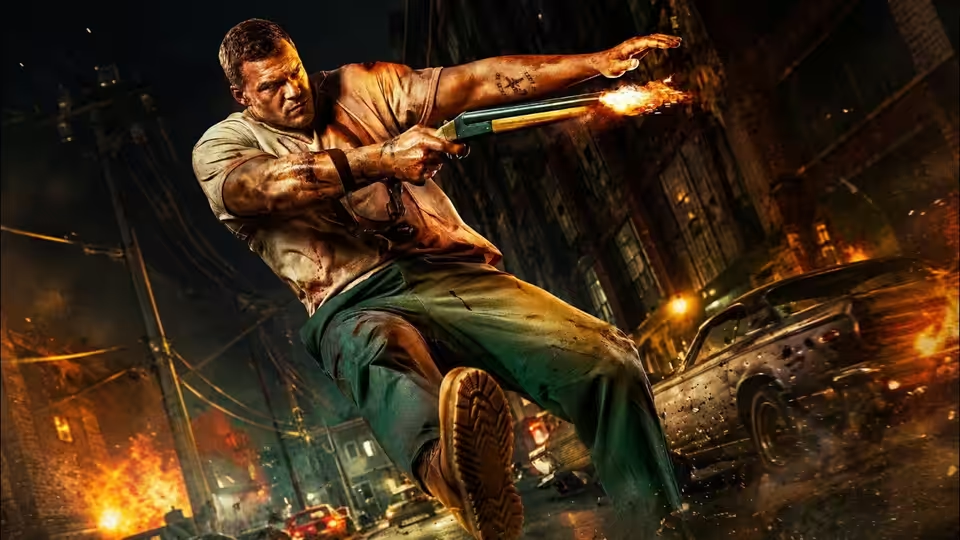
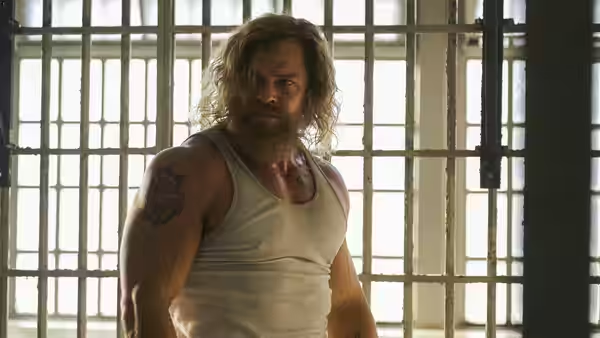
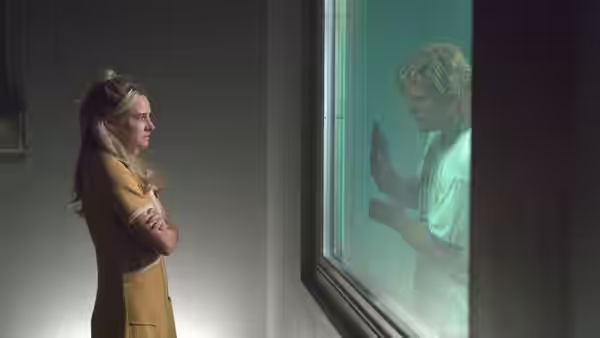
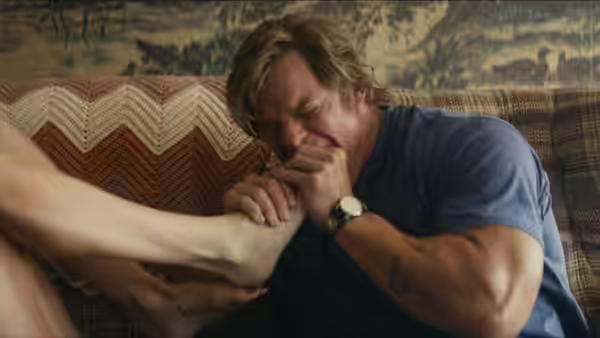
John Miller (Alan Ritchson) is a big, quiet man who builds cars and is in love with Sophia (Shailene Woodley). Reynolds (Ben Foster), who runs the city’s drug trade and keeps a police lieutenant, Savick (Pablo Schreiber), in his pocket, wants her as well. Miller is framed, arrested and sent to prison, and the second half is what he does about it. None of this is explained aloud. We are told it by a glance across a bar, a bag placed in a car, a cell door closing, and Ponciroli trusts us to keep up, which is more than most action films of this size manage.
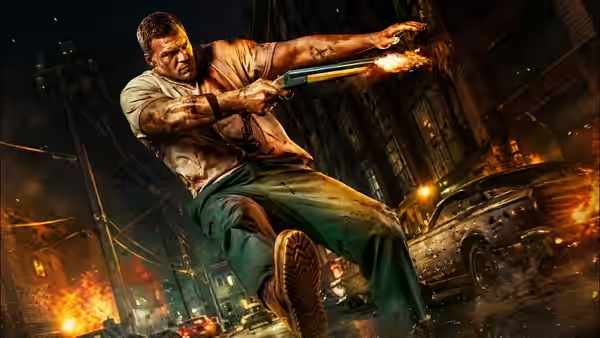
The method suits violence. The prison break, cut by Joe Galdo to the Moody Blues, is the film’s best stretch, a long piece of movement across yards and corridors where the song sets the tempo and the picture keeps it. An elevator fight, later, is fought in a space too small for the men in it, and Ritchson uses his bulk as a problem rather than an advantage, wedging and heaving. We held the armrest through it. John Matysiak shoots the city at night, in headlights and neon, and keeps the camera close enough that a fist landing has weight. This is well staged and it does not flinch.
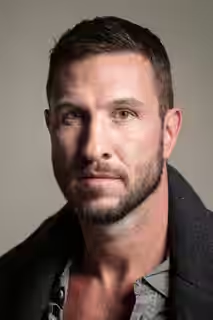
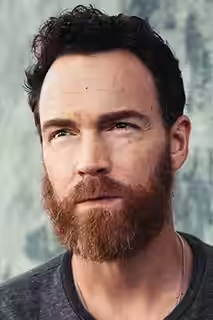
Foster is the performance to watch. Denied lines, he plays Reynolds as a man permanently on the edge of a decision, with a stillness that reads as threat, and he is the only one who seems to find the silence natural rather than a rule. Lionel Boyce and Amar Chadha-Patel, as Youngblood and Singh, do sharp, funny work as men who plainly have opinions and cannot voice them. Schreiber’s Savick is a wall of bad intent. Ritchson has presence and a face the camera likes when it is bruised; whether he can act is a question the film’s conceit is built not to answer, and it does not.
The trouble is Sophia. Woodley is given a woman to be wanted by two men and little else, and a film that has removed everyone’s voice has removed hers at a particular cost. She is looked at; she rarely does. The songs, so effective early, become a habit. Fleetwood Mac’s “The Chain” arrives exactly when you expect it, and every slow-motion walk comes with a record we already know. Somewhere past the hour we felt managed rather than moved, cued to a feeling by a chorus. Then, in the last act, the needle drops stop and Steve Jablonsky’s score takes over, thick and low and anonymous, and the film goes flat at the moment it most needs lift.
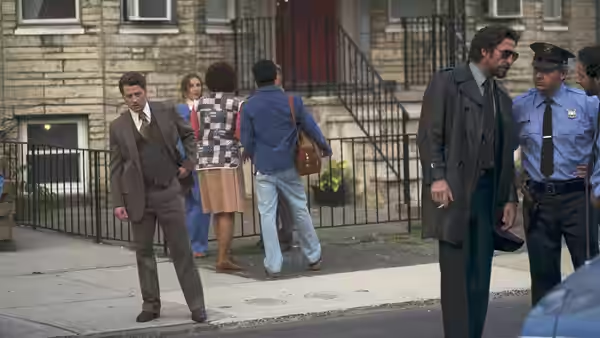
Mayne Berke’s Detroit is a 1970s of the mind rather than the record, vinyl banquettes and rust and wide chrome, and it is handsome. Amy Roth puts Foster in tailoring and Ritchson in denim, which counts as characterisation here, since there is nothing else to do it. Jack White turns up at a piano, which is the film’s idea of a joke, and a fair one.
Against its ancestors it is honest pulp. Point Blank (1967) and Le Samouraï (1967) also starved their men of words, but in those films the man did not speak because of who he was. Here nobody speaks because the film has decided so, and you can feel the decision. John Woo’s Silent Night (2023) tried the same wager and was both sillier and sadder. Ponciroli’s version is more fun and thinks less. Its final stretch, which we will not describe, adds a coda the film did not need and does not survive.
See it with the sound up and expectations moderate. It is a lean 104 minutes, it hits hard, and it has a soundtrack you will hum on the way home. What else you remember of it by the weekend is another matter.