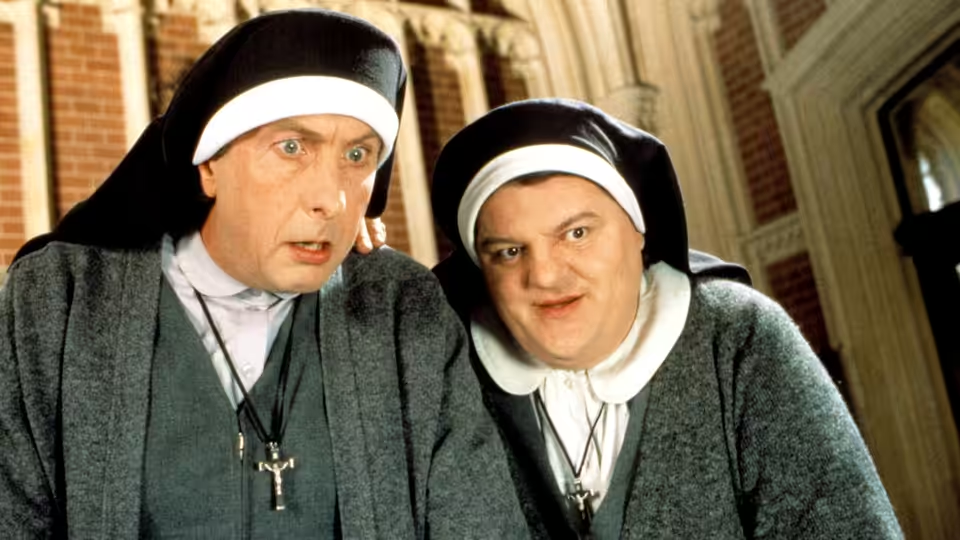
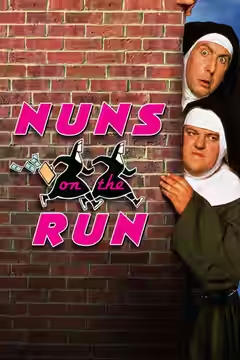
Eric Idle and Robbie Coltrane make the nun disguises funny, but Jonathan Lynn struggles to fill a film around them. Their company is pleasant; the predictable farce and intrusive car chases make this difficult to recommend.
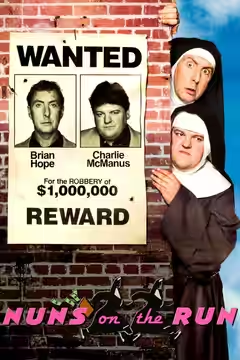
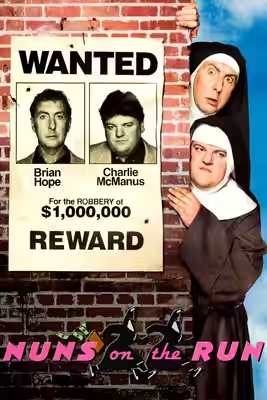
Nuns on the Run has an agreeable comic pair and too little for them to do, which makes its 89 minutes feel longer than they ought to. Jonathan Lynn writes and directs a crime comedy whose principal attraction is Eric Idle and Robbie Coltrane dressed as nuns. The sight is funny enough to justify the starting point. What follows needs a steadier supply of fresh trouble, and Lynn too often settles for complications that we can see coming before the characters do.
Idle’s Brian Hope and Coltrane’s Charlie McManus are the reason the premise survives as long as it does. The actors have an easy rapport, and their comic contrast gives the shared disguise some variety without much explanation. We laughed at the two of them in their habits, because their pairing makes the attempt to pass as nuns so plainly improbable. Neither needs the film to keep pointing out the joke. Both can make weak material playable, though even that skill starts to look like hard work when the script returns to the same source of embarrassment.
Lynn’s screenplay gets some mileage from double meanings, where an innocent-sounding remark can carry a second, less respectable sense. These are modest pleasures, and the film is more likeable when it trusts us to catch them without extra fuss. The gags involving poor eyesight are less welcome: repetition turns a comic vulnerability into a convenient way of making another obvious joke. A farce can be broad and still have ingenuity, but here too many situations arrive with their likely punchline already apparent.
The car chases are the larger nuisance. They add movement without giving the central pair much that is funny to play, and their interruptions make an already slight comedy feel cluttered. David Martin’s editing cannot find enough comic urgency in material whose next step is so easy to guess. We do not need this sort of farce to be plausible, but we do need each complication to make the deception harder or the behaviour funnier.
Michael Garfath’s cinematography is serviceable, with little that makes the broad comedy more rewarding to look at. The actors remain the principal visual attraction, which is reasonable enough until the situations begin to repeat. The music, credited to Frank Fitzpatrick, David Kitay, Boris Blank, Hidden Faces and Dieter Meier, does not make those passages much livelier either. The presentation gives us little reason to stay interested once the script has exhausted its most useful idea.
There is enough goodwill here to keep the film from becoming an ordeal, and that matters in a comedy so dependent on its performers. But farce needs mounting pressure, with each fresh lie making the next encounter more difficult, and Lynn offers too many familiar complications. The central joke remains easy to grasp long after the film has stopped finding much to do with it. Save this one for an evening when spending time with Idle and Coltrane is the main requirement.