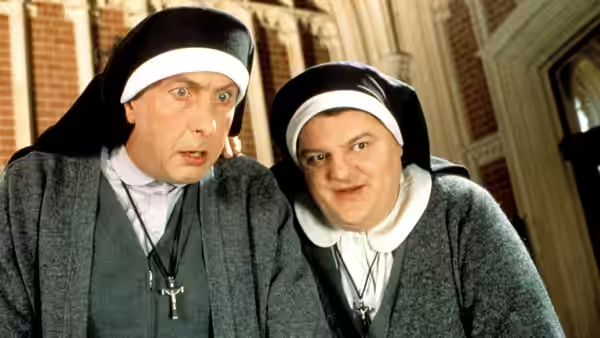
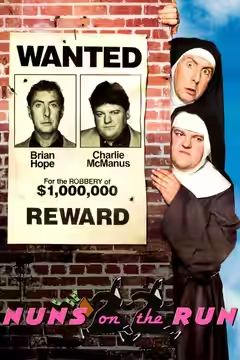
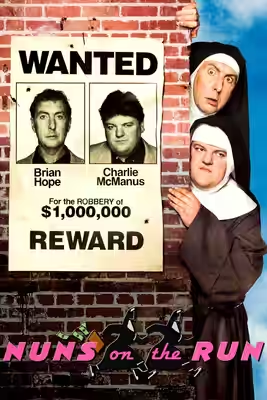
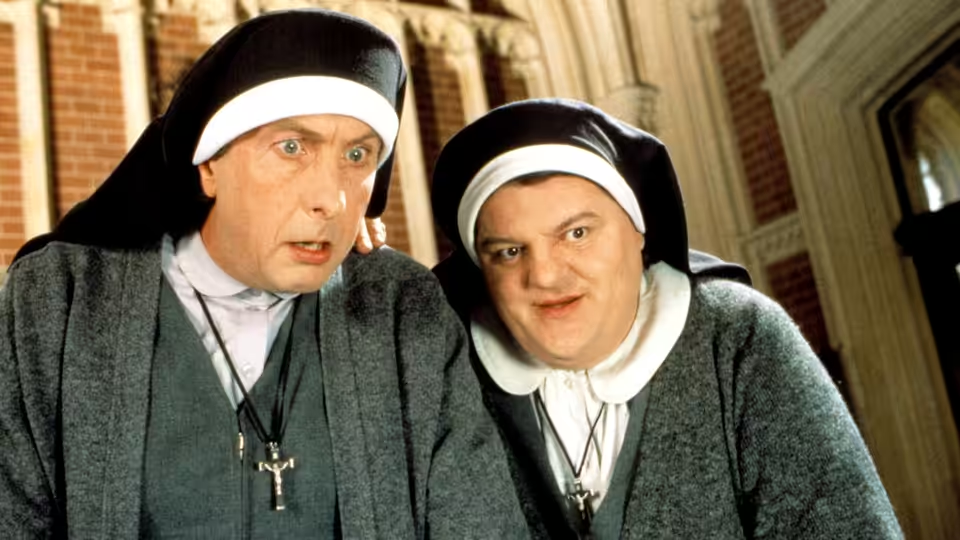
Brian Hope (Eric Idle) and Charlie McManus (Robbie Coltrane) disguised as nuns on a street
Film review

Nuns on the Run

1990 · Directed by Jonathan Lynn · 1h 29m

In a sentenceEric Idle and Robbie Coltrane are funny enough to make us wish somebody had written them a second joke

Brian Hope (Eric Idle) and Charlie McManus (Robbie Coltrane) disguise themselves as nuns, attempting to keep their identities hidden beneath religious habits. Around them are Sister Superior (Janet Suzman), Sister Mary of the Sacred Heart (Doris Hare) and Sister Mary of the Annunciation (Lila Kaye). The clothes give the two men a cover story, but they still have to speak and behave in ways that will sustain it. Their problem is keeping the deception going without attracting the attention they are trying to avoid.

Plays from YouTube when you press play; nothing loads from them until then.

Fi1m review

Eric Idle and Robbie Coltrane make the nun disguises funny, but Jonathan Lynn struggles to fill a film around them. Their company is pleasant; the predictable farce and intrusive car chases make this difficult to recommend.

Nuns on the Run has an agreeable comic pair and too little for them to do, which makes its 89 minutes feel longer than they ought to. Jonathan Lynn writes and directs a crime comedy whose principal attraction is Eric Idle and Robbie Coltrane dressed as nuns. The sight is funny enough to justify the starting point. What follows needs a steadier supply of fresh trouble, and Lynn too often settles for complications that we can see coming before the characters do.

Idle’s Brian Hope and Coltrane’s Charlie McManus are the reason the premise survives as long as it does. The actors have an easy rapport, and their comic contrast gives the shared disguise some variety without much explanation. We laughed at the two of them in their habits, because their pairing makes the attempt to pass as nuns so plainly improbable. Neither needs the film to keep pointing out the joke. Both can make weak material playable, though even that skill starts to look like hard work when the script returns to the same source of embarrassment.

Lynn’s screenplay gets some mileage from double meanings, where an innocent-sounding remark can carry a second, less respectable sense. These are modest pleasures, and the film is more likeable when it trusts us to catch them without extra fuss. The gags involving poor eyesight are less welcome: repetition turns a comic vulnerability into a convenient way of making another obvious joke. A farce can be broad and still have ingenuity, but here too many situations arrive with their likely punchline already apparent.

The car chases are the larger nuisance. They add movement without giving the central pair much that is funny to play, and their interruptions make an already slight comedy feel cluttered. David Martin’s editing cannot find enough comic urgency in material whose next step is so easy to guess. We do not need this sort of farce to be plausible, but we do need each complication to make the deception harder or the behaviour funnier.

Michael Garfath’s cinematography is serviceable, with little that makes the broad comedy more rewarding to look at. The actors remain the principal visual attraction, which is reasonable enough until the situations begin to repeat. The music, credited to Frank Fitzpatrick, David Kitay, Boris Blank, Hidden Faces and Dieter Meier, does not make those passages much livelier either. The presentation gives us little reason to stay interested once the script has exhausted its most useful idea.

There is enough goodwill here to keep the film from becoming an ordeal, and that matters in a comedy so dependent on its performers. But farce needs mounting pressure, with each fresh lie making the next encounter more difficult, and Lynn offers too many familiar complications. The central joke remains easy to grasp long after the film has stopped finding much to do with it. Save this one for an evening when spending time with Idle and Coltrane is the main requirement.

Critical consensus AI synthesised

52
Positive
1
Mixed
3
Negative
3

The available reviews lean towards disappointment, though several find enough in Eric Idle and Robbie Coltrane’s partnership to raise a laugh. Praise centres on their comic contrast and ease together, with even less favourable notices crediting the performances for making weak material work. The nun disguises provide some amusement, but the broader agreement is that the farce delivers occasional laughs rather than sustained comic invention.

The divide is over how much those laughs compensate for familiar plotting and mechanical situations. Variety is the clearest supporter, finding the comedy enjoyable and efficiently directed, with witty double entendres, though some eyesight gags go too far. Elsewhere, complaints cluster around clichés, car chases and a lack of surprise; Empire argues that the situations underuse the leads. The spread is wide, but specific judgements are unavailable for two of the seven reviews, limiting how fully that range can be explained.

Variety
31 December 1989 · Variety Staff
75*

The review finds the comedy enjoyable and efficiently directed, with Idle and Coltrane making a convincing comic pair. It praises the wit of the double entendres but says the sight gags about one character’s poor eyesight go too far at times.

Read the full review →
RogerEbert.com
64*

The page content is blocked, so the critic’s verdict cannot be established. No specific praise or complaint is available to report.

Read the full review →
The New York Times
16 March 1990
64*

The page identifies this as a New York Times film review, but its text is inaccessible. The critic’s verdict and any specific praise or complaint cannot be determined.

Read the full review →
Radio Times
★★★ · John Marriott
60

The review finds the farce intermittently entertaining but weighed down by clichés. It praises the natural spark between Robbie Coltrane and Eric Idle, while faulting the inane car chases and clutter.

Read the full review →
Time Out
· DW
40*

The review finds some humour in the men’s nun disguises but says it is not enough to sustain the film. The available text singles out that comic premise as amusing, though insufficient.

Read the full review →
Empire
1 January 2000 · Tom Tunney
30*

The critic finds the comedy predictable and mechanical, with little surprise or spontaneity. They acknowledge occasional genuine giggles but complain that the scenarios fail to make the most of the leads.

Read the full review →

Straight answers AI written, from our review

Is Nuns on the Run worth watching?
Nuns on the Run is difficult to recommend beyond admirers of Eric Idle and Robbie Coltrane, and we score it 54/100. We enjoy their easy rapport and improbable disguises, but the predictable farce repeats its central joke while car chases interrupt the comedy.
How long is Nuns on the Run, and what is it rated?
Nuns on the Run runs 1h 29m. It is a comedy and crime film.
Where can I watch Nuns on the Run in Canada?
Nuns on the Run is not on any streaming or rental service in Canada at the moment. It is available in 7 other countries; change your country at the top of the page to see where. Availability is checked daily.
How violent or frightening is Nuns on the Run, and is it suitable for children?
Nuns on the Run carries a UK 12 certificate, so it is not a choice for younger children. The comedy includes suggestive double meanings and car chases; the certificate is the clearest guide to suitability, as our review does not establish how strong any violence or frightening material is.
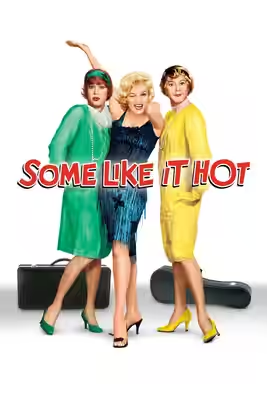
How does Nuns on the Run compare to Some Like It Hot?
Nuns on the Run is the weaker farce beside Some Like It Hot, which we recommend for its sharper jokes and better-sustained comic pressure. Both use desperate disguises, but Idle and Coltrane have to work harder with repetitive material; their pairing is the main reason to choose it instead.
What should I watch after Nuns on the Run?
After Nuns on the Run, try Some Like It Hot (1959, Fi1m 92): Desperate disguises and sharper complications, with the comic pressure kept on. Then The Ladykillers (1955, Fi1m 86): A criminal scheme meets formidable respectability, with considerably nastier comic consequences; and Sister Act (1992, Fi1m 78): Another convent refuge, with more affection for the women already living there.

Cast

If you liked this, try…

  1. Some Like It Hot (1959, Fi1m 92)Desperate disguises and sharper complications, with the comic pressure kept on.

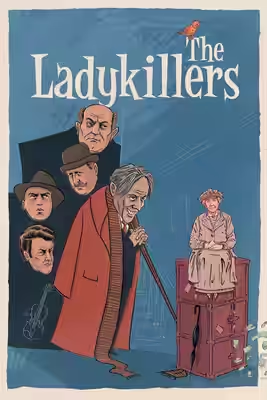
  2. The Ladykillers (1955, Fi1m 86)A criminal scheme meets formidable respectability, with considerably nastier comic consequences.

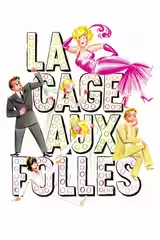
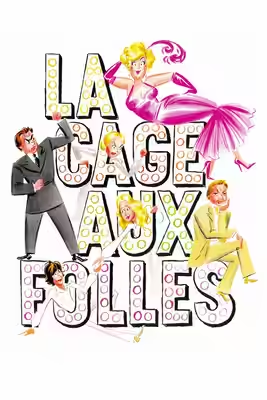
  3. La Cage aux Folles (1978) · not reviewed yetThe strain of keeping up appearances gives the farce warmer human stakes.

  4. Sister Act (1992, Fi1m 78)Another convent refuge, with more affection for the women already living there.

  5. The Mad Adventures of Rabbi Jacob (1973) · not reviewed yetReligious impersonation becomes a busier farce, driven by panic and mistaken identity.

Free account

Know what to watch tonight

Two lists that know where things are streaming, collections you can share, your own score beside ours, and Discover that remembers what you have seen.

  • Want to see, sorted by what is streaming now
  • Seen, with your score out of ten
  • No adverts, ever