Jim Drake’s poor sequel remains amiable even as Gene Quintano’s script runs short of jokes. George Gaynes and G. W. Bailey offer some relief, but the civilian recruits do little to justify another outing.
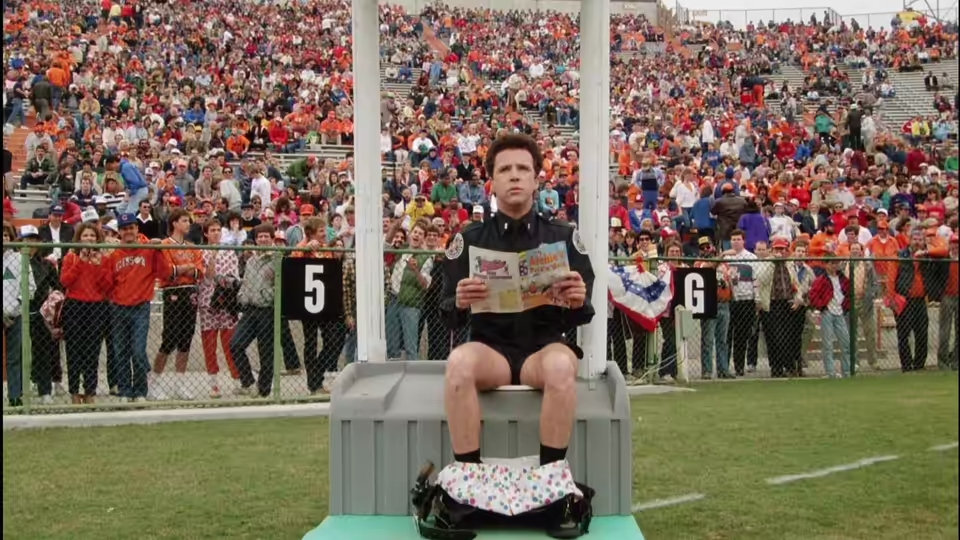
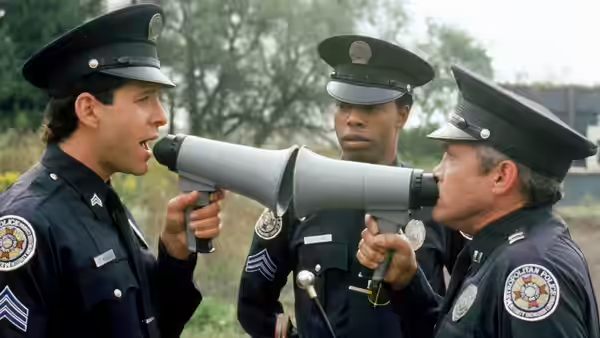
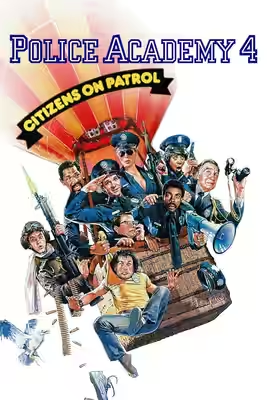
The idea behind Police Academy 4: Citizens on Patrol is simple enough: Commandant Lassard recruits civilians to help the police, giving the regular cast new people to bounce off. Jim Drake approaches the business cheerfully, and there is something welcome about a comedy that asks for so little solemnity. The trouble is that it asks for equally little invention. This is a poor sequel, full of routines that do not become funnier through familiarity.
Gene Quintano’s screenplay never makes much of the recruits’ arrival. It keeps presenting opportunities for slapstick without developing much interest in what happens between them. The volunteers ought to make the established officers behave differently, but the film remains content to let familiar personalities take their turns. When a gag misses, the next one has to start again from nothing. At 88 minutes this should be light work; instead, the shortage of a story makes even the brisk passages feel longer than they are.
G. W. Bailey gives Captain Harris’s exasperation enough energy to suggest that at least somebody here has something at stake. We laughed at his irritation, because he makes the indignity matter even when the gag itself hardly does. Bobcat Goldthwait as Zed and Tim Kazurinsky as Sweetchuck provide some welcome silliness, helped by a willingness to look foolish without asking to be liked for it. These are modest pleasures, but in this company we start to value them.
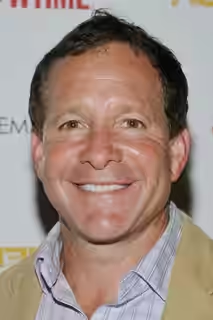
George Gaynes fares better still as Commandant Lassard, making the thin material feel briefly worth attending to. His scenes benefit from the simple sense that somebody has found a joke worth telling. Steve Guttenberg’s Mahoney is less persuasive: the relaxed manner becomes disengagement, leaving stretches without much of a comic lead. The ensemble is willing enough, but willingness cannot supply a reason for everybody to be here.
Robert Saad’s cinematography keeps the performers clearly readable, which is useful when so much depends on a reaction. Yet the staging seldom gives a joke an extra beat of discovery or makes the relationship between bodies in the frame amusing. Trevor Williams’s production design likewise provides serviceable surroundings without contributing much to the humour. The cast remain responsible for almost all the amusement, including the stretches when the material gives them little chance of providing it.
David Rawlins’s editing keeps the separate routines moving, but moving on is about the only remedy the film has for a failed joke. There is little accumulation of comic trouble and little satisfaction in seeing one mishap lead to another. Robert Folk’s score supplies a buoyancy the scenes struggle to maintain unaided. Jim Drake keeps the tone good-natured, which stops the experience becoming unpleasant without making it particularly rewarding.
A broad police comedy need not have an intricate plot, and a taste for daft slapstick is no disqualification. It does need jokes that are shaped, timed and allowed to build, particularly when it offers so little else to hold our interest. There are enough flickers of that here to spare the cast a blanket dismissal, though nowhere near enough to recommend the film. Come for George Gaynes only if waiting between his appearances sounds like an acceptable evening.