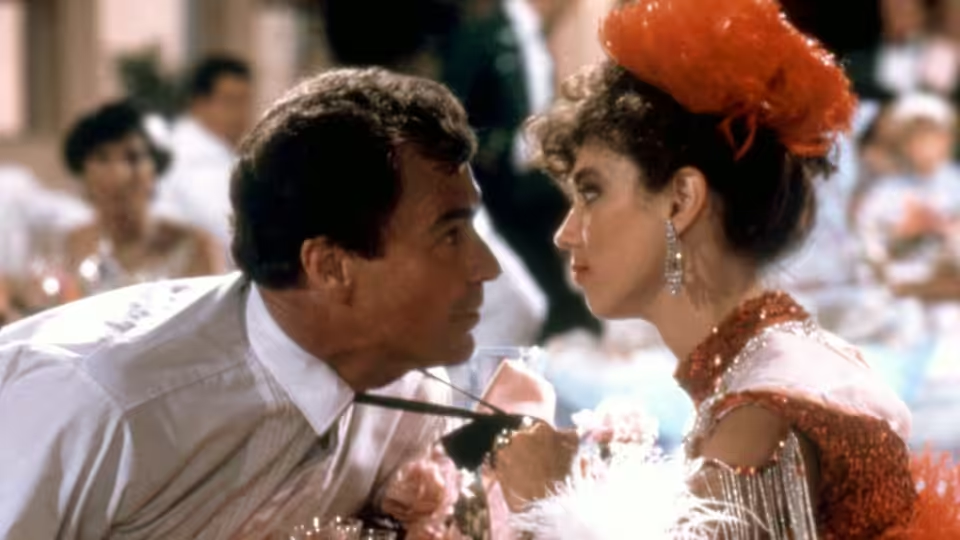
Bob Clark’s crude school farce has some wit, a welcome role for Kaki Hunter and more repetition than it needs. It is agreeable enough for the already interested, though choosing a bigoted opponent does not automatically make the jokes funny.
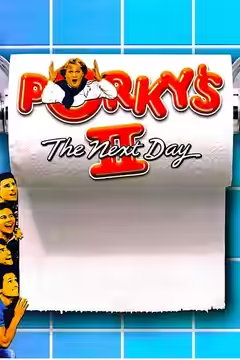
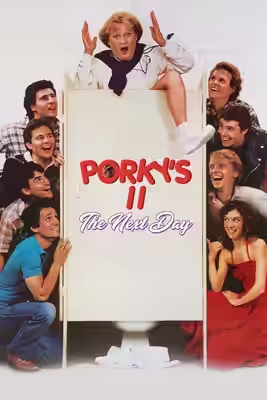
Bob Clark’s Porky’s II: The Next Day finds a useful target for its crude comedy: a school Shakespeare festival under attack from a bigoted clergyman. There is pleasure in watching a film this cheerfully smutty take offence at somebody else’s intolerance, and some wit among the familiar gags. It is a decent, limited sequel, worth considering chiefly for Kaki Hunter and its willingness to let women be funny. Anyone hoping for a thorough comic rethink should lower those hopes.
The screenplay, credited to Alan Ormsby, Roger Swaybill and Bob Clark, gives Reverend Flavel’s crusade a useful place in the proceedings. His objection to the festival supplies the teenagers with something to be indignant about beyond interference with their own appetites. That is a sensible way to organise a farce, since pompous opposition can produce laughs without making the youngsters particularly admirable. The film does, however, lean too heavily on our approval of its target, as though recognising a bigot were sufficient preparation for a joke.
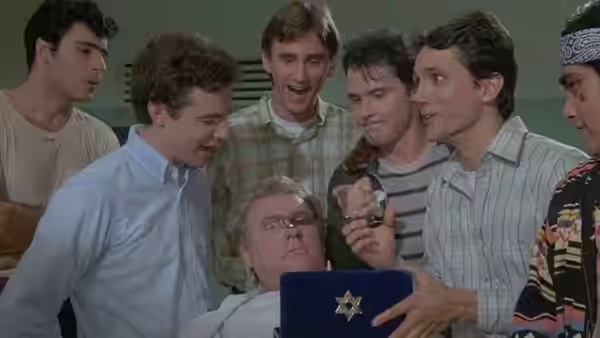
Dan Monahan’s Pee Wee and Wyatt Knight’s Tommy belong to a comedy that takes the boys’ claim on our attention largely for granted. Their shared eagerness has some charm, though the familiar raunch becomes wearing when enthusiasm has to supply the whole joke. Bill Wiley’s Reverend Flavel is a useful opponent, with a campaign against school Shakespeare that hardly requires exaggeration to sound absurd. The broadness suits this sort of farce, but it also limits how surprising the exchanges can be.
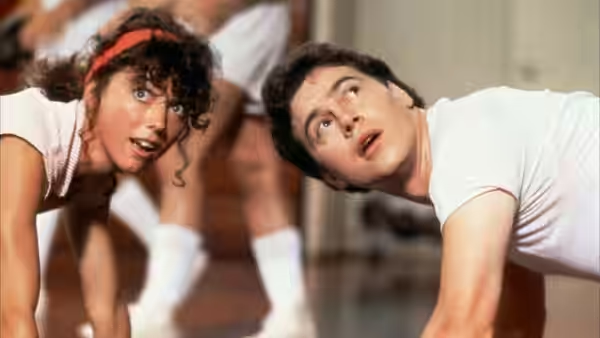
Kaki Hunter, as Wendy, provides the most persuasive reason to stay with it. We laughed at her comic assurance; her timing gives the crude material a welcome lightness. The film allows women a share of the humour that matters in a comedy whose appeal might otherwise depend entirely on liking the boys. Its comparatively generous attitude makes the company more agreeable, even when the material is doing little to deserve the performers’ efforts.
Reginald H. Morris’s cinematography is serviceable, leaving the performances to do most of the work. That plainness helps when a performer has the timing to justify our attention, but gives the weaker jokes little assistance. Stan Cole’s editing feels insufficiently selective about which comic business deserves room, and some of the broader material outstays its welcome. The pace sometimes gives us time to notice how thin the joke was in the first place.
Carl Zittrer’s music supplies encouragement, although the comedy hardly needs further permission to be boisterous. Bob Clark is more convincing when the ensemble finds an easy rhythm than when the film insists on its own cheek. The school farce gives him a dependable arrangement: an adult objects loudly, leaving the younger characters room to misbehave. He has less success finding fresh amusement in the familiar sexual material, which needs more variation than another bout of collective enthusiasm can provide.
At 98 minutes, Porky’s II: The Next Day asks for a manageable evening, although the weaker stretches still feel padded. There is enough warmth here to keep the crudity from becoming sour, and enough wit to make the repetition mildly frustrating. Those already fond of this sort of school comedy will have an easier time forgiving its limitations. Try it for Kaki Hunter, with a tolerance for jokes that arrive more noisily than they need to.