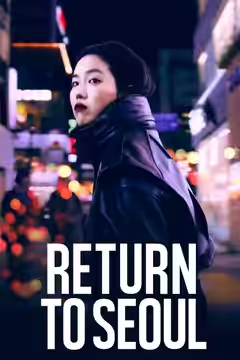
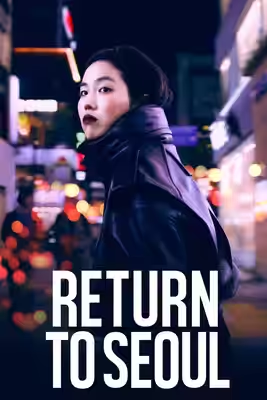
Davy Chou’s second feature sends a French adoptee back to Korea and then refuses to give her, or us, the reunion the setup promises. Park Ji-min, acting for the first time, is the reason to see it; the later chapters are thinner than the first.
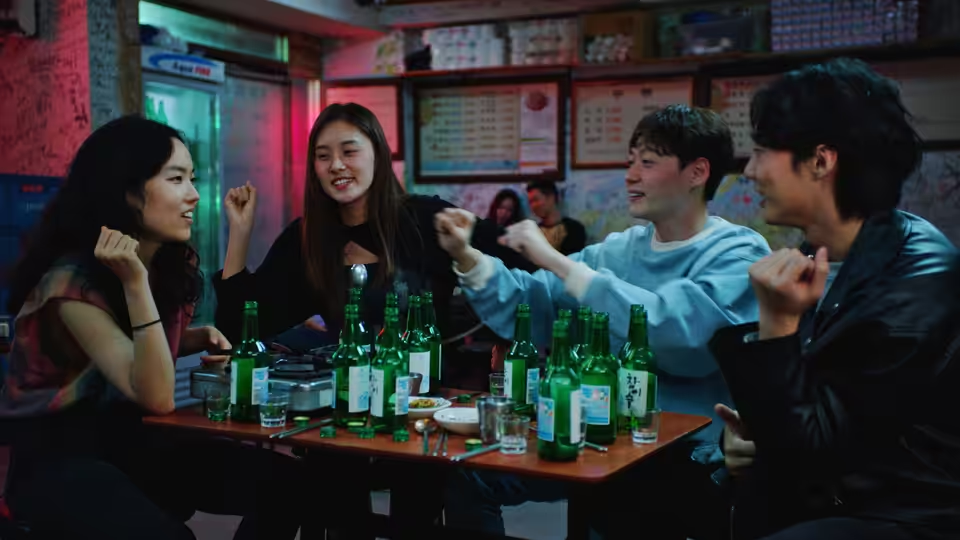
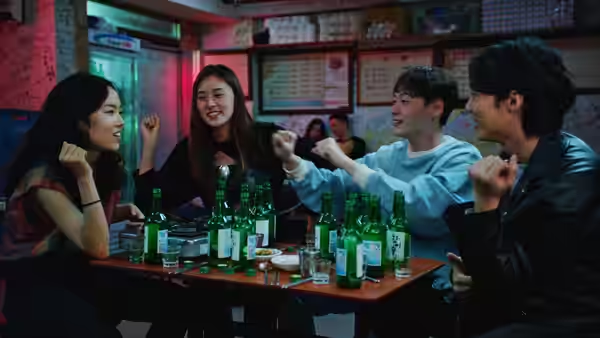
Freddie (Park Ji-min) arrives in Seoul with a rucksack and no plan, and on her first night out she takes over a restaurant. She pushes tables together, pours soju for strangers, tells Tena (Guka Han), the guesthouse receptionist who has made the mistake of befriending her, that in France you look people in the eye when you drink. She is French, she insists, and she is not here to find anyone. A few scenes later she is sitting in the Hammond adoption agency asking them to send a telegram. Davy Chou, who wrote and directed, spends the rest of his 119 minutes on the gap between what Freddie says she wants and what she does, and he never once closes it for us.
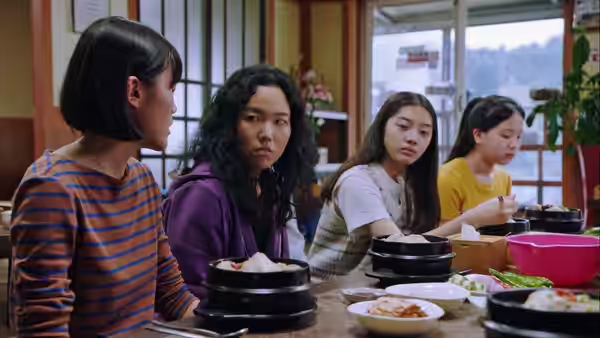
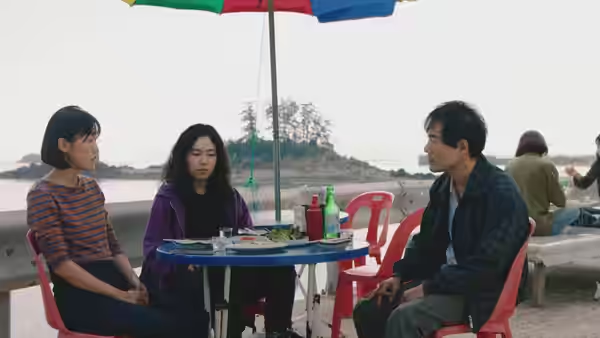
The father (Oh Kwang-rok) replies, and Freddie goes to meet him with Tena along to translate. He is a soft, wrecked man who drinks too much and apologises in a way that asks to be forgiven on the spot. Freddie’s aunt (Kim Sun-young) does most of the talking. Freddie’s grandmother (Heo Jin) takes her face in her hands and weeps. Freddie sits through all of it like someone waiting for a bus. Afterwards the father starts sending her text messages late at night, and she answers with the word for no.
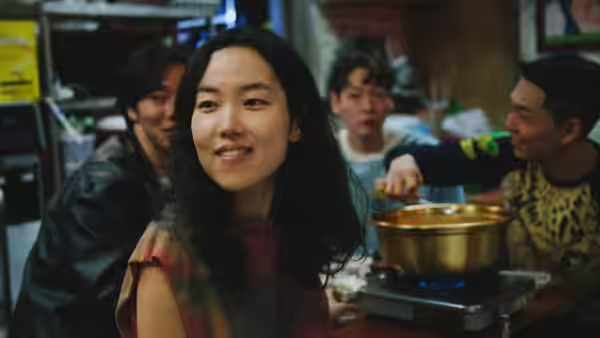
We disliked her for the best part of an hour, and we think we were meant to. Then, in that flat, with the grandmother crying over her, we found we were crying too and Freddie was not, and the film had us. It is Park Ji-min’s first screen performance, and she plays Freddie as a person who has decided in advance not to feel anything and is furious every time she fails. Watch her face when she is being loved. It goes still, then hard, then somewhere else entirely, and none of it looks worked out in advance.
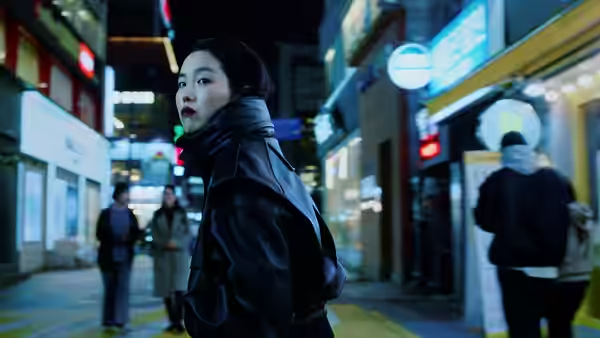
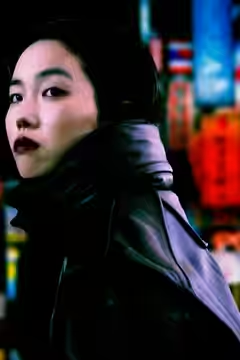
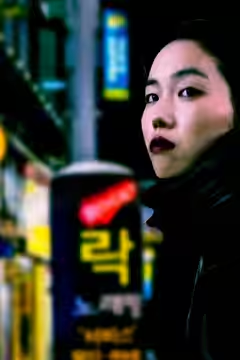
Thomas Favel shoots her close and often from slightly below, so that the bars and side streets of Seoul are a smear of pink and green neon behind her head and she is the only thing in focus. Bo Koung Shin and Choi Chi-youl give the father’s home the look of a place where nothing has been thrown away in thirty years, and the agency office the look of a place where everything has. Claire Dubien changes Freddie’s clothes as the years change, and each new wardrobe tells us something about her before she has opened her mouth. Jérémie Arcache and Christophe Musset keep their own score sparse and let old Korean records do the emotional work, mostly when Freddie is drinking.
The structure is the bold thing, and the risky one. Dounia Sichov cuts across gaps of years with almost nothing to soften the jump, and each time we land Freddie has a new haircut, new company and a new version of what she is doing in Korea. The first of these leaps is thrilling. We had settled into a film about a search and were suddenly in a film about a woman who had stopped searching and was daring anyone to mention it. The second and third leaps are less sure. The sections get shorter, the new people around Freddie, among them Maxime (Yoann Zimmer) and Andre (Louis-Do de Lencquesaing), are drawn quickly, and one late stretch reads as a diagram of what Freddie has become rather than as scenes from her life. We will not say what that is.
Most critics have been warmer than this about the whole, and we understand why, because when the film is working it is doing something almost nobody attempts. It puts an adoptee at the centre of an adoption story and lets her be cold, rude, drunk, promiscuous and wrong, and it does not punish her or explain her. Chou never gives us the mother. He never gives Freddie the scene where she says the thing she has been holding back. Every conventional release is refused, and the refusals cost the film some of its second half, and we would still rather have it this way than the other.
It is a 15 certificate and a slow film that moves in jerks. It will frustrate anyone who wants to like the person they are watching. Freddie dances alone twice in it, to music nobody else has chosen, and both times people clear a little space around her. We suspect that is the film’s whole argument, and that it is right.