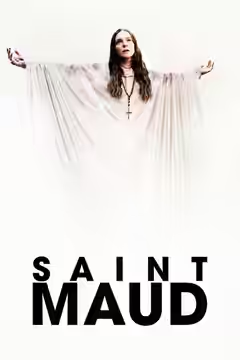
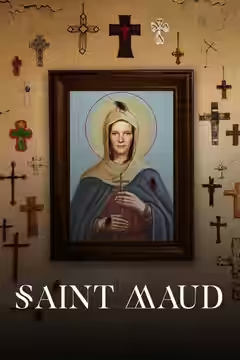
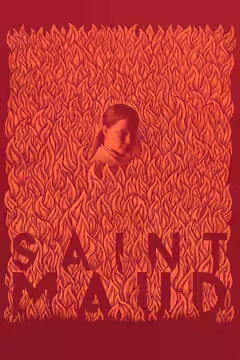
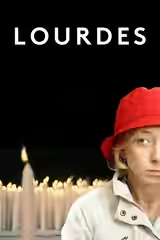
Rose Glass’s first film is short, exact and frightening, and Morfydd Clark makes a saint of a woman you would cross the road to avoid. It loses its footing for a stretch in the middle, and it does not matter much. We recommend it.
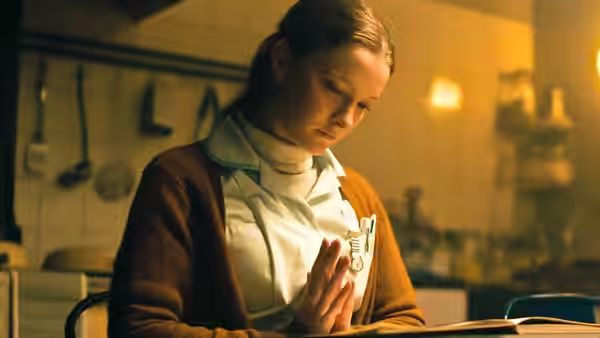
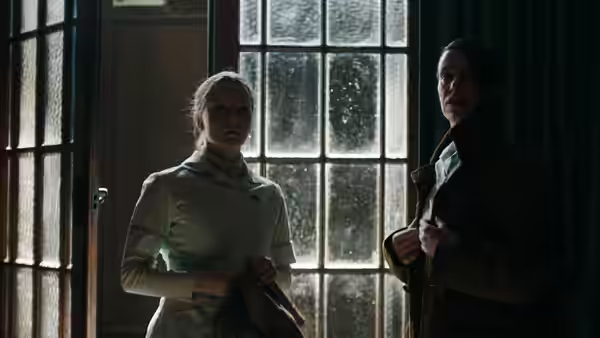
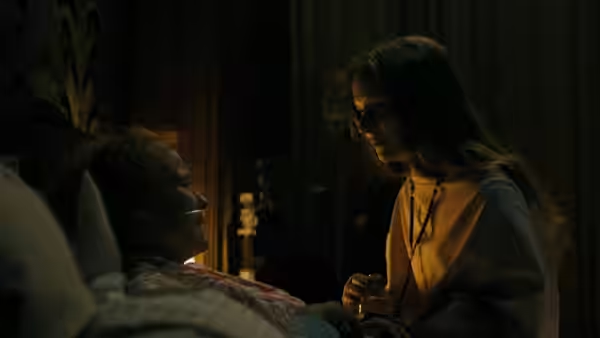
Maud (Morfydd Clark) looks after people who are dying, and she has recently started to believe that God has a particular use for her. Sent by an agency to nurse Amanda (Jennifer Ehle), a dancer and choreographer with cancer and a large dark house on a hill, she sees a soul that needs saving and a deadline. Rose Glass, writing and directing her first feature, has made a horror film about faith that takes the faith seriously, and that is rarer than it should be. It is 85 minutes long, it is very good, and its one real weakness is a stretch in the middle where it loses the second of its two women.
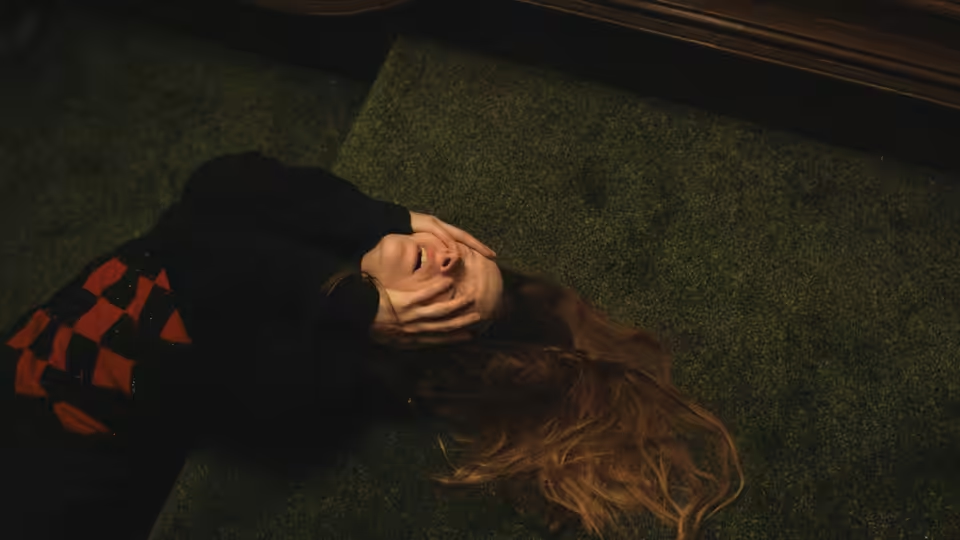
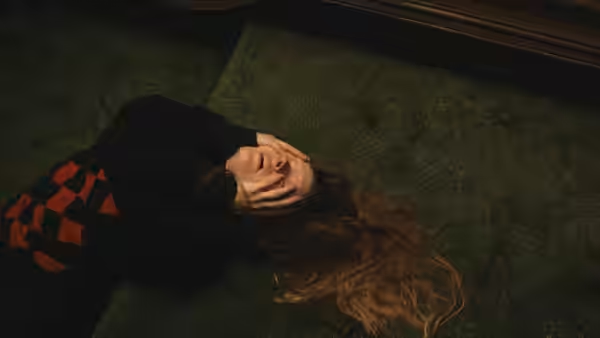
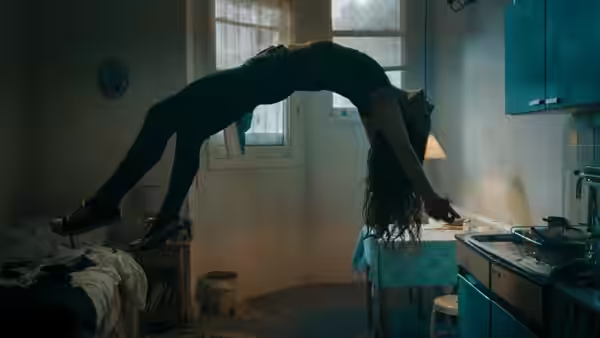
Clark is the film. She plays Maud as someone who has organised her whole life around one idea and is slightly put out when the world does not co-operate. She narrates to God in voiceover, apologising for small lapses, asking for signs, mildly hurt by the silences. The first time she feels Him arrive, alone on the lino of her bedsit, the sound drops away and her body bends back as if pulled by the spine, mouth open, eyes wet. We were frightened by it and a little ashamed to be watching, because Glass films faith the way other films film sex, and Clark does not spare us a second of it.
Ehle is the reason the first half works as drama and not just as a study. Amanda has spent her life being looked at, and Ehle plays the vanity of that, and the terror underneath it, without asking for sympathy. She drinks through the afternoon in a silk dressing gown, lights a cigarette when Maud is not looking, and needles her nurse’s God because it is the only game left in the house. Lily Frazer’s Carol, who visits with a bottle and stays the night, is everything Maud wants Amanda to give up. The scenes where the three of them share a room are the sharpest in the film.
The craft is small-scale and precise. Ben Fordesman shoots the town at night in the greens and pinks of the amusement arcades, and Maud’s face lit from below by whatever she happens to be kneeling in front of. Paulina Rzeszowska gives Amanda’s house heavy curtains, dark wood and framed photographs of her dancing, so that the whole place is a shrine to a body that is failing, and gives Maud a bedsit with one ring, one bed and one picture. Tina Kalivas keeps Maud in a nurse’s tunic and shapeless cardigans and puts Amanda in turbans and silk. Adam Janota Bzowski’s score is mostly a low drone and something like breathing, and it knows when to stop. Mark Towns cuts it tight; there is not a slack scene in the first forty minutes.
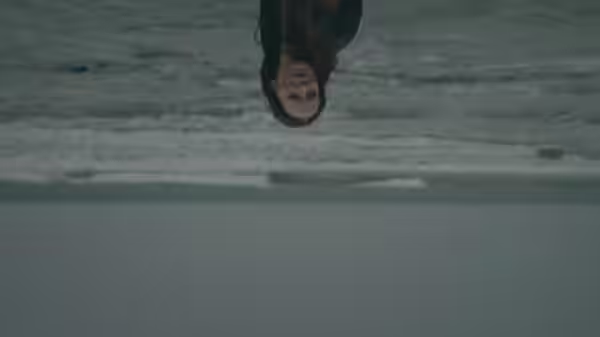
The problem arrives when Maud and Amanda are separated, for reasons we will leave alone. Maud on her own in the town, drifting past the pubs and the seafront, is less interesting than Maud with someone to convert, and Glass fills the gap with a couple of scenes that show us what we had already understood. Some critics have complained that Maud is thin as a character, that we never learn enough about her to feel the fall. We disagree. Glass gives us the hospital in a few frames and the rest in Clark’s face, and that is enough; it is the town, not the woman, that runs out of things to say. The last few minutes ask more of the budget than the budget can quite give, and you can see it straining. The final image is another matter. We have not managed to shake it.
Religious horror usually picks a side, the priest’s or the devil’s, and lets the audience watch from the pews. Glass puts us inside Maud’s head and leaves us there, and the film is at its best when it will not tell us whether what she hears is God or an illness, because Maud herself has no doubt. It owes something to Repulsion, another film about a young woman alone in a flat with her own mind, and it earns the comparison.
Watch it in the dark, alone if you can bear to, and do not plan anything for afterwards. It is over quickly and it does not leave quickly.