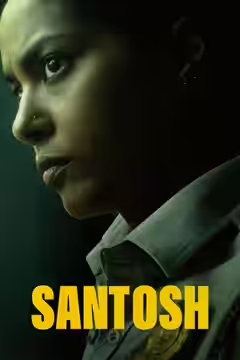
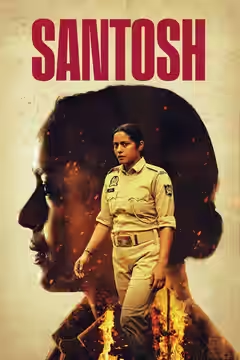
Sandhya Suri makes an absorbing police drama about two women working inside an institution that rewards prejudice. Shahana Goswami and Sunita Rajwar give it human weight, though the writing grows too eager to explain what their performances already show.
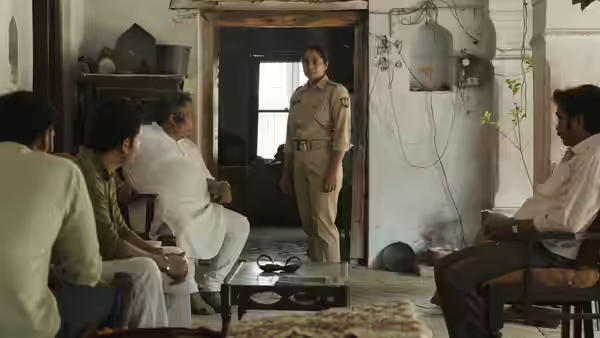
Santosh is an absorbing crime drama with two performances strong enough to carry it through some over-explaining. Sandhya Suri uses a murder investigation to examine how women find a place inside a police force organised around male authority and social prejudice. We keep watching for the investigators as much as for the investigation. The director is particularly good at making the job’s appeal understandable even when its practices are appalling.
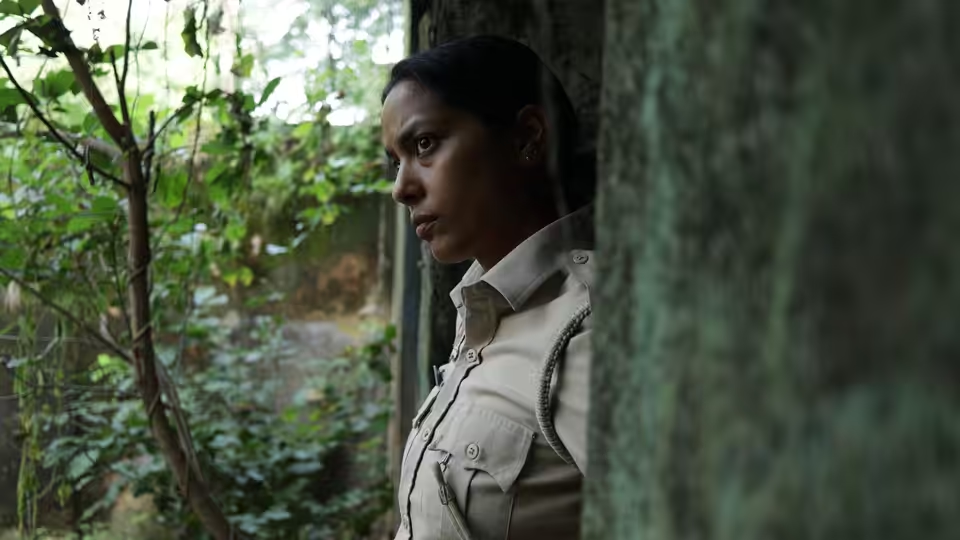
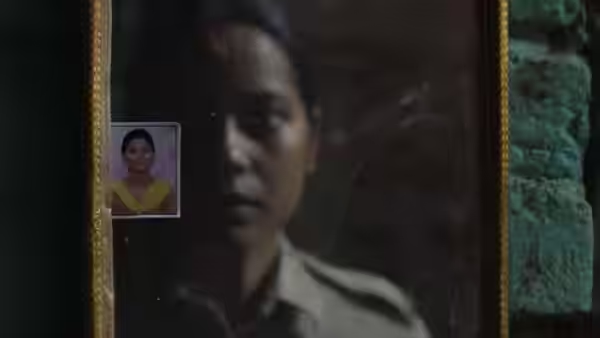
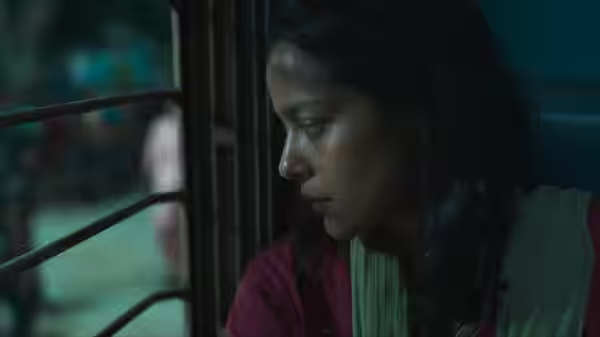
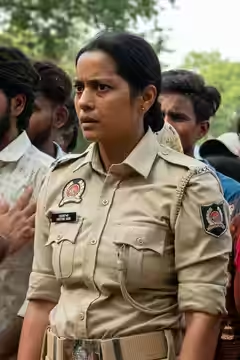
Shahana Goswami plays Constable Santosh Saini with a restraint that asks us to pay attention without making her unreadable. She makes the officer’s vulnerability apparent without asking for sympathy at every opportunity. Santosh’s grief, however, receives less attention than it needs, leaving us to supply some of the connection between her private life and her conduct at work. The performance holds our interest even when the screenplay offers too little of that life.
Sunita Rajwar’s Inspector Sharma gives Santosh someone to feel close to in a force defined by its hostility towards women. The affection between them matters because the film lets it feel welcome without making either woman harmless. We were unsettled by their warmth: it made belonging to this police force seem attractive, despite everything wrong with it. Their exchanges help us understand why Santosh might respond to the person offering support rather than question the institution around her.
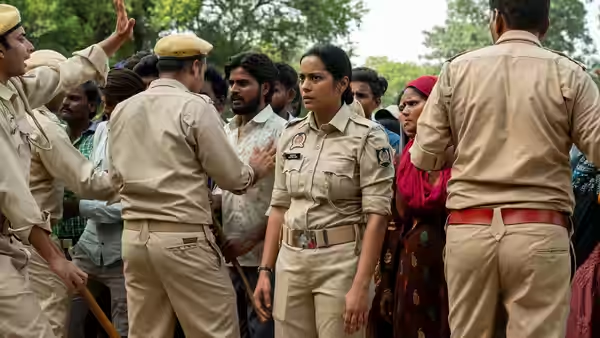
The screenplay is sharpest about the way caste, religion and rank affect the exercise of police power. These pressures bear on the investigation without requiring each character to stop and deliver a position on them. It helps that the women are allowed to be compromised, and that the actors give them more to do than demonstrate the film’s objections to policing. There is enough detail in the police work to hold our attention even when the direction of the case becomes easier to anticipate.
Lennert Hillege’s cinematography observes the officers coolly, an effective choice that also contributes to the film’s occasional emotional distance. Devika Dave’s production design helps the police setting feel like a workplace, though the people remain more distinctive than their surroundings. Maxime Pozzi-Garcia’s editing sustains our interest in the procedural detail, but the 128 minutes leave room for the same point to register more than once. Luisa Gerstein’s music makes less of an impression than the tension the two leads create together.
The weakness is a growing determination to make sure we have understood. As the film proceeds, Sandhya Suri’s writing becomes more explicit about ideas the performances have already made clear, and some of the uncertainty drains away. The crime story is also easier to predict than its patient attention to the inquiry initially promises. None of that undoes the force of the partnership, but it does make the film feel longer and more instructional than it needs to be.
Anyone coming for an ingenious mystery should adjust their expectations. The interest lies in spending time with people whose judgement we cannot comfortably trust, and whose company has begun to appeal to us. It is worth an evening for the two leads, provided a crime drama does not have to keep its deductions ahead of yours.