Two South African fans go looking for a singer who was famous in their country and nowhere else. Bendjelloul’s documentary is warm, brisk and sure of its effects, and it has quietly left out whatever would spoil the mystery. Enjoy it, and believe about eighty per cent.
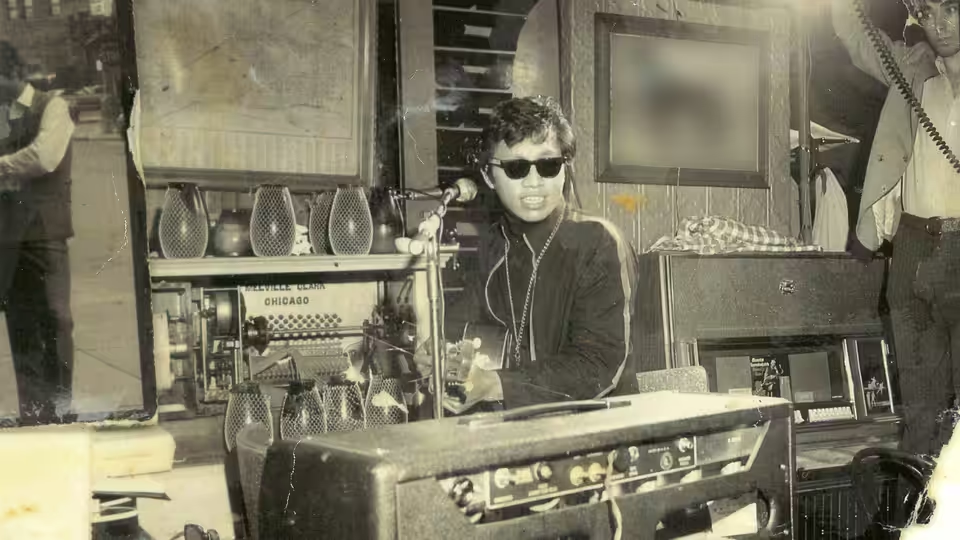
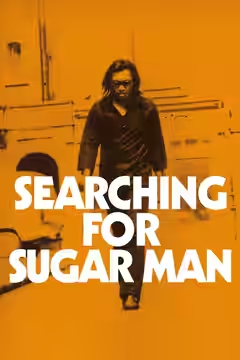
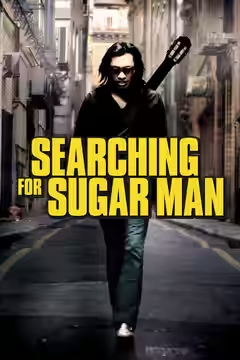
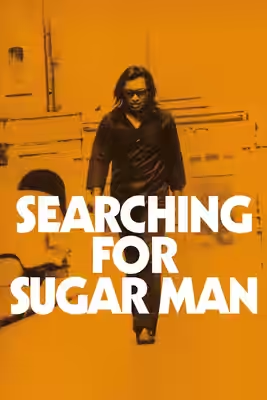
Two men in Cape Town, record shop owner Stephen Segerman and writer Craig Bartholomew Strydom, grew up with an album by an American singer called Rodriguez. Under apartheid, they say, Cold Fact was on every shelf, passed round among young white people who wanted permission to dislike their government. In America nobody had heard of it. The man was believed dead, by his own hand, on stage, and they set out to discover how. Malik Bendjelloul’s film follows the search, runs 85 minutes, and is hard to dislike. It has also been tidied, and we minded the tidying more than most critics did.
The songs are good. Most documentaries about a forgotten genius spend twenty minutes talking you into the genius; this one does not need to. When “Sugar Man” comes in over Camilla Skagerström’s shots of the coast road out of Cape Town, blue sea on one side and the mountain on the other, we sat up. The voice is dry and close, the lyric is odd, and it sounds like it was recorded last week. Bendjelloul, who cut the film himself, knows it and lets the songs run long.
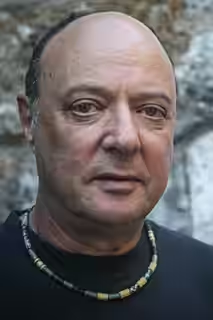
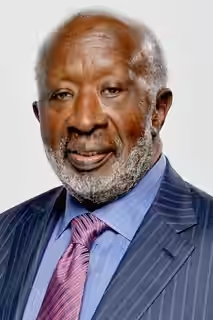
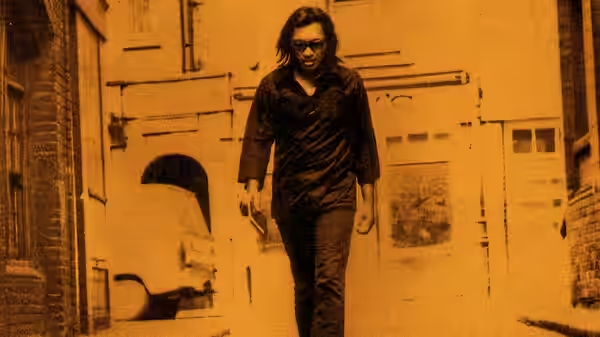
Skagerström shoots the two cities as opposites. Cape Town is sun, sea and clean white walls; Detroit is snow, low grey sky and shuttered buildings. Bendjelloul drops in painted animation of a figure in a long coat walking those Detroit streets, since nobody has a photograph of him. Mike Theodore and Dennis Coffey, who produced the first record, are the best of the Detroit witnesses, baffled forty years on that it did not sell. Steve Rowland, who produced the second, is gentler and sadder. Clarence Avant, who ran the label, is the only person who bristles on camera, and the film keeps circling back to what he bristled about, which is money. We did not need the question asked four times.
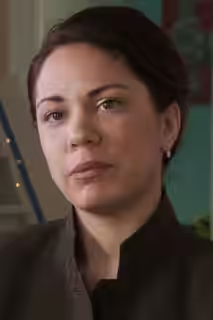
Around the midpoint the search arrives somewhere, and we will not say where, though a reader who has seen the cast list, Rodriguez alongside Regan Rodriguez, Eva Rodriguez and Sandra Rodriguez-Kennedy, will have guessed the shape of it. The second half is the half that got to us. We had a lump in the throat during a long stretch a colder viewer would call a set-up; we knew it was one while it was happening, and it worked anyway. It was not the man that did it. It was the faces of ordinary people who had been told for twenty years that he was dead.
Here is the trouble. A mystery only holds if nobody knows the answer, and the reviews have pointed out that the film leaves out episodes from Rodriguez’s life, travels and audiences elsewhere, that would have made the answer easier to come by. Bendjelloul does not lie. He does not mention them, and the story is better for the silence. We enjoyed ourselves and then, in the car, started doing sums, which is not what you want from a film that has just made you cry.
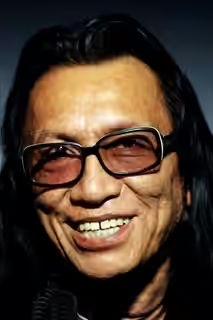
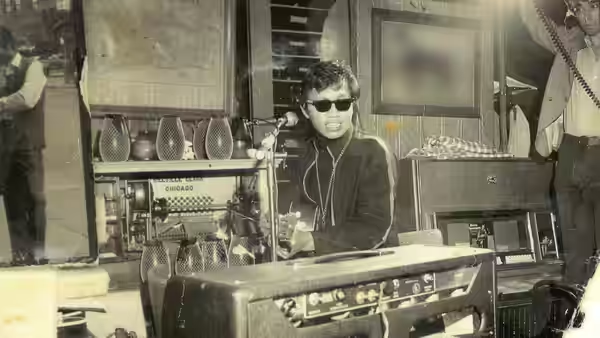
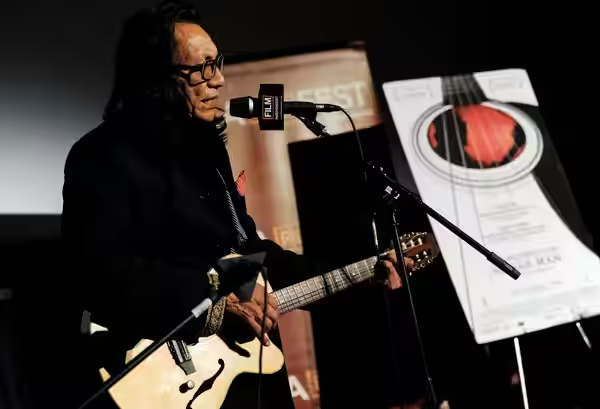
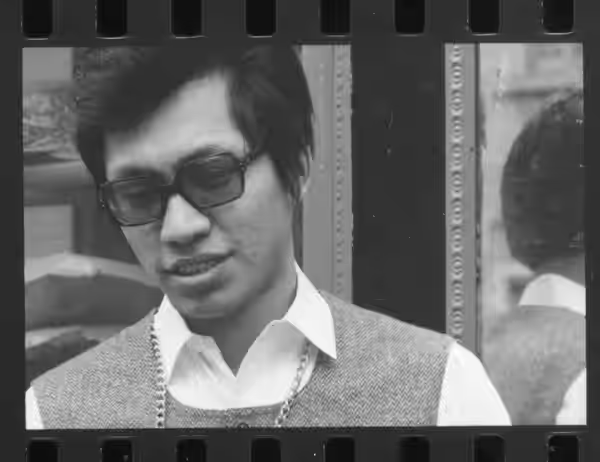
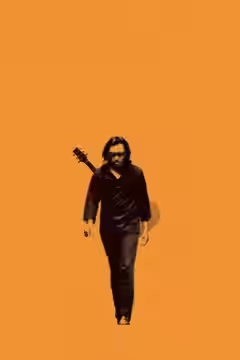
Rodriguez himself is a faint presence. He answers in a sentence or two, wears dark glasses indoors, and lets the camera look at him without offering much back. Some of that is the man, and it is rather lovely. Some of it is the director wanting a saint rather than a person, and we would have traded a Cape Town sunset for ten minutes of him being difficult, or funny, or wrong about something.
Simon Chinn, who produced Man on Wire, knows how to build a true story like a heist, facts released in the order that hurts most. This is built the same way, though the interviews loop in the last half hour and the ending is held a beat too long. It is among the more pleasurable music documentaries about the overlooked, and less honest than it looks.
See it, preferably with someone who has not heard the records, and put Cold Fact on afterwards. Then, if you are the type, read up on what the film chose not to tell you. You will like the man more and the film a little less.