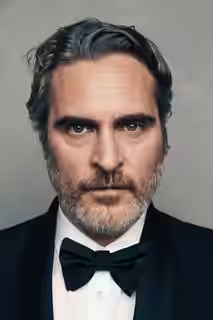
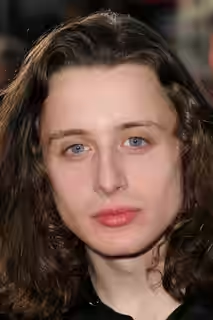
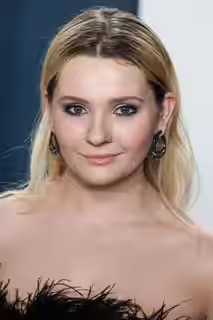
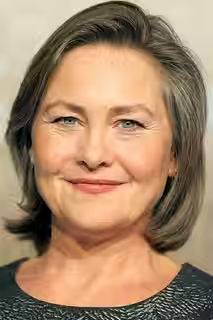
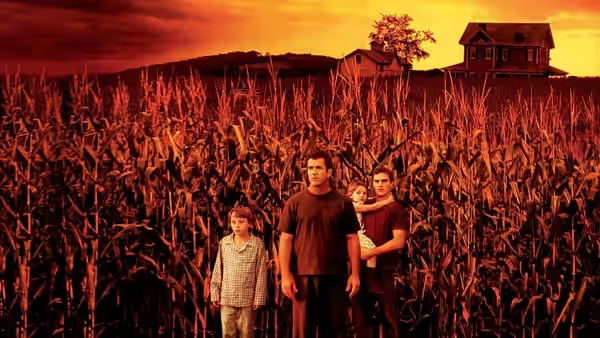
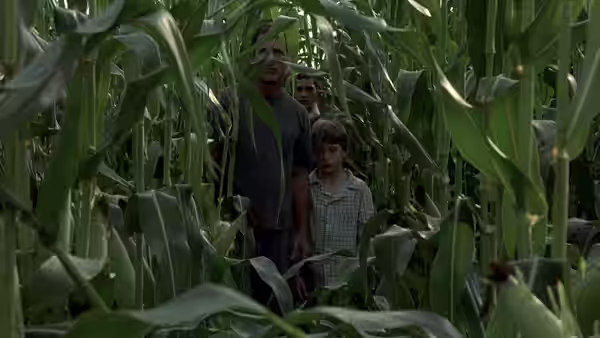
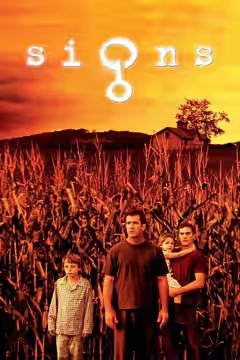
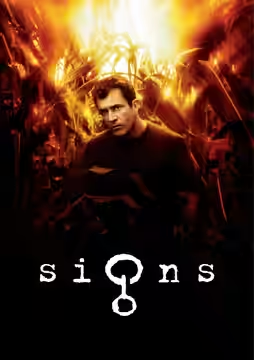
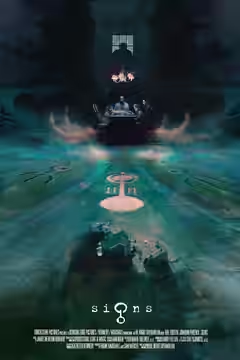
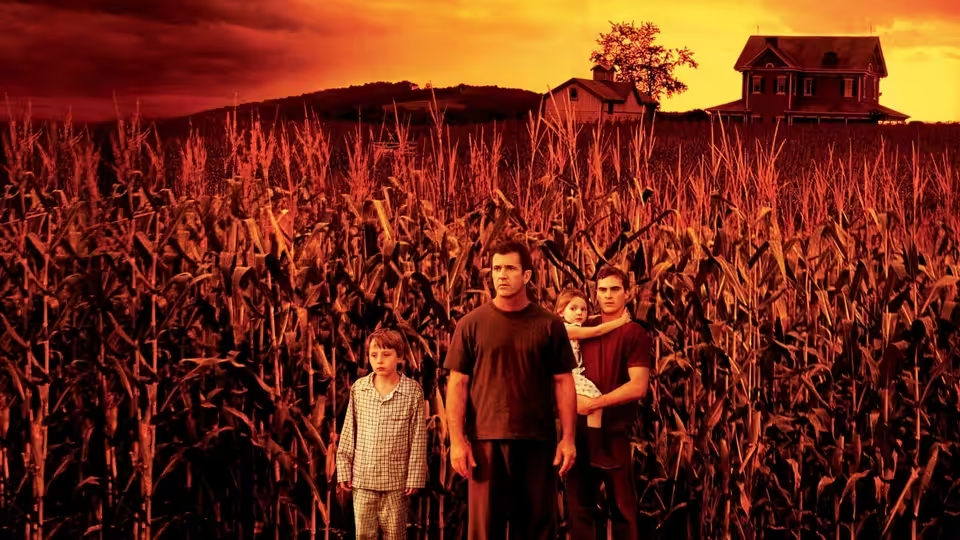
Graham and Merrill Hess stand with Morgan and Bo among corn rows at dusk
Film review

Signs

2002 · Directed by M. Night Shyamalan · 1h 46m · OFNAA IIA

In a sentenceThe cornfield does most of the frightening; the explanations could have stayed in there

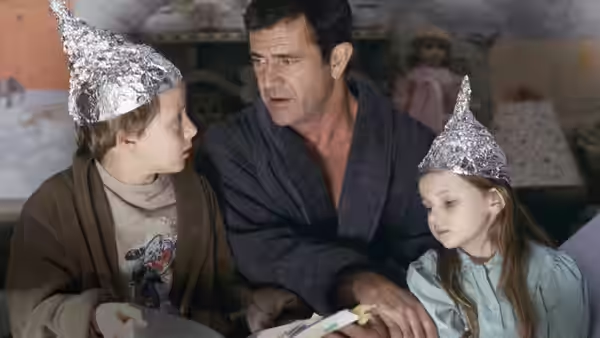
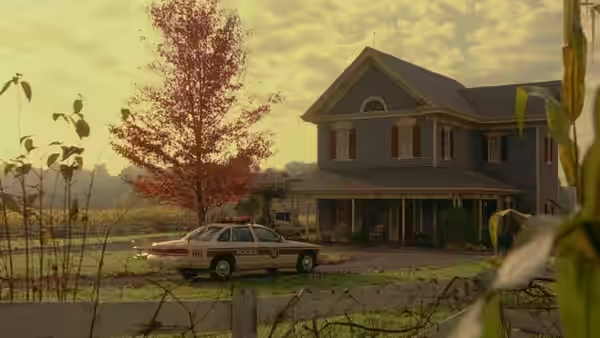
A cornfield becomes a source of unease for Graham Hess (Mel Gibson), Merrill Hess (Joaquin Phoenix) and the children, Morgan Hess (Rory Culkin) and Bo Hess (Abigail Breslin). The possibility of visitors from elsewhere turns their attention to what they cannot see around them. Graham tries to reassure a frightened dog while facing questions he cannot readily answer himself. As fear grows, questions of faith accompany the effort to understand the threat. The story stays close to these four people as they face something with implications far beyond the cornfield.

Fi1m review

M. Night Shyamalan’s Signs earns its scares through patient framing and a restricted view of the threat. The writing grows heavy-handed, but the suspense makes this flawed chiller worth an evening.

M. Night Shyamalan makes Signs frightening by giving us too little to look at and enough time to worry about it. It is a good, uneven thriller whose quiet stretches are considerably more persuasive than its explanations. The science-fiction premise promises a threat larger than these few people, yet he keeps our attention on their attempts to understand what might be nearby. That limited view sustains the suspense, even when the writing starts asking for more belief than it earns.

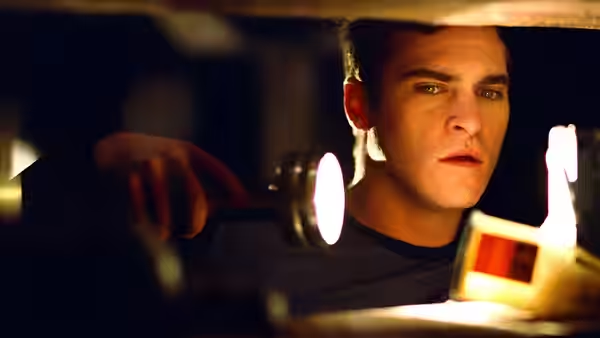
Mel Gibson gives Graham Hess a guarded seriousness, useful when the film needs someone to resist panic and less useful when it needs emotional warmth. The dialogue about faith can sound laboured in his delivery, with an emphasis that the quieter scenes do without. Joaquin Phoenix, as Merrill Hess, supplies a welcome looseness, and the script could have given him more room. Rory Culkin and Abigail Breslin keep the children from becoming merely small people waiting to scream, giving their apprehension enough individuality to hold our attention.

Tak Fujimoto’s cinematography is most effective when a frame offers somewhere to look without promising anything will appear there. The cornfield matters because so much can remain unseen within it; the director does not need to fill the image to make it worrying. We were frightened by the waiting. Those held views made us search for a threat, then dread having found one. This is familiar horror technique, but the patience and precise framing make it work without any need for novelty.

Larry Fulton’s production design is valuable for how little it distracts us from that search. The surroundings never seem more important than the people having to occupy them, which suits a story that keeps its science-fiction threat at such close quarters. Barbara Tulliver’s editing makes the held shots feel deliberate rather than sluggish, and gives the unease time to settle before moving on. The quiet scenes are where that control is most apparent, with no hurry to supply the next shock.

James Newton Howard’s music helps the suspense, but the sound is most unsettling when there is less of it. Silence leaves us listening for something the picture will not confirm, and the restricted view makes that uncertainty worse. The humour helps, too, particularly the disproportion between the size of the threat and the small business of reassurance. Graham attempting to comfort a spooked dog is funny without making the fear seem foolish, and allows some welcome awkwardness into the solemnity.

The weakness is M. Night Shyamalan’s writing, especially when the film insists that its religious concerns must carry the same force as its scares. The dialogue can be awkward, and the meaningful details begin to feel placed for our benefit rather than belonging to these people. We do not object to faith entering a science-fiction thriller; we object to being prodded towards a conclusion that the drama has not made convincing. The later explanations also expose gaps in the story’s logic, though describing those would spoil things better left alone.

Most critics disagree with us about how much the suspense compensates for these faults, and the complaints about contrivance are fair. We think they give the clumsy explanations too much weight when the sustained apprehension is what works on us most directly. At 106 minutes, Signs has enough restraint in its direction to survive the overemphasis in its writing, though anyone seeking watertight science fiction will have a difficult evening. Choose it for a quiet night when being made to listen nervously sounds like a pleasure.
Critical consensus AI synthesised

57
Positive
5
Mixed
7
Negative
3

The reviews lean mixed on Signs, with praise clustering around Shyamalan’s control of suspense rather than the story’s explanations. Critics repeatedly single out the restricted perspective, careful framing and use of sound or silence, finding that threats kept out of sight make the quieter scenes unnerving. Even several less favourable reviews admire the tense staging, while the children’s performances attract some of the warmer comments on the acting.

The main reservations concern contrived plotting, awkward dialogue and a conclusion that several critics find weaker than the build-up. Faith proves more divisive: The New York Times welcomes its suspenseful treatment, while other reviews find the spiritual themes heavy-handed or manipulative. The spread is wide, from enthusiastic responses to the film as a chiller to the Evening Standard’s rejection of both its storytelling and its capacity to frighten; agreement about individual sequences does not translate into agreement about the whole.

Total Film
13 September 2002 · ★★★★ · Total Film
80

The critic finds Signs a highly proficient, gripping chiller, though plot holes and a hokey climax weaken it somewhat. They particularly praise Shyamalan’s suspenseful use of sound and restricted perspective to build fear.

Read the full review →
The AV Club
5 August 2002 · Scott Tobias
75*

Tobias finds the film an effective, unsettling work of science fiction, despite its heavy-handed religious themes and Mel Gibson’s lack of conviction. He praises Shyamalan’s visual storytelling and the way the film builds fear by keeping shocks and threats out of view.

Read the full review →
The Guardian
7 February 2003 · Rob Mackie
70*

Mackie finds the film classy and increasingly impressive, though its ending is a let-down. He praises its quiet, careful build-up of suspense and claustrophobia.

Read the full review →
The New York Times
2 August 2002 · A.O. Scott
70*

The review is broadly positive about the film’s suspenseful treatment of faith. It singles out the cornfield setting as central to the film’s unsettling effect.

Read the full review →
RogerEbert.com
64*

The page is blocked, so the critic’s verdict cannot be determined. No specific praise or complaint is available from the page provided.

Read the full review →
Screen Daily
1 August 2002 · John Hazelton
64*

The page is identified as a review, but its verdict is unavailable in the accessible text. No specific praise or complaint can be established because the review body is paywalled.

Read the full review →

Straight answers AI written, from our review

Is Signs worth watching?
Signs is worth watching for its patient suspense and restricted view of the threat, and we score it 76 out of 100. We find the waiting more frightening than the explanations are convincing; it suits a quiet evening of unease, provided awkward dialogue about faith and gaps in the science-fiction logic are not deal-breakers.
How long is Signs, and what is it rated?
Signs runs 1h 46m and is rated IIA by the OFNAA in Hong Kong. It is a thriller and science fiction film.
Where can I watch Signs in Hong Kong?
Signs is streaming on Disney+ in Hong Kong. Availability is checked daily; the links above go straight to each service.
How violent or frightening is Signs, and is it suitable for children?
Signs has a UK 12A certificate, and its scares rely on waiting, silence and an unseen threat rather than constant shocks. We find that sustained uncertainty frightening; the certificate allows children under 12 with an adult, but the cornfield dread makes this a cautious choice for younger or easily frightened children.
How does Signs compare to Take Shelter?
Signs is the more straightforward chiller, while we recommend Take Shelter as the more searching account of fear, family responsibility and possible catastrophe. Choose Signs for patient scares despite clumsy explanations; choose Take Shelter for a troubling family drama anchored by Michael Shannon, with the caveat that its slow pacing sometimes prolongs a fear we already understand.

Cast

If you liked this, try…

  1. The Birds (1963) · not on Fi1m yetThe ordinary world turns hostile, with suspense built from watching and waiting.

  2. Cure (1997) · not on Fi1m yetAnother patient chiller that lets uncertainty make familiar places feel unsafe.

  3. The Devil's Backbone (2001) · not on Fi1m yetChildren confront fear in a ghost story with a stronger historical footing.

  4. Take Shelter (2011, Fi1m 83)A more searching account of fear, family responsibility and possible catastrophe.

  5. The Vast of Night (2019) · not on Fi1m yetSmall-scale science fiction that understands how much terror a sound can carry.