Ken Loach makes the damage done by insecure work painfully clear, helped by a cast who make the family worth caring about. The accumulated setbacks can feel arranged, but the anger is earned.
Sorry We Missed You is a forceful, humane drama, with performances that keep it worth watching when the writing becomes too insistent. Ken Loach and writer Paul Laverty follow the pressures of insecure work into family life, where earning a living begins to hurt the people it is meant to support. Delivery and care work give the film its subject, and the ordinary demands of employment supply much of its tension. We recommend it, with a warning that the succession of setbacks can feel arranged.
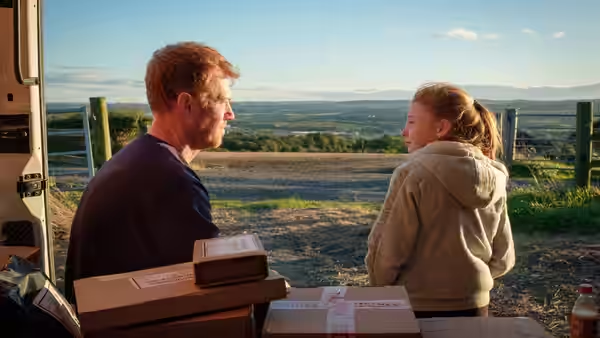
Kris Hitchen gives Ricky enough humour to keep him from becoming merely a man to feel sorry for. The customer encounters are important for that reason: we get some sense of the person doing the job, beyond the difficulties of getting it done. Such exchanges let the film breathe without pretending the pressure has disappeared. His approachable performance makes the family scenes more involving. We have reasons to care about Ricky before the setbacks accumulate.
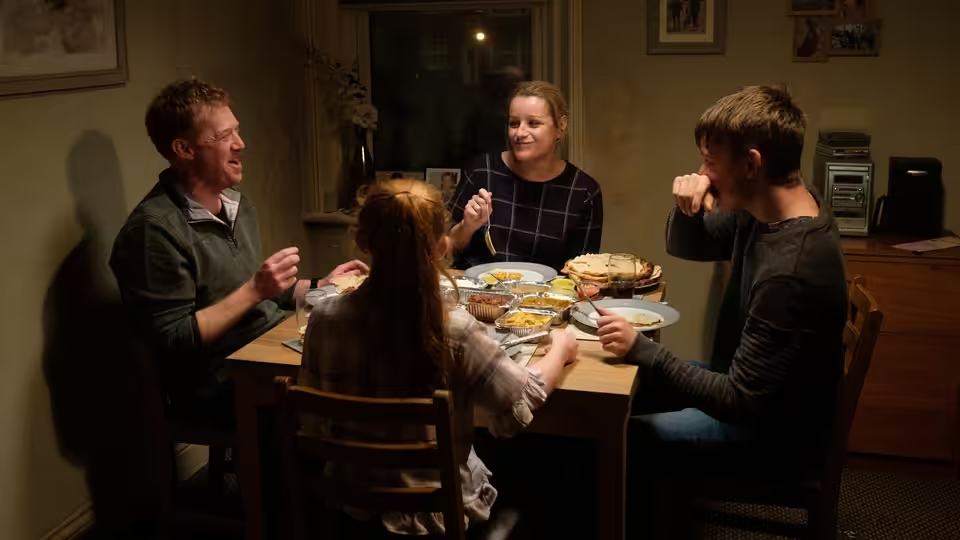
Debbie Honeywood’s Abby is the strongest reason to stay with the film when the writing grows forceful. She makes the exhaustion and anger credible without making Abby seem incapable of tenderness. Rhys Mcgowan as Seb and Katie Proctor as Liza Jane help the family scenes feel awkward and affectionate without making them cosy. The affection matters because it gives us something to worry about losing when work begins to crowd everything else out.
Robbie Ryan’s cinematography has a documentary-like plainness, which suits a drama that asks us to pay attention to ordinary work. Fergus Clegg’s production design shares that lack of fuss, helping the family scenes feel lived in without making hardship the only thing to notice. Jonathan Morris’s editing keeps the demands of employment close to their consequences at home, giving the film a firm pace across its 101 minutes. George Fenton’s score is less memorable than the voices, which is no failing in a film so dependent on the credibility of its performances.
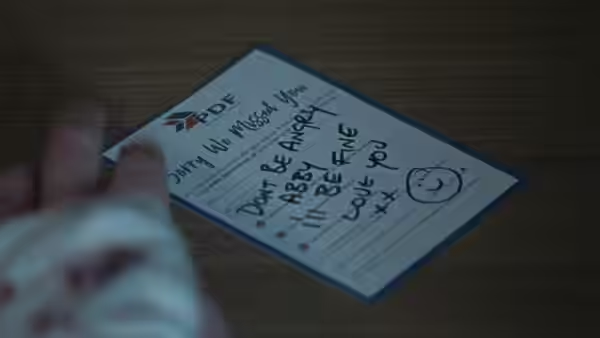
The trouble is how determined Paul Laverty is to leave us in no doubt about the damage. As setbacks accumulate, there is less room for the casual family observation that makes the earlier passages persuasive, and Seb’s difficulties are pushed particularly hard. The film sometimes appears to have decided what each person must suffer before letting them get on with living. That matters in social drama: if every difficulty seems prescribed by the writer, we can start resisting events we might otherwise believe.
Ross Brewster’s Maloney shows how well the blunt approach can work when it has a clear target. We were angry at his callous speech about work, because it makes the needs of the worker sound like an imposition. The writing scarcely disguises its purpose there, but the performance makes that attitude credible. See it when there is time to talk afterwards; it is poor preparation for an early night.