Adam Shankman’s drag-queen disaster spoof is good-natured and quick, and Ginger Minj and Jujubee earn their laughs as the stewardesses. But the script recycles more than it invents, the cameos do work the writing should, and the train never looks as if it weighs anything.
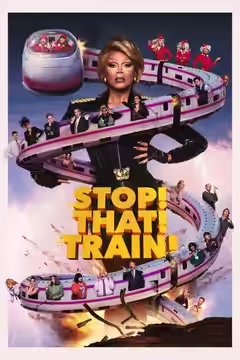
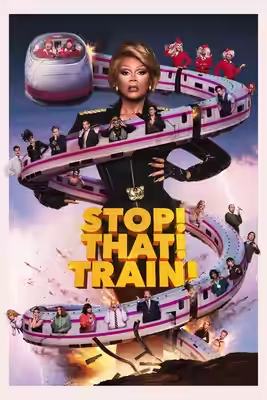
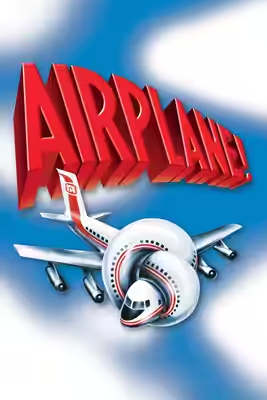
Adam Shankman, who made Hairspray (2007), has taken the template of the 1980 airline spoof, put it on rails and staffed it almost entirely with drag queens. RuPaul, who also produces with Fenton Bailey and Randy Barbato, plays President Judy Gagwell, aboard a luxury train that will not stop. Christina Friel and Connor Wright’s script fires a gag roughly every twenty seconds for ninety minutes. About half of them land. That is a respectable rate for the genre, and it is also the ceiling of what the film manages: cheerful, quick and gone from the mind by the time we reach the car park.
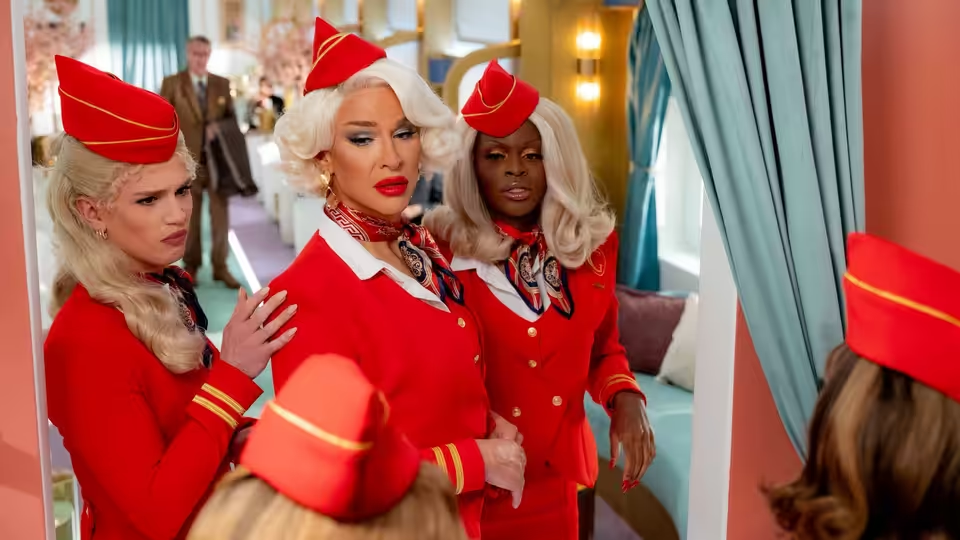
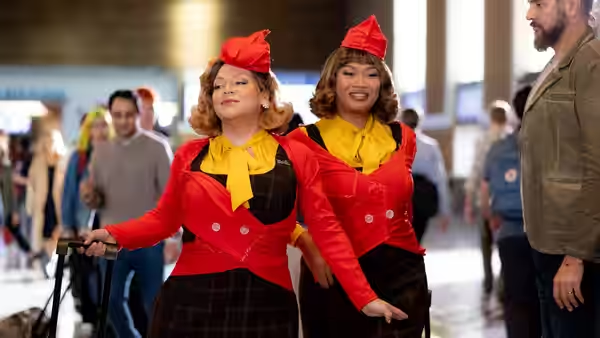
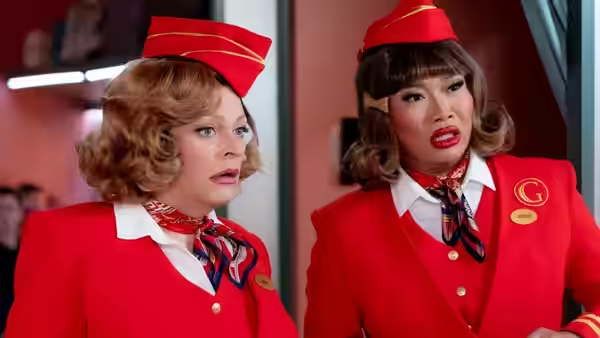
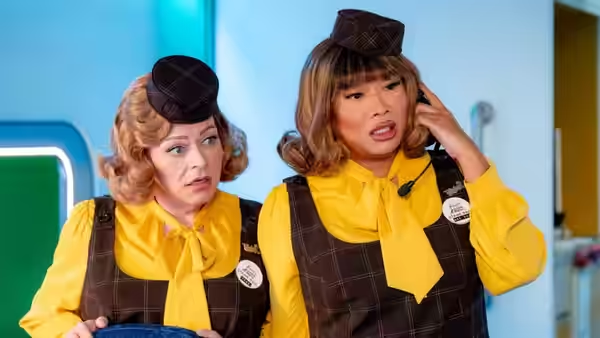
The stewardesses are the reason to go. Ginger Minj plays Tess as a woman who has dealt with worse than a runaway train before breakfast, and she can land a line while carrying a tray at a forty-degree tilt. Jujubee’s DeeDee is the panicker, all wide eyes and small screams, and the two of them have the timing of a double act that has been touring for years. We laughed, out loud and more than once, and nearly every time it was one of them, usually reacting to something rather than saying it. RuPaul plays the president with a stillness that works best when the film leaves the president alone with a bad decision and a straight face.
The straight men matter more than the film seems to realise. Chris Parnell’s Conductor Davenport is the one person aboard who behaves as though a train might actually crash, and every scene he anchors is funnier than the ones he is not in. Guy Branum, on the ground as a Train Traffic Controller, gets the film’s best sustained sequence, trying to clear a line while nobody on the other end listens. When neither is on screen, everyone is playing the joke, and there is nothing to bounce it off.
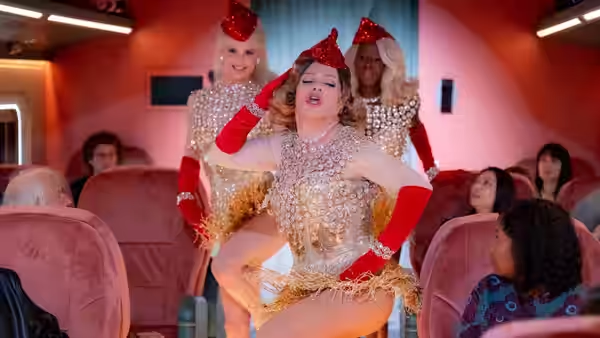
Alessandro Marvelli’s train is the film’s best-looking thing: carriages in cream and brass, a bar car with more mirrors than a dressing room, corridors just narrow enough that two gowns cannot pass. Salvador Pérez Jr. cuts the stewardess uniforms like couture and gives the president a wardrobe of suits in colours no real president has dared. Luka Bazeli lights it all bright and flat, the way the disaster films of the 1970s were lit, which is the correct choice and also means nothing on screen is ever lovely to look at. Jacques Brautbar’s score does the swelling brass of the genre it is mocking and knows exactly when to cut out for a punchline.
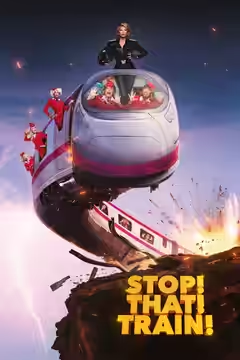
Joshua Kirchmer cuts for speed, and speed is the film’s strategy: if this joke did not work, here comes another. It is a sound approach until about the hour mark, when we noticed we were smiling politely rather than laughing, and that the gags were now mostly references, to drag, to the queens’ own television careers, to the sort of thing that gets a cheer in a room that already agrees. A stream of famous faces arrives to do a line each, and the film leans on them the way a tired host leans on the bar. The train itself, seen from outside, is a digital object that weighs nothing, and in a film about a heavy thing moving fast that is not a small fault.
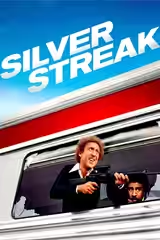
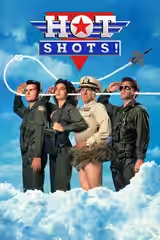
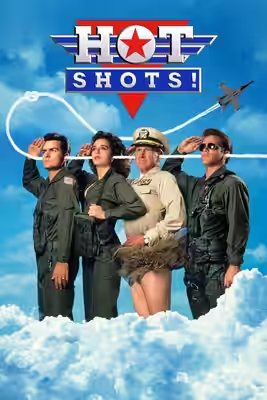
Zucker, Abrahams and Zucker’s airline spoof of 1980 worked because Robert Stack and Leslie Nielsen did not know they were in a comedy. Here everyone knows, and the script has not given anyone a want beyond the next line. Nobody on this train needs to get anywhere. When the danger is a joke and the people in danger are also a joke, there is nothing left to be relieved about.
It runs 90 minutes and carries a 15 certificate. See it with a crowd, ideally one that watches RuPaul’s Drag Race, because the film was made for that audience and plays best in it. Alone on a sofa it is pleasant, brisk and thin, and it leaves the evening with time to spare.