Jim Abrahams, David Zucker and Jerry Zucker make an excellent comedy by keeping everyone serious. The wordplay can be painfully corny, but the straight-faced performances keep even some of the weakest jokes working.
Disaster films depend on people who can make unlikely emergencies sound plausible. Here, Jim Abrahams, David Zucker and Jerry Zucker give that authority to a cast prepared to say almost anything without embarrassment. It is an excellent comedy, with enough inventiveness to make its occasional feeble wordplay forgivable. The three directors also wrote the screenplay.
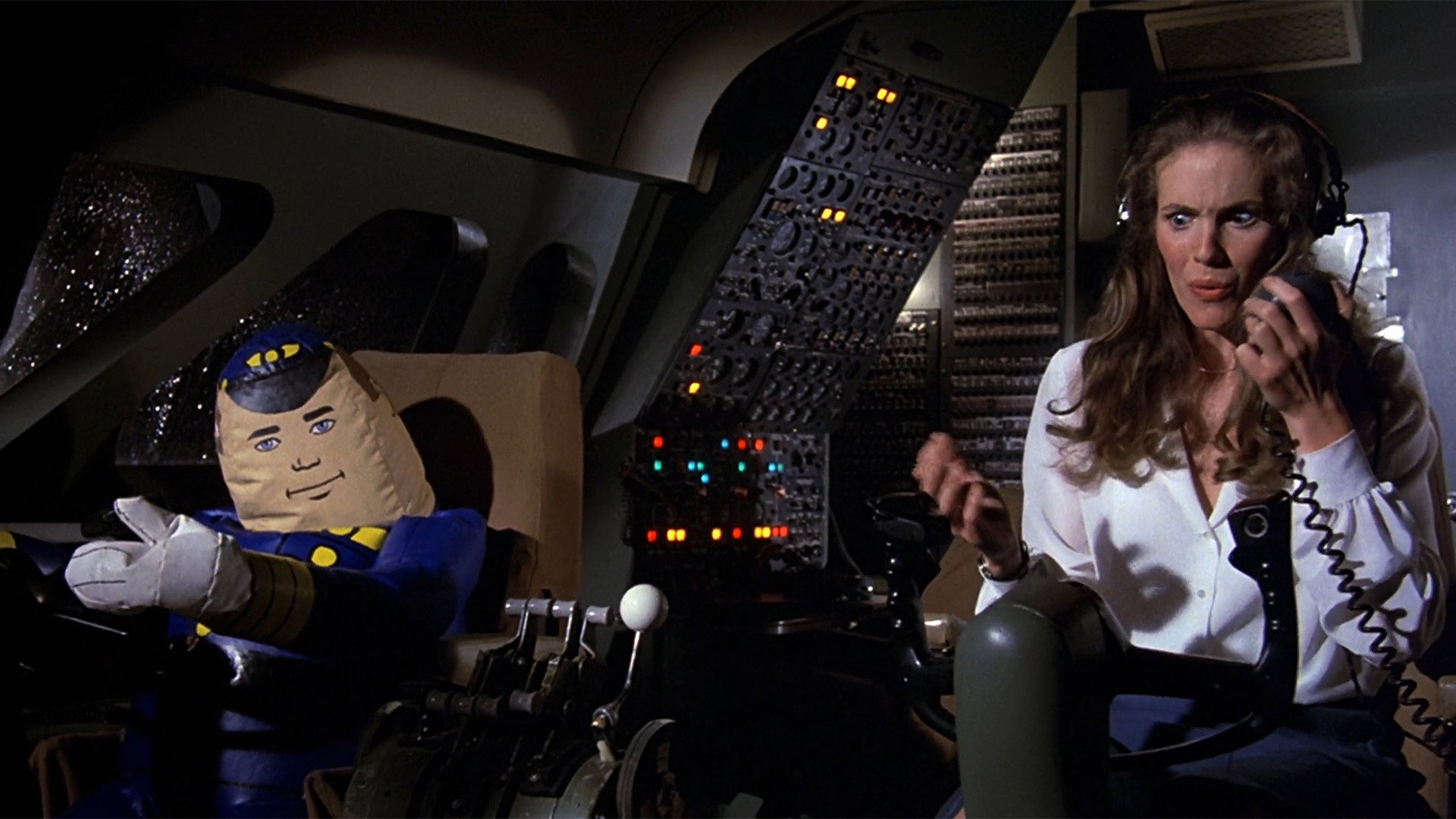
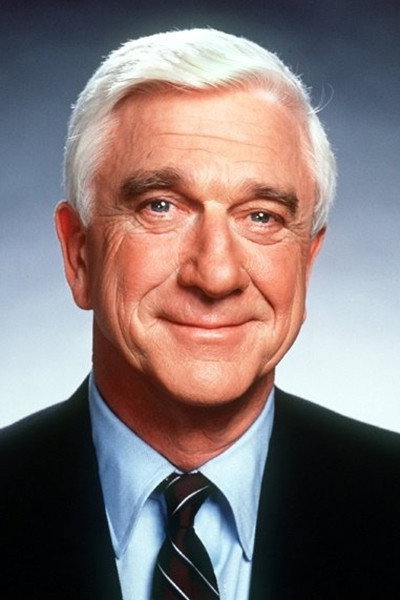
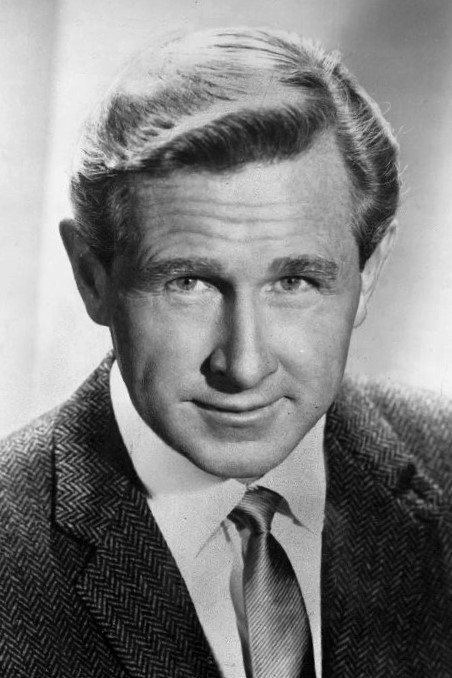
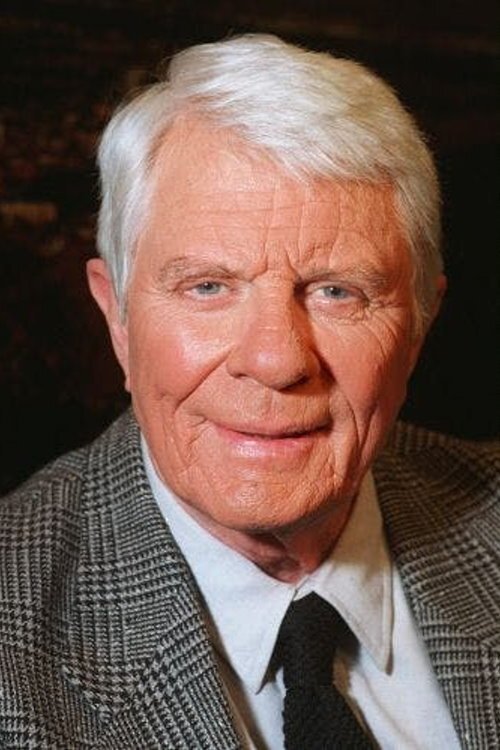
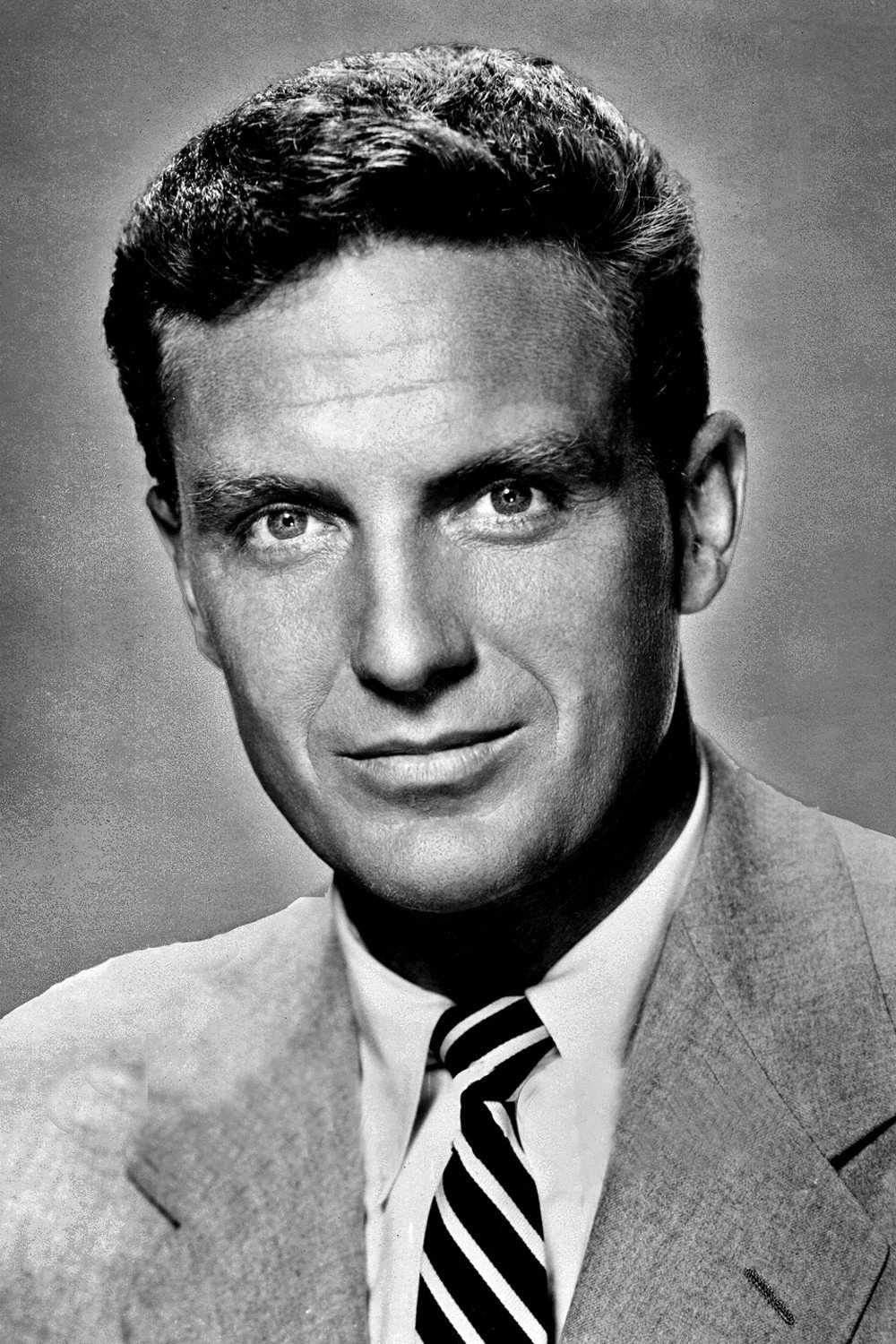
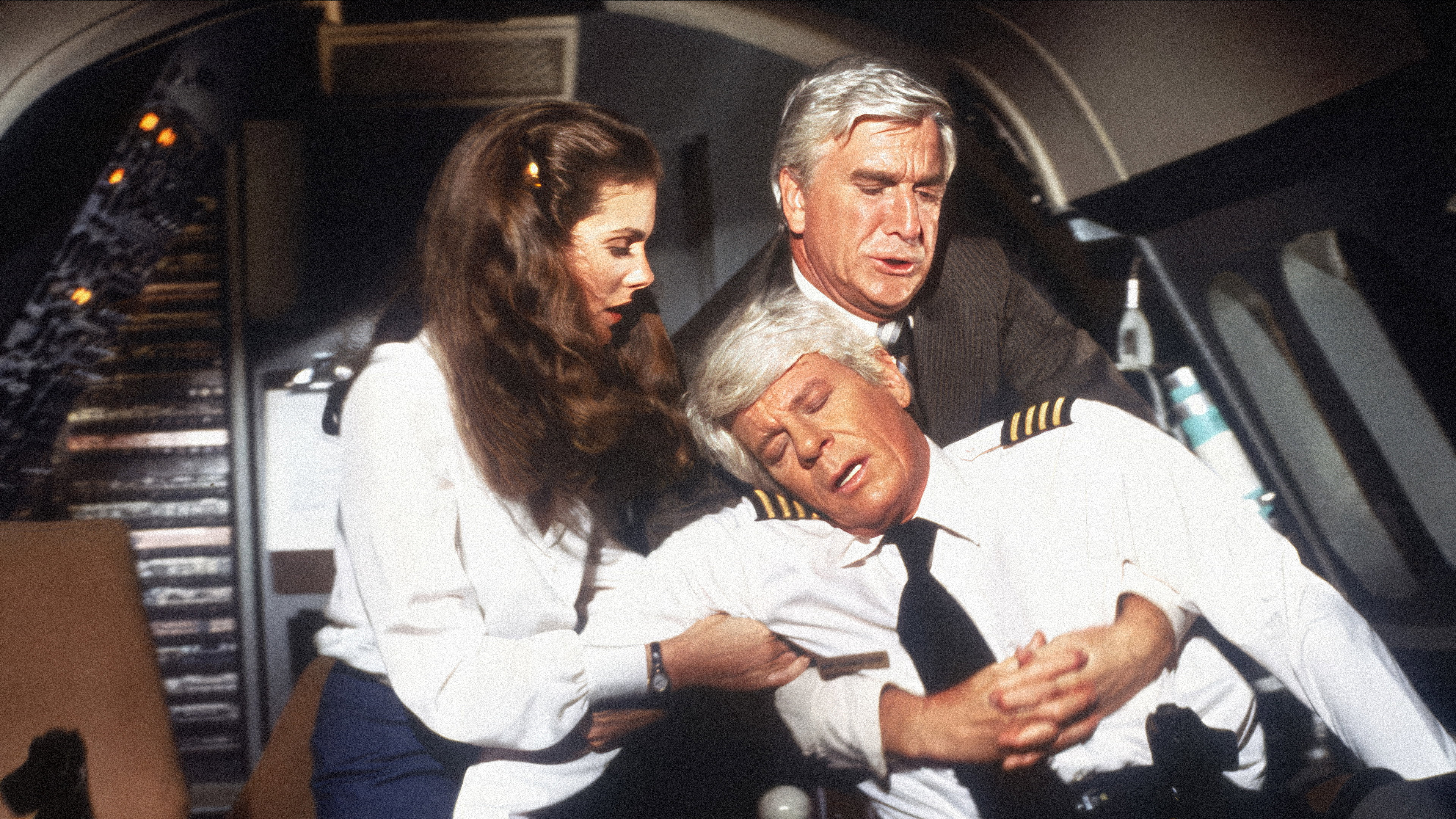
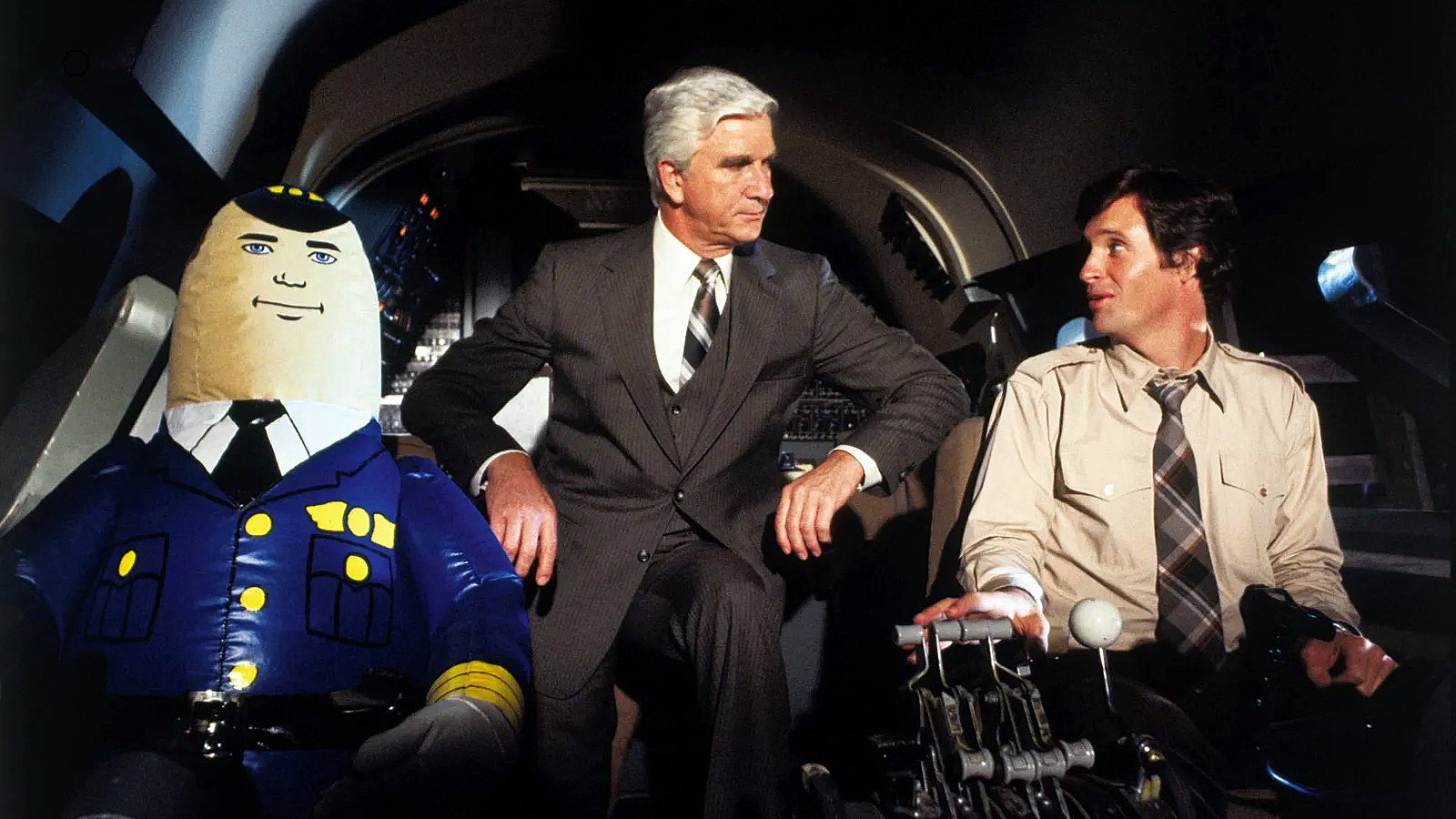
Leslie Nielsen’s Dr Rumack is the clearest demonstration of how the method works. Nielsen gives foolish dialogue the weight of a considered medical opinion, without suggesting that we ought to applaud him for keeping a straight face. Peter Graves, as Captain Clarence Oveur, and Robert Stack, as Captain Rex Kramer, bring similarly useful seriousness, while Lloyd Bridges’ Steve McCroskey seems less securely in command. The actors keep addressing the emergency as though sensible behaviour might still be possible.
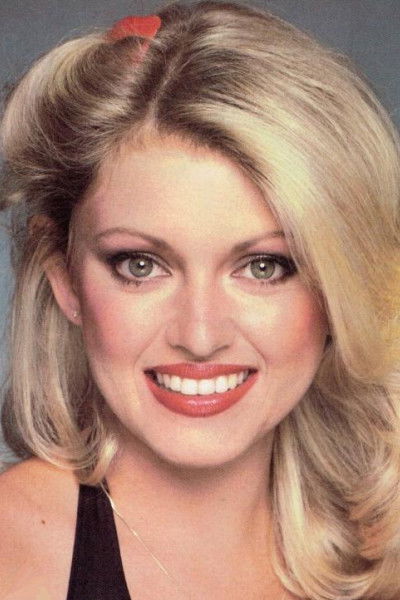
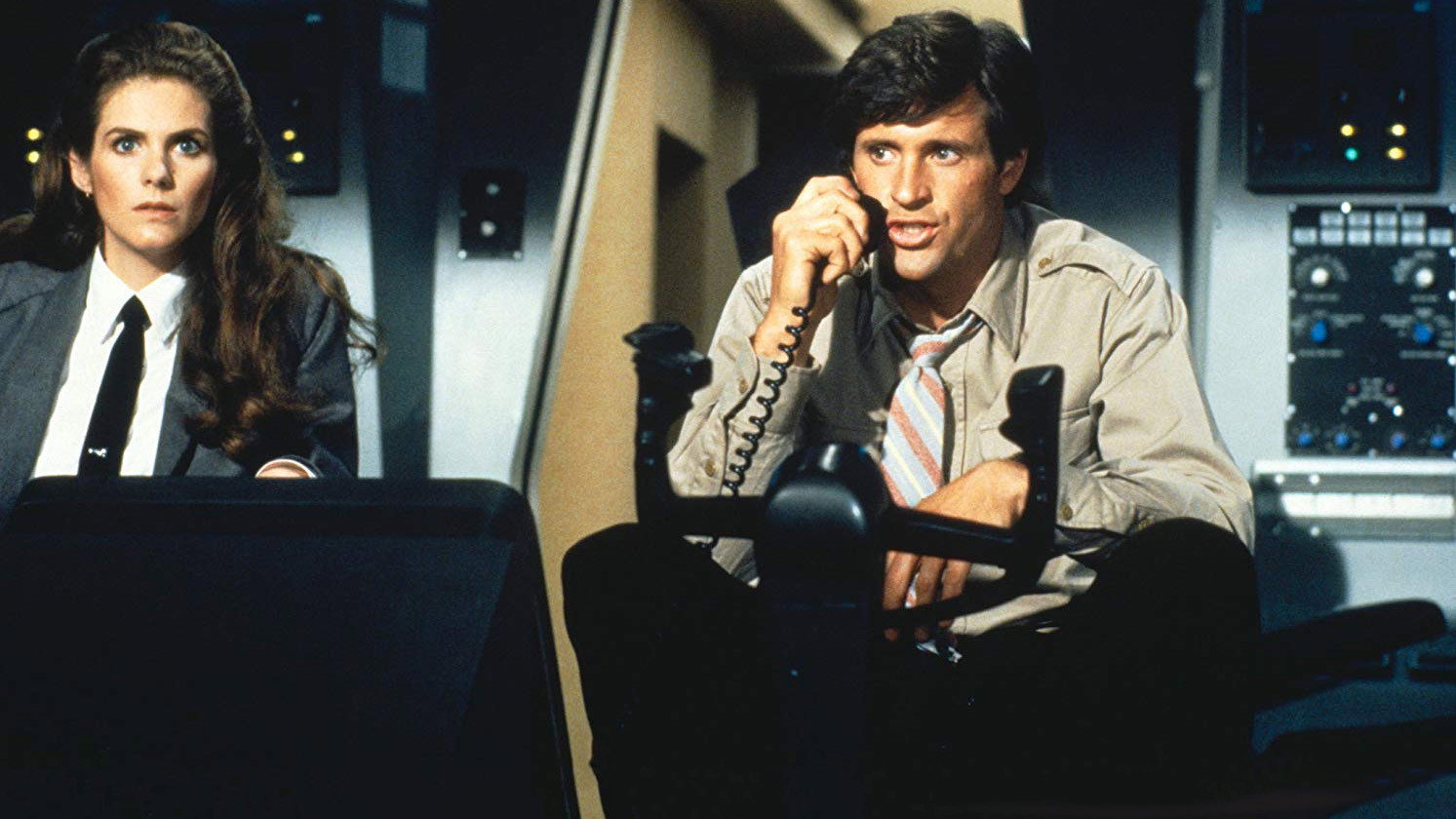
Robert Hays and Julie Hagerty, as Ted Striker and Elaine Dickinson, have to keep the melodrama sufficiently clear for all these interruptions to work. They manage it without trying to make the film respectable. We laughed hard at the bar flashback, because the romantic seriousness makes the change to disco silliness so much funnier. The sequence mixes a Casablanca-style encounter with a parody of Saturday Night Fever.
Joseph F. Biroc’s cinematography helps the bar encounter pass for romantic melodrama long enough for the disco business to interrupt it. Ward Preston’s production design is usefully convincing, giving the foolish behaviour surroundings that could accommodate a serious disaster story. Elmer Bernstein scores the danger as though it deserves our concern, which makes the foolish dialogue funnier. The music does not keep nudging us to notice the jokes.
Patrick Kennedy’s editing deserves particular credit for knowing how quickly to leave a joke behind. A weaker spoof might underline an incongruity or wait for a reaction; here another gag is already asking for attention. At 88 minutes, the film does not give the constant interruptions time to become exhausting, and repeat viewing lets us look beyond whichever joke first caught the eye. There is often more than one joke to notice.
Some of the wordplay is feeble. Abrahams and the Zuckers sometimes settle for an obvious misunderstanding and rely on the cast to make it worth hearing. An earnest delivery cannot rescue every line, and we occasionally wished the script had found something better than another verbal mix-up. These lapses are brief, but a low tolerance for corny jokes will make them more noticeable.
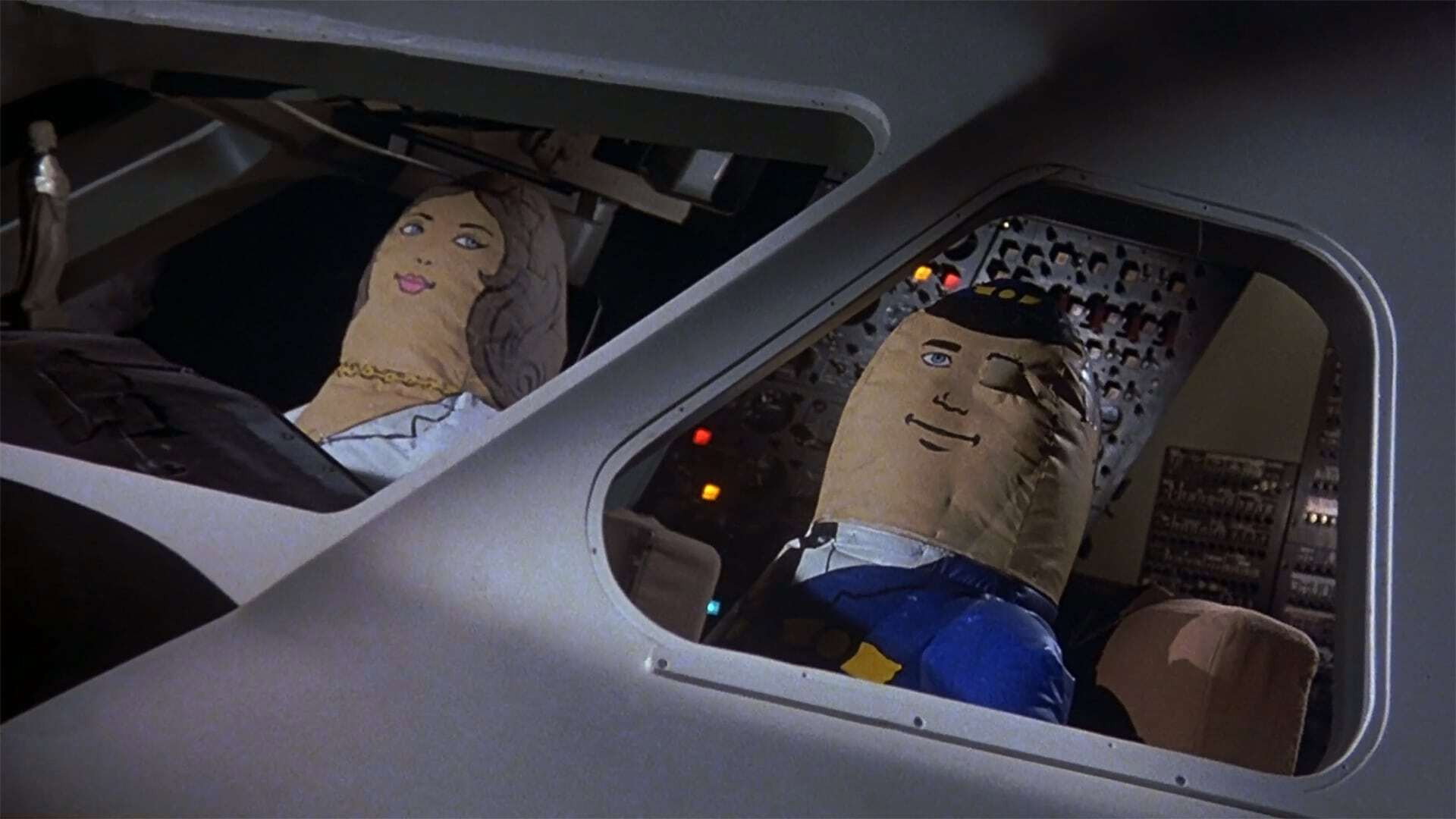
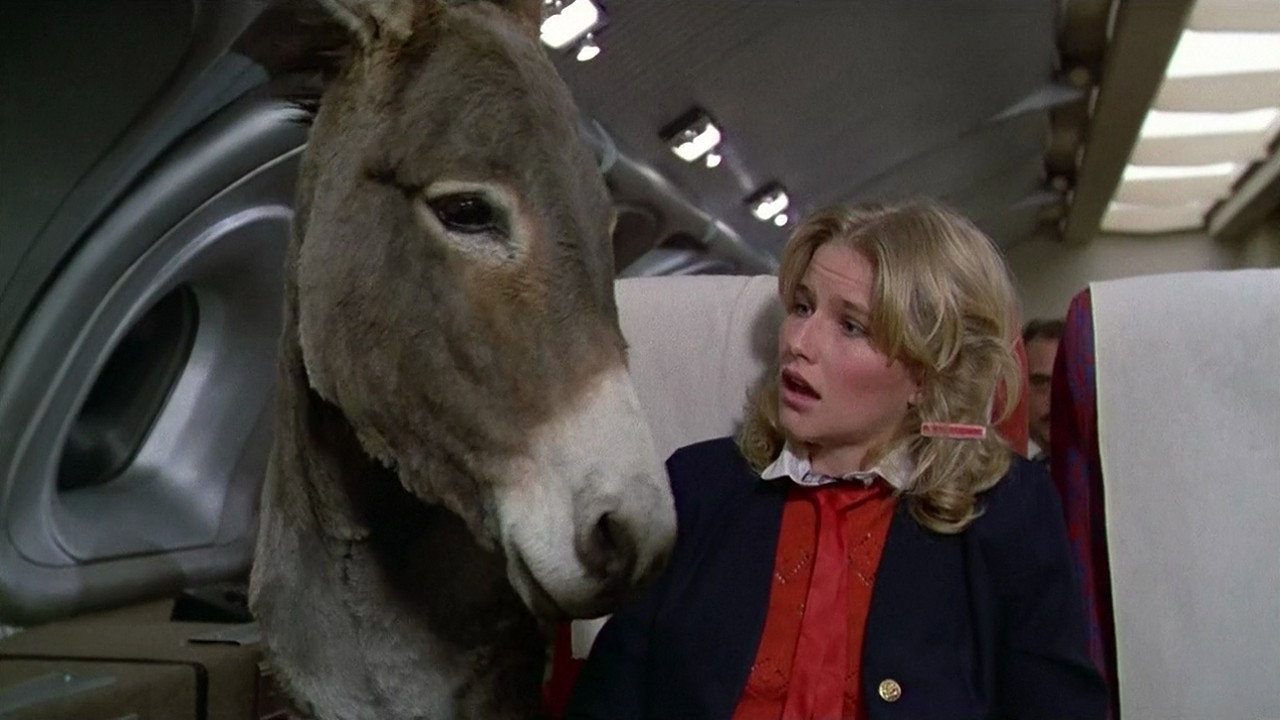
Compared with spoofs built entirely around recognition, this one gives its actors something to keep doing between the jokes. The disaster story holds together sufficiently for the interruptions to have a purpose, and the cast never stops treating the predicament as a problem requiring adult attention. Knowing the references adds pleasure, but the behaviour is funny without any homework. See it with company; somebody will need to repeat a line while everybody else is laughing.