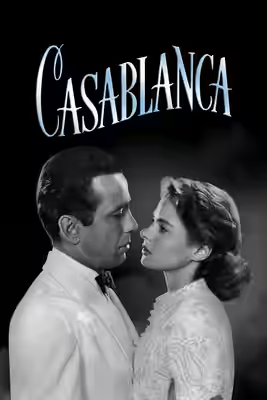
We would recommend Casablanca without asking anyone to make allowances for its age. Bogart and Bergman make the wartime romance hurt, while the wit carries the film past some decidedly convenient plotting.
Casablanca is worth recommending even to people who usually need persuading to watch a romance. Michael Curtiz gives the lovers our full attention and makes us consider the refugees caught up in the same war. The political urgency never feels like something attached to lend the romance importance. It affects how we judge the people in it, including the ones we like. Across 102 minutes, the jokes provide a welcome break from the worry without making anyone’s predicament seem trivial.
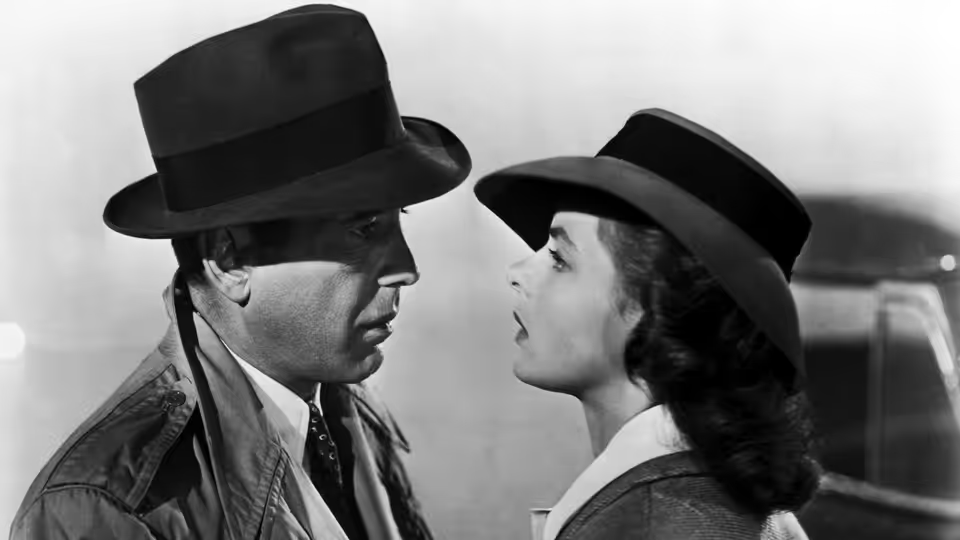
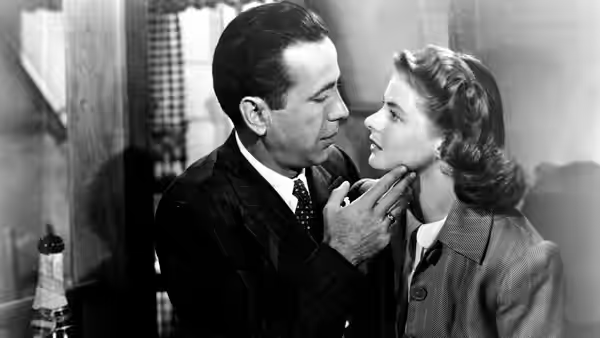
Humphrey Bogart’s Rick Blaine makes sourness oddly companionable. Bogart lets us see the effort involved in keeping other people at a distance, and that makes Rick’s unhappiness convincing. Ingrid Bergman’s Ilsa Lund is allowed to be troubled and difficult to read without becoming merely a problem for him to solve. Her performance asks us to give her feelings the same attention as his. Their scenes reward watching both faces, especially when one of them has finished speaking.
The screenplay, credited to Julius J. Epstein, Philip G. Epstein and Howard E. Koch, has enough bite to stop the sentiment growing sticky. The jokes sound like things these people would say to protect themselves, rather than lines inserted because the drama has become too earnest. Claude Rains, as Captain Louis Renault, is particularly good at making politeness sound suspect. He remains so agreeable that we enjoy his company even while wondering how much of what he says we ought to believe.
Arthur Edeson’s cinematography makes Bergman’s face as compelling as the dialogue. Her uncertainty remains interesting beneath the glamour, and the images keep us looking for what she might be holding back. Owen Marks’s editing is assured when the film moves between romantic distress and wartime danger, and neither strand makes us impatient to return to the other. There is a lot to fit together here. Curtiz keeps it comprehensible without having everyone explain themselves at every opportunity.
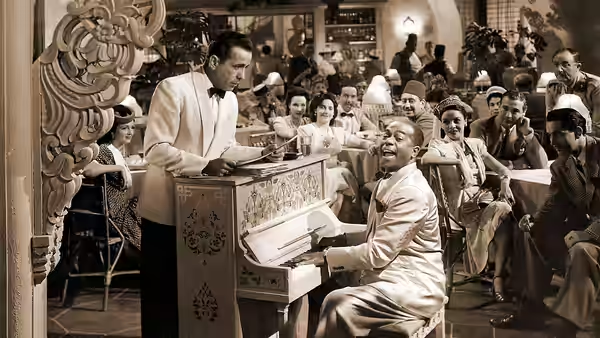
Steiner’s score sometimes presses harder than we need when the actors have already made the feeling clear. Yet the use of ‘As Time Goes By’ moved us. The tune makes the lovers’ unhappiness seem painfully ordinary, the sort of thing people endure without a film being made about them. Its sentiment is plain enough to risk embarrassment, and that is part of why it works. Curtiz does not hurry us away from the feeling.
The thriller plotting deserves the caveat. A few developments depend on our accepting an improbability because it is useful, and brisk direction cannot quite make them convincing. We stay with the film because we care about the people making the decisions, though anyone inclined to inspect the mechanics will find things to question. What distinguishes it within wartime romance is its continuing interest in the refugees and the people who would prefer to stand aside.
There is no need to approach Casablanca as a lesson in what films used to do well. Its humour is available without homework, and so is the hurt; nothing depends on recognising a famous line before it arrives. Give it an uninterrupted evening, and resist the temptation to recite along.