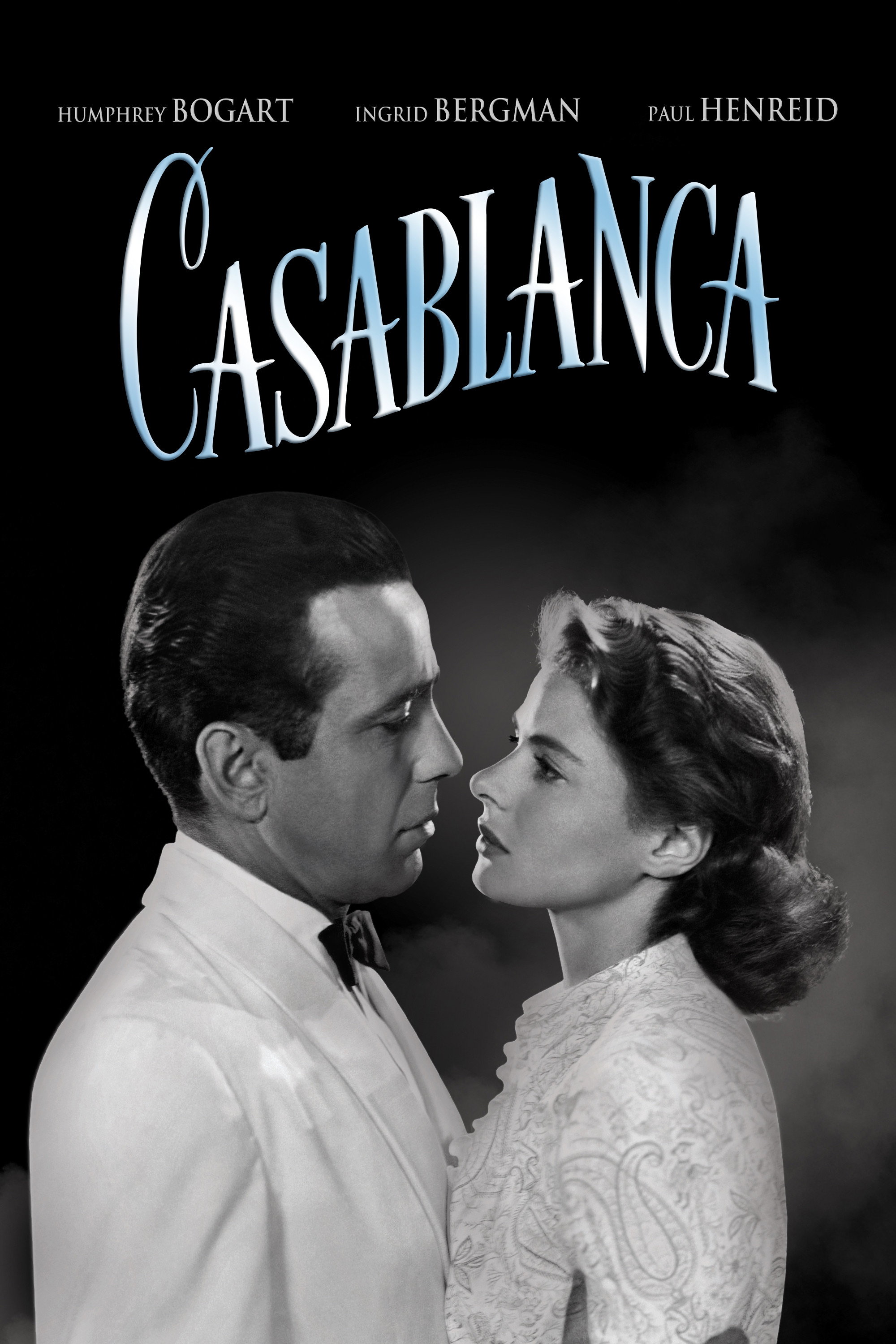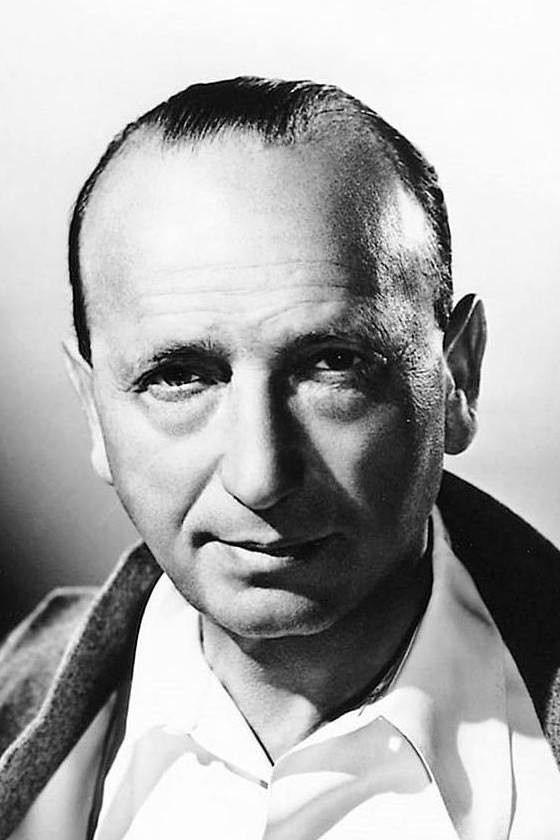
Michael Curtiz could make action, romance and melodrama move without losing sight of the people involved. We rate him for that practical intelligence: in Casablanca, his control lets the actors make sentiment feel uncomfortably personal.
Fi1m perspective
Bergman’s face in Casablanca (1943) makes us keep looking for what she is holding back. Arthur Edeson’s cinematography gives her glamour without smoothing away her uncertainty, and Curtiz allows it to hold our attention. We value that patience in a director whose skill at moving a story along can make his work seem simpler than it is. The lovers matter, but so do the refugees caught in the same war. The jokes give us a breather without treating anyone’s predicament as trivial.
Warner Bros. brought Curtiz to Hollywood in 1926, and his long stretch of studio work makes more sense through its variety than through a single favourite subject. Captain Blood (1935) established his command of swashbuckling action; Yankee Doodle Dandy (1942) put him to work on musical biography. Mildred Pierce (1945) drew on his strength with melodrama and sentiment. He became a freelance director in 1954, with the later musical White Christmas (1954) among his work outside Warner Bros. We would not ask all these films to resemble one another before taking their director seriously.
Curtiz’s fluid camera movements, unusual angles and shadow play are recognisable habits, even if they do not amount to the single personal signature some critics want. We find the complaint that he was primarily a capable craftsman unpersuasive. In Casablanca, editor Owen Marks moves between romantic distress and wartime danger without making us impatient to return to either. Curtiz keeps a crowded story comprehensible without having everyone explain themselves. That clarity takes judgement, particularly when the film needs to be funny as well as anxious.
His willingness to allow sentiment has its risks: Steiner’s score in Casablanca sometimes presses a feeling the actors have already made clear. Yet the use of ‘As Time Goes By’ moved us because it makes the lovers’ unhappiness feel ordinary enough to recognise. Curtiz gives that feeling time, without seeming embarrassed by its plainness. Some of the plotting is decidedly convenient, and we need not pretend otherwise to rate the film so highly. Start with Casablanca, even if romances usually require some persuasion.
Biography
Michael Curtiz was a Hungarian-American film director. Born Manó Kaminer on 24 December 1886 in Budapest, Austria-Hungary (now Hungary), he began his career in Hungary and worked across Europe before moving to the United States in 1926. He directed more than 100 films in Hollywood, primarily for Warner Bros. during the 1930s and 1940s.
Curtiz is known for directing Casablanca (1942), for which he won the Academy Award for Best Director, as well as The Adventures of Robin Hood (1938), Angels with Dirty Faces (1938), Yankee Doodle Dandy (1942), Mildred Pierce (1945) and White Christmas (1954). He also directed several Errol Flynn adventure films, including Captain Blood (1935) and The Sea Hawk (1940). He continued working until shortly before his death on 10 April 1962 in Hollywood, California.