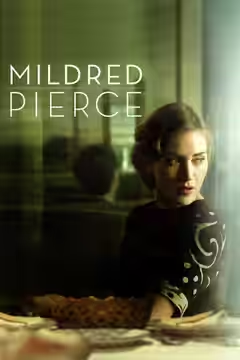
Michael Curtiz’s melodrama about a mother who bakes her way to money and cannot buy the one thing she wants is as sharp as its reputation. Joan Crawford holds the centre by will alone; the murder wrapped around her is the least of it.
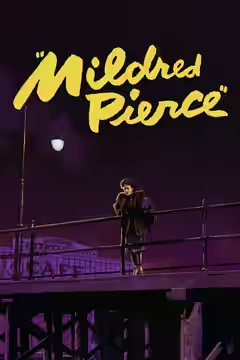
Michael Curtiz’s Mildred Pierce opens with gunshots in a beach house and spends the next 111 minutes explaining how a Glendale housewife who bakes pies came to be walking a pier at night near a dead man. James M. Cain’s novel has no murder in it. Ranald MacDougall’s screenplay and Jerry Wald’s production put one in, wrapped the mother-and-daughter story inside a police interview, and sold a women’s picture as a thriller. That should have been a mess. It is one of the sharpest studio melodramas of its decade.
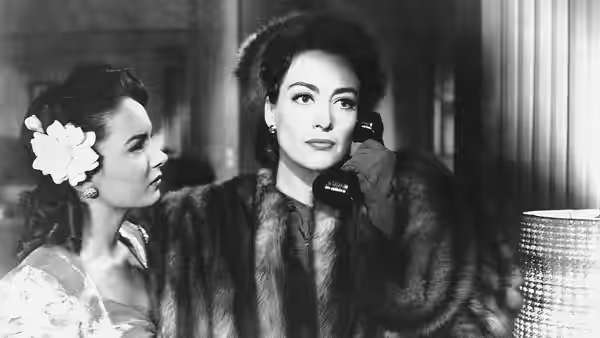
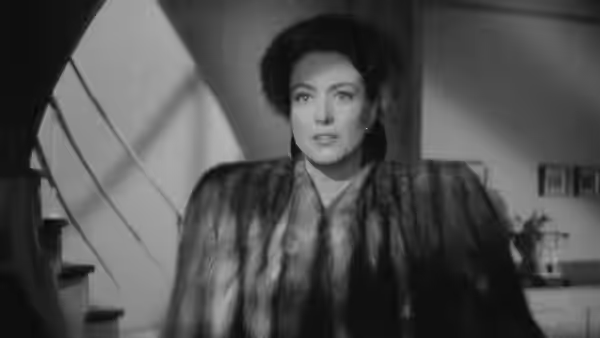
It is as good as its reputation, and most of the reputation belongs to Joan Crawford. Mildred is a woman who has decided to be respectable and will work herself into the ground to prove it. Crawford plays her with her chin up and her eyes wet, and never once asks us to like her. Milo Anderson dresses the change: an apron and a housedress at the start, then a waitress’s uniform, then tailored suits with shoulders you could rest a tray on, and at last a fur she wears without quite believing in it. You can read the bank balance off the clothes.
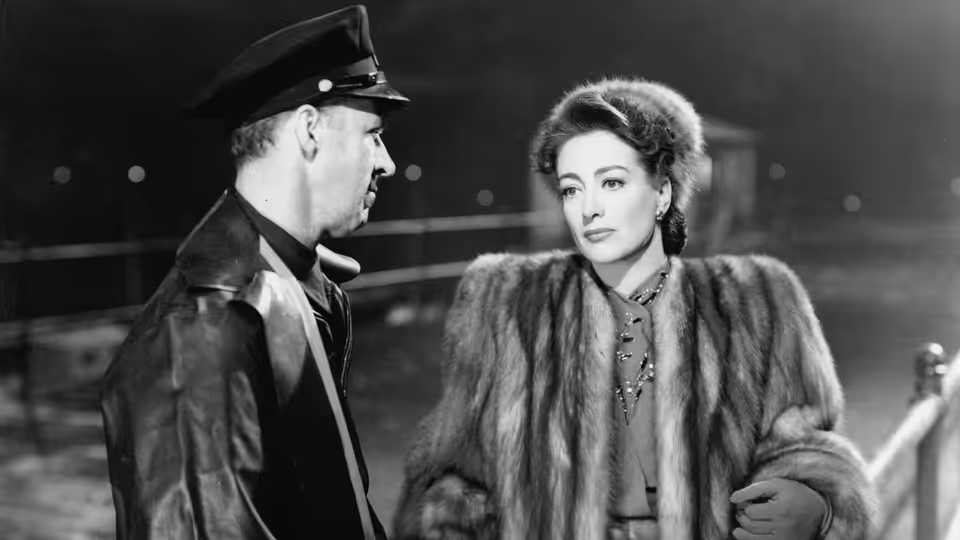
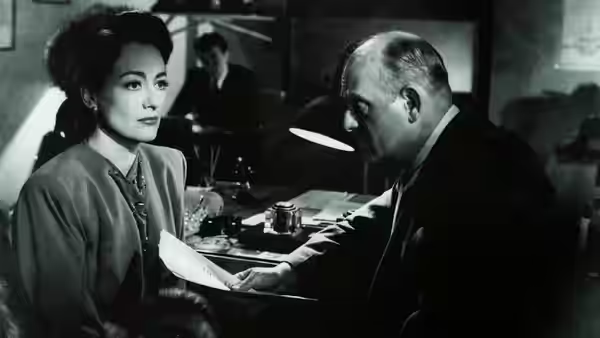
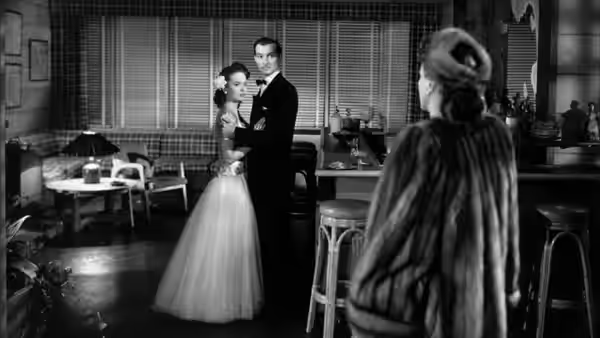
Ernest Haller lights the two halves of the story as two different films. The Glendale kitchen is flat and bright, every surface visible, nobody hiding anything. The beach house, the pier and the police station are the other film: venetian blinds throwing bars across faces, wet boards under a streetlamp, a single desk light in the interview room. David Weisbart cuts between the two with slow dissolves, so the past arrives as something Mildred is admitting rather than something we are shown.
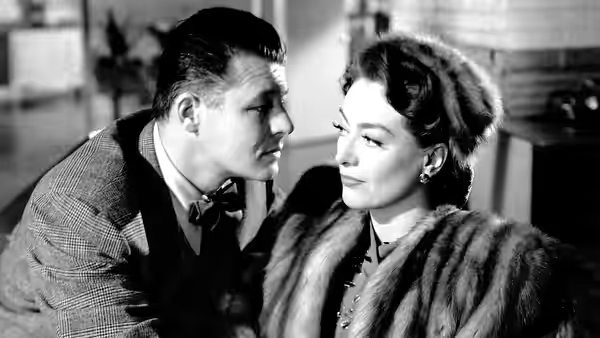
Around her the casting is close to faultless. Eve Arden’s Ida runs the restaurant floor with a line for everything and no illusions about anybody, and is the only person who tells Mildred the truth. Jack Carson’s Wally Fay is a property man who never stops selling, damp-handed and always slightly too close. Zachary Scott’s Monte Beragon is a Pasadena idler who has run out of money but not of manners. Bruce Bennett’s Bert is the weak point, decent and dull; that may be the idea, but it leaves a hole where the marriage should be.
The film lives or dies on Veda, and Ann Blyth plays her with a lifted chin and a voice already practising for money. At least one reviewer in 1945 found the girl hard to credit. We did not, because the film shows why: every time Veda sneers, Mildred pays for something. The scene that got at us is a small one. Veda finds the waitress uniform, puts it on the maid as a joke, and lets her mother know what she thinks of women who wait tables. We watched Crawford’s face fall and then set, then watched Mildred apologise, and wanted to reach into the screen and stop her. She can face down a bank and she cannot face down her own child.
Not all of it holds. Max Steiner’s score tells us what to feel a few seconds before the actors do, and there are string surges under scenes that had already landed. The grafted-on murder plot takes over the last stretch, and the film gets smaller as it gets busier; the interview room, so useful as a frame, becomes a place for explanations. Butterfly McQueen plays the maid, Lottie, and is not credited for it, and the uniform joke is at her expense as much as Mildred’s. That is how the studio worked in 1945.
Curtiz had made Casablanca three years earlier, and this is the colder, tighter film. The other Cain pictures of the period are about people who want money and each other. Mildred wants respectability, and not even for herself, which makes this the bleaker film.
The PG certificate is accurate; the cruelties are all spoken, and a child would miss most of them. Watch it with your mother, or with someone who has one, and do not expect the conversation afterwards to be easy. It reached British cinemas on 13 April 1946, and the only thing in it that has dated is the furniture.