Michael Curtiz’s life of George M. Cohan is a wartime morale film with songs, sanitised and a reel too long. It is also the film in which James Cagney dances, stiff-legged and grinning, and every time he does we forgave it a great deal.
George M. Cohan wrote “Over There”, “Give My Regards to Broadway” and “You’re a Grand Old Flag”, and for thirty years he was the loudest man on Broadway. Michael Curtiz’s film of his life reached British cinemas on 15 October 1942, with the war less than a year old for America, and it was plainly made to send people to the recruiting office. It does not pretend otherwise. We enjoyed it anyway, in stretches a great deal, and nearly all of the enjoyment has one source. James Cagney is in it.
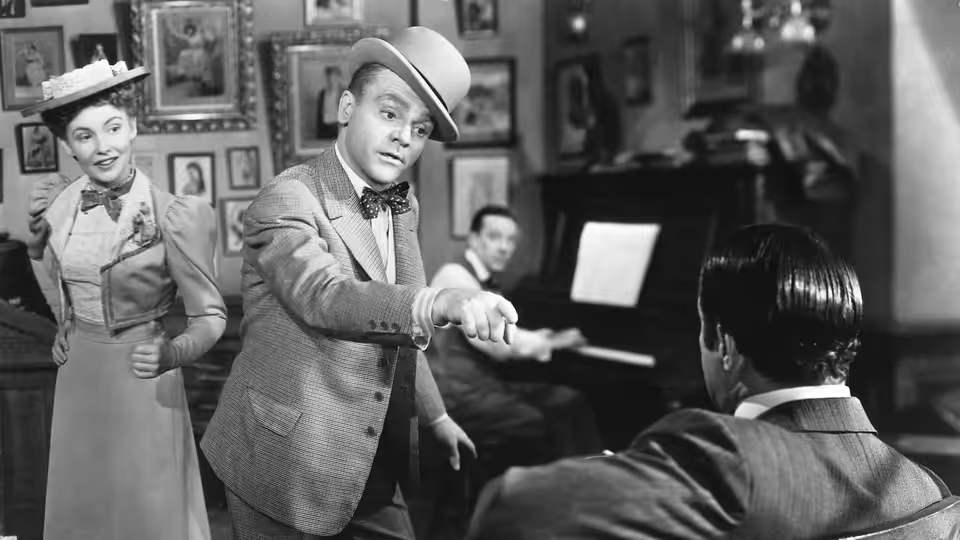
The script, by Robert Buckner, Edmund Joseph and Julius J. Epstein, follows the biopic pattern to the letter. Cohan, old and retired, is called to the White House and tells the president his life story, from a childhood act called the Four Cohans through the theatre managers who would not hire him to the year his name went up in lights. Anything awkward has been removed. Mary (Joan Leslie), the sweetheart, has no surname and no wants of her own; she is there to be sung to. At 126 minutes the film is a reel too long, and the last half hour marks time between numbers with scenes of people telling George how much he means to them.
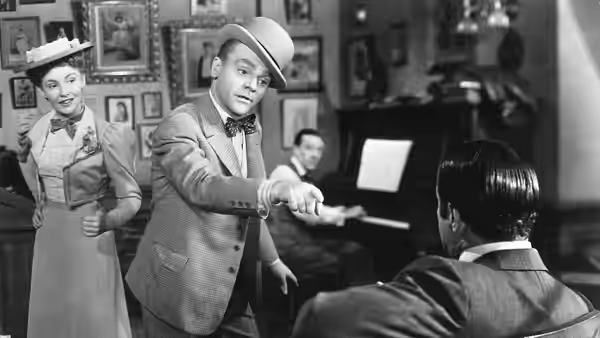
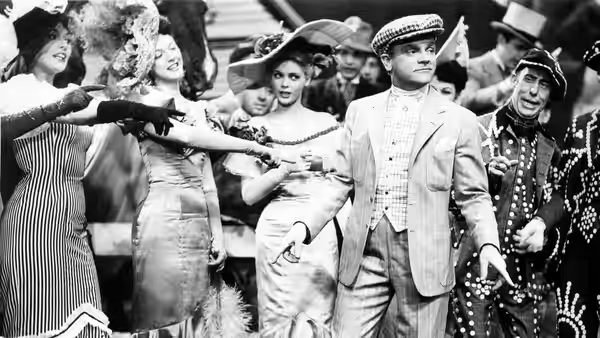
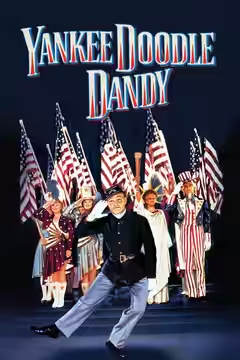
Then Cagney dances, and the pattern stops mattering. He had spent a decade playing men who shot people, and here he plays a man who cannot keep still. His dancing is unlike anyone else’s: knees almost locked, back straight, arms working like pistons, bouncing up onto his toes and coming down in a stamp. He talks his way through the songs as Cohan did, barking one line, half-singing the next, throwing the last over his shoulder. We grinned at the first “Yankee Doodle Boy” number and had not stopped by the end of it, and we are not, as a rule, people who grin at flags. It was the strut that did it. Cagney plays a man who believes he is the best thing in any room, and plays it without a flicker of apology.
James Wong Howe shoots the stage numbers from the stalls first, so we see the footlights and the edge of the boards, and then takes the camera up onto the stage as the numbers grow. “You’re a Grand Old Flag” starts as one man on a bare set and ends with a chorus, a flag the width of the proscenium and Milo Anderson’s costumes turning every dancer into a stripe. Heinz Eric Roemheld and Ray Heindorf arrange Cohan’s tunes so that they arrive first on a rehearsal piano and come back with a full pit, which is a simple trick and it works every time. George Amy’s editing is where the film shows its nerves. He keeps cutting away to the audience in the stalls to show us they are enjoying it, and we did not need telling.
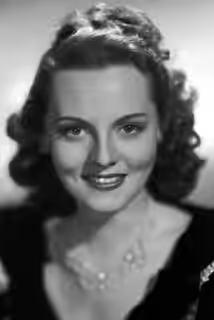
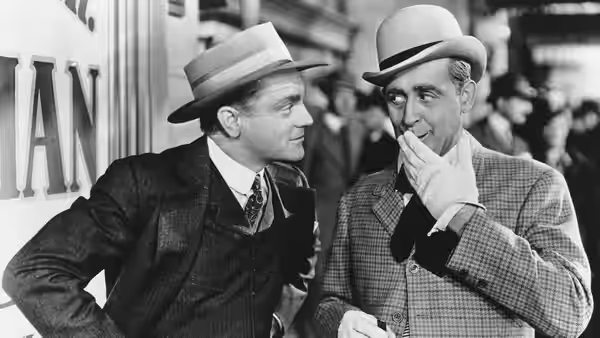
Walter Huston is the reason the family scenes hold. His Jerry Cohan is a modest, decent vaudevillian whose son’s mouth keeps getting the whole act sacked, and Huston plays the exasperation quietly enough that it is funny rather than sour. Rosemary DeCamp as Nellie and Jeanne Cagney as Josie, the star’s sister in life as well as on the bill, fill out the act, and Douglas Croft gives young George exactly the cockiness the older one will keep. Richard Whorf’s Sam Harris is a patient partner with nothing to do but be patient. Irene Manning’s Fay Templeton gets the film’s one scene of somebody refusing George, and it is a relief when she does. The moment that caught us out was smaller: George in old-man greasepaint meeting Mary backstage, letting her think he is sixty, and writing her a song on the spot. It is a con, and it is also the only time in the film he stops performing long enough to look at someone.
Curtiz made Casablanca the same year, and this is the more obedient film; it does what the studio and the moment asked and no more. Against the musical biopics of its period, though, it stands up, because the star is doing something real in front of the camera rather than standing in a good light being admired. Against Cagney’s own films it is a curiosity: the one where he is happy.
The politics are simple and the film does not apologise for them. If two hours of a man telling America it is wonderful sounds like a long evening, it is, at intervals. Then Cagney stands up and the intervals end.