Michael Curtiz’s small-town family drama is soft, sunlit and a little too pleased with its own decency, and it would have been forgotten if John Garfield had not walked into it. He did, and the film has kept its pull for that reason.
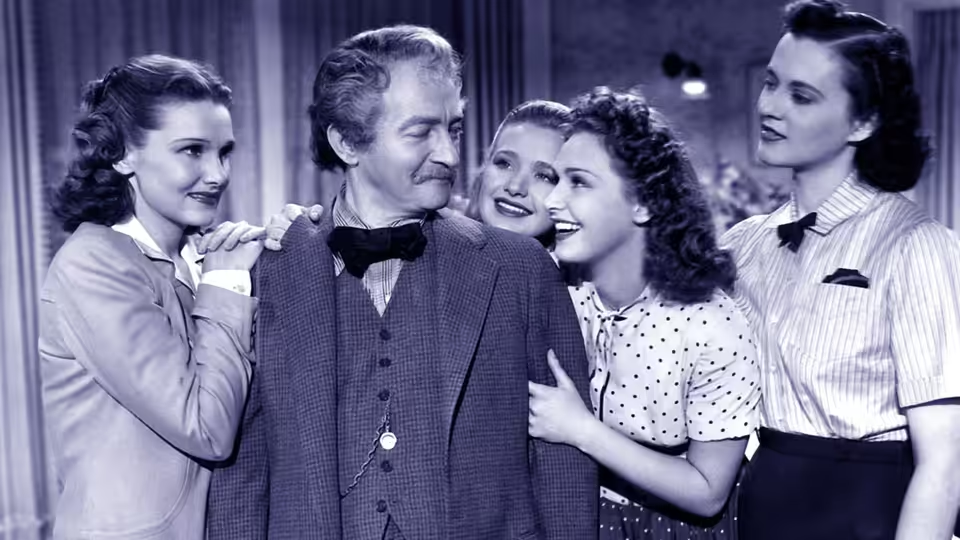
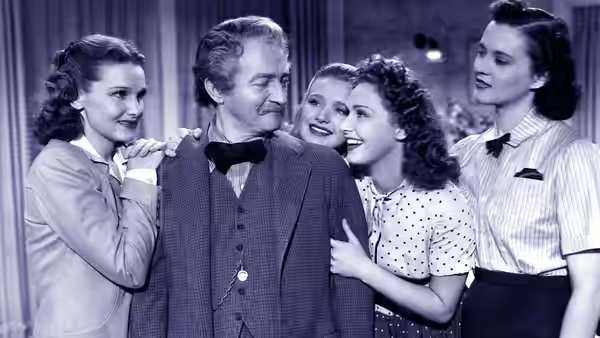
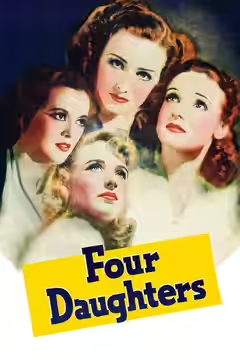
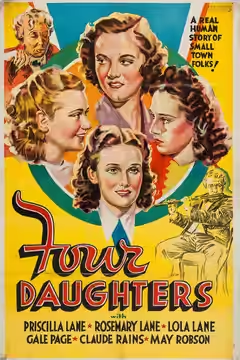
Michael Curtiz, four years before Casablanca, made this small, sunlit film about a widowed music teacher and his four grown daughters. Adam Lemp (Claude Rains) runs his household like a chamber group. Ann (Priscilla Lane) plays the violin, Kay (Rosemary Lane) sings, and the film opens on a family rehearsal in the parlour, with Aunt Etta (May Robson) coming through from the kitchen to complain about the noise. It is a film about decency, and for its first half hour it is nearly too decent to bear.
The screenplay, by Julius J. Epstein and Lenore J. Coffee, gets the household moving when a young composer, Felix Deitz (Jeffrey Lynn), arrives to board. He is courteous, handsome and available, and each sister quietly decides he is hers. Frank McHugh’s Ben Crowley, the cheerful rich suitor, and Dick Foran’s Ernest, the neighbour who wants Emma (Gale Page), stand about in the garden being pleasant. Ernest Haller shoots the house through lace and sunlight so that every face glows, and nothing darker than the shadow of a curtain falls across the Lemp parlour. It is charming and it is a little airless, and we were beginning to check the runtime.
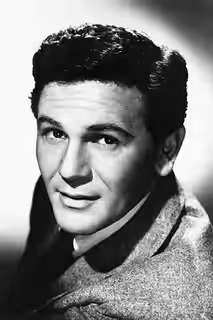
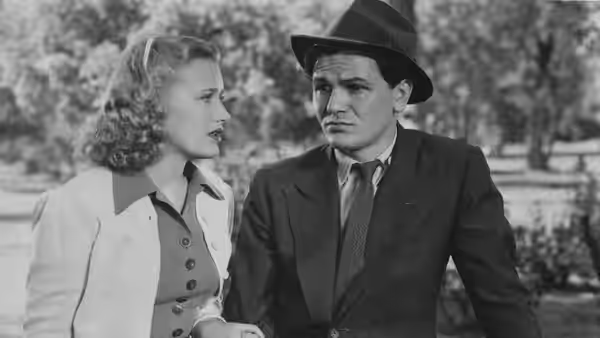
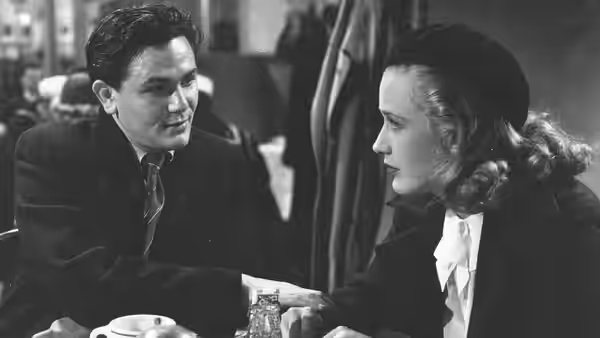
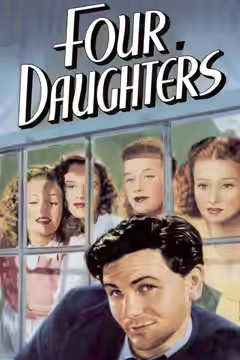
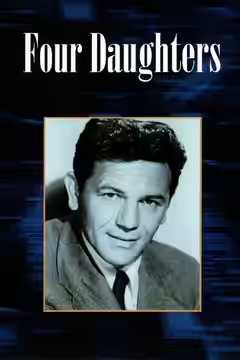
Then Mickey Borden walks in. John Garfield, in his first film, plays the orchestrator Felix has sent for, and he arrives with his hat on, sits down at the piano without being asked, and tells the Lemps that the fates have it in for him and always have. He lights a cigarette. He is unimpressed by the sunshine and the sisters. He speaks in a different rhythm from everyone else, faster and lower and with the pauses in the wrong places, and Curtiz knows exactly what he has, because from this scene on the camera keeps drifting back to him. We sat forward. The film had been asking us to like it; Garfield made us watch it.
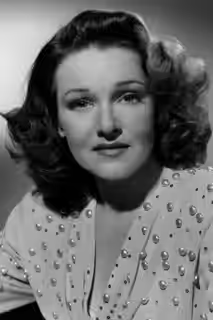
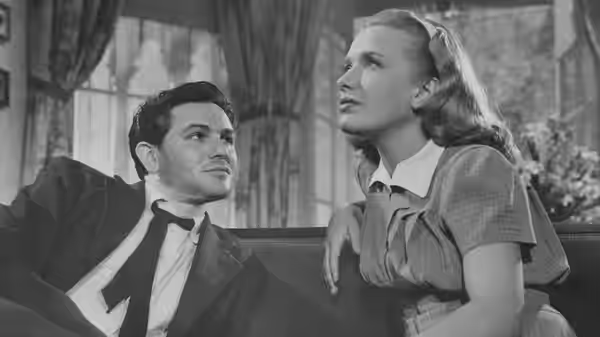
What he does for Priscilla Lane is the interesting part. Ann has been the sunniest of the four, and Lane plays sunshine easily, but when Mickey plays his own unfinished piece and Ann listens, Haller holds on her face and something in it goes quiet. We were moved more than we expected to be by a scene that consists of a man at a piano and a woman on a chair. It is the first time the film admits that being happy in that house might not be the whole of a life.
Elsewhere the seams show. Curtiz treats the sisters as a set: they enter in a row, wear complementary frocks by Orry-Kelly, and hand lines to one another like a relay. Lola Lane’s Thea and Rosemary Lane’s Kay barely get a scene apart, and Gale Page’s Emma is given a suitor instead of a character. Rains is mild and warm and has almost nothing to play; Adam’s job is to conduct and to look worried, and Rains does both with a grace the script does not repay. Max Steiner builds his score out of the family’s own music, which is clever, and then underlines every feeling at least twice. Ralph Dawson cuts the first half generously, which is a kind way of saying it dawdles.
The second half takes a turn we will not describe. The comedy of a house full of women rearranging themselves around a polite young man gives way to something sadder, and it is here that Curtiz’s fluency pays off: rain on a windscreen, a long walk up a path, a porch scene played mostly in silence. The shift works because Garfield had already unsettled the house.
Against Casablanca this is a small thing, and it would be silly to pretend otherwise. But the same gift is at work: a crowded cast, each given one moment to be seen, and a director who knows where the heat in a scene is and moves the camera towards it. Watch it at home on a wet afternoon. It runs 90 minutes, asks little, and hands you a debut that anyone in 1938 could have told you was the start of something.