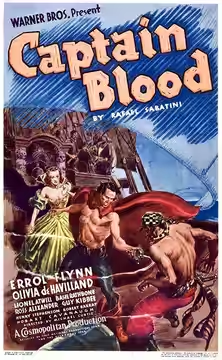
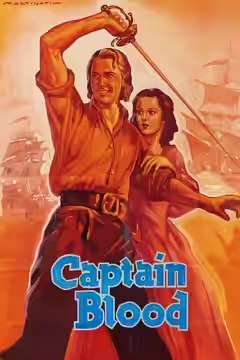
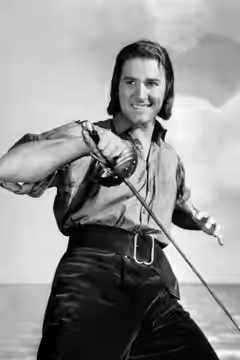
Curtiz’s pirate film is stagey and talky for its first forty minutes, and then Flynn gets a ship, a sword and Korngold’s orchestra and becomes the star every later swashbuckler wanted. Creaky at the edges, thin in the crew; still the real thing.
Michael Curtiz’s film of Rafael Sabatini’s novel is the one that made Errol Flynn, and you can watch it happen. He is billed first, in his first leading role, and for the opening forty minutes the film does not quite know what it has. Then it puts him on the deck of a captured Spanish galleon, gives him a captain’s coat and Erich Wolfgang Korngold’s brass section, and from that moment it is the picture later pirate films have been measured against. It is stagey and talky and nearly two hours long, and we enjoyed nearly all of it.
The slow part comes first. Casey Robinson’s screenplay has a rebellion, a treason trial, a sea voyage and a slave market to get through, and it does most of it in speeches. Lionel Atwill’s Colonel Bishop is a plantation owner of the sneering school, and the business of Blood treating the governor’s gout while the rival doctors (Hobart Cavanaugh, Donald Meek) fume is played for the back row. What keeps it alive is Flynn’s cheek. In the dock, condemned, he looks the judge over and informs him that he is a dying man. We grinned at him against our better judgement, and kept grinning.
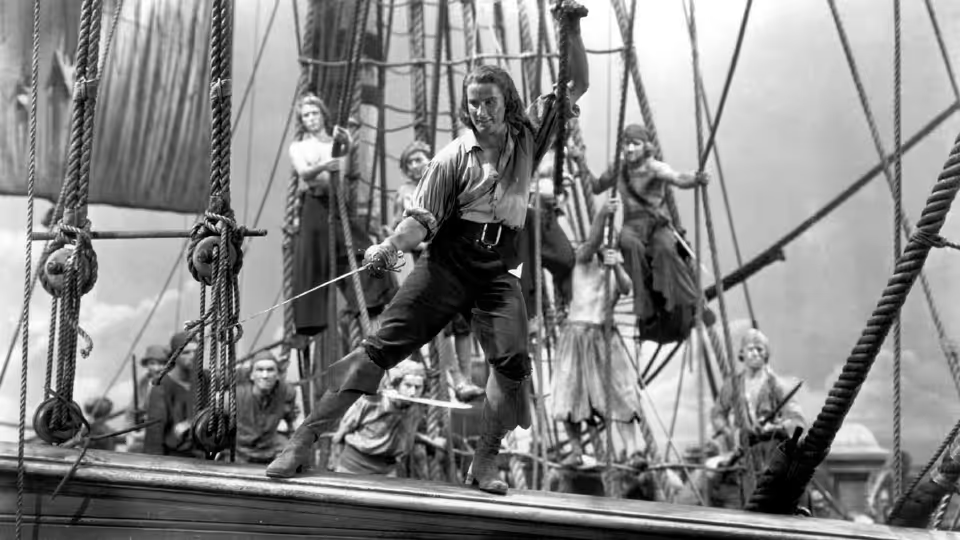
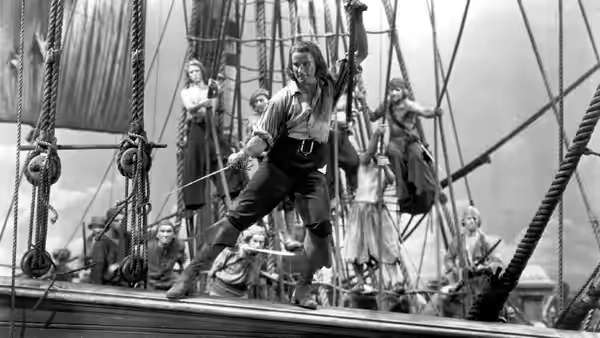
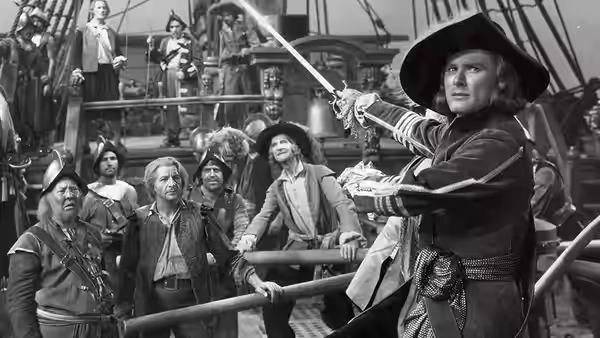
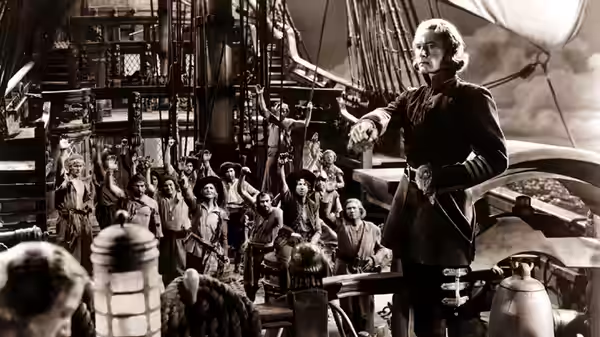
The film turns when the Spanish raid Port Royal and the slaves row out and take the raiders’ ship. Curtiz shoots the galleon low and wide from the deck, rigging filling the top of the frame, and Korngold lets the orchestra go. There is a scene on the quarterdeck where Blood reads the articles his new crew will sail under and the men roar each one back, the music rising under them, and we sat up in our seats. It is corn of the purest kind, and we did not care.
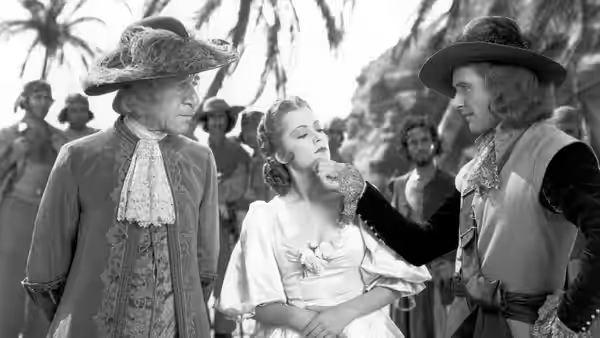
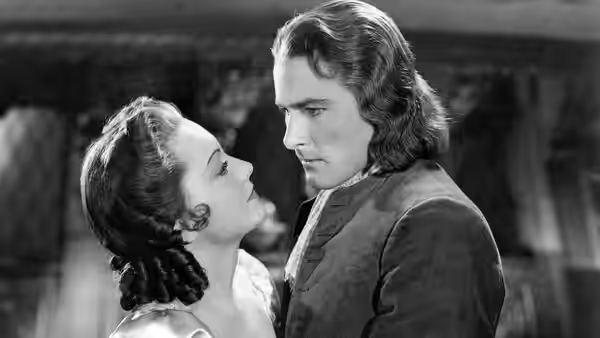
Olivia de Havilland’s Arabella buys Blood at auction to spite her uncle and spends the rest of the film pretending not to have noticed him. It is a thin part, a young woman who is cross and then is not, and de Havilland gives it more spirit than it was written with. The two are good at the quarrel that is really a flirtation: she calls him a rogue, he reminds her she owns him, and Curtiz lets them stand a little too close while they say it. Milo Anderson dresses her in pale silk and him first in rags, then in more lace than any privateer needs.
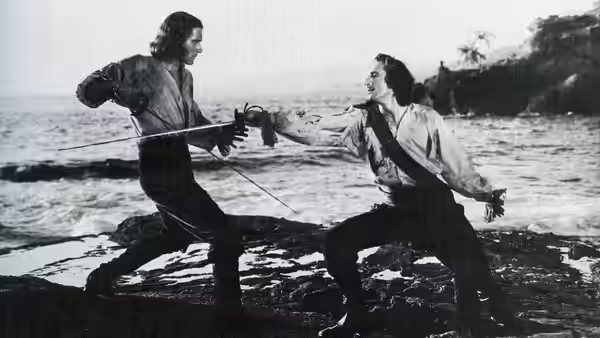
Basil Rathbone arrives an hour in as Levasseur, a French pirate proposing a partnership, and the film gets a villain worth the name. Rathbone plays him quiet and amused, which after an hour of Atwill’s shouting is a relief. He and Flynn cross swords on a beach, Ernest Haller and Hal Mohr shooting them in the surf with the light coming off the water behind them, and George Amy cuts so that we see each exchange whole rather than a blur of close-ups. It lasts a few minutes and they are the best few minutes in the film. Rathbone, plainly the more practised fencer, makes Flynn look good, which is a gift. We will not say how it ends.
The flaws are those of 1935 and of a script that will not stop explaining. Henry Stephenson’s Lord Willoughby turns up late with news from England and the film halts so he can deliver it. The crew, Ross Alexander’s Jeremy Pitt, Guy Kibbee’s Hagthorpe, Robert Barrat’s Wolverstone, are names on a muster roll more than men, each with a line or two and a hearty laugh. The closing sea battle is fought with models, and they look like models, bobbing in a tank while the guns go off and the smoke drifts the wrong way. At 119 minutes it could lose a reel of the first hour’s talk and nobody would notice.
One critic at the time found it talky and overdressed and Flynn too gentle for the Caribbean. The first charge is fair; we have just made it. The second misses the point. Blood is a doctor who never wanted to be a soldier and does not want to be a pirate, and Flynn plays the reluctance as amusement, which is why he is charming rather than a brute. It is a PG. A child who can sit through a courtroom will get a sword fight for it. The talk you can doze through. You will wake for the brass.