Film review

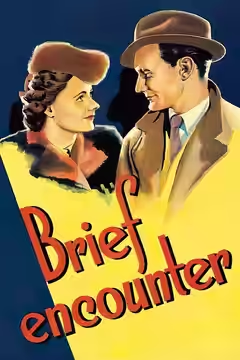
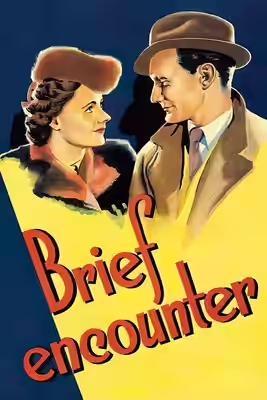
Brief Encounter

1945 · Directed by David Lean · 1h 26m · PG

In a sentenceBeing sensible looks exhausting when Celia Johnson does it

DramaRomance

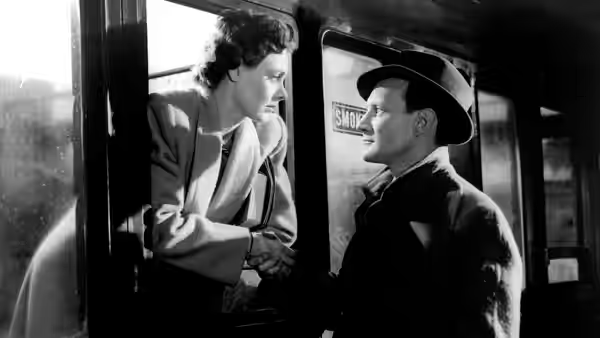
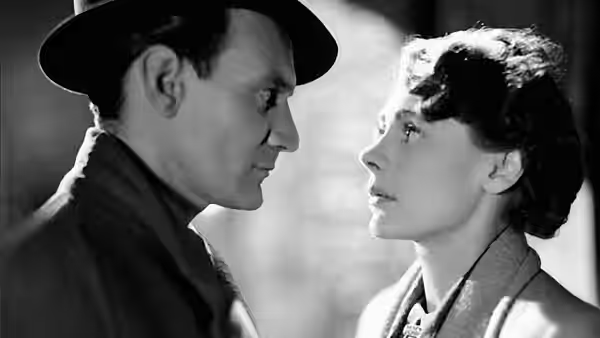
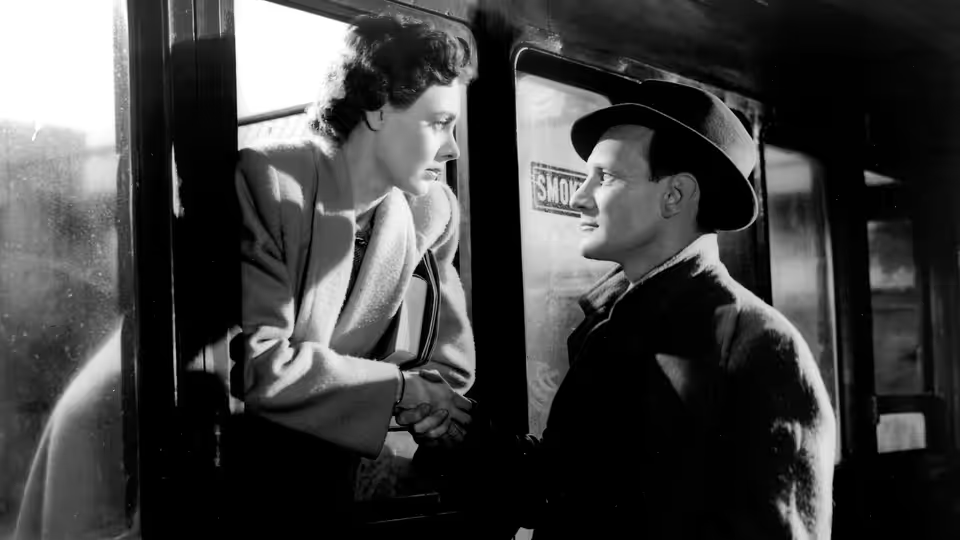
Laura Jesson (Celia Johnson) is a married woman in middle-class England. She meets Dr Alec Harvey (Trevor Howard), who is also married, and their acquaintance develops into an attachment that unsettles her ordinary life. Her husband Fred (Cyril Raymond) gives her little cause for complaint, making her feelings for Alec harder to explain to herself. As the pair spend time together, Laura weighs what she wants against what she believes she owes others. David Lean directs from Noël Coward’s screenplay, with the story following Laura’s private anxieties as the relationship grows.

Plays from YouTube when you press play; nothing loads from them until then.

Fi1m review

David Lean’s romance makes falling in love feel ordinary and frightening, with Celia Johnson giving Laura’s anxiety painful weight. Alec is less fully drawn, but this is still a film we would urge a stranger to see.

Brief Encounter takes an ordinary attraction seriously enough to make it painful, and we recommend it without asking anyone to make allowances for its age. David Lean, directing Noël Coward’s screenplay, follows two married people whose feelings threaten lives they have no wish to despise. The difficulty is there from the start: falling in love does not conveniently make their existing obligations worthless. The film gives us reason to want these people together without making everyone in their way objectionable.

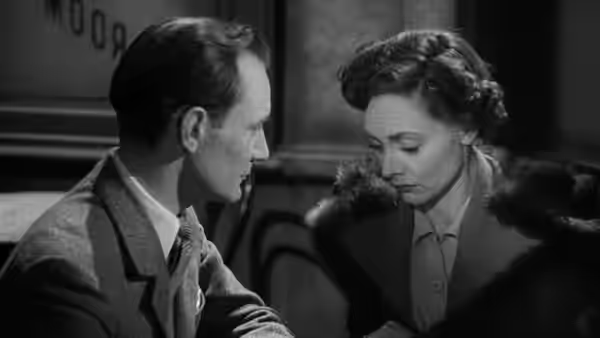
Celia Johnson’s Laura Jesson is the reason this remains so affecting. Johnson makes Laura’s awareness of what is proper persist even when she can no longer feel as she is supposed to, so that pleasure brings its own immediate discomfort. We found her anxiety almost unbearable: being with Alec offers happiness, and Johnson lets us see how quickly Laura begins to question her right to it. She makes that guilt understandable even when we wish Laura could feel less of it.

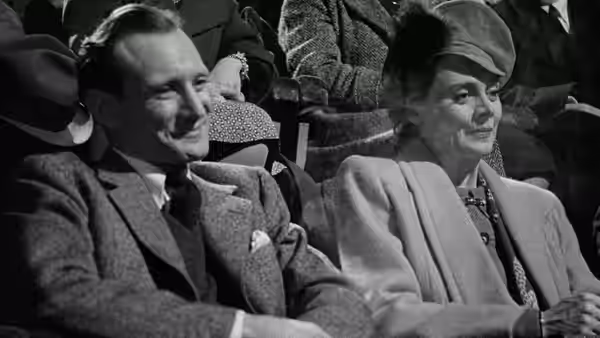
Trevor Howard gives Dr Alec Harvey enough ordinariness to make the attraction plausible. These are people who might otherwise pass unnoticed, and the growing importance they assume for each other is the film’s most persuasive achievement. Cyril Raymond’s Fred Jesson matters just as much to its honesty. His decent, unexciting husband gives Laura no easy excuse, and Raymond makes it possible to understand why a marriage might offer security without meeting every need.

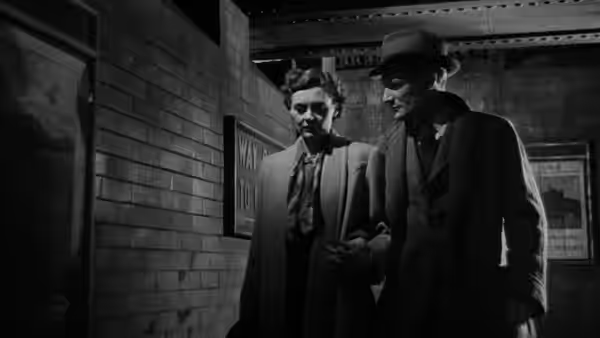
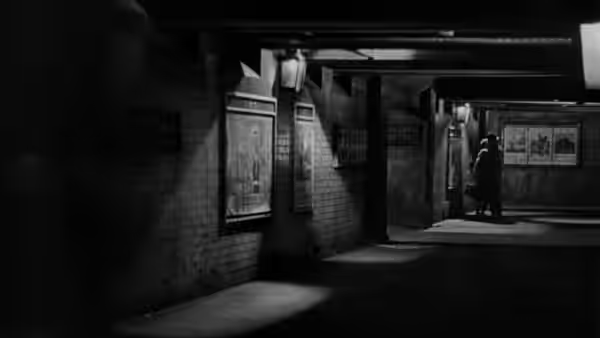
Robert Krasker’s cinematography gives Laura’s distress a physical force. An occasional tilt makes the frame itself feel wrong, a conspicuous disturbance in a film about people trying to keep their composure. We can feel the strain without needing anyone to announce it. Lean’s use of that flourish is effective because the acting remains so controlled; a more demonstrative performance would have made the same shot excessive.

Jack Harris’s editing does something equally important with our understanding of what we have seen. When scenes recur, what has changed is our knowledge of the people in them, so an exchange can become painful without acquiring a more emphatic performance. This is a precise use of repetition, trusting us to remember and reconsider. The gradual attachment has room to develop within a running time of 86 minutes.

There is a limit to that intimacy. Alec is less fully available to us than Laura, and Howard sometimes has to rely on simple decency where Johnson can suggest a complicated inner life. Coward’s concentration on her anxieties makes sense, but it leaves us with a romance in which one person is more thoroughly known. A little more uncertainty in Alec would have made their meetings richer.

For a romance, its willingness to let ordinary obligations matter is unusually demanding. Lean does not ask us to despise Fred so that we can care about Laura and Alec. It is possible to wish for their happiness and still worry about the people around them, and the film gives that worry proper weight. Give Johnson your attention, even when she seems to be doing almost nothing.

Critical consensus AI synthesised

92
Positive
7
Mixed
0
Negative
0

The reviews agree that Brief Encounter draws its emotional force from ordinary people trying to contain feelings they cannot comfortably accommodate. Praise centres on the believable development of the romance, the decency of its characters and the precise depiction of middle-class life. Celia Johnson receives particular attention for making private distress so affecting, with Trevor Howard also praised. Critics consistently find that the restraint intensifies the love story rather than keeping it at a distance.

Differences are chiefly matters of emphasis, with the supplied reviews uniformly positive. Some concentrate on self-sacrifice and repression; others find a suggestion that happiness deserves to be seized. The AV Club particularly values the way repeated scenes acquire new meaning and the occasional disruption of visual composure. Reservations are scarce: The New Yorker admires the quiet, sympathetic storytelling but finds the film slightly longer than it needs to be.

Little White Lies
5 November 2015 · 5/5/5 · Sophie Monks Kaufman
100

The critic calls it a majestic masterpiece and a high peak of screen romance. She singles out the purity of the storytelling and the moral depth of the characters' decency amid overwhelming urges.

Read the full review →
Radio Times
★★★★★ · David Parkinson
100

This is one of the finest films ever made in Britain. The critic singles out the sheer ordinariness of the leads and the special quality given to their stolen moments by the husband's decent dullness.

Read the full review →
Time Out
2 November 2015 · ★★★★★ · Tom Huddleston
100

It is one of the most emotionally devastating movies of all time. The critic singles out the vivid, impassioned and painfully believable love story as well as its affectionate nudge to the British bourgeoisie about seizing happiness.

Read the full review →
The AV Club
23 April 2016 · A · Mike D'Angelo
95

The critic calls it a masterpiece of British restraint and repression that exquisitely realizes the gradual process of two people falling in love. The review singles out the structural gambit of recontextualized scenes and occasional formal flourishes like a disorienting camera tilt.

Read the full review →
Evening Standard
11 April 2012
85*

The critic praises the film as one of the most effective and touching romances in cinema history. They single out the magnificent performances of Celia Johnson and Trevor Howard alongside the deliberate reticence in the central relationship.

Read the full review →
Slant Magazine
29 April 2016 · Clayton Dillard
85*

The critic praises the film for penetrating Laura's inner psychological life and transforming her personal anxieties into a broader commentary on cultural normalcy. It highlights the contrast with Todd Haynes' Carol and commends the 4K restoration.

Read the full review →

Cast

Stills

Awards

Academy Awards, 1947

Nominated
Best Actress
Nominated
Best Director
Nominated
Best Writing, Adapted Screenplay

If you liked this, try…

In the Mood for Love poster

In the Mood for Love

2000 · For another romance in which good manners make every small encounter hurt.

The Lunchbox poster

The Lunchbox

2013 · Another tentative connection, with loneliness treated seriously and sentiment kept in check.

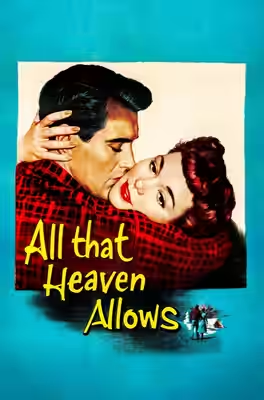
All That Heaven Allows poster

All That Heaven Allows

1955 · For a warmer, more openly angry look at respectability policing desire.

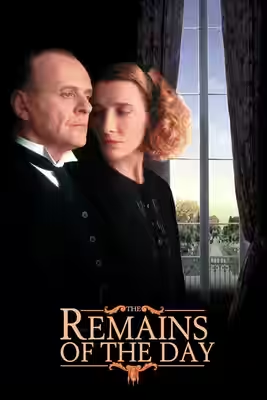
The Remains of the Day poster

The Remains of the Day

1993 · For anyone who finds a withheld confession harder to bear than an argument.

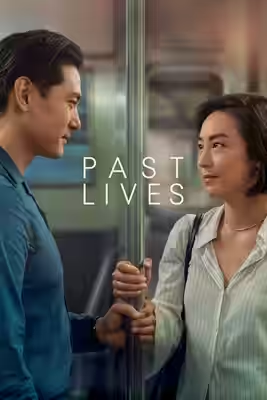
Past Lives poster85

Past Lives

2023 · Another patient study of the lives people imagine alongside the ones they choose.