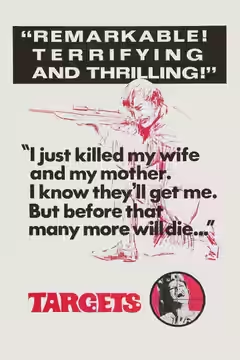
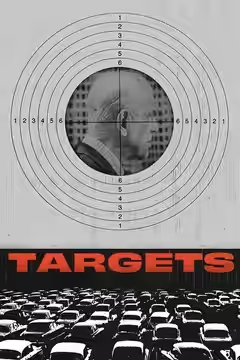
Targets makes a troubling thriller from the contrast between Gothic horror and gun violence. Boris Karloff gives it warmth and dignity, though Peter Bogdanovich sometimes makes the comparison too neat for the damage it describes.
Targets is a disturbing, carefully made thriller whose central comparison is a little too tidy. Peter Bogdanovich places Gothic screen horror beside gun violence and asks how the former can compete with the latter. The question is blunt, and the film does not always make it more complicated. Yet there is enough unease, and enough feeling for Byron Orlok, to sustain its 90 minutes.
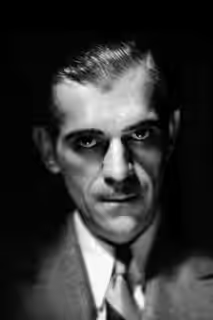
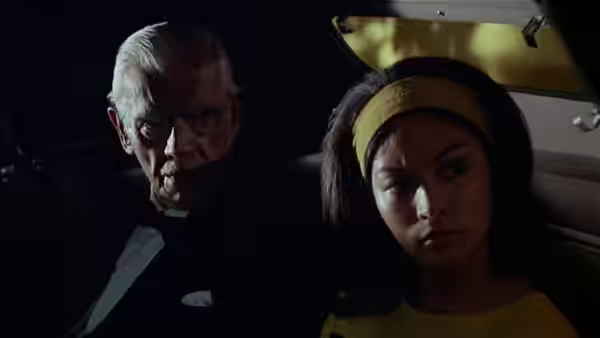
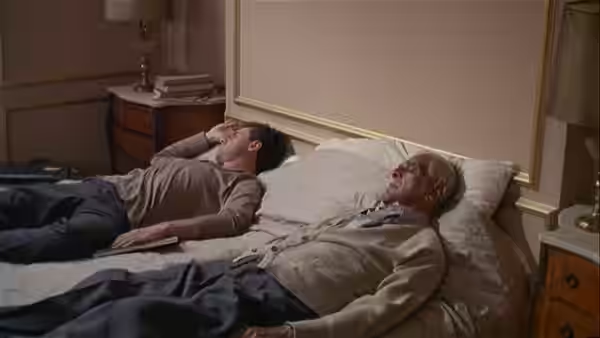
Boris Karloff gives Byron Orlok the film’s most persuasive claim on our attention. The tenderness of the performance matters because this comparison could easily reduce him to a convenient emblem of yesterday’s horror. We care about Orlok before we worry about what he represents, and that is the performance’s achievement. There is a welcome generosity in allowing the gentler story so much weight in a film concerned with guns.
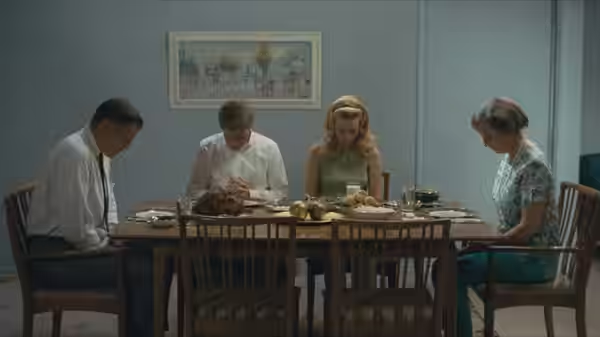
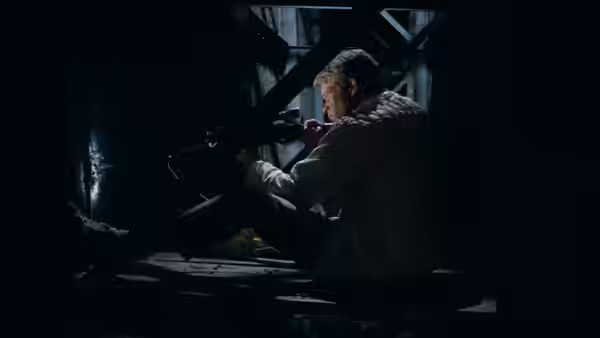
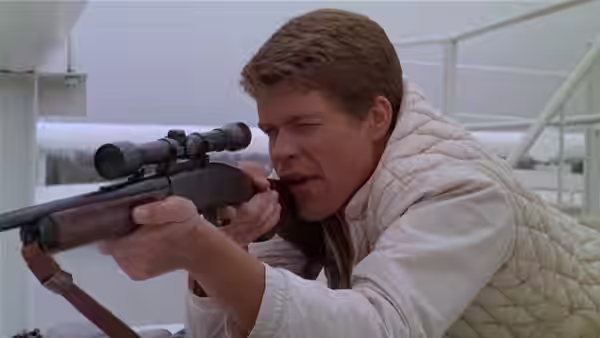
The shooter’s story is treated with a detachment that makes the warmth around Orlok more conspicuous. We were disturbed by the implied gun violence, precisely because the suggestion of harm leaves us to imagine its consequences. The director trusts us to supply some of what makes these passages frightening. That approach works, although it also makes us uncomfortable about the ease with which a thriller can turn violence into something to watch.
László Kovács’s cinematography supports that clinical treatment of the shooter, where the lack of fuss becomes oppressive. The director also edits, making the contrast between the stories part of the suspense. The implied shocks depend on our awareness of what the film holds back, and the editing gives that suggestion its force. This is economical thriller-making, with the more affectionate handling of Orlok providing a necessary change in how closely we feel involved.
Polly Platt’s production design helps the stories feel like parts of the same film, despite their different approaches to fear. She also shares the story credit with Peter Bogdanovich, so her contribution extends beyond the way things look. Ronald Stein’s music makes less of an impression than the images and the editing. The suspense is already there in the treatment of the violence, and musical emphasis is not what stays with us.
The weakness is that the comparison becomes clear early, and the film sometimes labours it. Gothic horror has other purposes besides matching the awfulness of gun violence, and setting the two against each other risks making the older tradition seem merely inadequate. That is a narrower account of fear than the film’s own sympathy for Orlok suggests. The people are interesting enough without continually having to demonstrate the difference between the two stories.
The suspense survives that limitation. There is little reassurance in a film that places such weight on the threat of a gun, and familiarity with Gothic horror offers limited protection. It is an uneasy choice for a casual evening, even at this length. Choose it for Boris Karloff, and allow some time afterwards before reaching for something cheerful.