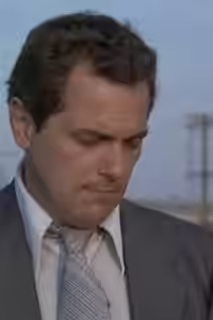
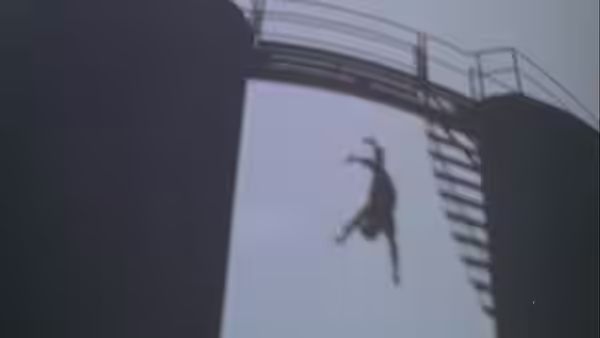
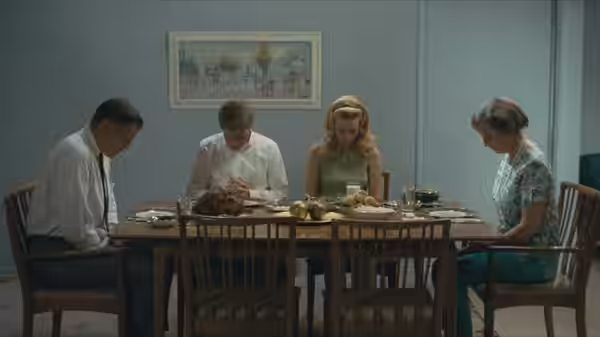
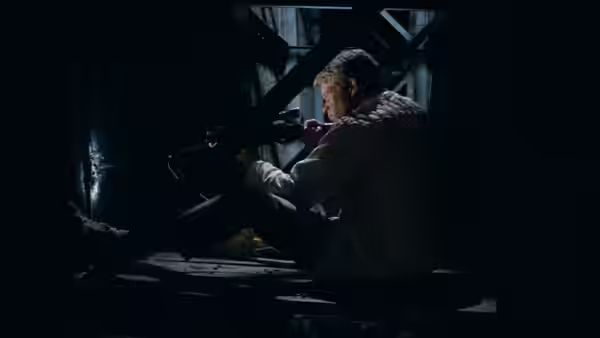
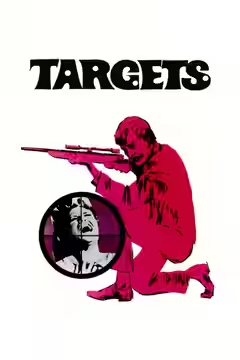
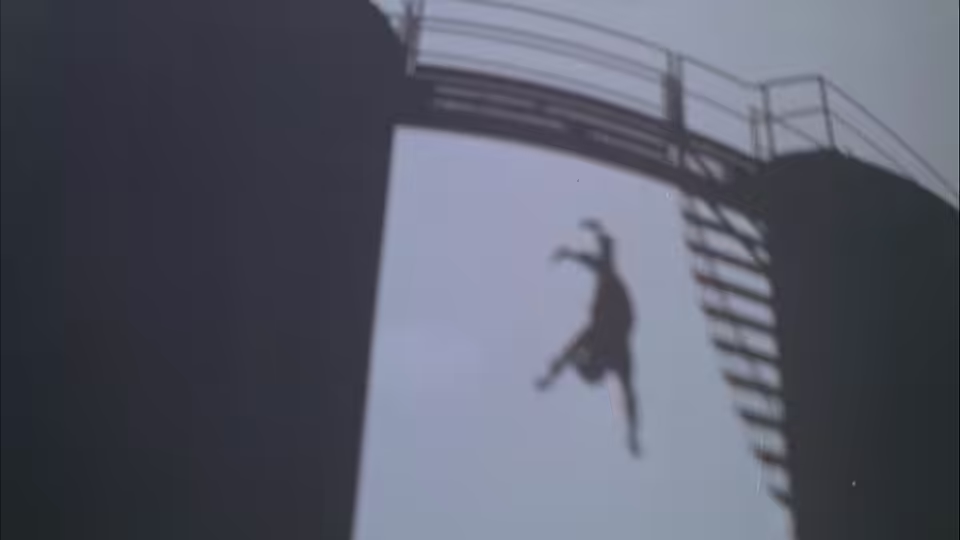
A figure falls from an elevated structure against the pale sky
Film review

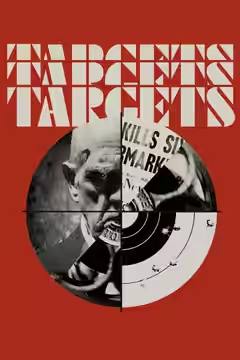
Targets

1968 · Directed by Peter Bogdanovich · 1h 30m

In a sentenceBoris Karloff is the reassuring presence, which is a worrying state of affairs

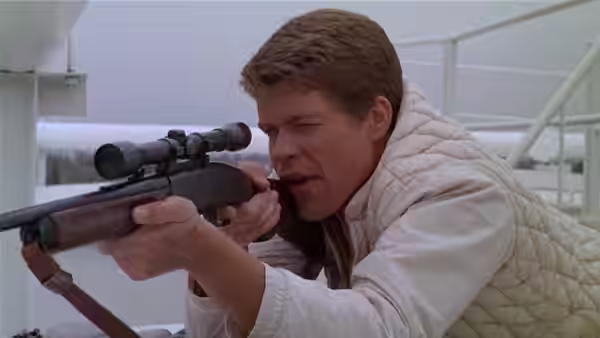
Fear takes two forms in Targets: the Gothic horror associated with Byron Orlok (Boris Karloff), and the violence of a shooter. Bobby Thompson (Tim O’Kelly) and Sammy Michaels (Peter Bogdanovich) also feature in the film’s parallel stories. Orlok’s strand concerns the older tradition of screen horror; the other places firearms and the people threatened by them at the centre. The film moves between the two, bringing imagined monsters and gun violence into the same account of what makes people afraid.

Fi1m review

Targets makes a troubling thriller from the contrast between Gothic horror and gun violence. Boris Karloff gives it warmth and dignity, though Peter Bogdanovich sometimes makes the comparison too neat for the damage it describes.

Targets is a disturbing, carefully made thriller whose central comparison is a little too tidy. Peter Bogdanovich places Gothic screen horror beside gun violence and asks how the former can compete with the latter. The question is blunt, and the film does not always make it more complicated. Yet there is enough unease, and enough feeling for Byron Orlok, to sustain its 90 minutes.

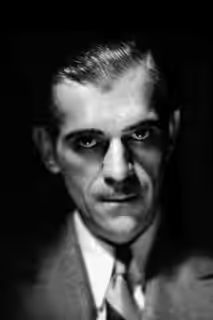
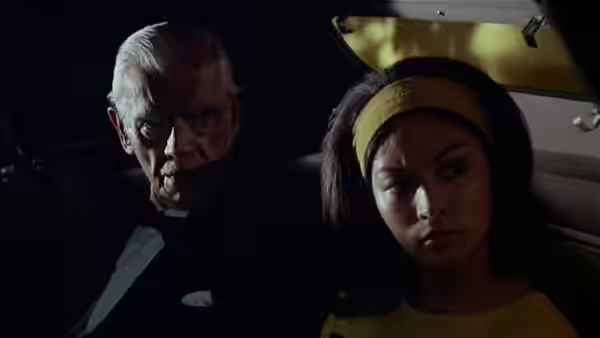
Boris Karloff gives Byron Orlok the film’s most persuasive claim on our attention. The tenderness of the performance matters because this comparison could easily reduce him to a convenient emblem of yesterday’s horror. We care about Orlok before we worry about what he represents, and that is the performance’s achievement. There is a welcome generosity in allowing the gentler story so much weight in a film concerned with guns.

The shooter’s story is treated with a detachment that makes the warmth around Orlok more conspicuous. We were disturbed by the implied gun violence, precisely because the suggestion of harm leaves us to imagine its consequences. The director trusts us to supply some of what makes these passages frightening. That approach works, although it also makes us uncomfortable about the ease with which a thriller can turn violence into something to watch.

László Kovács’s cinematography supports that clinical treatment of the shooter, where the lack of fuss becomes oppressive. The director also edits, making the contrast between the stories part of the suspense. The implied shocks depend on our awareness of what the film holds back, and the editing gives that suggestion its force. This is economical thriller-making, with the more affectionate handling of Orlok providing a necessary change in how closely we feel involved.

Polly Platt’s production design helps the stories feel like parts of the same film, despite their different approaches to fear. She also shares the story credit with Peter Bogdanovich, so her contribution extends beyond the way things look. Ronald Stein’s music makes less of an impression than the images and the editing. The suspense is already there in the treatment of the violence, and musical emphasis is not what stays with us.

The weakness is that the comparison becomes clear early, and the film sometimes labours it. Gothic horror has other purposes besides matching the awfulness of gun violence, and setting the two against each other risks making the older tradition seem merely inadequate. That is a narrower account of fear than the film’s own sympathy for Orlok suggests. The people are interesting enough without continually having to demonstrate the difference between the two stories.

The suspense survives that limitation. There is little reassurance in a film that places such weight on the threat of a gun, and familiarity with Gothic horror offers limited protection. It is an uneasy choice for a casual evening, even at this length. Choose it for Boris Karloff, and allow some time afterwards before reaching for something cheerful.
Critical consensus AI synthesised

72
Positive
4
Mixed
3
Negative
0

The available reviews lean positive, with praise clustering around the film’s suspense, controlled treatment of violence and contrast between modern terror and Gothic horror. Critics find that contrast disturbing and still relevant, particularly in its treatment of America’s relationship with guns. Boris Karloff’s performance receives particular praise, while the tender portrayal of Byron Orlok offers a counterweight to the shooter’s clinically depicted violence. The craft attracts approval too: implied violence creates shocks without needing to show everything.

There is less evidence of disagreement than the positive and mixed scores suggest. The review texts from The New York Times, RogerEbert.com and Time Out are unavailable, so their specific reservations cannot be established. The verifiable responses range from solid approval of a suspenseful thriller to stronger enthusiasm for its daring nihilism; none supplies a clear negative verdict.

Empire
1 January 2000 · Adam Smith
85*

The critic calls the film a gripping, neglected gem. They praise its daring nihilism and its sharp contrast between modern and Gothic horror.

Read the full review →
Radio Times
★★★★ · Tony Sloman
80

The critic calls the film genuinely disturbing and immaculately crafted, with themes that remain relevant. They single out Boris Karloff’s marvellous valedictory performance for praise.

Read the full review →
Variety
31 December 1967 · Variety Staff
75*

The review calls the film a good, suspenseful programmer that builds to an exciting climax. It praises Bogdanovich’s use of implied violence to create moments of shock and fear.

Read the full review →
Slant Magazine
18 May 2023 · ★★★½ · Eric Henderson
70

Henderson finds the film’s contrasting stories a still-relevant portrait of America’s fraught relationship with gun violence. He praises the elegant, tender portrayal of Byron Orlok alongside the clinical depiction of the shooter’s violence.

Read the full review →
RogerEbert.com
64*

The page does not reveal the critic’s verdict. It provides no praise or complaint to report.

Read the full review →
The New York Times
14 August 1968
64*

The article appears to be a review of Targets, but its verdict and specific praise cannot be verified from the page content available. The page returned only a JavaScript and ad-blocker notice.

Read the full review →

Straight answers AI written, from our review

Is Targets worth watching?
Targets is worth watching for Boris Karloff’s warm, dignified performance and its disturbing suspense; we score it 82. We recommend it to viewers who welcome an unsettling thriller, though its comparison between Gothic horror and gun violence sometimes becomes too neat and laboured.
How long is Targets, and what is it rated?
Targets runs 1h 30m. It is a thriller and crime film.
Where can I watch Targets in the Philippines?
Targets is not on any streaming or rental service in the Philippines at the moment. It is available in 14 other countries; change your country at the top of the page to see where. Availability is checked daily.
How violent or frightening is Targets, and is it suitable for children?
Targets has a US R certificate and no UK certificate supplied here, and we would not recommend it for children or viewers sensitive to gun violence. We found the implied harm disturbing because the film leaves us to imagine its consequences; its detached treatment of the shooter makes it frightening without relying on explicit detail.

Cast

If you liked this, try…

  1. The Sniper (1952) · not on Fi1m yetAnother troubling account of gun violence, with little appetite for reassurance.

  2. Peeping Tom (1960) · not on Fi1m yetFor a more intimate examination of watching, fear and screen violence.

  3. Cure (1997) · not on Fi1m yetA police investigation whose restraint makes its violence harder to dismiss.

  4. Benny's Video (1992) · not on Fi1m yetDomestic comfort and recorded images make the violence harder to bear.

  5. Tower (2016) · not on Fi1m yetAn account of gun violence that keeps individual lives in view.