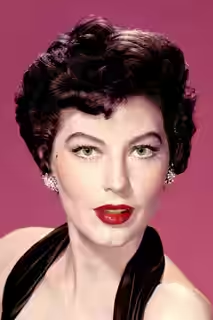
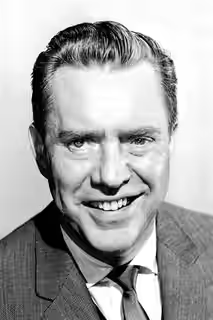
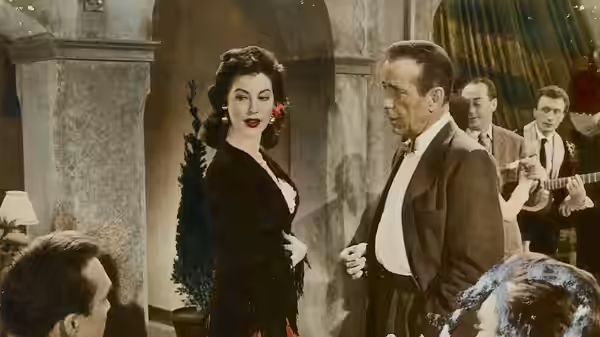
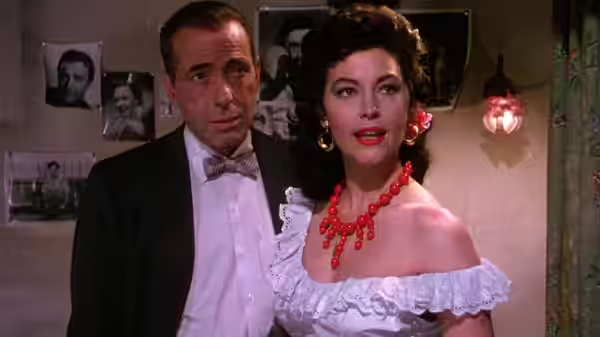
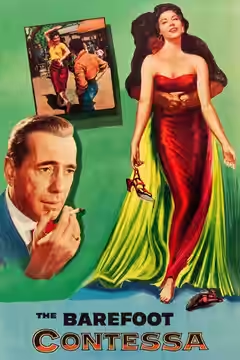
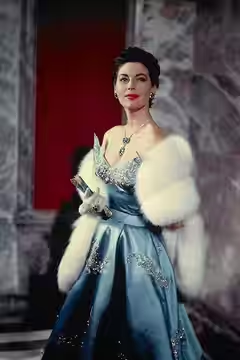
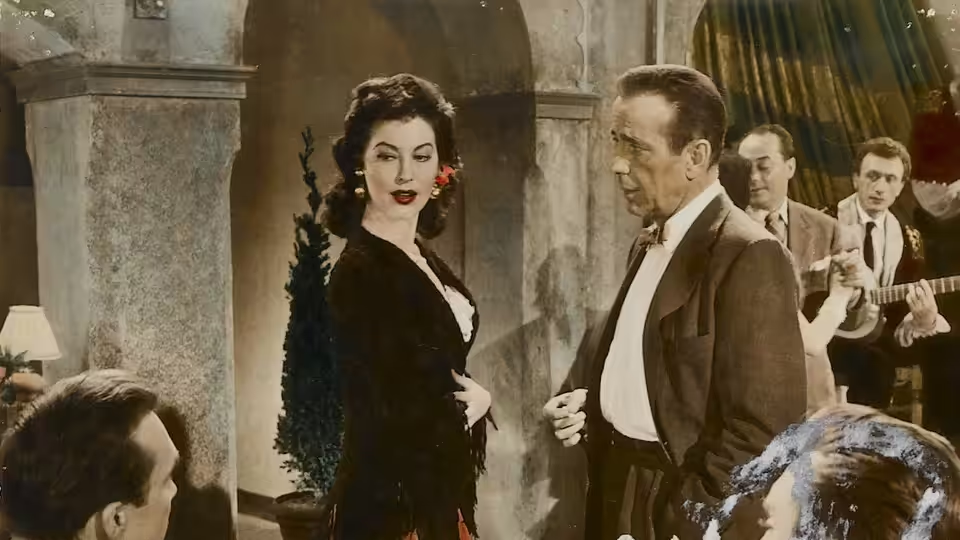
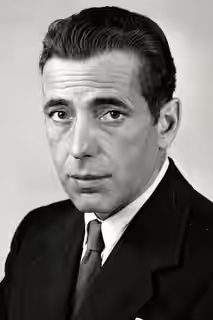
Maria Vargas (Ava Gardner) stands beside Harry Dawes (Humphrey Bogart) at a party
Film review

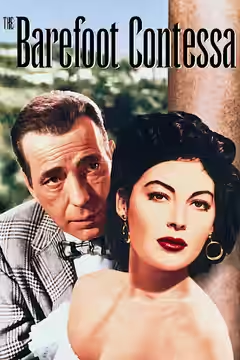
The Barefoot Contessa

1954 · Directed by Joseph L. Mankiewicz · 2h 08m

In a sentenceAva Gardner keeps making us wish the men would finish their sentences

At a funeral, recollections begin to piece together the life of Maria Vargas (Ava Gardner). Harry Dawes (Humphrey Bogart) and Oscar Muldoon (Edmond O’Brien) are among the people around her as the story looks back towards the film business and its competing ambitions. Maria’s public image becomes a subject for other people’s accounts, while her private life offers a different view. Several perspectives shape the story, bringing the woman herself into question alongside the glamorous figure others see and describe.

Plays from YouTube when you press play; nothing loads from them until then.

Fi1m review

Joseph L. Mankiewicz gives The Barefoot Contessa wit, bitterness and more explanation than it needs. Ava Gardner and Humphrey Bogart make this film-business drama worth the patience, even when the talk starts keeping its subject at a distance.

The Barefoot Contessa is a good, talkative drama whose fascination with Ava Gardner survives some strenuous attempts to explain her. Writer-director Joseph L. Mankiewicz examines the film business through its appetite for a beautiful woman and the stories other people build around her. There is pleasure in the wit and an uncomfortable awareness of how readily admiration becomes a claim on someone. We recommend it for the performances, with the warning that its people can take a long time to finish telling us what they think.

Beginning at a funeral, the film looks backwards through several accounts of Maria Vargas’s life. William Hornbeck’s editing gives the changes of perspective a workable clarity, allowing us to attend to the speakers’ attitudes without struggling to follow the arrangement. The structure also encourages a useful scepticism about anybody who claims to have understood Maria. It is a promising way to approach the difference between a performer’s public image and private life, since the people offering explanations have their own reasons for doing so.

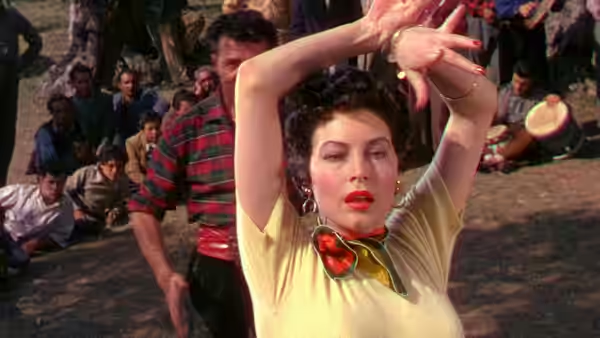
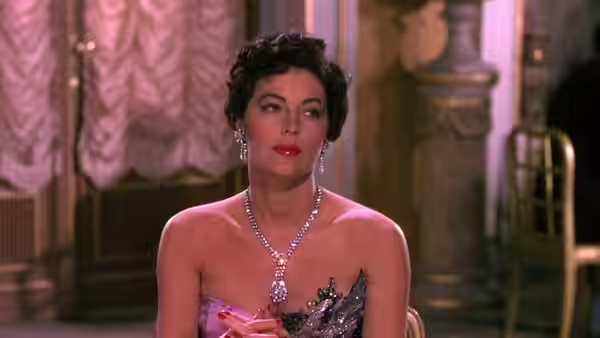
Ava Gardner prevents Maria from becoming merely the subject of all this intelligent conversation. The force of the performance lies in how much displeasure can coexist with the beauty the film keeps asking us to notice. We were moved by her flashes of anger; they make the attention paid to Maria feel exhausting rather than enviable. We want to hear more from Maria herself, especially after so many confident assessments of her from other people.

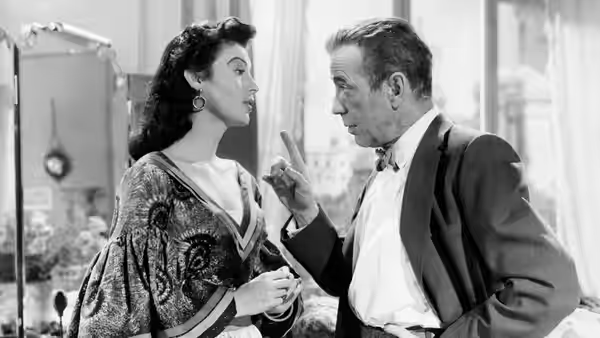
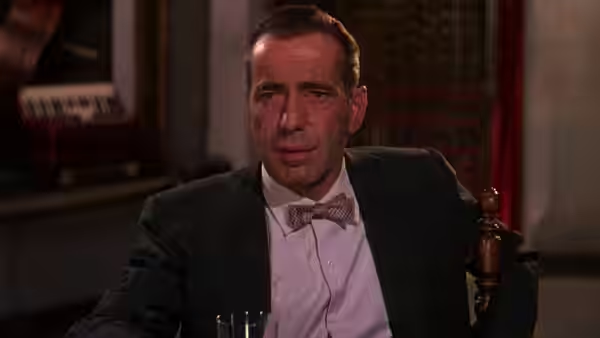
Humphrey Bogart’s Harry Dawes is a useful presence in such company, and the quietness of the performance matters as much as the cynical dialogue. He can make a polished line sound like something the speaker has had occasion to regret. That keeps the wit from becoming a series of invitations to applaud the writer. His performance gives the film a human scale, even when Joseph L. Mankiewicz seems reluctant to let anybody stop talking and leave an impression unqualified.

Jack Cardiff’s photography gives Ava Gardner the lustre that the story needs, though the camera’s admiration occasionally makes Maria feel remote. Her face remains more interesting to us than the commentary surrounding it, and the images make that preference easy to sustain. Mario Nascimbene’s music lends feeling to a film already generous with explanations. Its emphasis is sometimes excessive, but it helps us feel the sadness that the dialogue can be too busy to accommodate.

The weakness is in Joseph L. Mankiewicz’s determination to make his people so articulate about the business that surrounds them. Much of the dialogue is sharp, but its fluency can make hurt and disappointment seem too neatly understood. The film avoids the easiest pleasure of an industry satire: letting us feel superior to a collection of unpleasant professionals. There is sympathy here, particularly for Maria, although the writing needs to give her more room to be difficult without somebody explaining why.

There is enough tenderness to keep the bitterness from becoming a pose. Ava Gardner and Humphrey Bogart make the film worth its 128 minutes, even if some of those minutes are devoted to commentary we could have supplied ourselves. That qualification matters: the writing asks for attention even when it has begun to repeat itself. Choose it when a long, well-acted conversation sounds like a reasonable way to spend the evening.
Critical consensus AI synthesised

71
Positive
4
Mixed
3
Negative
0

Most critics respond warmly to The Barefoot Contessa as a sharp satire of the film business, with praise clustering around its dialogue and performances. Ava Gardner is central to that approval: the reviews find her well suited to the title role and praise the fire of her performance. Humphrey Bogart also earns credit for his quietly effective work and cynical lines, while the writing’s wit and sharply drawn characters give the Hollywood satire its bite.

The available scores suggest a fairly narrow spread, though the evidence for the more cautious responses is incomplete. The New Yorker identifies a strangely undramatic quality, yet still finds the treatment of ambition and the distance between screen image and private life incisive and poignant. Three reviews lack enough accessible text to establish their reservations, so there is no securely documented pattern of dissent.

Radio Times
★★★★ · Tony Sloman
80

Sloman presents the film as a mordant satire of the movie business, though less theatrical than Mankiewicz’s All About Eve. He singles out Ava Gardner’s beauty and performance as central to the film’s appeal.

Read the full review →
Variety
31 December 1953 · Variety Staff
80*

Variety gives the film a strongly positive verdict, praising its sharp characters, wit, and high-voltage dialogue. It singles out Ava Gardner as ideal in the title role and Humphrey Bogart for his quietly effective performance.

Read the full review →
The New Yorker
28 March 2012 · Richard Brody
75*

Brody finds the film incisive and poignant, despite its strangely undramatic quality. He especially praises its exploration of Hollywood ambition and the divide between an actor’s screen image and private life.

Read the full review →
Empire
1 January 2000 · empire
70*

The review finds the film an entertaining satire of the movie industry. It praises Gardner’s fiery performance and Bogart’s cynical lines.

Read the full review →
RogerEbert.com
64*

The page could not be accessed, so the critic’s verdict is unavailable. No praise or complaint can be confirmed from the provided page.

Read the full review →
The New York Times
30 September 1954
64*

The page identifies a review, but its text is inaccessible, so the critic’s verdict cannot be determined. No specific praise or complaint can be reliably extracted.

Read the full review →

Straight answers AI written, from our review

Is The Barefoot Contessa worth watching?
The Barefoot Contessa is worth watching for Ava Gardner and Humphrey Bogart’s performances, particularly if a long, witty film-business drama appeals; we scored it 74 out of 100. Gardner’s flashes of anger give the film feeling that its elaborate dialogue sometimes stifles, so we recommend it with patience for people who explain rather more than they need to.
How long is The Barefoot Contessa, and what is it rated?
The Barefoot Contessa runs 2h 08m. It is a drama film.
Where can I watch The Barefoot Contessa in Estonia?
The Barefoot Contessa is not on any streaming or rental service in Estonia at the moment. It is available in 29 other countries; change your country at the top of the page to see where. Availability is checked daily.
How does The Barefoot Contessa compare to All About Eve?
The Barefoot Contessa is the more tender choice beside All About Eve, which we recommend more readily for sharp satire and cruelly funny conversation about ambition. Both have strong performances and backward-looking structures, but Gardner’s anger and Bogart’s quiet regret are the chief pleasures here; the talk too often keeps Maria at a distance.
What should I watch after The Barefoot Contessa?
After The Barefoot Contessa, try All About Eve (1950, Fi1m 90): More barbed conversation about ambition, with performers who know every occupational hazard. Then Lola Montès (1955, Fi1m 81): Another famous woman finds her life turned into entertainment for other people; and Millennium Actress (2001, Fi1m 86): A screen career and a private longing become impossible to separate.

Cast

Awards

Academy Awards, 1955

Nominated
Best Writing, Original Screenplay
Won
Best Supporting Actor

If you liked this, try…

  1. All About Eve (1950, Fi1m 90)More barbed conversation about ambition, with performers who know every occupational hazard.

  2. Lola Montès (1955, Fi1m 81)Another famous woman finds her life turned into entertainment for other people.

  3. Opening Night (1977) · not on Fi1m yetAn actress struggles to keep a private self behind her public performance.

  4. Millennium Actress (2001, Fi1m 86)A screen career and a private longing become impossible to separate.

  5. Clouds of Sils Maria (2014) · not on Fi1m yetTwo women argue over acting, ageing and who gets to interpret whom.