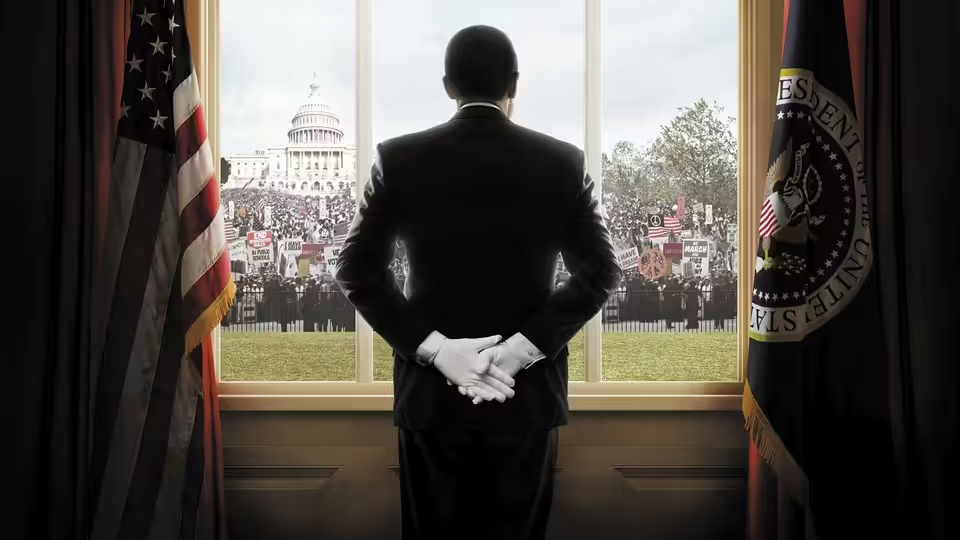
Forest Whitaker and Oprah Winfrey make The Butler affecting despite its crowded, insistent script. Lee Daniels’s historical drama is worth considering for the performances, with patience required for the famous faces and the repeated explanations.
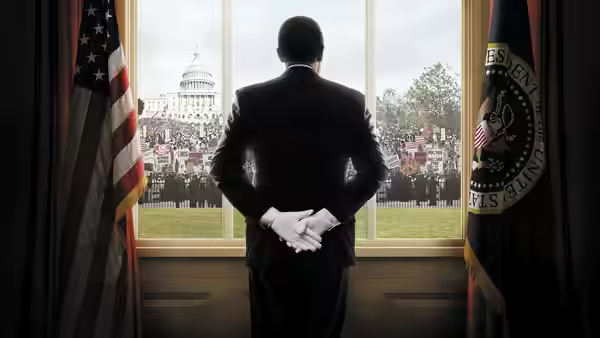
Lee Daniels tries to tell a family’s story alongside a broad account of civil-rights history, and The Butler struggles to give both enough time. There is enough here to make it worth considering, chiefly in the performances, but Danny Strong’s screenplay keeps hurrying towards another public event. Cecil Gaines’s work in the White House gives the story a useful way to look at power. It also creates a temptation to make every encounter important.
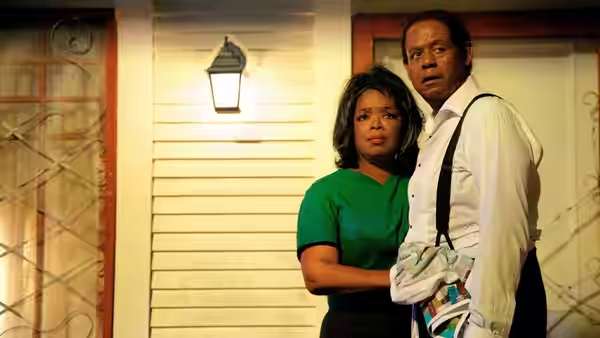
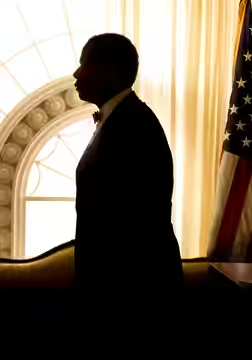
Forest Whitaker makes Cecil’s restraint interesting because it looks like something he has learnt and continues to practise. The politeness takes effort; we can sense the judgement being held back. His performance allows Cecil pride in doing a job properly without pretending that the job puts him on equal terms with those he serves. When the writing becomes pushy, he remains measured, and the film depends heavily on that difference.
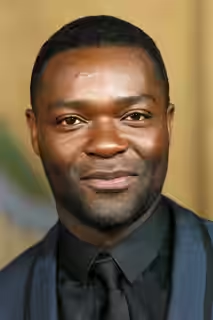
Oprah Winfrey gives Gloria Gaines the energy that Cecil keeps under control, and their shared scenes suggest people accustomed to one another. The family scenes give her room to be more than an audience for Cecil. David Oyelowo makes Louis Gaines’s activism feel like a serious choice, so the father-son disagreement has more substance than a dutiful argument between generations. We can understand why Louis is impatient without dismissing the experience behind Cecil’s caution.
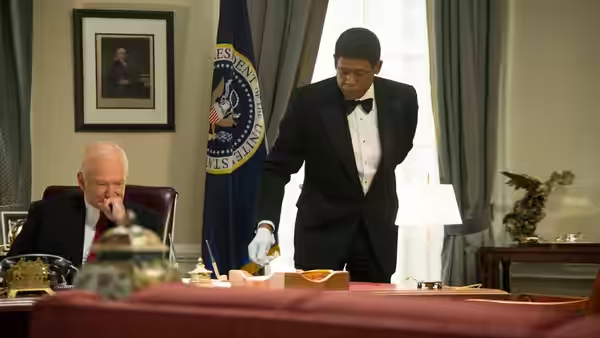
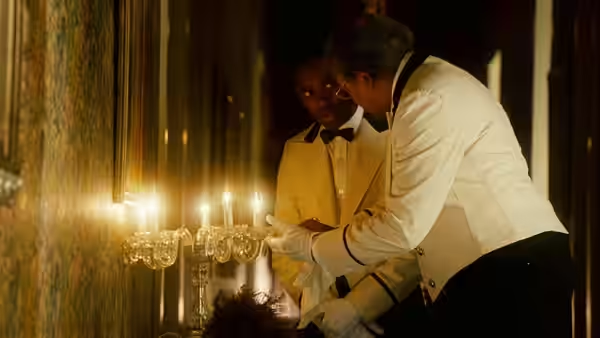
Joe Klotz’s editing finds a persuasive way to connect their experiences, moving between Cecil preparing a White House table and a civil-rights sit-in. We were moved by that sequence, because the ordinary business of being served makes the inequality painfully clear. The connection needs no accompanying lecture. It is also more thoughtful than the dialogue that repeatedly spells out the disagreement between Cecil and Louis.
Danny Strong’s script is less trusting. Too often a scene arrives with its lesson already prepared, leaving the actors to make an argument sound like a conversation. At 132 minutes, the film still feels hurried when it moves through public history, because so much has to be acknowledged. A historical family drama needs time for an argument to affect ordinary life; this one too often needs to get to the next event.
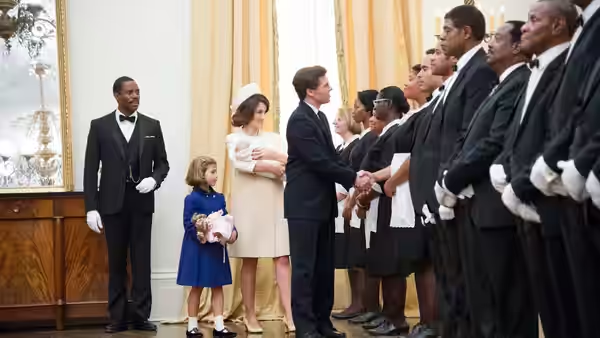
Andrew Dunn’s cinematography gives the White House scenes a formal polish that suits Cecil’s professional manner. Tim Galvin’s production design makes the setting convincing as a workplace, particularly when a table needs preparing. That polish can also make the film feel too comfortable when it ought to be troubling us. Rodrigo Leão’s music adds to the pressure to feel, sometimes where the actors have already done enough.
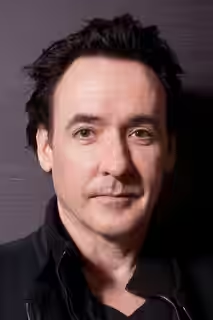
The casting of the political figures brings a separate distraction. John Cusack as Richard Nixon and Jane Fonda as Nancy Reagan invite recognition before there is much chance to consider the people being portrayed. These appearances make the passage through history feel more like a succession of appointments. Beside the patient work of Forest Whitaker, they are liable to seem like interruptions.
Those drawn to the conflict between Cecil and Louis will find enough here to justify the uneven stretches. We would be more cautious with anyone hoping for a patient account of political change. Watch it for the family, and allow for some blunt explanations along the way.