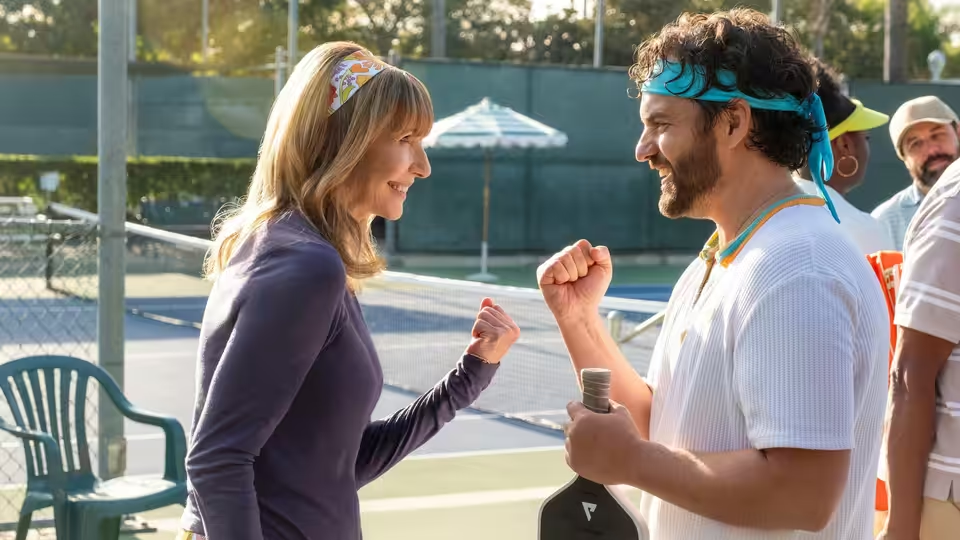
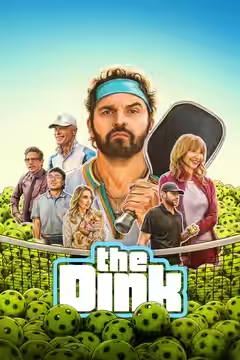
Jake Johnson and Mary Steenburgen make agreeable company in a pickleball comedy that struggles to find enough good jokes. Their friendship provides some warmth, but the familiar sporting business gives us little reason to recommend it.
Josh Greenbaum’s The Dink is a mild sports comedy with an appealing central friendship and too little comic invention to earn a recommendation. Sean Clements’s screenplay puts a washed-up tennis professional into pickleball and follows a familiar underdog course. There is nothing wrong with that starting point, or with keeping the stakes small. The trouble is that the film too often settles for being agreeable when it needs to be funny.
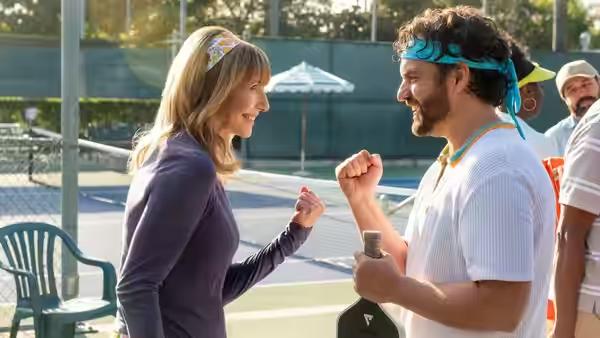
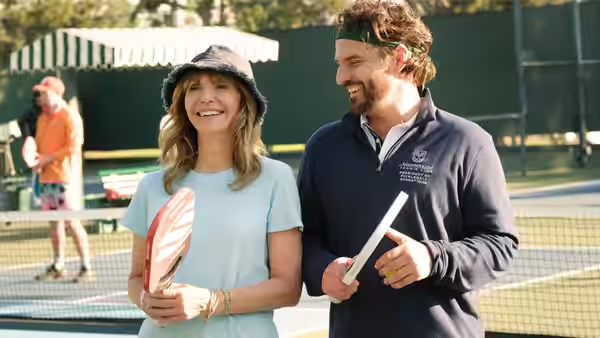
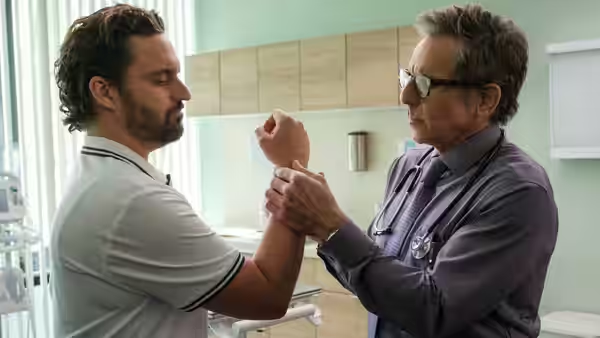
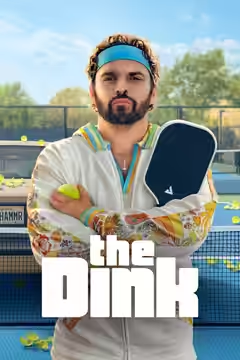
Jake Johnson plays Dustin ‘The Hammer’ Boyd, whose move from tennis into pickleball gives the film its premise. He is an easy presence to build a comedy around, and his relaxed manner helps the familiar material along. But charm has a limit when the sporting plot offers so little that is unexpected. He makes the film comfortable to spend time with, although the script leaves him doing too much of that work himself.
Mary Steenburgen, as Candace, gives him someone worth spending that time with. We warmed to their friendship because the film lets it remain a friendship, without turning it into a romance. Their chemistry makes the stretches spent simply in each other’s company more enjoyable than the competition around them. This is also where the film’s gentleness becomes a virtue: it allows two appealing performers to establish a connection without insisting that every exchange produce a joke.
Elsewhere, it could insist a little harder. Aaron Chen supplies a welcome comic contribution as PJ, but the ensemble cannot keep compensating for material that feels recycled. Sean Clements’s screenplay needs more invention within its familiar sporting framework, especially when the pleasure of the central relationship has shown what the film can offer. Knowing roughly where an underdog comedy is heading need not spoil the evening; recognising too much of the business along the way makes it harder to stay interested.
Greg Hayden’s editing does not overcome that unevenness. At 103 minutes, the film is not unusually long, but the patchy pace makes its shortage of strong material more noticeable. The scenes between the leads give it a reason to slow down, while the thin sporting plot needs more momentum than it acquires. We would happily accept a leisurely comedy if the time spent away from the competition consistently offered this much warmth.
The film has cinematography by Carl Herse, production design by Caity Birmingham and music by Dara Taylor, but its main weakness lies in the writing. No additional flourish from those departments would supply the missing comic surprise. Josh Greenbaum is right not to force a gentle friendship into a nastier film; we simply wanted him and Sean Clements to give that friendship better jokes.
There is room for a sports comedy that keeps its ambitions modest and treats its characters kindly. The Dink has enough affection to make its shortcomings disappointing rather than infuriating, and Mary Steenburgen remains a persuasive reason to consider it. The friendship may be sufficient for an evening when agreeable company is the main requirement. Anyone coming chiefly for the jokes should keep looking.