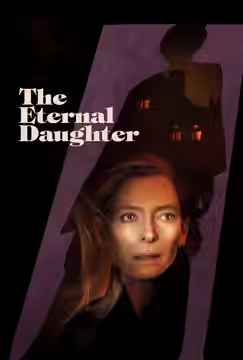
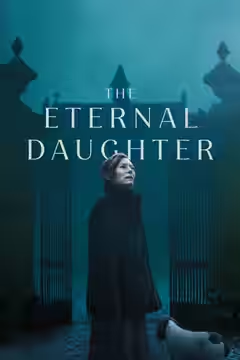
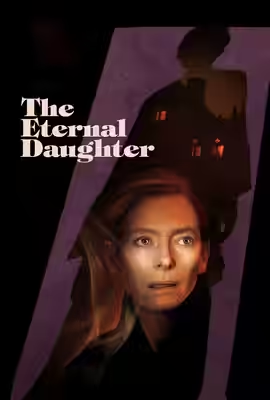
Joanna Hogg’s foggy ghost story has Tilda Swinton play both a film-maker and her ageing mother in an empty Welsh hotel. It is slow and barely frightening, but the sadness under it is real and it stayed with us.
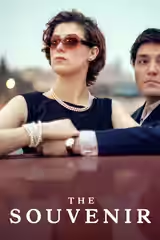
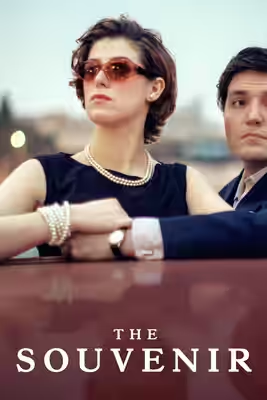
Joanna Hogg has spent two films on Julie. In The Souvenir (2019) and The Souvenir Part II (2021) she was a film student, and her mother Rosalind was played by Tilda Swinton. The Eternal Daughter finds Julie in middle age, and this time Swinton plays both of them.
Julie has brought Rosalind to a country house hotel in Wales for her birthday. Rosalind stayed in the house as a girl during the war, and Julie, who is trying to write a film about her mother, hopes the rooms will get her talking. Hogg wants an old British ghost story, fog and floorboards and a hotel with nobody in it, and she wants an honest account of taking notes on your own mother while she sits across the table from you. She manages the second better than the first, and the second is what matters.
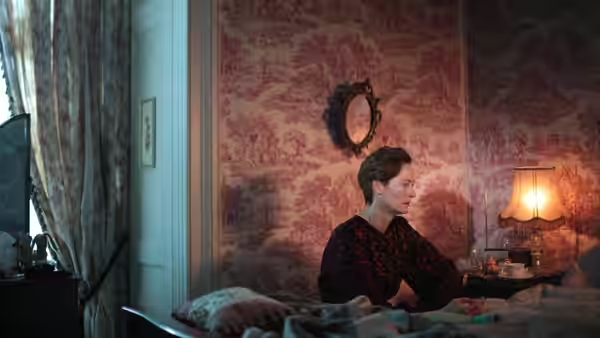
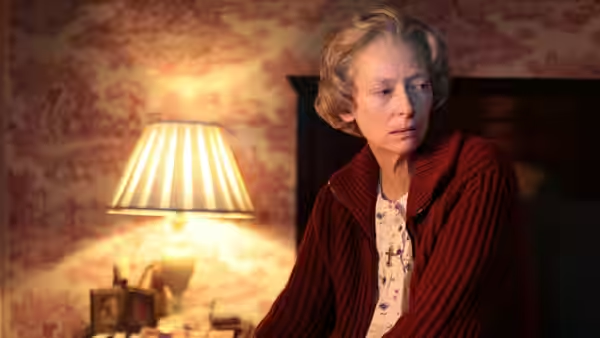
The double casting is the first thing anyone mentions, and for twenty minutes we watched for the join. Helle le Fevre cuts nearly every conversation as shot and reverse shot, and the two women so rarely share a frame that when they do it is a small shock. Then we stopped looking. Rosalind holds herself a little bowed, apologises before she disagrees and answers a question with a story about something else. Julie sits forward, notebook out, and hears every deflection as a door closing.
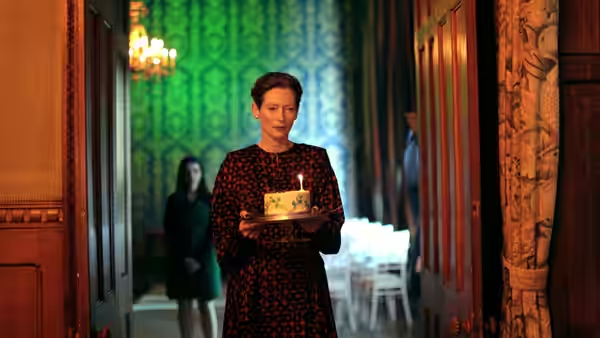
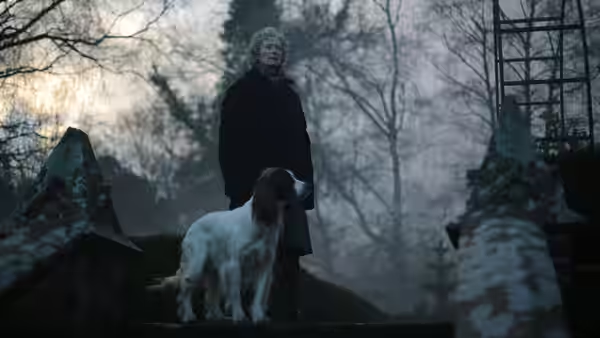
Ed Rutherford shoots it soft and grainy, and the grain and the fog do most of the haunting. The fog outside does not lift in 96 minutes. Inside, Stéphane Collonge has dressed the hotel in patterned wallpaper and dark wood, and Rutherford lights it with table lamps that reach about a yard. Grace Snell puts both women in the same muted greens and browns, so that from behind you could not say which is which. The soundtrack is wind, a window that bangs all night, and footsteps on a floor above where there should be no one.
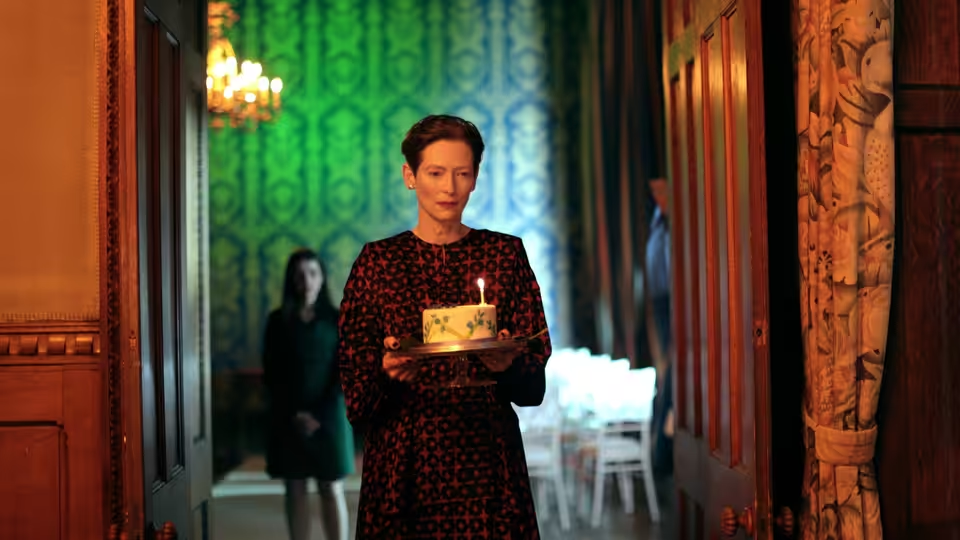
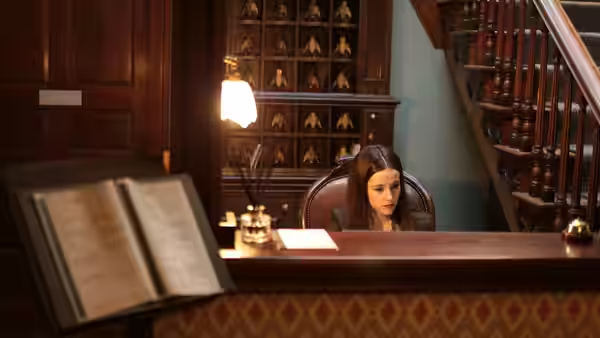
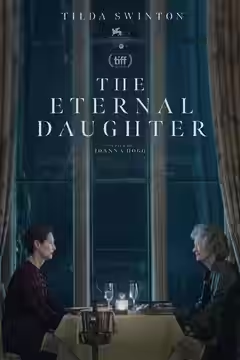
The scene that got at us is the birthday dinner. Julie has fought the receptionist (Carly-Sophia Davies) for a cake, and it arrives with a candle into a dining room laid for two and built for forty. Rosalind is pleased in the small, careful way of a woman who decided years ago not to be a nuisance, and Julie watches her across the table, half daughter and half director. It moved us more than we were prepared for, and we were uneasy about being moved, because Julie is doing what Hogg is doing: making material out of a woman who did not agree to be material.
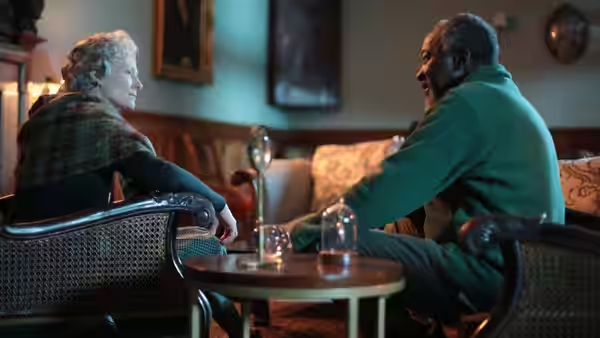
None of this is frightening, and we think Hogg knows it. The ghost-story furniture is set out with a straight face: the taxi (August Joshi at the wheel) creeping up the drive, the dog Louis barking at an empty corridor. Davies’s sullen receptionist is funny the first three times and asked to be funny about eight. There were two stretches in the middle, Julie pacing the corridors at night, where we were waiting rather than watching. Anyone who has seen a few ghost stories will be ahead of the film, and we will not say where it goes. Joseph Mydell, as Bill, turns up partway through with a calm the film needs by then.
Against the Souvenir films this is a coda rather than a third chapter. Without them it is a well-made, slow ghost story with one clever performance. With them it is sadder, because you have already watched this mother and daughter fail to say things to each other for two films, and here they are in a nicer house, still failing. Hogg has always made films about well-off English people in good rooms not quite saying what they mean, in Unrelated (2007) and Archipelago (2010). This is the first time she has used a ghost to get them talking.
It is a 12A and there is nothing in it a child could not watch. Watch it at home with the lights off and the phone in another room; it does not survive interruptions, and the second half pays back what the first half asks. Then ring your mother, if you still can, and ask about the house she grew up in.