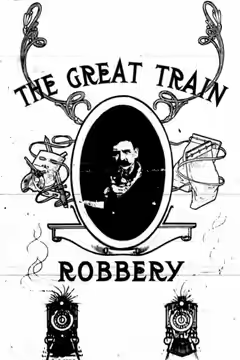
Edwin S. Porter’s twelve-minute hold-up is one of the first films to cut from one place to another and trust the audience to follow. The acting is stage-bound and the gunfights are a scramble, but the chase still moves and one shot still startles.
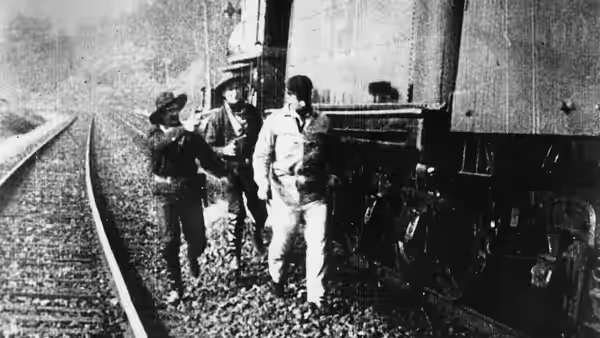
Edwin S. Porter’s The Great Train Robbery runs twelve minutes and does what its title says. Four men hold up a train, and men on horses go after them. Porter directed, wrote and produced it for the Edison company and shot it with Blair Smith, working from the bones of Scott Marble’s stage melodrama of the same name. What he wanted to do was something the stage could not: put the audience in the telegraph office, then on the tender of a moving engine, then beside the track, then in a dance hall, and trust them to understand that these places belonged to one story. That was not a safe bet in 1903. It paid.
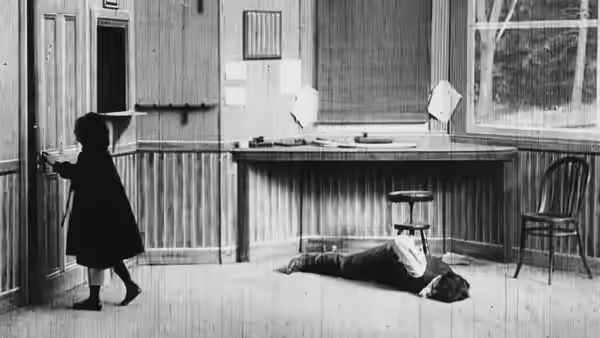
The shots that people who care about how films are made will point to are the two in which a train passes behind an opening while something else happens in front of it: the window of the telegraph office, and later the open door of the mail car during a fight. Porter and Smith masked the gap, filmed the office, then ran the film through again with the train in the space. It looks like a painted backcloth until the train moves, and then it looks like a window. Nearer the middle, after a run of shots from a camera that has not moved once, the frame turns to follow the bandits down an embankment to their horses. We had not expected that to matter. It does; it is the moment the film stops being a stage and becomes a place.
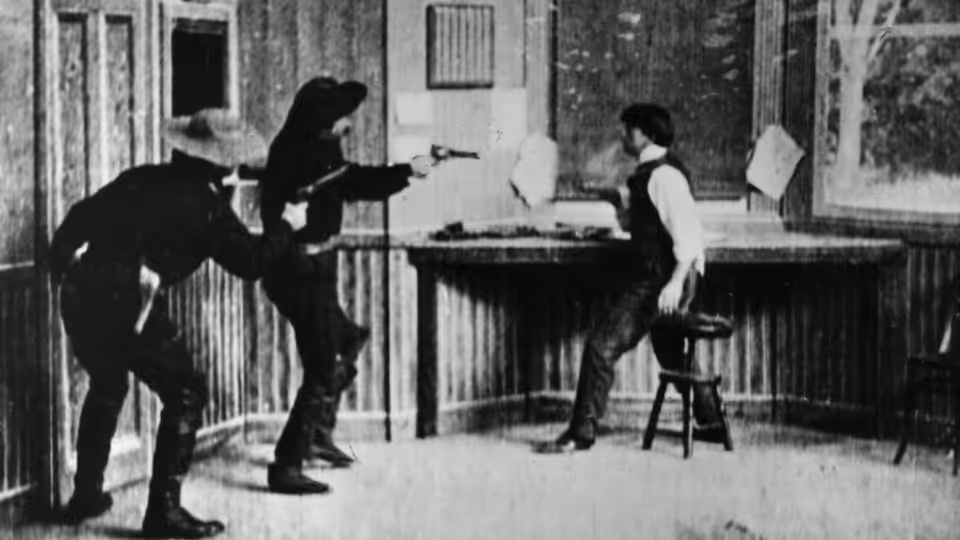
What happens in front of the camera is a different matter. The passengers are lined up along the track in a single row facing the lens, hands raised, as tidy as a chorus. A bandit shoots a man who runs, and the man does his dying with his arms out. Broncho Billy Anderson plays three parts, one of the robbers, that shot passenger, and the tenderfoot in the dance hall made to jig by pistol shots at his feet, and in none of them does anyone ask him to do less than the back row could see. Marie Murray leads the dancing. Mary Snow, as the operator’s daughter, has the one piece of business in the film that is done for the camera rather than the stalls, kneeling to a father who does not move.
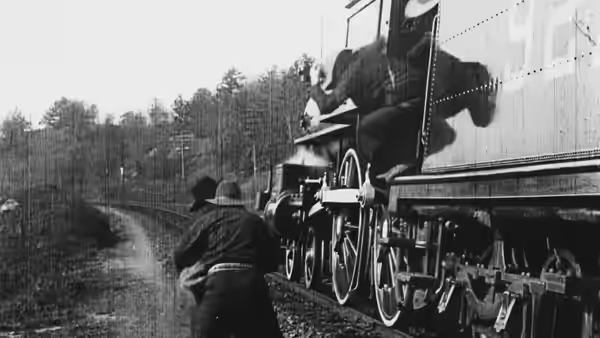
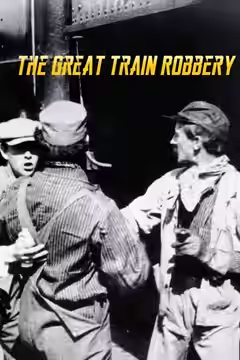
On the tender, a bandit and the fireman grapple and the fireman goes over the side, and by then the fireman is unmistakably a stuffed suit with a hat on. We laughed, then felt slightly ashamed, because a moment later the film cut to the woods and the horses and the shooting and we found our pulse had gone up anyway. The gunfight has no geography at all, men in a clearing firing in the general direction of other men, and it still works, because the cutting between hunted and hunters does the job the staging cannot. In the tinted prints the colour is painted on by hand and only where Porter wants it: the little girl’s frock, the puff of smoke from a revolver, the flash when the strongbox goes up. Everything else stays grey.
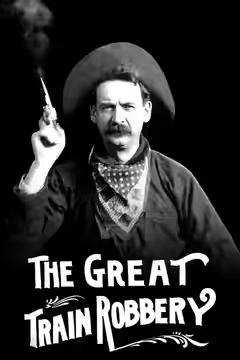
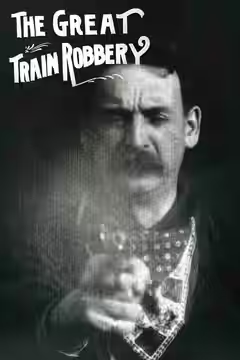
Then there is the shot. A man in a black hat (George Barnes) stands against a plain backdrop, looks straight down the lens, raises a revolver and empties it at us. It has nothing to do with the story; it is a thing done to the audience, and Porter plainly knew it. We have seen the still on a hundred book covers and knew to the second when it was coming. We flinched anyway. It is the only close shot in the film and the only time anyone looks at the camera.
Against the Western as it became, this is the sketch on the napkin: the hold-up, the saloon, the posse, all present and none developed. The men have no names and no reasons. Nobody is good or bad beyond which side of the guns they stand. That is fair for twelve minutes in 1903; the genre spent the next century filling in the rest.
It reached British cinemas on 23 January 1904 and carries a U certificate, which seems generous to the gentleman with the revolver. Twelve minutes is a fair ask of anyone. Watch it once for the story and once more for the seams, which is where all the interest is.