Film review

The Kids Are All Right

2010 · Directed by Lisa Cholodenko · 1h 46m · MPA R

In a sentenceTwo mothers and a sperm donor make a persuasive case for leaving the adults unsupervised as little as possible

ComedyDrama

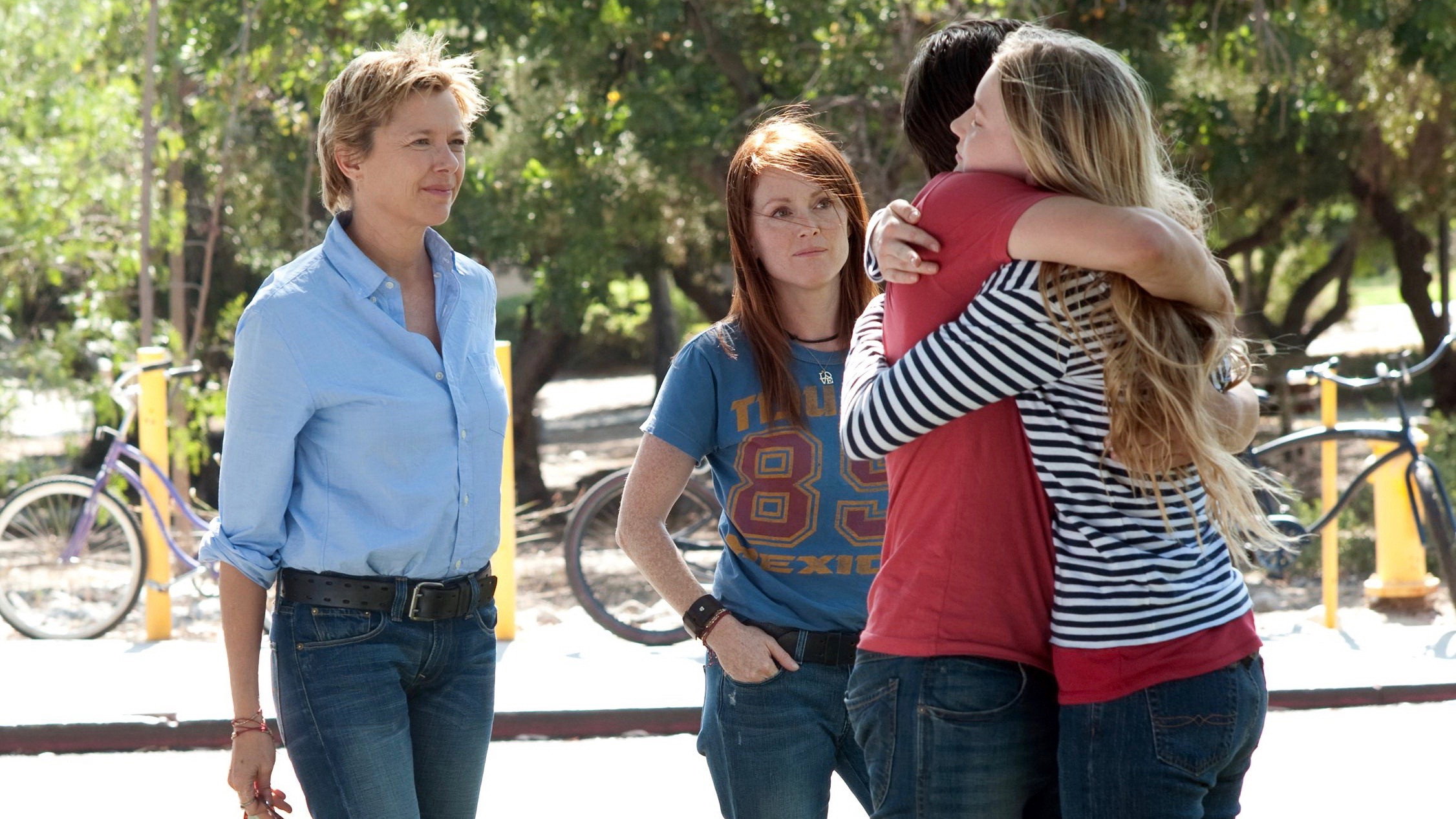
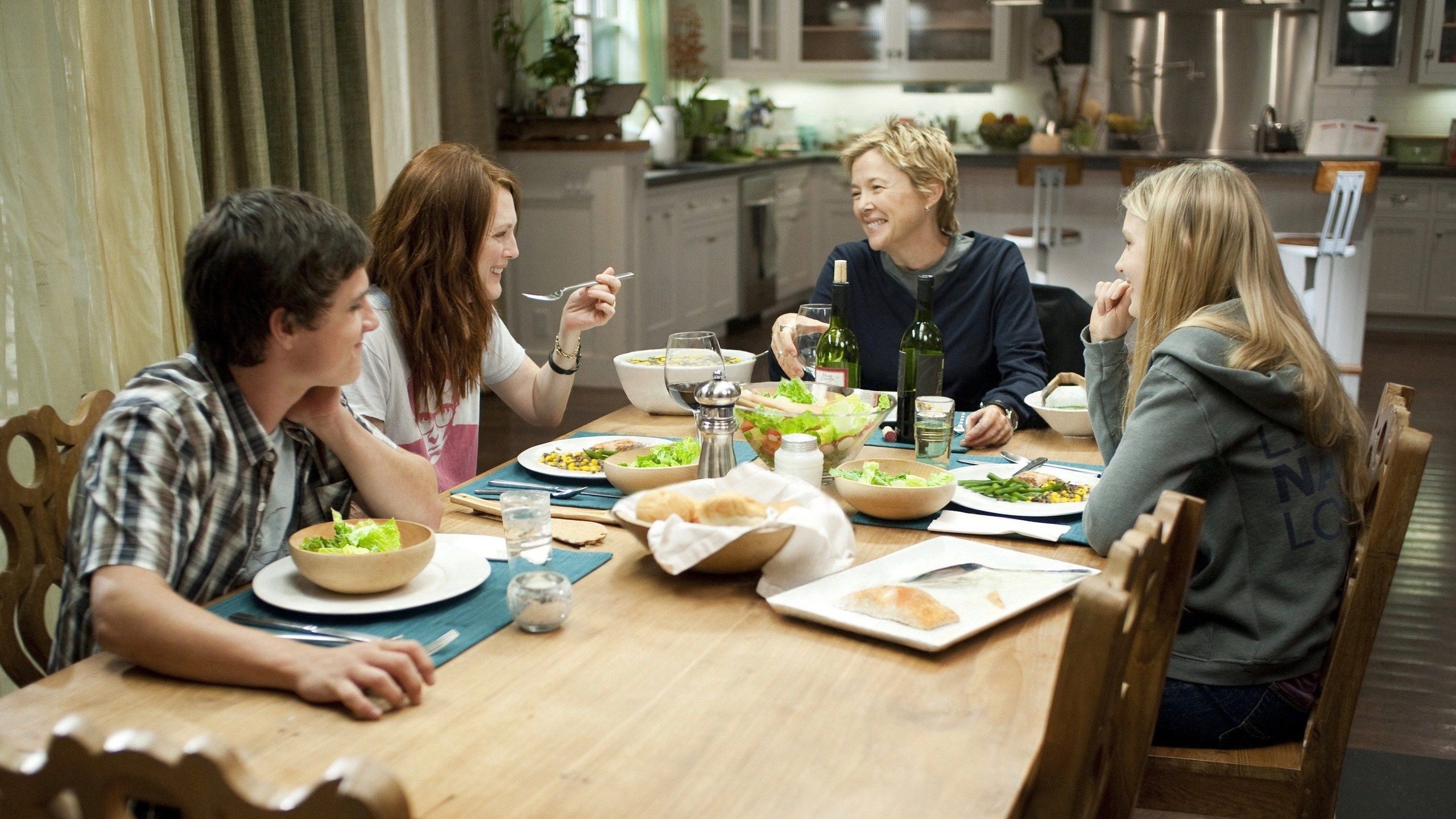
Nic (Annette Bening) and Jules (Julianne Moore) are raising Joni (Mia Wasikowska) and Laser (Josh Hutcherson) together. Their children introduce a new person into this established household: Paul (Mark Ruffalo), the sperm donor who helped make the family possible. Joni and Laser want to get to know him, while their mothers try to work out how he fits into lives that have carried on without him. Meeting the donor turns a question about the children’s origins into an immediate problem for the parents. Nic and Jules must accommodate the children’s curiosity without letting Paul’s arrival unsettle their relationship.

Plays from YouTube when you press play; nothing loads from them until then.

Fi1m review

Lisa Cholodenko’s family comedy is funny, perceptive and carried by performances that make long familiarity convincing. It sometimes settles difficult questions too comfortably, but Annette Bening and Julianne Moore give the marriage enough friction to keep it honest.

Lisa Cholodenko’s The Kids Are All Right is a warm, sharply acted family comedy that we recommend with one reservation: it sometimes makes its difficult questions too easy to answer. The arrival of a sperm donor could have supplied a succession of jokes about an unusual household. Instead, the film pays attention to the couple already raising the children. Their routines have become habits, and those habits can irritate the people they once reassured. The comedy comes from recognising how much irritation a loving family can accommodate.

Annette Bening plays Nic with a watchfulness that makes even reasonable concern feel faintly supervisory. Julianne Moore’s Jules is less firmly in command, and the performance gives her uncertainty weight without asking us to find it charming. Together they suggest years of knowing what the other person will say and still wishing she would say something else. We laughed at the mothers’ strained efforts to answer a serious question. Their determination to be sensible makes the exchange awkward, and both actors let the worry show through the composure.

Mark Ruffalo makes Paul easy company, which is exactly what complicates matters. He brings an appealing looseness to a family whose members already know one another’s faults, and the actor lets us enjoy that change without insisting that everyone should welcome it. Mia Wasikowska and Josh Hutcherson give Joni and Laser distinct reactions to the adults around them. Neither performance treats a child’s curiosity as a convenient excuse to start the plot. Their presence keeps the parental anxieties in proportion.

Lisa Cholodenko and Stuart Blumberg are good at making considerate language sound mildly aggressive. The family members want to be decent, open-minded people, and that gives them elaborate ways to avoid saying something simple and unkind. We can hear affection and exasperation in the same exchange. Occasionally, though, the dialogue becomes too pleased with its grasp of liberal parenting. The cast usually keeps it conversational, but there are moments when we can hear the writers arranging the joke.

Igor Jadue-Lillo’s colourful photography gives the domestic comedy an agreeable brightness without making its discomfort feel out of place. Julie Berghoff’s production design makes the household feel comfortably established, giving the disruption somewhere credible to happen. Jeffrey M. Werner’s editing gives the exchanges a conversational rhythm; the jokes do not feel detached from the disagreements. Carter Burwell’s music leaves the awkwardness with the actors, where it belongs. These contributions work together without making the family’s troubles feel excessively polished for our enjoyment.

The reservation concerns how firmly the script wants to settle what family means. There is room here for selfishness and confusion, but less willingness to leave their consequences untidied. Without giving away how the relationships develop, some of the writing grows more instructive than these performances need. We wanted the film to trust the uncomfortable feelings it had already stirred. A little more patience with that discomfort would have made the drama stronger.

By the standards of family comedy, this is unusually attentive to the work of remaining a couple while being parents. It allows the women to be difficult without making their sexuality an explanation for every difficulty. That freedom gives the actors space to be funny, cross and occasionally unfair. Go for the performances and the accuracy of the domestic irritation. Allow for a screenplay that sometimes wants everyone to learn the lesson before they have finished the conversation.
Critical consensus AI synthesised

79
Positive
15
Mixed
3
Negative
0

Most critics warmly welcome The Kids Are All Right as a funny, perceptive account of marriage and family life, with praise centred on Annette Bening and Julianne Moore’s convincing partnership. Mark Ruffalo also earns strong notices, while the cast’s natural rapport helps make the household’s tensions recognisable. The reviews repeatedly credit Lisa Cholodenko with balancing sharp domestic humour and sympathy for flawed adults, treating same-sex parenting as part of everyday family life rather than a topic requiring instruction.

The disagreement concerns how honestly the film follows through on those complications, rather than the quality of its performances. The New Yorker objects to self-conscious liberal chatter and moralising, while the Evening Standard sees wish-fulfilment where others find emotional truth. Den of Geek finds the handling too safe. The spread runs from enthusiastic praise to qualified approval: reservations about conventional storytelling matter to a minority, but none of the reviews is outright negative.

Time Out
26 October 2010 · ★★★★★ · Dave Calhoun
100

The critic highlights the warm, wise humour that distinguishes the film, along with its convincing and affecting portrait of modern American family life. It singles out the relatable dynamics of the two mothers and their children as they navigate the arrival of the sperm donor.

Read the full review →
Los Angeles Times
8 July 2010 · Betsy Sharkey
90*

The critic describes the film as witty, urbane and thoroughly entertaining, an ode to family virtues in an unconventional household, singling out the peerless performances of Annette Bening, Julianne Moore and Mark Ruffalo along with Cholodenko's lyrical direction and adventurous script.

Read the full review →
Screen Daily
26 January 2010 · festival review
90*

The critic calls the film a consistently amusing delight that cleverly peppers laughs into its examination of the modern family while making the case for accepting gay couples with children. It singles out the expertly constructed one-liners and the realistic, natural rapport among the cast.

Read the full review →
The Guardian
28 October 2010 · Peter Bradshaw
90*

The film is a sparkling, easygoing comedy of emotional difficulty and a witty portrait of postmodern family life. Cholodenko and her cast carry off the complex juggling act of family disruption with sensitivity, wit and warmth.

Read the full review →
The New York Times
7 July 2010 · A.O. Scott
85*

The critic calls the film wonderful and praises its portrait of a liberal middle-class lesbian couple (Annette Bening and Julianne Moore) whose domestic routines and complacency are gently mocked and empathetically observed as their children introduce their sperm donor into the family.

Read the full review →
Empire
27 September 2010 · Anna Smith
80*

The critic praises the film as a witty, warm exploration of family life, highlighting its keenly observed portrait of a marriage tested by change and its blend of humor and heart in depicting relatable adult characters.

Read the full review →

Cast

Awards

Academy Awards, 2011

Nominated
Best Actress
Nominated
Best Picture
Nominated
Best Supporting Actor
Nominated
Best Writing, Original Screenplay

If you liked this, try…