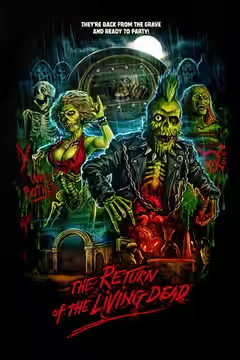
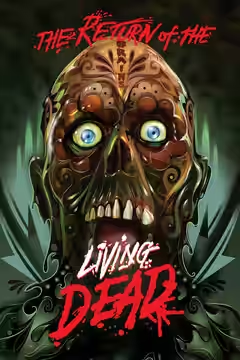
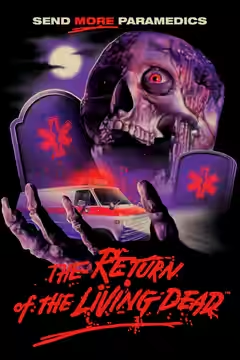
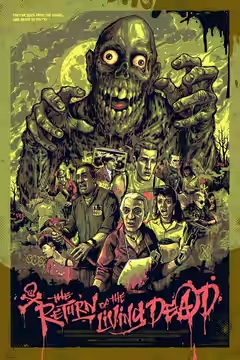
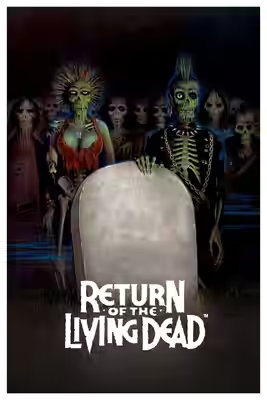
Dan O’Bannon’s zombie comedy is cheap, loud and quicker on its feet than anything the genre had managed. James Karen and Clu Gulager carry the first half; the punks in the cemetery nearly sink the second. Worth your evening, with the sound up.
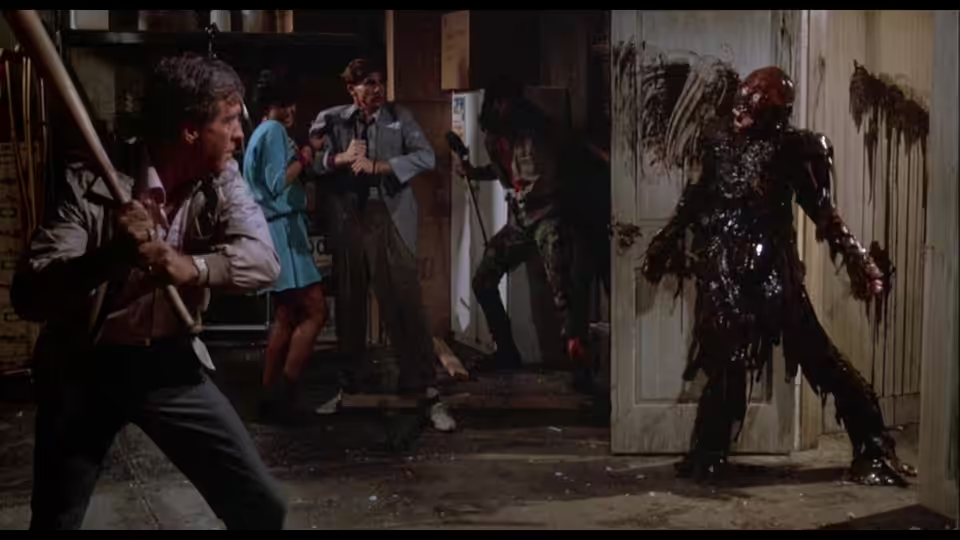
Dan O’Bannon wrote Alien, and here directs a zombie film that opens by claiming Night of the Living Dead was a cover story. The real dead, Frank (James Karen) tells the new boy at the Louisville medical supply warehouse, were sealed in army drums after a chemical accident and sent to the wrong address, and they are in the basement. John A. Russo and Russell Streiner, who worked on the 1968 original, share the story credit, so the joke is made with permission. What follows is cheap, loud and quicker on its feet than most comedies of its decade, and we recommend it to anyone who can watch a dog cut in half and still breathing. It runs 91 minutes and wastes few of them.
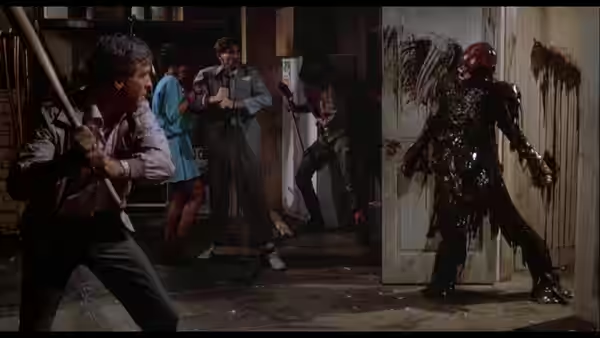
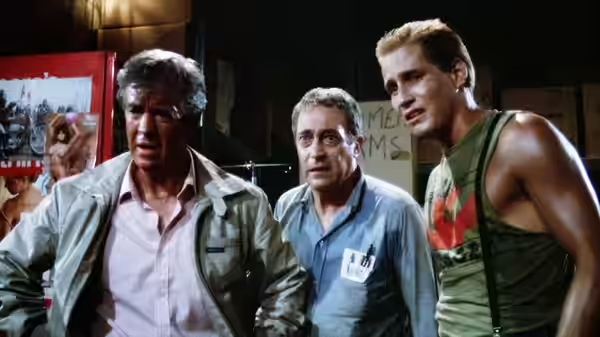
The first half belongs to three middle-aged men. Karen plays Frank as a foreman who has waited years for someone to show off to, and he slaps the drum to prove it is safe with the confidence of a man who has never been wrong. Clu Gulager’s Burt, the owner, arrives to find a corpse that will not stop moving and treats it as a matter of liability rather than theology. Don Calfa’s Ernie, the mortician next door, listens to German marches through headphones and agrees to burn the body as a favour between tradesmen. The three of them arguing over which end to saw first is the best stretch of the film.
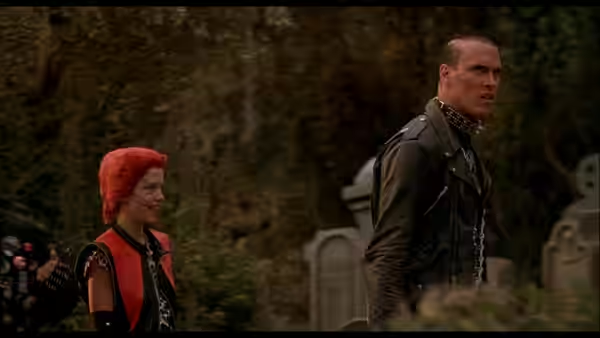
William Stout’s production design keeps everything on the same shabby level: a warehouse of cardboard boxes and split skeletons, drums stencilled with army warnings, a funeral home with a well-used furnace, and a cemetery of flat headstones under orange light. Jules Brenner shoots it flat and bright, fluorescent indoors, like a television film of its decade. Budget, probably, but it suits men in overalls dealing with the end of the world on an evening shift. Robert Gordon cuts between the warehouse and the cemetery, where Freddy’s friends are waiting for him, so that neither story has time to look as thin as it is. Matt Clifford’s score is cheap synthesiser, and the punk songs carry the cemetery scenes when nothing else does.
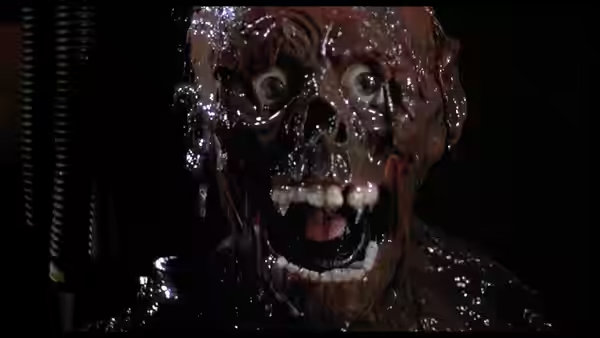
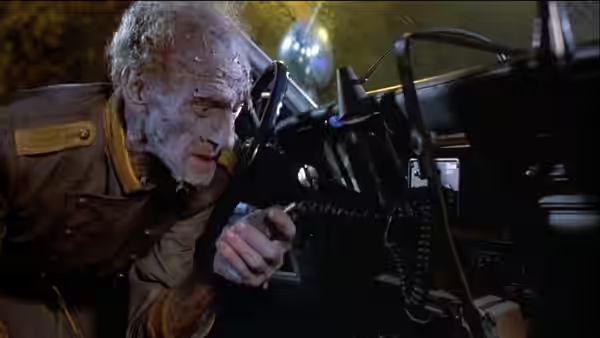
We laughed, a lot, at the first half, and then the film pulled a trick we did not expect. There is a scene in the mortuary where a dead woman, strapped to a table, explains in a level voice why the dead eat brains, and the film goes quiet while she does it. We stopped laughing. O’Bannon’s zombies run, think, lie on the radio and cannot be stopped by a shot to the head, and the moment the film makes that clear is the moment it stops being a send-up of Romero and becomes something nastier. The dead here are not slow and sad. They are in pain and they are organised.
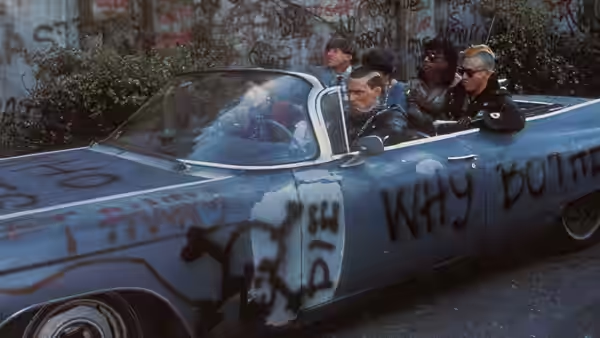
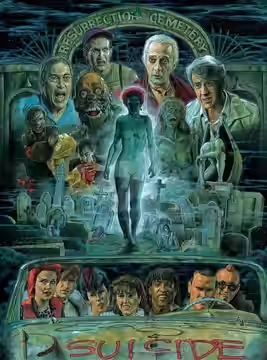
The young cast is the problem. Spider (Miguel A. Núñez Jr.), Scuz (Brian Peck), Chuck (John Philbin), Casey (Jewel Shepard) and Suicide (Mark Venturini) are written as thinly as they are named, and their stretch sitting around the graveyard waiting for the plot to rain on them is the only time we checked the clock. Linnea Quigley’s Trash takes her clothes off on a tomb for no reason the script supplies. Thom Mathews’s Freddy and Beverly Randolph’s Tina are asked to carry the film’s one scene of real feeling, and neither is up to it. The adults are acting; the kids are being filmed.
Set against the serious zombie films it is poking fun at, this is the one that rewrote the rules and did not care who noticed: the brains, the speed, the dead who talk back. It also has an ending we will not describe, except to say it is abrupt, bleak and earns its 18 certificate twice over. The reviews at the time called the production threadbare, and they were right; it has not mattered.
Watch it late, with the sound up and somebody next to you who has not seen it. Alone on a sofa the cemetery scenes run longer, and the mortuary scene is still what you will remember in the morning.